Shark Toy
CN → US| HS Code | Tariff Rate | Origin | Destination | Doc |
|---|---|---|---|---|
| 9503000071 | 10.0% | CN | US | Official Doc |
| 9503000073 | 10.0% | CN | US | Official Doc |
| 4205006000 | 39.9% | CN | US | Official Doc |
| 4205008000 | 35.0% | CN | US | Official Doc |
| 9503000071 | 10.0% | CN | US | Official Doc |
Product Images
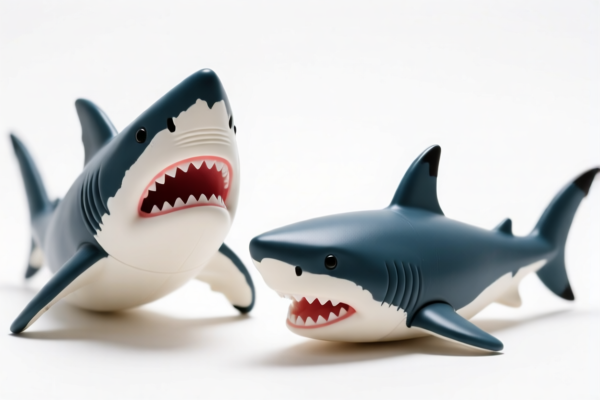
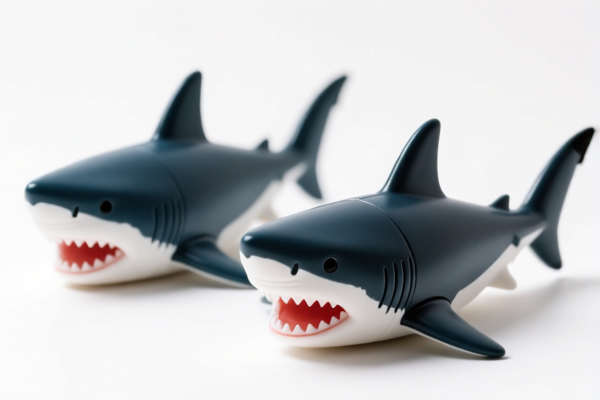
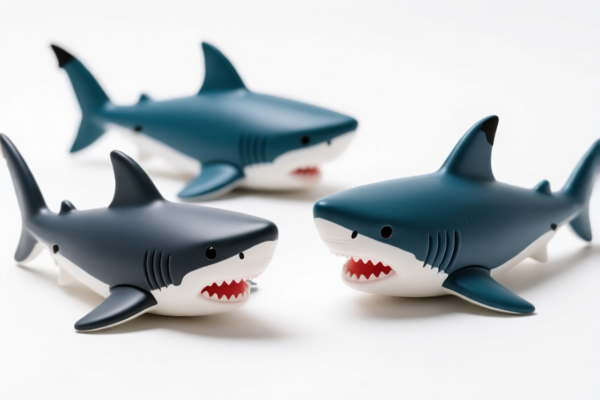
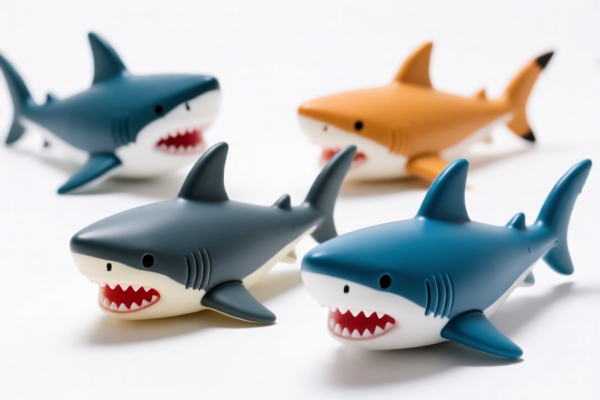
AI Analysis
🦈 Shark Toy (Plush, PVC, or Leather制品)
🌐 HS Code Reference & Customs Clearance Guide | 2026 Latest Tariff Analysis | Professional Customs Strategy
📌 I. Product Definition & Classification: What Exactly Is a "Shark Toy"?
A "Shark Toy" is a broad category in international trade. Its classification depends entirely on material composition and intended use. In customs terms, it is generally divided into two main camps:
- Toys (Chapter 95): If the shark is made of plastic (PVC/ABS), plush fabric, or soft materials, and its primary function is for play/enjoyment.
- Leather Articles (Chapter 42): If the shark is made from real reptile leather or synthetic/artificial leather, and is categorized as an accessory or other leather article rather than a pure toy.
⚠️ Key Distinction Point:
- If it is PVC, Plastic, Plush, or Fabric → It is a Toy (HS 9503). LOW TAX (10%).
- If it is Reptile Leather → It is an Leather Article (HS 4205.60). HIGH TAX (39.9%).
- If it is Synthetic/Artificial Leather → It is an Leather Article (HS 4205.80). HIGH TAX (35.0%).
📦 II. HS Code Classification Details (2026 Latest Tariff Authority)
| HS Code | Product Description | Scenario | Material Conflict? |
|---|---|---|---|
9503.00.00.71 |
Toys, including toys, dolls, games, sports equipment, etc. (Specific: Toys for children) | Standard PVC shark, plush shark, soft play shark | ✅ No (Toy purpose prevails) |
9503.00.00.73 |
Toys, including toys, dolls, games, sports equipment, etc. (Specific: Other toys) | Novelty shark, rigid plastic shark, non-specific toy | ✅ No (Toy purpose prevails) |
4205.00.60.00 |
Other made up articles of leather or of composition leather (Specific: Reptile leather) | Shark made from real reptile skin/leather | ❌ Yes (Material overrides toy purpose) |
4205.00.80.00 |
Other made up articles of leather or of composition leather (Specific: Other leather articles) | Shark made from synthetic leather or PU leather | ❌ Yes (Material overrides toy purpose) |
9503.00.00.71 |
Consumer goods, finished toys | General finished shark toy for retail | ✅ No |
🔍 Critical Reminder:
- Most shark toys (PVC, Plush, Foam) belong to HS 9503. Do NOT classify them as leather products just because they might look like a "pouch" or "bag" if they are intended for play.
- Leather Shark Toys are a special case. If the material is leather (real or synthetic), US Customs often classifies them under Chapter 42 due to specific material rules, leading to significantly higher tariffs.
💰 III. 2026 Latest Tariff Rate Details (Including Additional Taxes & Policy Add-ons)
✅ Applicable Country: United States (US)
✅ Origin: China (CN)
✅ Effective Date: From November 10, 2025 (and subsequent imports)
🎯 1. 9503.00.00.71 & 9503.00.00.73 —— Shark Toys (Non-Leather)
| Item | Content |
|---|---|
| Base Tariff Rate | 0% (ad valorem) |
| Section 301 (USITC) Additional Tariff | 0% (No additional 301 tariff for these specific toy subheads in this data set) |
| Section 122 Tariff (IEEPA) | +10% (Targeting Chinese products) |
| Total Tariff Rate | 10.0% |
| Tax Calculation | CIF Value × 10% |
| De Minimis Exemption Available? | ❌ No (deny_de_minimis) |
| Legal Basis Path | IEEPA:9903.01.25 → USITC:9503.00.00.71 |
📌 Explanation:
- Even though the base tariff is 0%, the Section 122 tariff of 10% applies strictly to Chinese-origin shark toys in this category.
- This is the most common and cost-effective classification for standard plastic/plush shark toys.
- Total Cost Impact: 10% of the CIF value.
🎯 2. 4205.00.60.00 —— Shark Toy Made of Reptile Leather
| Item | Content |
|---|---|
| Base Tariff Rate | 4.9% |
| Section 301 (USITC) Additional Tariff | +25% |
| Section 122 Tariff (IEEPA) | +10% |
| Total Tariff Rate | 39.9% |
| Tax Calculation | CIF Value × 39.9% |
| De Minimis Exemption Available? | ❌ No (deny_de_minimis) |
| Legal Basis Path | IEEPA:9903.01.24 → USITC:4205.00.60.00 |
📌 Warning:
- If your shark toy is made of real reptile skin (e.g., crocodile/serpentine texture leather), it falls here.
- Total Tax is ~40%. This is VERY HIGH and can erase profit margins.
- Ensure material declaration is accurate; misclassification can lead to severe penalties.
🎯 3. 4205.00.80.00 —— Shark Toy Made of Synthetic/Artificial Leather
| Item | Content |
|---|---|
| Base Tariff Rate | 0.0% |
| Section 301 (USITC) Additional Tariff | +25% |
| Section 122 Tariff (IEEPA) | +10% |
| Total Tariff Rate | 35.0% |
| Tax Calculation | CIF Value × 35.0% |
| De Minimis Exemption Available? | ❌ No (deny_de_minimis) |
| Legal Basis Path | IEEPA:9903.01.24 → USITC:4205.00.80.00 |
📌 Warning:
- "Synthetic leather" or "PU leather" shark toys are often misclassified as toys.
- US Customs may argue that the material (leather substitute) dictates the classification over the use (toy).
- Total Tax is 35%, which is 3.5x higher than the standard toy classification.
🛠️ IV. Customs Clearance Practical Advice (Battle-Tested Pitfall Guide)
✅ 1. Preparation Checklist (No Missing Items)
| Material | Must Provide | Explanation |
|---|---|---|
| ✅ Product Specification Sheet | ✔️ | Must clearly state MATERIAL (e.g., "100% PVC", "Plush Fabric", "Synthetic Leather"). |
| ✅ Material Test Report | ✔️ | For leather items, proof of material composition is crucial to avoid reclassification. |
| ✅ Product Photos (Clear) | ✔️ | Show texture, stitching, and any labels. If it looks like a toy, emphasize "Toy" function. |
| ✅ Commercial Invoice | ✔️ | Description should be specific: "PVC Shark Toy" vs. "Leather Shark Pouch". |
| ✅ Packing List | ✔️ | Ensure unit price matches invoice. |
✅ 2. Declaration Tips (Key Mantras)
🔥 "Material Rules All! Plastic/Plush = Toy (10%), Leather = Article (35%+)"
| Scenario | Correct Declaration | Error to Avoid |
|---|---|---|
| Standard PVC/Plush Shark | 9503.00.00.71 or 9503.00.00.73 |
Calling it "Leather Article" → 35% Tax |
| Shark Made of Synthetic Leather | 4205.00.80.00 |
Calling it "Toy" → Risk of audit/penalty |
| Shark Made of Real Reptile Leather | 4205.00.60.00 |
Calling it "Toy" → Risk of audit/penalty |
| Mixed Material (e.g., Plastic Body + Leather Ears) | Consult Customs | Ambiguous description → Delays |
✅ 3. Special Case Handling
| Situation | Handling Advice |
|---|---|
| "Soft Plastic" vs. "Synthetic Leather" | Soft PVC (Vinyl) is NOT considered leather. It stays in HS 9503 (10%). Synthetic Leather (PU/PVC coated fabric) is HS 4205 (35%). Clarify this distinction! |
| Shark as a Bag/Pouch | If it functions as a bag (has zipper, handles), even if it looks like a shark, it may be classified as a bag. Bags have different tariffs. |
| OEM Custom Orders | Provide design sketches showing it is intended for children/play, to support HS 9503 classification if materials allow. |
🌍 V. Global Market Comparison (2026 Latest)
| Country/Region | Recommended HS Code | Tariff (China Origin) | Certification | Notes |
|---|---|---|---|---|
| 🇺🇸 USA | 9503.00.00.71 |
10% (Toy) 35-40% (Leather) |
ASTM F963, CPSIA (for toys) | Critical: Section 122 tax applies. No de minimis. |
| 🇨🇳 China | 9503.00.00.71 |
0% - 5% | CCC (if applicable) | Lower taxes, but export duties may apply depending on material. |
| 🇪🇺 EU | 9503.00.00 |
0% (Most toys) | CE, EN71 | No Section 122 equivalent. |
| 🇬🇧 UK | 9503.00.00 |
0% - 5% | UKCA | Post-Brexit rules apply. |
📌 Conclusion:
- USA is the most complex market for Shark Toys due to the Section 122 (10%) and potential Section 301 (25%) if misclassified as leather.
- Avoid "Leather" keywords unless it is genuinely leather. For plastic/plush, stick to HS 9503 to keep taxes at 10%.
📌 VI. Common Mistakes & Pitfalls (Blood & Tears Lessons)
❌ Mistake 1: Calling a PVC Shark a "Leather Toy" because it's "vegan leather"
👉 Consequence: Customs may still classify it under HS 4205 (35%) if the material is deemed "composition leather". Clarify "PVC/Vinyl" vs. "Synthetic Leather".
❌ Mistake 2: Assuming all toys get 0% duty
👉 Consequence: Ignoring Section 122 (10%) for Chinese toys leads to underpayment. You owe 10% on top of base duty.
❌ Mistake 3: Using vague terms like "Animal Toy"
👉 Consequence: Customs asks for clarification → Delay in release.
✅ Correct Description: "PVC Inflatable Shark Toy for Children, Model XYZ, CE/ASTM Certified"
🎯 VII. Conclusion: Precise Classification Saves Money!
🎯 Remember the Mantra:
🔹 "Plush/PVC/Plastic = Toy (10%). Real/Synthetic Leather = Article (35-40%). Don't Guess, Specify Material!"
🔹 "US Market: Base 0% + Sec 122 10% = 10% for Toys. Avoid Leather Class to Save 25-30%!"
📌 Pro Tip:
If your shark toy is made of PVC or Plush, insist on HS 9503. Provide material certificates proving it is NOT leather or composition leather. This keeps your tariff at 10% instead of jumping to 35-40%.
📣 Immediate Action:
📞 Contact your customs broker to confirm material classification.
📄 Provide detailed material specs (e.g., "100% Polyester Plush" vs. "Polyurethane Leather").
🚀 Clear customs smoothly, avoid penalties, and maximize your profit!
✨ Professional Customs, Starts with Accurate Classification!
💼 Every percentage point matters in global trade!
Customer Reviews
About HS Code Classification
The Harmonized System (HS) is an internationally standardized nomenclature developed by the World Customs Organization (WCO) to classify traded products. Over 200 countries use the HS system as the basis for customs tariffs, trade statistics, and import/export regulations.
Each HS code follows a hierarchical structure:
- Chapter (2 digits) — Broad category of goods (e.g., Chapter 84: Machinery and Mechanical Appliances)
- Heading (4 digits) — More specific grouping within the chapter
- Subheading (6 digits) — Internationally standardized breakdown, used by all WCO member countries
- National subdivisions (8-10 digits) — Country-specific extensions for further classification, such as US HTSUS 10-digit codes
Correct HS code classification is essential for smooth customs clearance, accurate duty payment, and compliance with trade regulations. Misclassification can lead to customs delays, overpayment of duties, or penalties.
When importing from CN to US, the applicable tariff rates may include:
- Most-Favored-Nation (MFN) rate — The standard duty rate applied to WTO members
- General rate — Applied to countries without trade agreements
- Trade remedy duties — Additional tariffs such as Section 301 (anti-dumping), Section 232 (national security), or countervailing duties
The information provided on this page is for reference purposes only. For official classification, please consult with your local customs authority or a licensed customs broker.