Sharp edged Cork Blank
CN → US| HS Code | Tariff Rate | Origin | Destination | Doc |
|---|---|---|---|---|
| 4501100000 | 35.0% | CN | US | Official Doc |
| 4503104000 | 35.0% | CN | US | Official Doc |
| 4503106000 | 35.0% | CN | US | Official Doc |
| 4501904000 | 35.0% | CN | US | Official Doc |
| 4502000000 | 35.0% | CN | US | Official Doc |
Product Images
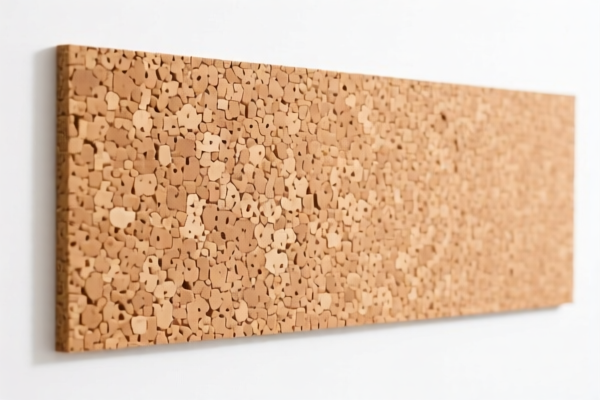
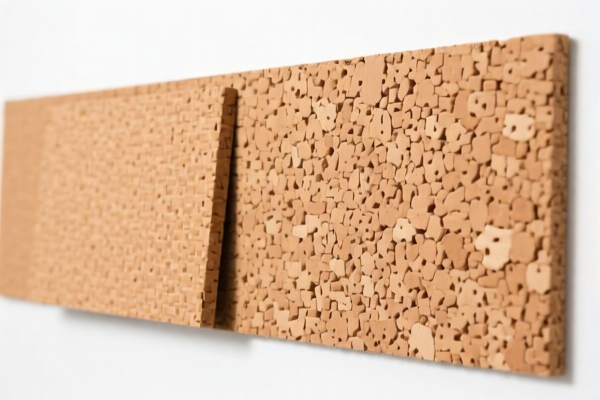
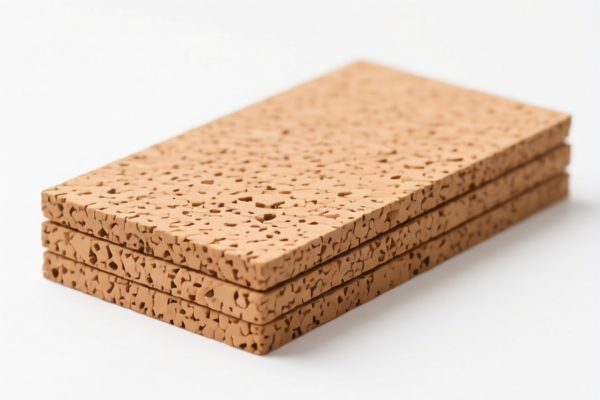
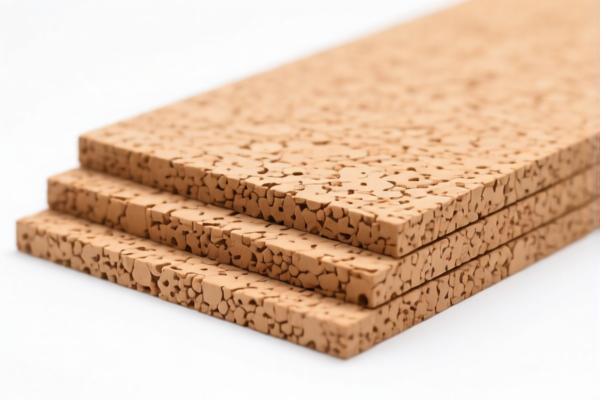
AI Analysis
🍷 Sharp Edged Cork Blank (Cork Stoppers for Manufacturing)
🌐 HS Code Reference & Customs Clearance Guide | 2026 Latest Tariff Analysis | Professional Entry Strategy
📌 I. Product Definition & Classification: Do You Really Understand "Cork Blank"?
Sharp Edged Cork Blank refers to natural cork material that has been processed into specific geometric shapes (blocks, boards, or strips) but retains sharp, unpolished edges. It is the primary semi-finished product intended for the manufacturing of cork stoppers, particularly for wine bottles.
In international trade, these are classified based on their physical state and intended use: * Raw/Primary Shape: Blocks or plates derived directly from the bark, cut to size but not yet shaped into final stoppers. * Semi-Finished: Material that has undergone initial processing (decortication, boiling) but lacks final polishing or stamping.
⚠️ Key Distinction Point:
- If the cork is shaped into a cylinder (ready for final finishing) with smooth edges → It may be classified differently depending on specific local nuances, but generally remains in Chapter 45 if unfinished.
- If it is block/board/strip form with sharp/rough edges → It falls strictly under 4502 or 4503, depending on the precise manufacturing stage and shape description.
- If it is crushed or granulated → It falls under 4501.
📦 II. HS Code Classification Details (2026 Latest Tariff Authority Mapping)
Based on the provided data, the following HS Codes apply to Natural Cork Blanks in their raw/semi-finished state with sharp edges:
| HS Code | Product Description | Application Scenario | Edge/Finish Status |
|---|---|---|---|
4502.00.00.00 |
Cork blanks (blocks, plates, strips), for making cork stoppers; sharp-edged blanks for cork stoppers | Most Common: Raw cork blocks/strips used specifically for manufacturing wine stoppers | ✅ Sharp/Rough Edges (Unpolished) |
4501.10.00.00 |
Cork, raw or simply prepared; cork granules, crushed, and ground | Simple processing of raw cork; primary form | ✅ Raw/Simplely Prepared |
4503.10.40.00 |
Other natural cork; natural cork blanks, raw state, falling under general residue logic | General natural cork material, raw state, generic classification | ✅ Raw State |
4503.10.60.00 |
Other natural cork materials/blanks, falling under other material inference categories | Alternative classification for natural cork blanks if not strictly 4502 | ✅ Material Inference |
4501.90.40.00 |
Cork blanks, primary form, falling under simple processing description for natural cork | Simple processing description | ✅ Simple Processing |
🔍 Key Reminder:
-4502.00.00.00is the most precise classification for "Sharp Edged Cork Blank" used specifically for stoppers. It explicitly mentions "sharp-edged blanks for cork stoppers." - Codes4501and4503are fallback/general classifications for raw or simply prepared cork if the specific "stopper blank" criteria aren't met or if customs authorities require a broader category. - All listed HS Codes in the provided data share the same tariff structure for US imports from China.
💰 III. 2026 Latest Tariff Rate Details (Including Surtaxes & Policy Add-ons)
✅ Applicable Country: United States (US)
✅ Country of Origin: China (CN)
✅ Effective Date: From November 10, 2025 onwards (including subsequent imports)
🎯 1. Universal Tariff Structure for All Listed HS Codes
| Item | Content |
|---|---|
| Base Tariff | 0% (Ad Valorem) |
| Section 301 Surcharge | +25% (Additional duty under Section 301 of the Trade Act) |
| Section 122 Tariff | +10% (Specific surcharge under Section 122 provisions) |
| Total Tariff Rate | 35% |
| Tax Calculation | CIF Value × 35% |
| De Minimis Exemption Eligible? | ❌ No (Not eligible for de minimis exemption) |
| Legal Basis Path | USITC:4502.00.00.00 → SECTION_301:25% → SECTION_122:10% |
📌 Explanation:
- "25% Section 301 Surcharge": Derived from the US Trade Act Section 301, imposing additional duties on Chinese goods to address unfair trade practices. - "10% Section 122 Tariff": A specific additional duty under Section 122, often applied to national security or specific import categories. - Combined 35%: This is a significant tariff burden. Importers must factor this into their landed cost calculations. - No De Minimis: Small shipments cannot bypass these duties.
🛠️ IV. Customs Clearance Practical Advice (Expert Pitfall Avoidance Guide)
✅ 1. Required Documentation Checklist (Non-Negotiable)
| Document | Must Provide | Description |
|---|---|---|
| ✅ Product Specification Sheet | ✔️ | Details: Size, dimensions, weight, volume, material type (Natural Cork) |
| ✅ Product Photos | ✔️ | Clear images showing the sharp edges and raw state of the cork blocks/strips |
| ✅ Commercial Invoice | ✔️ | Explicitly state: "Natural Cork Blanks, Sharp Edged, for Manufacturing Cork Stoppers" |
| ✅ Packing List | ✔️ | Itemize by weight/volume, clarify if packaging is reusable or disposable |
| ✅ Certificate of Origin (CO) | ✔️ | Essential for proving Chinese origin and applying specific tariffs |
| ✅ Bill of Lading/Air Waybill | ✔️ | Standard shipping document |
✅ 2. Declaration Tips (Key Mantra)
🔥 "Label as 'Cork Blank,' specify 'Sharp Edged,' avoid 'Finished Stoppers,' declare 'For Manufacturing Only'"
| Scenario | Correct Declaration | Incorrect Declaration |
|---|---|---|
| Raw cork blocks for stopper production | 4502.00.00.00 - Natural Cork Blanks, Sharp Edged |
"Cork Stoppers" → Might trigger different checks or misclassification |
| General natural cork material | 4503.10.40.00 or 4503.10.60.00 |
"Cork Planks" → Vague, may cause delays |
| Crushed cork | 4501.10.00.00 |
"Cork Blanks" → Incorrect, leads to penalties |
| Finished, polished cork stoppers | Different HS Code (not in this list) | "Cork Blanks" → Misdeclaration |
✅ 3. Special Situation Handling
| Situation | Handling Advice |
|---|---|
| Mixed Shipments (Blanks + Finished Stoppers) | Declare Separately. Do not bundle. Finished stoppers may have different tariff implications. |
| OEM Custom Sizes | Provide custom design drawings to justify the "Blank" status and avoid classification as "Finished Goods." |
| Unclear Edge Status | If edges are polished/smooth, re-evaluate classification. Sharp edges are key for 4502 classification. |
| Third-Party Transit | If shipped via Vietnam/Mexico, ensure Transit Documentation is flawless to avoid origin fraud claims. |
🌍 V. Global Market Customs Clearance Comparison (2026 Latest)
| Country/Region | Recommended HS Code | Tariff (China Origin) | Certification Requirements | Notes |
|---|---|---|---|---|
| 🇺🇸 USA | 4502.00.00.00 |
35% (25% + 10% surcharges) | None Specific | High tariff burden; ensure accurate declaration |
| 🇨🇳 China | 4502.00.00.00 |
5% | None | No additional surcharges |
| 🇪🇺 EU | 4502.00.00.00 |
0% (if preferential) | CE/RoHS (if applicable) | Favorable trade terms often apply |
| 🇬🇧 UK | 4502.00.00.00 |
0% (if preferential) | UKCA | Post-Brexit rules may vary |
| 🇦🇺 Australia | 4502.00.00.00 |
5% | None | Moderate tariff |
📌 Conclusion:
- The US imposes the highest effective tariff (35%) on natural cork blanks from China. - EU and UK often have 0% tariffs under preferential trade agreements, making them more cost-effective for re-export or local use. - Cost Optimization: Consider sourcing from non-China origins (e.g., Portugal, Spain) if shipping to the US, to avoid the 35% surcharge.
📌 VI. Common Errors & Pitfall Guide (Lessons from Experience)
❌ Error 1: Declaring "Cork Blanks" as "Cork Stoppers"
👉 Consequence: Potential misclassification, leading to underpayment of duties or delays if the customs officer determines they are not finished goods.
❌ Error 2: Not specifying "Sharp Edged" in the description
👉 Consequence: Customs may classify under a different subheading (4501 or 4503), causing valuation disputes or delays.
❌ Error 3: Ignoring the Section 301 and Section 122 tariffs
👉 Consequence: Unexpected cost increase of 35%. Importers must budget accordingly.
❌ Error 4: Failing to provide clear product photos showing the raw state
👉 Consequence: Customs may request additional information, leading to storage fees and clearance delays.
✅ Correct Declaration Example:
"Natural Cork Blanks, Sharp Edged, Raw State, for Manufacturing Cork Stoppers, HS Code 4502.00.00.00, Country of Origin: China"
🎯 VII. Conclusion: Precise Declaration Saves Money!
🎯 Remember the Mantra:
🔹 "Cork Blanks ≠ Finished Stoppers"
🔹 "Sharp Edged = 4502.00.00.00"
🔹 "35% Tariff = 25% (301) + 10% (122)"
🔹 "Declare Raw, Declare Sharp, Declare Correct!"
📌 Pro Tip:
If your cork blanks are sourced from Portugal, Spain, or Italy, you may benefit from lower or zero tariffs in the US under specific trade agreements or if classified differently.
Always request a Pre-Ruling (Advance Ruling) from US Customs if unsure about the classification of complex cork products.
📣 Immediate Action:
📞 Contact a licensed customs broker + Provide Product Photos + Request HS Code Pre-Ruling
🚀 Ensure Smooth Clearance, Minimize Costs, and Maximize Profit Margins!
✨ Professional Clearance Starts with Accurate Classification!
💼 Every Percent of Tariff Counts!
Customer Reviews
About HS Code Classification
The Harmonized System (HS) is an internationally standardized nomenclature developed by the World Customs Organization (WCO) to classify traded products. Over 200 countries use the HS system as the basis for customs tariffs, trade statistics, and import/export regulations.
Each HS code follows a hierarchical structure:
- Chapter (2 digits) — Broad category of goods (e.g., Chapter 84: Machinery and Mechanical Appliances)
- Heading (4 digits) — More specific grouping within the chapter
- Subheading (6 digits) — Internationally standardized breakdown, used by all WCO member countries
- National subdivisions (8-10 digits) — Country-specific extensions for further classification, such as US HTSUS 10-digit codes
Correct HS code classification is essential for smooth customs clearance, accurate duty payment, and compliance with trade regulations. Misclassification can lead to customs delays, overpayment of duties, or penalties.
When importing from CN to US, the applicable tariff rates may include:
- Most-Favored-Nation (MFN) rate — The standard duty rate applied to WTO members
- General rate — Applied to countries without trade agreements
- Trade remedy duties — Additional tariffs such as Section 301 (anti-dumping), Section 232 (national security), or countervailing duties
The information provided on this page is for reference purposes only. For official classification, please consult with your local customs authority or a licensed customs broker.