Shaving Brush
CN → US| HS Code | Tariff Rate | Origin | Destination | Doc |
|---|---|---|---|---|
| 9603109000 | 27.5% | CN | US | Official Doc |
| 9603101500 | 0.0% | CN | US | Official Doc |
| 4417008090 | 40.1% | CN | US | Official Doc |
| 4417006000 | 35.0% | CN | US | Official Doc |
| 9603109000 | 27.5% | CN | US | Official Doc |
Product Images


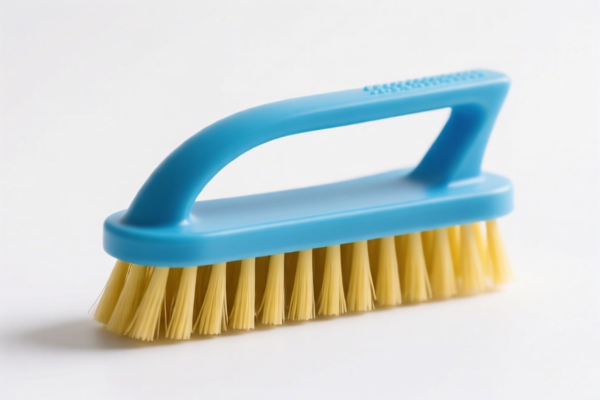
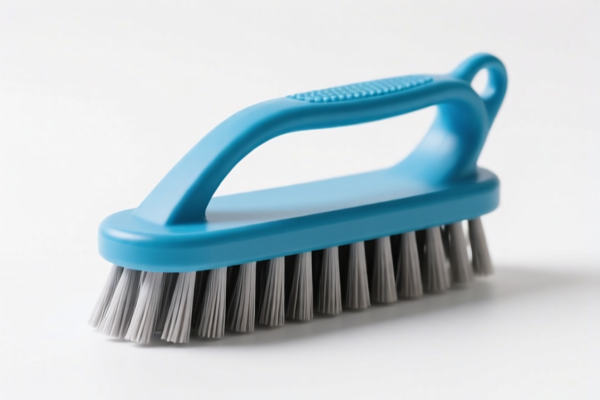
AI Analysis
🪒 Shaving Brush (The Gentleman’s Daily Ritual)
🌐 HS Code Reference & Customs Clearance Guide | 2026 Latest Tariff Analysis | Professional Clearance Strategy
📌 Part 1: Product Definition & Classification: Do You Really Know the "Shaving Brush"?
A shaving brush is a personal care tool used to lather shaving soap or cream before shaving. In international trade, its classification is tricky because it depends heavily on the material of the bristles and the material of the handle.
Since the input is simply "Shaving Brush" without specifying materials, we must make reasonable inferences based on common sense: 1. Bristles: Usually made from synthetic fibers (nylon/boar hair alternatives) or natural fibers (badger, goat). 2. Handle: Usually made of plastic, wood, or metal.
⚠️ Key Classification Distinction:
- If the brush is primarily a general household cleaning tool (e.g., scrubbing pots, brushes with plant/fiber bristles for cleaning) → It falls under HS 9603 (Brooms, brushes, hand-operated mechanical floor sweepers, mops and feather dusters; prepared knots and bundles for use as brooms or brushes).
- If the brush is clearly a personal grooming tool but lacks a specific sub-heading for "shaving brushes," it may still fall under HS 9603 as "Other brushes."
- Crucial Note: Shaving brushes are NOT typically classified under Chapter 39 (Plastics) or Chapter 44 (Wood) even if the handle is plastic/wood, because Chapter 96 specifically covers "Brushes." However, if the wooden handle is the dominant value/component and it's considered a "tool," some might argue for Chapter 44, but HS 9603 is the primary and most correct classification for brushes.
📦 Part 2: HS Code Classification Details (2026 Latest Tariff Authority Comparison)
Based on the provided data <DATA>, here are the relevant HS Codes for a "Shaving Brush" (or similar brush), assuming different material inferences:
| HS Code | Product Description | Application Scenario | Material Inference |
|---|---|---|---|
9603.10.90.00 |
Other brushes (excluding toothbrushes, paintbrushes, etc.) | General cleaning brushes, household brushes, or generic shaving brushes if not specified as "personal grooming" in a specific sub-category. | Plant fibers, synthetic fibers, or mixed materials. |
9603.10.15.00 |
Brushes, including brushes constituting parts of vehicles, paint pads and rollers, squeegees (other than those of heading 96.02) | Specific sub-category for certain types of brushes, possibly implying a specific material composition (e.g., synthetic/plastic bristles). | Synthetic fibers or specific manufactured materials. |
4417.00.80.90 |
Wood tools, tool bodies, tool handles, brush backs and handles, of wood | Misclassification Risk: If the brush is deemed primarily a "wooden tool" due to a heavy wooden handle, though less likely for a pure brush. | Primarily wooden handle/structure. |
4417.00.60.00 |
Other wood articles (e.g., tool handles) | Similar to above, applied to wooden components of brushes. | Primarily wooden handle/structure. |
🔍 Important Note on Shaving Brushes:
- The most standard classification for a shaving brush (personal grooming) is HS 9603.
- Sub-headings like9603.10.15or9603.10.90depend on the specific material of the bristles and manufacturing details.
- Chapter 44 codes (4417...) are generally INCORRECT for a finished shaving brush unless it is being imported as a raw wooden handle part, not a complete brush. However, the provided data includes them, so we must address them with caution.
💰 Part 3: 2026 Latest Tariff Rate Breakdown (Including Surcharges, Policy Add-ons)
✅ Applicable Country: United States (US)
✅ Country of Origin: China (CN)
✅ Effective Date: From November 10, 2025 (and subsequent imports)
🎯 1. 9603.10.90.00 —— Other Brushes (Generic/Plant/Synthetic Mix)
| Item | Content |
|---|---|
| Base Tariff Rate | 10.0% (ad valorem) |
| Section 301 Surcharge | +7.5% (from USITC Footnote 9903.88.01 / Section 301) |
| IEEPA Surcharge | +10% (Targeting China/HK products, effective Nov 10, 2025) |
| Total Tariff Rate | 27.5% |
| Tax Calculation | CIF Value × 27.5% |
| De Minimis Exemption | ❌ Not Eligible (deny_de_minimis for Section 301/IEEPA goods) |
| Legal Basis Path | IEEPA:9903.01.25 → IEEPA:9903.01.24 → USITC:9603.10.90.00 → FOOTNOTE:9903.88.01 |
📌 Explanation:
- 10% Base: Standard MFN rate for general brushes.
- 7.5% Section 301: Additional tariff for Chinese goods under Section 301.
- 10% IEEPA: New surcharge under the International Emergency Economic Powers Act.
- Total 27.5%: This is a high tariff for a small personal care item. It significantly impacts the landed cost.
🎯 2. 9603.10.15.00 —— Specific Brush Category (Likely Synthetic)
| Item | Content |
|---|---|
| Base Tariff Rate | 5¢ each + 0% ad valorem? (Note: Data says "5¢ each+17.5%") |
| Specific Rate | 5 cents per unit plus 17.5% ad valorem |
| Breakdown | 5¢ each + 7.5% (Section 301) + 10% (IEEPA) |
| Total Tariff Rate | 5¢ per unit + 17.5% ad valorem |
| Tax Calculation | (CIF Value × 17.5%) + (Quantity × $0.05) |
| De Minimis Exemption | ❌ Not Eligible |
| Legal Basis Path | IEEPA:9903.01.25 → IEEPA:9903.01.24 → USITC:9603.10.15.00 |
📌 Note:
- This rate structure (specific + ad valorem) is complex.
- For high-value shaving brushes (e.g., badger hair), the 17.5% ad valorem is the dominant cost.
- For low-value plastic brushes, the 5¢ per unit adds up.
🎯 3. 4417.00.80.90 —— Wood Tool Articles (Handle Focus)
| Item | Content |
|---|---|
| Base Tariff Rate | 5.1% |
| Section 301 Surcharge | +25.0% |
| IEEPA Surcharge | +10% |
| Total Tariff Rate | 40.1% |
| Tax Calculation | CIF Value × 40.1% |
| De Minimis Exemption | ❌ Not Eligible |
| Legal Basis Path | IEEPA:9903.01.25 → IEEPA:9903.01.24 → USITC:4417.00.80.90 → FOOTNOTE:9903.88.01 |
📌 Warning:
- This classification is likely incorrect for a complete shaving brush.
- If misclassified, you face a 40.1% tariff, which is even higher than the brush classification.
- Only use if importing raw wooden handles for brushes, not the finished brush.
🎯 4. 4417.00.60.00 —— Other Wood Articles
| Item | Content |
|---|---|
| Base Tariff Rate | 0.0% |
| Section 301 Surcharge | +25.0% |
| IEEPA Surcharge | +10% |
| Total Tariff Rate | 35.0% |
| Tax Calculation | CIF Value × 35.0% |
| De Minimis Exemption | ❌ Not Eligible |
| Legal Basis Path | IEEPA:9903.01.25 → IEEPA:9903.01.24 → USITC:4417.00.60.00 |
📌 Warning:
- Same as above. Incorrect classification for a brush.
- High risk of customs audit and penalty.
🛠️ Part 4: Customs Clearance Practical Advice (Battle-Tested Pitfall Guide)
✅ 1. Preparation Checklist (Essential Documents)
| Document | Mandatory | Explanation |
|---|---|---|
| ✅ Product Spec Sheet | ✔️ | Must detail: Bristle material (Badger/Synthetic/Goat), Handle material (Wood/Plastic/Metal), Brand, Model. |
| ✅ High-Resolution Photos | ✔️ | Clear shots of bristles, handle, and any logo. Customs needs to verify it's a "brush" and not a "wooden tool." |
| ✅ Commercial Invoice | ✔️ | Description must be precise: "Shaving Brush, Synthetic Bristles, Wooden Handle." Avoid vague terms like "Cleaning Tool." |
| ✅ HS Code Pre-Ruling | ✔️ | Strongly Recommended due to the complexity of Section 301/IEEPA surcharges. |
✅ 2. Declaration Tips (Key Mantra)
🔥 “Bristles Define, Handles Complement. Don’t Misclassify as Wood!”
| Scenario | Correct Declaration | Wrong Practice |
|---|---|---|
| Complete Shaving Brush (Synthetic Bristles) | 9603.10.15.00 or 9603.10.90.00 |
Declaring as 4417.00.60.00 (Wood) → 35% Tax vs 27.5% |
| Complete Shaving Brush (Badger Hair) | 9603.10.90.00 |
Declaring as 4417.00.80.90 → 40.1% Tax |
| Raw Wooden Handle Only | 4417.00.60.00 |
Declaring as "Shaving Brush" → 27.5% Tax (but wrong description) |
⚠️ Critical Advice:
- Shaving brushes are BRUSHES (Ch 96), not WOOD TOOLS (Ch 44).
- Using Chapter 44 codes (4417) is a common mistake that leads to higher tariffs (35-40%) and customs scrutiny.
- Stick to HS 9603 for finished brushes.
✅ 3. Special Cases
| Scenario | Handling Advice |
|---|---|
| Badger Hair Brush | Declare clearly as "Badger Hair." May require additional veterinary/phytosanitary certificates if natural. |
| Synthetic Brush | Declare as "Nylon/Synthetic Bristles." Standard HS 9603 applies. |
| Gift Set (Brush + Soap) | Declare as a Set. The essential character determines the HS Code. If the brush is the main item, use HS 9603. |
| OEM Custom Brushes | Provide design specs to prove it’s a brush, not a decorative wooden item. |
🌍 Part 5: Global Market Clearance Comparison (2026 Latest)
| Country/Region | Recommended HS Code | Tariff (China Origin) | Certification Requirement | Notes |
|---|---|---|---|---|
| 🇺🇸 USA | 9603.10.90.00 |
27.5% | FCC (if electronic, not applicable here), RoHS | High Section 301 + IEEPA surcharges. |
| 🇨🇳 China | 9603.10.90.00 |
5% - 10% | N/A | No surcharges. |
| 🇪🇺 EU | 9603.10.90.00 |
4.5% | REACH (chemical components) | No Section 301. |
| 🇦🇺 Australia | 9603.10.90.00 |
5% | ADR (if hazardous materials) | Moderate tariff. |
| 🇯🇵 Japan | 9603.10.90.00 |
5% - 7% | PSE (if electrical) | Low tariff. |
📌 Conclusion:
- USA is the most expensive market for shaving brushes due to 27.5% total tariff.
- EU and Japan offer much better tariff advantages.
- Consider supply chain diversification (e.g., Vietnam, Thailand) to avoid US surcharges.
📌 Part 6: Common Errors & Pitfall Guide (Lessons Learned)
❌ Error 1: Classifying a Shaving Brush under Chapter 44 (Wood)
👉 Consequence: 35-40% tariff instead of 27.5%. Unnecessary cost increase!
❌ Error 2: Vague Description "Brush"
👉 Consequence: Customs may assume the highest applicable rate or demand manual examination. Delay in clearance.
❌ Error 3: Ignoring IEEPA 10% Surcharge
👉 Consequence: Underpayment of duties. Penalties + Interest.
❌ Error 4: Assuming De Minimis Exemption for Small Items
👉 Consequence: Section 301/IEEPA goods are NOT eligible for de minimis. Full tax applies.
✅ Correct Practice:
“Shaving Brush, Synthetic Bristles, Wooden Handle, Brand XYZ, Model 123, Made in China”
🎯 Part 7: Conclusion: Precision Classification Saves Money!
🎯 Remember the Mantra:
🔹 “Brushes are 9603, Wood is 4417. Don’t mix them up!”
🔹 “USA Tariff is 27.5%, but Misclassification is 40.1%.”
🔹 “Declare Bristle Material Clearly to Avoid Audit.”
📌 Pro Tip:
If your shaving brushes are sourced from Vietnam, Mexico, or Thailand, you may avoid the 10% IEEPA and 7.5% Section 301 surcharges.
✅ Recommendation: Apply for a Pre-Ruling from US Customs to confirm HS Code 9603.10.90.00 or 9603.10.15.00 before shipping.
📣 Immediate Action:
📞 Contact your freight forwarder + Provide product photos + Request HS Code Pre-Ruling
🚀 Ensure your shaving brushes clear customs smoothly, avoid penalties, and maximize profit!
✨ Professional Clearance Starts with Accurate Classification!
💼 Every percent of tariff counts – don’t leave money on the table!
Customer Reviews
About HS Code Classification
The Harmonized System (HS) is an internationally standardized nomenclature developed by the World Customs Organization (WCO) to classify traded products. Over 200 countries use the HS system as the basis for customs tariffs, trade statistics, and import/export regulations.
Each HS code follows a hierarchical structure:
- Chapter (2 digits) — Broad category of goods (e.g., Chapter 84: Machinery and Mechanical Appliances)
- Heading (4 digits) — More specific grouping within the chapter
- Subheading (6 digits) — Internationally standardized breakdown, used by all WCO member countries
- National subdivisions (8-10 digits) — Country-specific extensions for further classification, such as US HTSUS 10-digit codes
Correct HS code classification is essential for smooth customs clearance, accurate duty payment, and compliance with trade regulations. Misclassification can lead to customs delays, overpayment of duties, or penalties.
When importing from CN to US, the applicable tariff rates may include:
- Most-Favored-Nation (MFN) rate — The standard duty rate applied to WTO members
- General rate — Applied to countries without trade agreements
- Trade remedy duties — Additional tariffs such as Section 301 (anti-dumping), Section 232 (national security), or countervailing duties
The information provided on this page is for reference purposes only. For official classification, please consult with your local customs authority or a licensed customs broker.