Sheepskin (Non patterned) Home Decor Tanned Leather
CN → US| HS Code | Tariff Rate | Origin | Destination | Doc |
|---|---|---|---|---|
| 4302196000 | 38.5% | CN | US | Official Doc |
| 4302191300 | 37.2% | CN | US | Official Doc |
| 4105300000 | 12.0% | CN | US | Official Doc |
| 4105109000 | 12.0% | CN | US | Official Doc |
Product Images
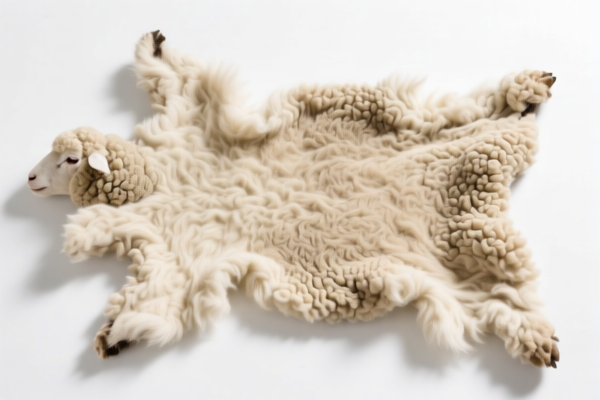
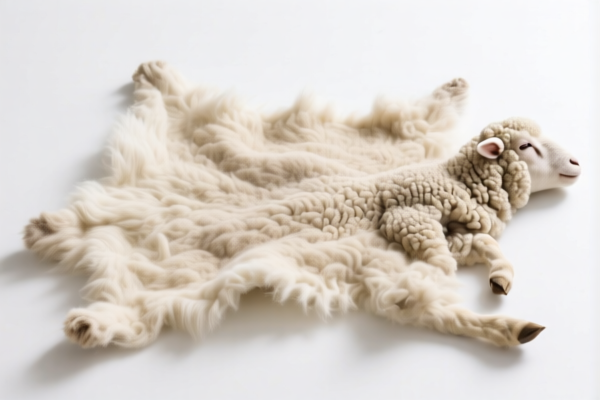
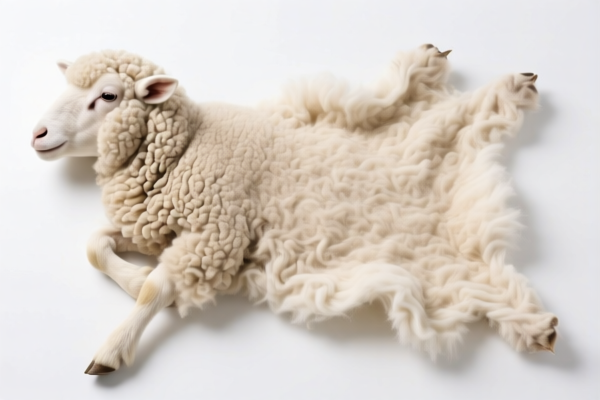
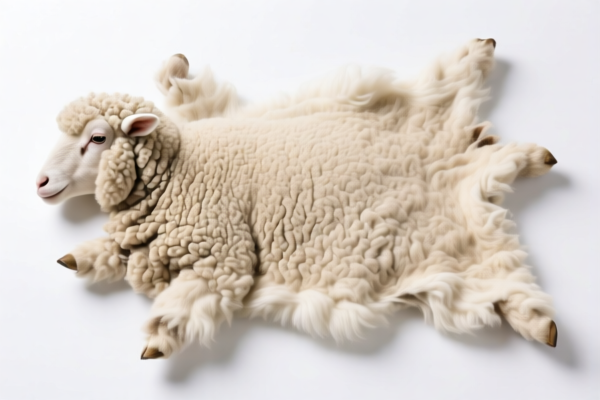
AI Analysis
🐑 Sheepskin (Non-patterned) Home Decor Tanned Leather
🌐 HS Code Reference & Customs Clearance Guide | 2026 Latest Tariff Analysis | Professional Compliance Strategy
📌 I. Product Definition & Classification: What Exactly Is This Product?
Sheepskin (Non-patterned) Tanned Leather for Home Decor refers to processed hides or skins of sheep or lambs, tanned or further prepared, without any specific surface pattern (such as embossing, printing, or graining) or with a natural/plain finish. In international trade, the classification depends heavily on the degree of processing and whether it is classified as "Rawhide/Skin" (Chapter 41) or "Fur/Skin" (Chapter 43).
Key Distinction Points: * Chapter 41 (Leather): Applies if the skin is tanned but not classified as fur/skin (e.g., smooth, plain, or lightly treated leather suitable for upholstery, bags, or general leather goods). * Chapter 43 (Fur/Skin): Applies if the skin retains its wool/hair (even if shorn/curled) and is classified as "fur skins" or "皮毛" (fur skins), even if tanned.
⚠️ Critical Warning:
- If the product is described as "Home Decor Tanned Leather" but the underlying nature is fur/skin with retained hair structure, customs may classify it under Chapter 43.
- If it is a plain tanned hide without significant hair retention or fur characteristics, it falls under Chapter 41.
- Misclassification between Ch. 41 and Ch. 43 can lead to significant duty differences (see below).
📦 II. HS Code Classification Details (2026 Latest Tariff Authority Comparison)
Based on the provided data, there are four distinct HS Codes identified for this product. Note that 4302.19.60.00 appears twice in the source data with identical details.
| HS Code | Product Description | Applicable Scenario | Classification Logic |
|---|---|---|---|
4302.19.60.00 |
Tanned or dressed fur skins (excluding sewn pieces), Sheep, Non-patterned, Home Decor | Classified as Tanned/Dressed Fur Skins. Likely retains wool/hair structure or is treated as fur for home decor use. | ✅ Chapter 43 (Fur) |
4302.19.13.00 |
Tanned or prepared fur skins, Sheep, Non-patterned, Fits Lambskin Category | Classified as Fur Skins, specifically Lambskin. | ✅ Chapter 43 (Fur) |
4105.30.00.00 |
Tanned leather, Sheep or lamb, Non-patterned, Fits no-grain characteristic | Classified as Tanned Leather. Plain/surface treatment without fur classification. | ✅ Chapter 41 (Leather) |
4105.10.90.00 |
Tanned leather, Sheep or lamb, Non-patterned, Fits material & processing state | Classified as Tanned Leather. General plain tanned sheepskin. | ✅ Chapter 41 (Leather) |
🔍 Key Insight:
- The total tax rate varies drastically depending on whether it is classified as Leather (Ch. 41) or Fur (Ch. 43).
- Leather (Ch. 41): Lower base duty (2.0%), 0% Section 301 tariff, but still subject to 122 Clause Tariff.
- Fur (Ch. 43): Higher base duty (2.2%–3.5%), 25% Section 301 tariff, plus 122 Clause Tariff.
💰 III. 2026 Latest Tariff Rate Breakdown (Including Additional Taxes & Policy Surcharges)
✅ Applicable Country: United States (US)
✅ Country of Origin: China (CN)
✅ Effective Date: Current trade policy (including Section 301 and 122 Clauses)
🎯 1. 4302.19.60.00 & 4302.19.13.00 —— Tanned/Dressed Fur Skins (Chapter 43)
A. 4302.19.60.00 (Sheep, Non-patterned, Fur Skin)
| Item | Content |
|---|---|
| Base Duty Rate | 3.5% (ad valorem) |
| Section 301 Additional Duty | +25.0% (USITC Footnote 9903.88.01) |
| 122 Clause Tariff | +10.0% (Specific to certain Chinese imports) |
| Total Tax Rate | 38.5% |
| Tax Calculation | CIF Value × 38.5% |
| De Minimis Exemption | ❌ Not Eligible (High-duty goods often excluded or strictly monitored) |
| Legal Basis Path | HTS:4302.19.60.00 → USITC:301 → 122 Clause |
B. 4302.19.13.00 (Lambskin, Non-patterned, Fur Skin)
| Item | Content |
|---|---|
| Base Duty Rate | 2.2% (ad valorem) |
| Section 301 Additional Duty | +25.0% |
| 122 Clause Tariff | +10.0% |
| Total Tax Rate | 37.2% |
| Tax Calculation | CIF Value × 37.2% |
| De Minimis Exemption | ❌ Not Eligible |
| Legal Basis Path | HTS:4302.19.13.00 → USITC:301 → 122 Clause |
📌 Explanation:
- Both Chapter 43 codes incur the 25% Section 301 tariff because they are considered manufactured/processed fur goods from China.
- The 10% 122 Clause tariff applies to all listed items in the provided data.
- Total cost impact: Expect ~37-38% of CIF value in duties alone.
🎯 2. 4105.30.00.00 & 4105.10.90.00 —— Tanned Leather (Chapter 41)
A. 4105.30.00.00 (Sheepskin, No Grain, Tanned)
| Item | Content |
|---|---|
| Base Duty Rate | 2.0% (ad valorem) |
| Section 301 Additional Duty | 0.0% (Exempt from Section 301 for this subheading) |
| 122 Clause Tariff | +10.0% |
| Total Tax Rate | 12.0% |
| Tax Calculation | CIF Value × 12.0% |
| De Minimis Exemption | ❌ Not Eligible (Due to 122 Clause) |
| Legal Basis Path | HTS:4105.30.00.00 → 122 Clause |
B. 4105.10.90.00 (Sheepskin, Other, Tanned)
| Item | Content |
|---|---|
| Base Duty Rate | 2.0% (ad valorem) |
| Section 301 Additional Duty | 0.0% |
| 122 Clause Tariff | +10.0% |
| Total Tax Rate | 12.0% |
| Tax Calculation | CIF Value × 12.0% |
| De Minimis Exemption | ❌ Not Eligible |
| Legal Basis Path | HTS:4105.10.90.00 → 122 Clause |
📌 Explanation:
- Crucial Advantage: Chapter 41 leather codes (4105.30and4105.10) are exempt from the 25% Section 301 tariff.
- This results in a massive tax saving (12.0% vs. 37-38%).
- However, you must ensure the product qualifies as "Leather" and not "Fur Skin" under US Customs rules.
🛠️ IV. Customs Clearance Practical Advice (Battle-Tested Pitfall Avoidance Guide)
✅ 1. Documentation Checklist (All Required)
| Document | Mandatory? | Explanation |
|---|---|---|
| ✅ Product Specification Sheet | ✔️ | Must clearly state: "Tanned Sheepskin," "No Pattern," "Home Decor Use." |
| ✅ Photos of Sample | ✔️ | Show surface texture. Is it smooth leather or does it have wool/hair? This determines Ch. 41 vs. 43. |
| ✅ Commercial Invoice | ✔️ | Describe as "Tanned Sheep Leather for Home Decor" (if Ch. 41) or "Tanned Fur Skins" (if Ch. 43). |
| ✅ Packing List | ✔️ | Standard format. |
| ✅ Certificate of Origin | ✔️ | To prove Chinese origin (subject to 122 Clause). |
| ✅ Third-Party Test Report | ✔️ | Optional but helpful: Chemical treatment report to confirm tanning process. |
✅ 2. Declaration Strategy (Key Mantra)
🔥 "Surface determines Chapter: Smooth = Ch.41 (12%), Hairy/Wool = Ch.43 (38%)!"
| Situation | Correct Declaration | Wrong Practice |
|---|---|---|
| Plain, smooth tanned hide | 4105.30.00.00 or 4105.10.90.00 |
Misdeclare as Ch. 43 → Overpay ~26% tax! |
| Sheepskin with wool/hair retained | 4302.19.60.00 |
Misdeclare as Ch. 41 → Underpay tax, risk penalty! |
| Home decor upholstery leather | 4105.30.00.00 |
Vague description "Sheepskin" → Customs discretion, likely Ch. 43 |
| Curled wool sheepskin | 4302.19.60.00 |
Call it "Leather" → Rejection & fines |
✅ 3. Special Handling Tips
| Scenario | Recommendation |
|---|---|
| "Home Decor" Use | Emphasize end-use (upholstery, cushioning, wall decor) to support Ch. 41 classification if the surface is truly plain tanned leather. |
| "Non-Patterned" | Ensure no embossing or printing. If any pattern exists, it may shift classification. |
| Lambskin vs. Sheepskin | If thin and soft, argue for 4302.19.13.00 (Lambskin) if Ch. 43, but stronger case for Ch. 41 if no wool. |
| 122 Clause Impact | All items are subject to 10% 122 Clause tariff. This is non-negotiable for Chinese origin. No optimization possible here. |
🌍 V. Global Market Comparison (2026 Update)
| Country/Region | Recommended HS Code | Duty Rate (China Origin) | Notes |
|---|---|---|---|
| 🇺🇸 USA | 4105.30.00.00 |
12.0% | Best Option: Exempt from 301. Avoid Ch. 43 (37-38%). |
| 🇨🇳 China | 4105.30.00.00 |
5-10% | Import duties vary; check latest CHINEX. |
| 🇪🇺 EU | 4105.30.00.00 |
0-3% | No Section 301. Favorable for leather. |
| 🇬🇧 UK | 4105.30.00.00 |
0-6% | Post-Brexit rules; generally lower than US. |
| 🇨🇦 Canada | 4105.30.00.00 |
0% (if CUSMA eligible) | Preferential if Canadian origin, otherwise MFN ~5-10%. |
📌 Conclusion:
- The US market is the most challenging due to Section 301 and 122 Clauses.
- Strategic Move: If possible, classify as Chapter 41 Leather (4105.xx) rather than Chapter 43 Fur (4302.xx) to save ~25-26% in duties.
- Ensure product documentation supports plain tanned leather characteristics.
📌 VI. Common Mistakes & Pitfalls (Blood-Stained Lessons)
❌ Mistake 1: Declaring all sheepskin as "Leather" to avoid Ch. 43 taxes.
👉 Consequence: If wool/hair is present, CBP will reclassify to Ch. 43 → Back taxes + Penalty (~25% more).
❌ Mistake 2: Ignoring the 122 Clause (10%).
👉 Consequence: Underpayment. The 10% applies to ALL listed HS codes in the data. Do not assume exemption.
❌ Mistake 3: Using vague terms like "Sheepskin Material."
👉 Consequence: CBP uses discretion → Likely defaults to Ch. 43 (higher duty) due to ambiguity.
✅ Correct Practice:
"Tanned Sheep Leather, Plain, No Grain, For Home Decor Upholstery, Non-Patterned, Chinese Origin"
→ Supports4105.30.00.00→ 12.0% Total Duty.
🎯 VII. Conclusion: Professional Classification Saves Money!
🎯 Remember the Golden Rule:
🔹 "Leather (Ch. 41) = 12% | Fur (Ch. 43) = 37-38%!"
🔹 "If it’s smooth and tanned, fight for Chapter 41!"
🔹 "If it has wool, accept Chapter 43 and plan for 38% cost!"
📌 Pro Tip:
If your product is genuinely plain tanned leather (no wool retention), provide photos showing the grain side and a manufacturer’s declaration stating "No wool/fur retained" to support 4105.30.00.00. This can save you thousands of dollars on large shipments.
📣 Immediate Action:
📞 Consult with a licensed US customs broker to review product samples.
📄 Request a Binding Ruling from CBP if shipment volume is high.
🚀 Optimize your HS Code to save 25% in duties!
✨ Professional Customs Clearance Starts with Accurate Classification!
💼 Every Percent Saved Is Profit Added!
Customer Reviews
About HS Code Classification
The Harmonized System (HS) is an internationally standardized nomenclature developed by the World Customs Organization (WCO) to classify traded products. Over 200 countries use the HS system as the basis for customs tariffs, trade statistics, and import/export regulations.
Each HS code follows a hierarchical structure:
- Chapter (2 digits) — Broad category of goods (e.g., Chapter 84: Machinery and Mechanical Appliances)
- Heading (4 digits) — More specific grouping within the chapter
- Subheading (6 digits) — Internationally standardized breakdown, used by all WCO member countries
- National subdivisions (8-10 digits) — Country-specific extensions for further classification, such as US HTSUS 10-digit codes
Correct HS code classification is essential for smooth customs clearance, accurate duty payment, and compliance with trade regulations. Misclassification can lead to customs delays, overpayment of duties, or penalties.
When importing from CN to US, the applicable tariff rates may include:
- Most-Favored-Nation (MFN) rate — The standard duty rate applied to WTO members
- General rate — Applied to countries without trade agreements
- Trade remedy duties — Additional tariffs such as Section 301 (anti-dumping), Section 232 (national security), or countervailing duties
The information provided on this page is for reference purposes only. For official classification, please consult with your local customs authority or a licensed customs broker.