Sheepskin Preservation
CN → US| HS Code | Tariff Rate | Origin | Destination | Doc |
|---|---|---|---|---|
| 4103901190 | 17.5% | CN | US | Official Doc |
| 4103301000 | 17.5% | CN | US | Official Doc |
Product Images
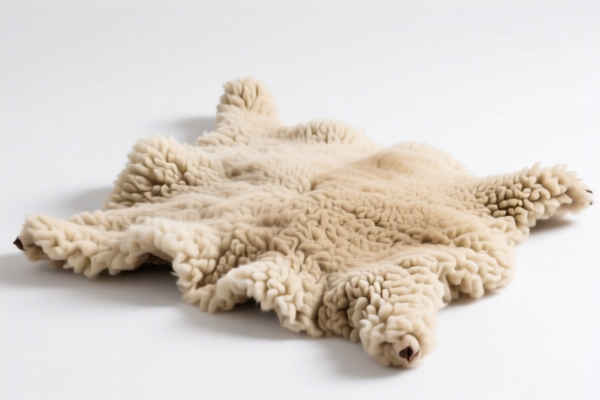
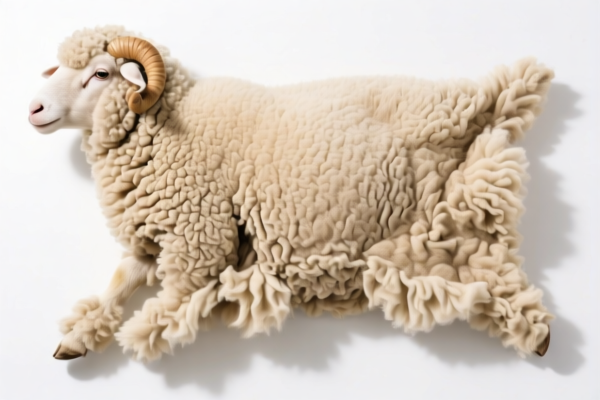
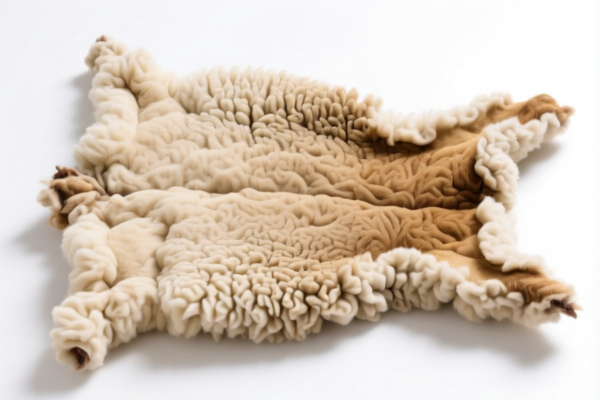
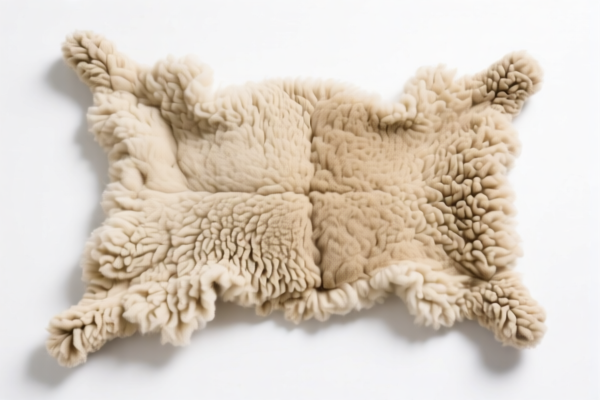
AI Analysis
🐑 Sheepskin Preservation (Raw Hides & Skins)
🌐 HS Code Reference & Customs Clearance Guide | 2026 Latest Tariff Analysis | Professional Clearance Strategy
📌 I. Product Definition & Classification: Do You Really Understand “Sheepskin Preservation”?
In international trade, raw sheepskins are not finished leather goods. They are biological materials that must be preserved (salted, dried, limed, pickled, etc.) to prevent rotting before they can be tanned. The key distinction lies in whether they are pretanned (partially tanned for preservation purposes) or not pretanned.
Key Categories: 1. Not Pretanned (General): Raw skins preserved by salting, drying, liming, etc., but not yet chemically tanned into leather. 2. Of Swine (Pigskins): Often grouped separately due to different processing characteristics, though sometimes confused with other hides.
⚠️ Critical Distinction:
- If the skin is fresh or merely salted/dried → It is Raw Hide/Skin → HS Code 4103
- If the skin has been pretanned (stabilized with tanning agents) → It falls under 4104 (Pretanned Hides) or 4105 (Tanned Sheepskins)
- Note: The data provided focuses on NOT PRETANNED raw sheepskins and pigskins.
📦 II. HS Code Classification Details (2026 Latest Tariff Authority)
Based on the provided data, here are the precise classifications for preserved raw sheepskins and pigskins:
| HS Code | Product Description | Applicable Scenario | Pretanned? |
|---|---|---|---|
4103.90.11.90 |
Other raw hides and skins (fresh, salted, dried, limed, pickled, etc.), Not pretanned. Other (includes Sheep, Cattle, etc., except excluded categories). | Raw sheepskins, goat skins, cattle hides that are salted or dried but NOT chemically tanned. | ❌ No |
4103.30.10.00 |
Other raw hides and skins: Of Swine (Pigskins), Not pretanned. | Raw pigskins that are preserved (salted/dried) but not yet tanned. | ❌ No |
🔍 Key Reminder:
- Sheepskins generally fall under4103.90.11.90unless specifically excluded by Chapter Note 1(b) or 1(c).
- Pigskins are explicitly classified under4103.30.10.00.
- Do not confuse with 4104 (Pretanned) or 4105 (Fully Tanned Leather). These are raw materials, not finished leather goods.
💰 III. 2026 Latest Tariff Rate Details (Including Additional Duties)
✅ Applicable Country: United States (US)
✅ Origin: China (CN)
✅ Effective Date: Current rates as per provided data
🎯 1. 4103.90.11.90 — Raw Sheepskins (Not Pretanned)
| Item | Details |
|---|---|
| Base Duty Rate | 0.0% (ad valorem) |
| Additional Duty (Section 301/Trade War) | +7.5% |
| Total Tariff Rate | 7.5% |
| Calculation | CIF Value × 7.5% |
| De Minimis Eligibility | ❌ Not Applicable (Usually, raw materials are subject to standard entry procedures) |
| Legal Basis | USHTS 2026, Chapter 41 Note 1 exclusions |
📌 Explanation:
- The base duty is 0%, which is favorable for raw materials.
- However, a 7.5% additional duty applies, likely due to reciprocal trade measures or Section 301 tariffs on Chinese-origin raw hides.
- Total cost impact: 7.5% of the CIF value.
🎯 2. 4103.30.10.00 — Raw Pigskins (Not Pretanned)
| Item | Details |
|---|---|
| Base Duty Rate | 0.0% (ad valorem) |
| Additional Duty (Section 301/Trade War) | +7.5% |
| Total Tariff Rate | 7.5% |
| Calculation | CIF Value × 7.5% |
| De Minimis Eligibility | ❌ Not Applicable |
| Legal Basis | USHTS 2026, Chapter 41 Note 1 exclusions |
📌 Note:
- Pigskins are treated similarly to other raw hides in terms of tariff structure.
- Same 7.5% total rate applies.
- Ensure accurate origin declaration: If pigskins are from Vietnam or other FTA partners, different rates may apply.
🛠️ IV. Customs Clearance Practical Advice (Battle-Tested Pitfall Guide)
✅ 1. Required Documentation Checklist (Non-Negotiable)
| Document | Mandatory? | Explanation |
|---|---|---|
| ✅ Commercial Invoice | ✔️ | Must clearly state “Raw Sheepskins, Not Pretanned, Salted/Dried” |
| ✅ Packing List | ✔️ | Detail weight, number of skins, preservation method (salted/dried) |
| ✅ Certificate of Origin | ✔️ | Essential for verifying country of origin (China) |
| ✅ Preservation Method Declaration | ✔️ | Must confirm NOT PRETANNED to avoid misclassification as 4104/4105 |
| ✅ Phytosanitary Certificate | ✔️ | Required for animal products to confirm no diseases |
| ✅ Bill of Lading/Air Waybill | ✔️ | Standard shipping documents |
✅ 2. Declaration Tips (Critical Keywords)
🔥 “Raw, Salted, Not Pretanned – Clear Classification, Smooth Customs!”
| Scenario | Correct Declaration | Wrong Practice |
|---|---|---|
| Sheepskins | 4103.90.11.90 – “Raw Sheepskins, Salted, Not Pretanned” |
Misdeclare as “Leather” → 4105 (Higher duty) |
| Pigskins | 4103.30.10.00 – “Raw Pigskins, Dried, Not Pretanned” |
Misdeclare as “Sheepskins” → Incorrect HS, potential penalty |
| Pretanned Skins | 4104.19.00.00 or 4105.30.00.00 |
Declare as “Raw” → Underpayment of duty |
| Tanned Leather | 4104.19.00.00 or 4105.30.00.00 |
Declare as “Raw” → Misclassification, audit risk |
✅ 3. Special Cases & Handling
| Scenario | Handling Advice |
|---|---|
| Mixed Lots (Sheep + Pig) | Declare separately. Sheepskins under 4103.90.11.90, Pigskins under 4103.30.10.00. Do not combine! |
| Wet Blue Skins (Pretanned) | These are NOT covered under 4103. They are 4104 or 4105. Check with your customs broker. |
| Foul or Rotting Skins | May be rejected or require additional veterinary certification. Ensure proper preservation. |
| High Value / Large Volume | Consider applying for Advance Ruling to confirm HS code classification with CBP. |
🌍 V. Global Market Comparison (2026 Latest)
| Country/Region | Recommended HS Code | Tariff (China Origin) | Certification Required | Notes |
|---|---|---|---|---|
| 🇺🇸 USA | 4103.90.11.90 / 4103.30.10.00 |
7.5% | Phytosanitary Certificate | Base 0% + 7.5% additional |
| 🇨🇳 China | 4103.90.11 / 4103.30.10 | 5-8% (Varies) | None | Domestic trade may have different rates |
| 🇪🇺 EU | 4103.90 / 4103.30 | 0-2% | REACH, Traceability | Check EU TARIC for exact rates |
| 🇬🇧 UK | 4103.90 / 4103.30 | 0-2% | Post-Brexit Rules | Similar to EU but separate system |
| 🇦🇺 Australia | 4103.90 / 4103.30 | 5% | Biosecurity Permit | Strict biosecurity rules |
📌 Conclusion:
- USA has a clear 7.5% duty for these raw hides.
- EU and UK generally have lower base duties but may have additional regulatory requirements.
- Always verify with local customs if the skins are pretanned (4104/4105), as tariffs differ.
📌 VI. Common Mistakes & Pitfalls (Lessons Learned)
❌ Mistake 1: Declaring Pretanned Skins as Raw Skins
👉 Consequence: Underpayment of Duty → CBP Audit, Penalties, Back Taxes.
❌ Mistake 2: Confusing Sheepskins with Pigskins
👉 Consequence: Wrong HS Code → 4103.90.11.90 vs 4103.30.10.00. Even if same rate, incorrect data leads to clearance delays.
❌ Mistake 3: Failing to Declare Preservation Method
👉 Consequence: Customs cannot verify if skins are raw or pretanned → Delayed release, additional inspections.
❌ Mistake 4: Ignoring Phytosanitary Requirements
👉 Consequence: Rejection at Border → Skins deemed unsafe → Return or Destruction.
✅ Correct Approach:
“Raw Sheepskins, Salted, Not Pretanned, 500 Pieces, Gross Weight 1000kg, Origin: China, Phytosanitary Certificate Attached”
🎯 VII. Conclusion: Precise Classification, Cost Control, Compliance
🎯 Remember This Mantra:
🔹 “Raw ≠ Tanned. Salted/Dried = 4103. Pretanned = 4104/4105.”
🔹 “Sheep = 4103.90. Pig = 4103.30. Don’t Mix Them!”
🔹 “7.5% Duty in US. Phytosanitary Cert is a Must!”
📌 Pro Tip:
If your raw hides are from Vietnam, Thailand, or other ASEAN countries, check for ASEAN-China FTA or RCEP benefits. Some raw hides may enjoy 0% additional duty.
Always apply for CBP Advance Ruling if you are unsure about the pretanning status.
📣 Immediate Action:
📞 Contact Your Customs Broker + Provide Photos + Get HS Code Pre-Ruling
🚀 Ensure Your Raw Hides Clear Customs Smoothly, Avoid Delays, and Control Costs!
✨ Professional Customs Clearance Starts with Accurate Classification!
💼 Every Percent of Duty Matters in the Raw Material Trade!
Customer Reviews
About HS Code Classification
The Harmonized System (HS) is an internationally standardized nomenclature developed by the World Customs Organization (WCO) to classify traded products. Over 200 countries use the HS system as the basis for customs tariffs, trade statistics, and import/export regulations.
Each HS code follows a hierarchical structure:
- Chapter (2 digits) — Broad category of goods (e.g., Chapter 84: Machinery and Mechanical Appliances)
- Heading (4 digits) — More specific grouping within the chapter
- Subheading (6 digits) — Internationally standardized breakdown, used by all WCO member countries
- National subdivisions (8-10 digits) — Country-specific extensions for further classification, such as US HTSUS 10-digit codes
Correct HS code classification is essential for smooth customs clearance, accurate duty payment, and compliance with trade regulations. Misclassification can lead to customs delays, overpayment of duties, or penalties.
When importing from CN to US, the applicable tariff rates may include:
- Most-Favored-Nation (MFN) rate — The standard duty rate applied to WTO members
- General rate — Applied to countries without trade agreements
- Trade remedy duties — Additional tariffs such as Section 301 (anti-dumping), Section 232 (national security), or countervailing duties
The information provided on this page is for reference purposes only. For official classification, please consult with your local customs authority or a licensed customs broker.