Sheepskin for Clothing Cuffs/Collars
CN → USProduct Images
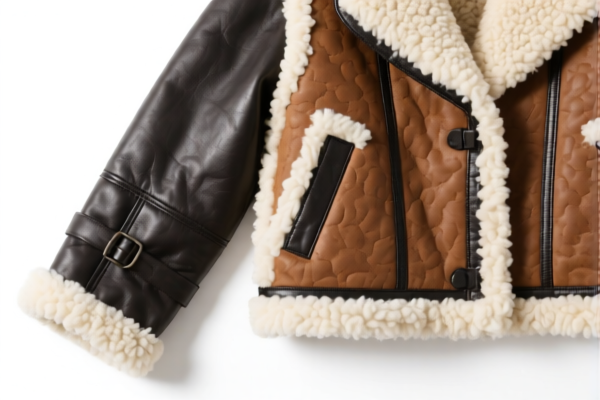
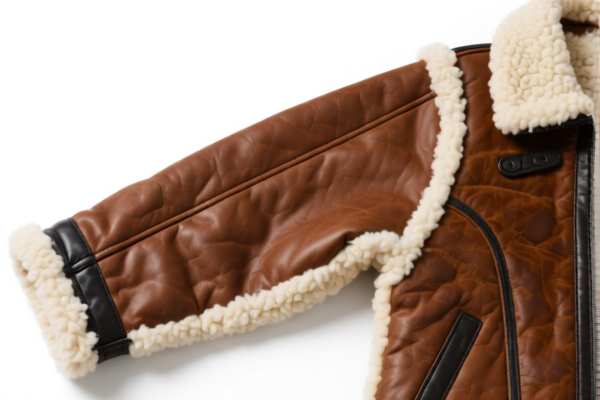
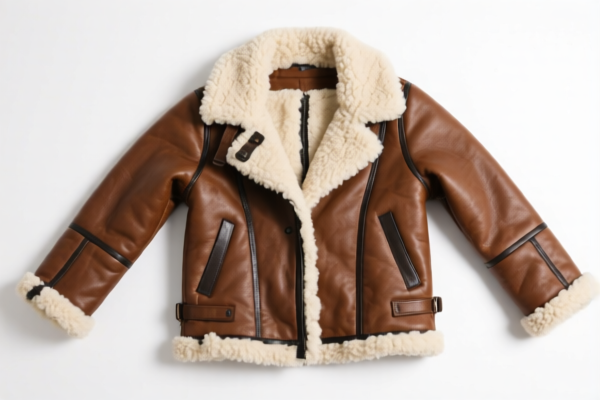
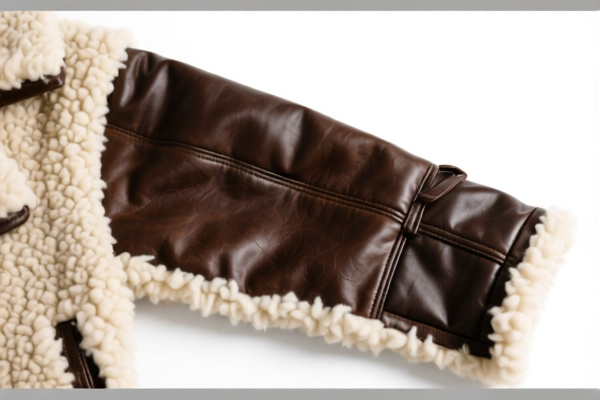
AI Analysis
🧥 Sheepskin for Clothing Cuffs/Collars (Fur Linings/Trims)
🌐 HS Code Reference & Customs Clearance Guide | 2026 Latest Tariff Analysis | Professional Level Clearance Strategy
📌 I. Product Definition and Classification: Do You Really Understand "Sheepskin Cuffs/Collars"?
Sheepskin used for clothing cuffs, collars, hoods, and pelisses is a specialized fur product. In international trade, it is primarily classified under Chapter 43 (Furskins and Artificial Fur). However, the specific HS Code depends heavily on the state of processing (raw, tanned, or simply dressed) and whether it is fitted for use or just cut panels.
Key Distinction: * Tanned/Dressed Fur (Ready for Use): If the sheepskin is tanned and dressed, ready to be sewn into garments, it generally falls under 4302. * Raw/Simple Dressed (Not Tanned): If it is merely scraped or salted but not chemically tanned, it may fall under Chapter 41 (Raw Hides/Skins). Note: Most commercial "sheepskin for cuffs" is tanned.
⚠️ Critical Classification Point:
- If it is tanned and dressed (with or without hair on) → HS Code 4302.
- If it is raw (salted, limed, or simply scraped) → HS Code 4103.
- Most common scenario: Tanned sheepskin for apparel → 4302.50 (Tanned fur skins with hair on).
📦 II. HS Code Classification Details (2026 Latest Tariff Authority Comparison)
| HS Code | Product Description | Applicable Scenario | Processing State |
|---|---|---|---|
4302.50.00.00 |
Tanned fur skins, with hair on, not further worked (e.g., cut pieces for cuffs/collars) | Tanned sheepskin, ready for garment manufacturing | ✅ Tanned & Dressed |
4302.30.10.00 |
Tanned fur skins, whole, with head, legs, tail (not typical for cuffs) | Whole pelts for coats | ✅ Whole Pelt |
4103.30.00.00 |
Skins of sheep or lambs, other than those of heading 4102 or 4104 (Raw/Simple Dressed) | Raw sheepskin, salted, not tanned | ❌ Not Tanned |
4102.21.00.00 |
Skins of sheep or lambs, with wool on, skunked or scoured | Raw sheepskin with wool, cleaned but not tanned | ❌ Not Tanned |
6117.10.00.00 |
Shawls, scarves, mufflers, mantillas, veils, and the like (if pre-made as accessories) | Pre-sewn collars/cuffs (finished goods) | ✅ Finished Accessory |
🔍 Key Reminder:
- Do not confuse with Chapter 61: If the item is a finished collar or cuff already sewn, it may be classified as a ready-made accessory under 6117 or 6116. However, if sold as fur pieces/panels for further manufacturing, it is 4302.
- Tanning is Key: The presence of hair and tanning process dictates Chapter 41 vs. Chapter 43.
- "Not Further Worked": Even if cut into rectangular strips for cuffs, if not sewn, it remains 4302.50.
💰 III. 2026 Latest Tariff Rate Details (Including Surcharges & Policy Add-ons)
✅ Applicable Country: United States (US)
✅ Origin: China (CN)
✅ Effective Date: November 10, 2025 (and subsequent imports)
🎯 1. 4302.50.00.00 —— Tanned Fur Skins (Sheepskin, with hair on, not further worked)
| Item | Content |
|---|---|
| Base Rate | 0% (ad valorem) |
| USITC Surcharge | +25% (from USITC Footnote 9903.88.01) |
| IEEPA Surcharge | +10% (for China/HK products, effective Nov 10, 2025) |
| Total Rate | 45% |
| Tax Calculation | CIF Value × 45% |
| De Minimis Eligibility | ❌ Denied (deny_de_minimis) |
| Legal Path | IEEPA:9903.01.25 → IEEPA:9903.01.24 → USITC:4302.50.00.00 → FOOTNOTE:9903.88.01 |
📌 Explanation:
- USITC 25%: Additional tariff under Section 301 of the Trade Act.
- IEEPA 10%: Additional tariff under the International Emergency Economic Powers Act targeting China.
- Total 45%: Extremely high tariff. Must be factored into cost calculations.
🎯 2. 6117.10.00.00 —— Finished Shawls/Scarves/Cuffs (If pre-assembled)
| Item | Content |
|---|---|
| Base Rate | 16% (General) |
| USITC Surcharge | +25% |
| IEEPA Surcharge | +10% |
| Total Rate | 51% |
| Tax Calculation | CIF Value × 51% |
| De Minimis Eligibility | ❌ Denied |
📌 Note:
- If customs classifies the item as a "finished accessory" rather than "raw fur material," the base rate is higher (16% vs 0%), leading to an even higher total tax burden.
- Recommendation: If these are cut fur pieces, insist on classification as 4302.50 (0% base) to save on the base tariff, though the 35% surcharge remains.
🛠️ IV. Customs Clearance Practical Advice (Practical Pitfall Avoidance Guide)
✅ 1. Required Documentation Checklist (None Can Be Omitted)
| Document | Must Provide | Description |
|---|---|---|
| ✅ Product Specification Sheet | ✔️ | Material: 100% Sheepskin. State: Tanned. With/Without Hair. Dimensions/Weight. |
| ✅ Process Description | ✔️ | Clearly state "Tanned and Dressed" vs "Raw." Include tanning method (e.g., vegetable, chrome) if possible. |
| ✅ Product Photos | ✔️ | Clear images showing hair side, skin side, and any tags/labels. |
| ✅ Commercial Invoice | ✔️ | Description: "Tanned Sheepskin Skins, Cut to Size, For Garment Cuffs/Collars." |
| ✅ Packing List | ✔️ | Detail gross/net weight. Avoid vague terms like "Fur Parts." |
| ✅ Non-Commercial Invoice (NCUI) | ✔️ | If applicable for sample shipments. |
✅ 2. Declaration Tips (Key Mantra)
🔥 "Tanned is Chapter 43, Raw is 41, Finished is 6117, Declare Accurately!"
| Scenario | Correct Declaration | Wrong Practice |
|---|---|---|
| Cut pieces of tanned sheepskin | 4302.50.00.00 |
Misclassified as "Clothing" → Higher Tax |
| Raw, salted sheepskin | 4103.30.00.00 |
Misclassified as "Tanned" → Penalty |
| Pre-sewn collar | 6117.10.00.00 |
Misclassified as "Raw Fur" → Penalty |
| Mixed materials (Sheepskin + Fabric) | 6117 or 4302 (depending on essential character) |
Vague description → Audit Risk |
✅ 3. Special Case Handling
| Scenario | Handling Advice |
|---|---|
| Sheepskin with Lamb Wool On | Specify "With Hair On" to distinguish from shearling (which may have different codes). |
| Small Cut-offs/Scraps | If value is low, ensure weight is accurate. De Minimis does not apply to China-origin fur. |
| CITES/Endangered Species | Ordinary sheepskin (Ovis aries) is not CITES-controlled. No CITES permit needed. Verify species if exotic sheep. |
| Chemical Compliance | Provide REACH/RoHS compliance for tanning agents if required by buyer, though US customs focuses on tariff/origin. |
🌍 V. Global Main Market Clearance Comparison (2026 Latest)
| Country/Region | Recommended HS Code | Tariff | Certification Requirements | Notes |
|---|---|---|---|---|
| 🇺🇸 USA | 4302.50.00.00 |
45% (Total) | No specific cert. for raw fur | High tariff due to Section 301 & IEEPA |
| 🇨🇳 China | 4302.50.00.00 |
2.5% - 10% | N/A | Lower tariff for importing raw fur materials |
| 🇪🇺 EU | 4302.50 |
0% - 5% | No specific cert. for raw fur | No additional surcharges for China-origin in most cases |
| 🇦🇺 Australia | 4302.50 |
5% | N/A | Moderate tariff |
| 🇯🇵 Japan | 4302.50 |
0% - 5% | N/A | Favorable tariff |
📌 Conclusion:
- USA is the most expensive market for sheepskin due to 35% in surcharges on top of base rate.
- EU and Japan are more favorable for Chinese-origin fur products.
- Cost Advantage: Consider sourcing sheepskin from non-Chinese origins (e.g., Australia, NZ, Italy) for US shipments to avoid IEEPA tariffs (if eligible), though base rates may vary.
📌 VI. Common Errors & Pitfall Avoidance (Blood-Tear Lessons)
❌ Error 1: Declaring "Sheepskin Cuffs" as "Clothing Accessories" (6117) when they are just cut fur pieces.
👉 Consequence: Base rate jumps from 0% to 16%, increasing tax by significant margin.
❌ Error 2: Misclassifying raw sheepskin as "Tanned."
👉 Consequence: Wrong Chapter (41 vs 43). Customs may assess different duty rates and require additional documentation.
❌ Error 3: Omitting "With Hair On" in description.
👉 Consequence: Customs may classify as "Shearling" or "Processed Leather" (4104 or 4303), leading to misclassification penalties.
❌ Error 4: Ignoring IEEPA & Section 301 applicability.
👉 Consequence: Underpayment of 35% in tariffs. US Customs will demand back payment + interest.
✅ Correct Practice:
"Tanned Sheepskin Skins, With Hair On, Cut to Size, For Garment Manufacturing, HS 4302.50.00.00, Origin: China"
🎯 VII. Conclusion: Professional Declaration, Save Time, Reduce Costs!
🎯 Remember the Mantra:
🔹 "Tanned is 4302, Base 0%, But 35% Surcharge Hits Hard!"
🔹 "Raw is 4103, Check Tanning Process!"
🔹 "Finished Collars are 6117, Base 16%, Even Higher Tax!"
📌 Tips:
- If your sheepskin is originally from Australia, New Zealand, or Italy, you may avoid IEEPA tariffs for US imports, reducing total tax to just the USITC 25% (if applicable) or base rate + 25%.
- Pre-clearance Ruling: Consider applying for an Advance Ruling (USCBP Form 5565) to confirm classification of cut fur pieces vs. finished accessories.
📣 Immediate Action:
📞 Contact professional customs broker + Provide detailed photos + Confirm tanning status
🚀 Ensure your sheepskin products clear customs smoothly, avoid unexpected 45% tax shocks!
✨ Professional clearance starts with accurate classification!
💼 Every dollar saved in tariff is pure profit!
Customer Reviews
About HS Code Classification
The Harmonized System (HS) is an internationally standardized nomenclature developed by the World Customs Organization (WCO) to classify traded products. Over 200 countries use the HS system as the basis for customs tariffs, trade statistics, and import/export regulations.
Each HS code follows a hierarchical structure:
- Chapter (2 digits) — Broad category of goods (e.g., Chapter 84: Machinery and Mechanical Appliances)
- Heading (4 digits) — More specific grouping within the chapter
- Subheading (6 digits) — Internationally standardized breakdown, used by all WCO member countries
- National subdivisions (8-10 digits) — Country-specific extensions for further classification, such as US HTSUS 10-digit codes
Correct HS code classification is essential for smooth customs clearance, accurate duty payment, and compliance with trade regulations. Misclassification can lead to customs delays, overpayment of duties, or penalties.
When importing from CN to US, the applicable tariff rates may include:
- Most-Favored-Nation (MFN) rate — The standard duty rate applied to WTO members
- General rate — Applied to countries without trade agreements
- Trade remedy duties — Additional tariffs such as Section 301 (anti-dumping), Section 232 (national security), or countervailing duties
The information provided on this page is for reference purposes only. For official classification, please consult with your local customs authority or a licensed customs broker.