Sheepskin or Lambskin for Book Covers
CN → US| HS Code | Tariff Rate | Origin | Destination | Doc |
|---|---|---|---|---|
| 4105109000 | 12.0% | CN | US | Official Doc |
| 4114207000 | 36.6% | CN | US | Official Doc |
| 4114100000 | 38.2% | CN | US | Official Doc |
| 4105300000 | 12.0% | CN | US | Official Doc |
Product Images
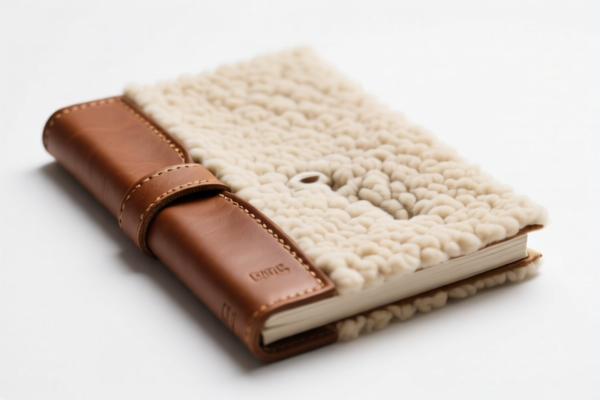
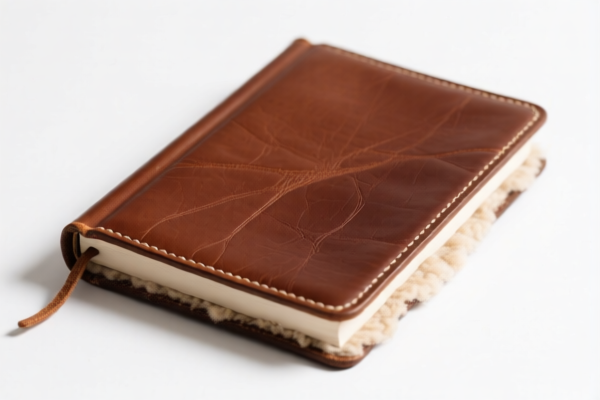
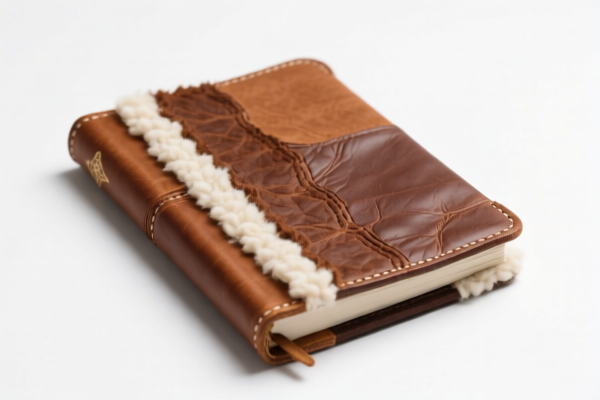
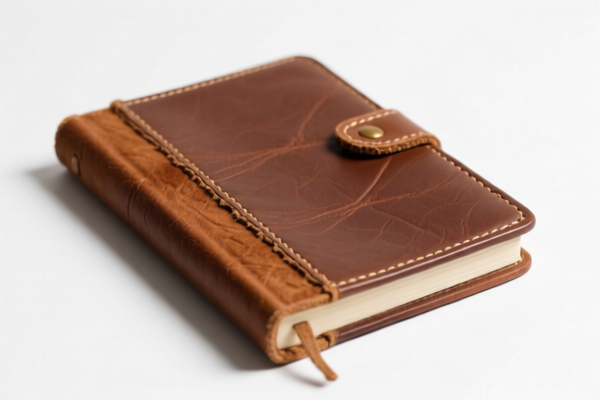
AI Analysis
📚 Sheepskin / Lambskin for Book Covers: HS Code Classification & Tariff Guide (USA Import)
🌐 HS Code Reference & Customs Clearance Guide | 2026 Latest Tariff Analysis | Professional Customs Strategy
📌 I. Product Definition & Classification: What Exactly Is "Lambskin for Book Covers"?
Leather intended for bookbinding is a specialized industrial material. In international trade, it is categorized not by its end-use (book covers), but by its material composition (leather) and processing state (tanned vs. further manufactured).
Key Distinction: * Raw/Tanned Leather Hides: Skins that have been tanned but not yet cut or stitched into final covers. These fall under Chapter 41. * Manufactured Articles: If the leather is already cut, stitched, or printed with specific book cover shapes, it may fall under Chapter 42 (Articles of leather).
⚠️ Critical Classification Point: - If the material is unfinished tanned leather (crust) or tanned skin (sheep/lamb), it is classified under Chapter 41. - The fact that it is intended for book covers does not change its fundamental classification as "Leather." - Wool Status: "Sheepskin" often implies the presence of wool. If the wool is removed (hair removed), it is classified as leather. If the wool is present, it is classified as "Sheepskin, dressed with wool on" (Chapter 43), which has different tariffs. The provided data assumes wool is removed/hair is treated, focusing on the leather aspect.
📦 II. HS Code Classification Details (2026 Latest Tariff Authority Cross-Reference)
Based on the provided data, here are the matched HS Codes for Sheepskin/Lambskin (tanned, hair removed, suitable for bookbinding):
| HS Code | Product Description | Match Logic | Total Tax Rate |
|---|---|---|---|
| 4105.10.90.00 | Other tanned leather of sheep or lamb (other than dressed lamb皮毛) | ✅ High Match: Matches material (Lambskin) and form (Tanned). Although "book cover" is mentioned, the essence is unprocessed tanned leather without wool. | 12.0% |
| 4114.20.70.00 | Other leather further worked than crust leather, of sheep or lamb (Painted/Lacquered) | ⚠️ Match: Matches material (Lambskin) and form (Tanned). Classifies as "Painted/Lacquered Leather" (漆层皮革). | 36.6% |
| 4114.10.00.00 | Chromium tanned leather of sheep or lamb (Chromed) | ⚠️ Match: Matches material (Leather) and form (Crust/Tanned). Logic aligns with "suede-like" or specific chromed tanned leathers. | 38.2% |
| 4105.30.00.00 | Other tanned leather of sheep or lamb, non-patina | ✅ High Match: Matches "Lambskin" (Sheep/Lamb), "Tanned Leather" (Crust), and "No Pattern/Non-patina". Logic aligns with "non-patterned, unprocessed leather." | 12.0% |
🔍 Key Insight: - 4105.10.90.00 and 4105.30.00.00 are the most likely candidates for standard tanned lambskin used in bookbinding, as they reflect the basic state of the leather before further manufacturing. - 4114.20.70.00 and 4114.10.00.00 apply if the leather has undergone additional processing (e.g., painting, lacquering, or specific chromium tanning) beyond basic tanning.
💰 III. 2026 Latest Tariff Rate Breakdown (Including Surcharges & Policy Add-ons)
✅ Applicable Country: United States (US)
✅ Origin: China (CN)
✅ Effective Date: From November 10, 2025 (and subsequent imports)
🎯 1. 4105.10.90.00 & 4105.30.00.00 — Tanned Sheep/Lamb Leather
| Item | Content |
|---|---|
| Base Tariff | 2.0% (ad valorem) |
| USITC Surcharge (Section 301) | +0.0% |
| IEEPA Surcharge (Section 122) | +10.0% (Applied to Chinese goods) |
| Total Tariff Rate | 12.0% |
| Tax Calculation | CIF Value × 12.0% |
| De Minimis Exemption Eligible? | ❌ No (Cannot use de minimis for leather goods under these codes due to high tax burden) |
| Legal Basis Path | IEEPA:9903.01.25 → USITC:4105.10.90.00 / 4105.30.00.00 |
📌 Explanation: - The base tariff for tanned sheep/lamb leather is relatively low at 2%. - The 10% IEEPA surcharge (often referred to as "Section 122" in some contexts, though technically IEEPA authority) is the dominant cost driver. - No additional Section 301 (25%) surcharge applies to these specific HS codes in the provided data, making them more cost-effective than further-processed leathers.
🎯 2. 4114.20.70.00 — Painted/Lacquered Leather
| Item | Content |
|---|---|
| Base Tariff | 1.6% |
| USITC Surcharge (Section 301) | +25.0% |
| IEEPA Surcharge (Section 122) | +10.0% |
| Total Tariff Rate | 36.6% |
| Tax Calculation | CIF Value × 36.6% |
| De Minimis Exemption Eligible? | ❌ No |
| Legal Basis Path | IEEPA:9903.01.24 → USITC:4114.20.70.00 |
📌 Explanation: - If the leather is painted or lacquered (e.g., glossy finish for premium book covers), it moves to Chapter 4114. - This triggers the 25% Section 301 surcharge in addition to the 10% IEEPA surcharge. - Total tax jumps to 36.6%, significantly increasing import costs.
🎯 3. 4114.10.00.00 — Chromium Tanned Leather
| Item | Content |
|---|---|
| Base Tariff | 3.2% |
| USITC Surcharge (Section 301) | +25.0% |
| IEEPA Surcharge (Section 122) | +10.0% |
| Total Tariff Rate | 38.2% |
| Tax Calculation | CIF Value × 38.2% |
| De Minimis Exemption Eligible? | ❌ No |
| Legal Basis Path | IEEPA:9903.01.24 → USITC:4114.10.00.00 |
📌 Explanation: - Chromium tanned leathers (often used for durability and colorfastness) face the highest tariff burden at 38.2%. - This includes both the 25% Section 301 surcharge and the 10% IEEPA surcharge.
🛠️ IV. Customs Clearance Practical Advice (Best Practices & Pitfall Avoidance)
✅ 1. Essential Documentation Checklist (Non-Negotiable)
| Document | Mandatory? | Description |
|---|---|---|
| ✅ Product Specification Sheet | ✔️ | Must specify: Material (Sheep/Lamb), Tanning Method (Vegetable/Chrome), Finish (Matte/Glossy), Thickness, and intended use ("for bookbinding"). |
| ✅ Commercial Invoice | ✔️ | Clearly state "Tanned Sheepskin/Lambskin, Hair Removed, for Book Covers." Avoid vague terms like "Fashion Material." |
| ✅ Packing List | ✔️ | Detail net/gross weight and number of hides/sheets. |
| ✅ Certificate of Origin | ✔️ | Crucial for determining origin (China vs. other) to apply correct IEEPA/Section 301 rates. |
| ✅ Lab Test Report | ✔️ | If claiming "hair removed," a test report confirming no wool presence may be required to avoid classification under Chapter 43 (Sheepskin with wool). |
✅ 2. Declaration Tips (Key Mnemonics)
🔥 "Tanned is Key, Finish Defines Tax, Origin Determines Surcharge!"
| Scenario | Correct Declaration | Incorrect Practice |
|---|---|---|
| Basic Tanned Lambskin | 4105.10.90.00 or 4105.30.00.00 |
Declaring as "Textile Material" → Severe Penalty |
| Painted/Lacquered Lambskin | 4114.20.70.00 |
Declaring as "Basic Tanned Leather" → Underpayment Risk |
| Sheepskin WITH Wool | Chapter 43 (Not in current data) | Declaring as "Leather" → Misclassification |
| Book Covers Already Sewn | Chapter 42 (e.g., 4202.12) |
Declaring as "Leather Hides" → Wrong Chapter |
✅ 3. Special Considerations
| Situation | Handling Advice |
|---|---|
| OEM Custom Leather | Provide client orders and design specs. If the leather is custom-colored or coated for the client, ensure the "finish" is accurately described to avoid misclassification under 4114. |
| Mixed Shipments | If a shipment contains both basic tanned leather (4105) and painted leather (4114), must separate declarations. Mixing them can lead to higher duty rates for the entire shipment or audits. |
| Leather with Wool On | If the sheepskin retains its wool (e.g., shearling style), it cannot be classified under 4105. It falls under Chapter 43 (Furskins). This data does not apply to wool-on sheepskin. |
| Pre-Cut Book Cover Shapes | If the leather is already cut into specific book cover shapes, it may be considered an "Article of Leather" (Chapter 42), not raw leather. Check if 4202 codes apply. |
🌍 V. Global Market Comparison (2026 Latest)
| Country/Region | Recommended HS Code | Tariff (China Origin) | Certification Required | Notes |
|---|---|---|---|---|
| 🇺🇸 USA | 4105.10.90.00 |
12.0% | No specific cert | Highest risk: Section 301 may apply if misclassified. IEEPA 10% is mandatory. |
| 🇨🇳 China | 4105.10.90.00 |
~5-10% | N/A | Lower tariffs, no IEEPA surcharge. |
| 🇪🇺 EU | 4105.10.00 |
0-6% | N/A | No Section 301/IEEPA. Generally lower cost. |
| 🇬🇧 UK | 4105.10.00 |
0-6% | N/A | Post-Brexit tariff schedule similar to EU. |
| 🇯🇵 Japan | 4105.10.00 |
0-3% | JIS (if applicable) | Very low tariffs for leather. |
📌 Conclusion: - USA imports face a 12% minimum tariff for basic tanned lambskin, but jump to 36-38% if the leather is further processed (painted/chrome). - Accurate classification of "processing level" is critical to avoid unexpected tax hikes. - No de minimis exemption applies; all shipments are subject to full duty calculation.
📌 VI. Common Mistakes & Pitfall Avoidance (Lessons Learned)
❌ Mistake 1: Classifying "Painted Lambskin" as "Basic Tanned Leather" 👉 Consequence: Underpayment of 24%+ in taxes + penalties.
❌ Mistake 2: Using "Leather" as a generic description without specifying "Sheep/Lamb" 👉 Consequence: Customs may reclassify to a different species code with higher tariffs or delay shipment for clarification.
❌ Mistake 3: Ignoring the "Wool Status" 👉 Consequence: If wool is present, classification shifts to Chapter 43, leading to wrong duty rates and potential smuggling accusations if not declared.
❌ Mistake 4: Assuming "Book Covers" changes the HS Code 👉 Consequence: If the leather is not yet manufactured into covers, it is still raw material (Chapter 41). Only finished covers go to Chapter 42.
✅ Correct Practice:
"Tanned Lambskin, Hair Removed, Matte Finish, for Bookbinding Industry, Not Further Manufactured, Model XYZ"
🎯 VII. Conclusion: Precision Classification, Cost Control, Smooth Clearance!
🎯 Remember Mnemonics:
🔹 "Tanned is 12%, Painted is 36%, Chrome is 38%, Wool-On is Not in This List!" 🔹 "Finish Determines Tax, Origin Determines Surcharge, Use Determines Nothing (until manufactured)!"
📌 Pro Tip:
If your lambskin is originally from Italy, France, or Spain, you may avoid the 10% IEEPA surcharge, reducing the total tax to just the base rate (e.g., 2.0% for
4105).Recommendation: Always apply for an Advance Ruling from US Customs if you are unsure about the "finishing" level of your leather. A single misclassification can cost you 20%+ in additional duties.
📣 Immediate Action:
📞 Contact a licensed customs broker + Provide product photos + Request HS Code Advance Ruling 🚀 Ensure your lambskin book cover materials clear customs efficiently, minimize taxes, and maximize profit!
✨ Professional Customs Clearance Starts with Accurate Classification! 💼 Every cent of your cost deserves precise calculation!
Customer Reviews
About HS Code Classification
The Harmonized System (HS) is an internationally standardized nomenclature developed by the World Customs Organization (WCO) to classify traded products. Over 200 countries use the HS system as the basis for customs tariffs, trade statistics, and import/export regulations.
Each HS code follows a hierarchical structure:
- Chapter (2 digits) — Broad category of goods (e.g., Chapter 84: Machinery and Mechanical Appliances)
- Heading (4 digits) — More specific grouping within the chapter
- Subheading (6 digits) — Internationally standardized breakdown, used by all WCO member countries
- National subdivisions (8-10 digits) — Country-specific extensions for further classification, such as US HTSUS 10-digit codes
Correct HS code classification is essential for smooth customs clearance, accurate duty payment, and compliance with trade regulations. Misclassification can lead to customs delays, overpayment of duties, or penalties.
When importing from CN to US, the applicable tariff rates may include:
- Most-Favored-Nation (MFN) rate — The standard duty rate applied to WTO members
- General rate — Applied to countries without trade agreements
- Trade remedy duties — Additional tariffs such as Section 301 (anti-dumping), Section 232 (national security), or countervailing duties
The information provided on this page is for reference purposes only. For official classification, please consult with your local customs authority or a licensed customs broker.