Shell Resin Granules for Casting
CN → US| HS Code | Tariff Rate | Origin | Destination | Doc |
|---|---|---|---|---|
| 3824100000 | 41.0% | CN | US | Official Doc |
| 3824999310 | 40.0% | CN | US | Official Doc |
| 390760 | 0.0% | CN | US | Official Doc |
| 391590 | 0.0% | CN | US | Official Doc |
Product Images
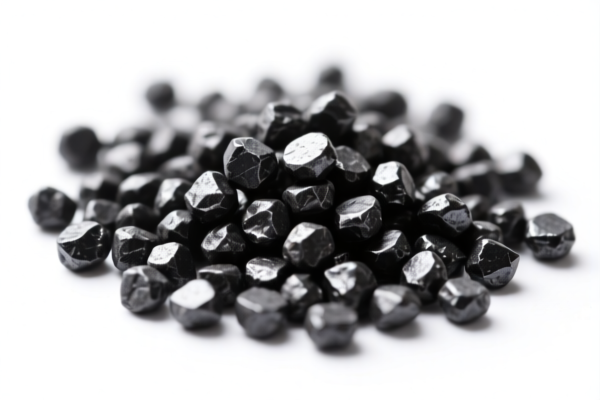
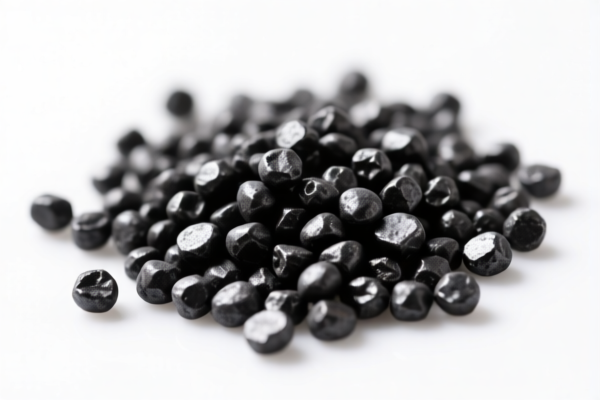
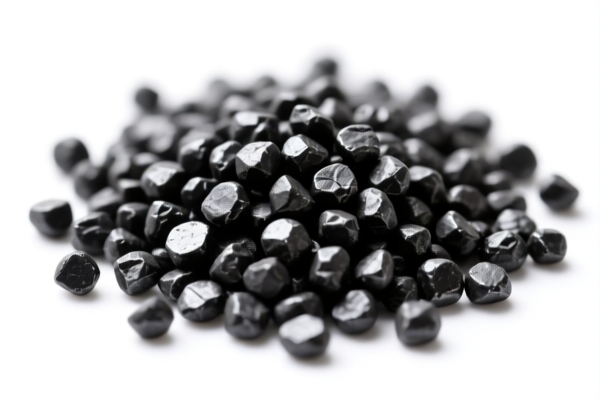
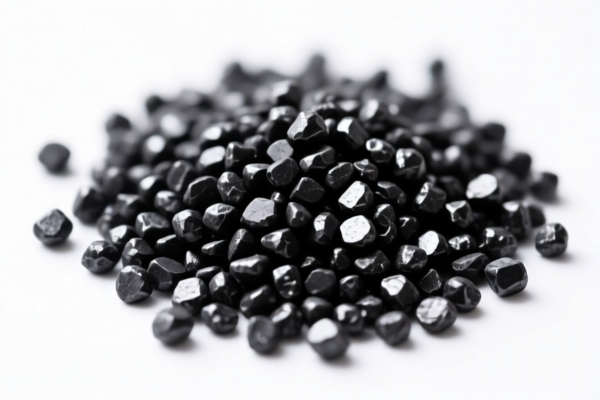
AI Analysis
🏭 Shell Resin Granules for Casting (Foundry Binders)
🌐 HS Code Reference & Customs Clearance Guide | 2026 Latest Tariff Analysis | Professional Classification Strategy
📌 I. Product Definition & Classification: What Exactly Are "Shell Resin Granules"?
Shell Resin Granules are synthetic polymer particles specifically designed for foundry mold making, particularly in the shell molding process. In this process, these granules are mixed with sand and heated to form rigid, precise metal molds or cores for casting.
In international trade, confusion often arises between three categories: 1. Plastic Granules (Raw Materials): Unprocessed polymers (Chapter 39). 2. Plastic Waste/Scrap: Recyclable plastic debris (Chapter 39). 3. Prepared Chemical Binders: Mixtures specifically formulated for industrial binding purposes (Chapter 38).
⚠️ Key Distinction Point:
- If the product is merely raw synthetic polymer granules without specific chemical preparation for binding → It falls under Chapter 39.
- If the product is a prepared mixture (resin + additives) specifically intended as a binder for foundry molds → It falls under Chapter 38.
- Customs Focus: The intent and composition. Are they just "plastic pellets" or are they "prepared binders"?
📦 II. HS Code Classification Details (2026 Latest Tariff Authority对照)
Based on the provided data, here is the breakdown of potential HS codes and why they are applied:
| HS Code | Product Description | Applicable Scenario | Tax Status (China Origin) |
|---|---|---|---|
| 3907.60 | Synthetic polymer granules, not elsewhere specified; including shell resin granules for casting | Raw synthetic resin granules intended for casting processes | ❌ Error: Tax info unavailable |
| 3915.90 | Articles of plastics, waste, parings & scrap, incl. powder; includes resin granules for industrial casting | Plastic waste/recyclable granules from industrial casting applications | ❌ Error: Tax info unavailable |
| 3824.10.00.00 | Prepared binders for foundry molds or cores | Chemically prepared mixtures specifically for mold/core binding | ✅ Total Tax: 31.0% (Base 6% + Additional 25%) |
| 3824.99.93.10 | Other chemical products/preparations: Mixtures of acyclic alcohols (C11 or lower) | Chemical mixtures/alcohols used in casting processes (not general binders) | ✅ Total Tax: 30.0% (Base 5% + Additional 25%) |
🔍 Critical Note:
- 3907.60 and 3915.90 are listed in the data but have failed tax retrieval. This usually indicates a need for specific country-level tariff verification or that they are not the primary "binders" but rather raw materials. - 3824.10.00.00 is the most accurate classification for "Prepared Binders" used in shell molding. This is the standard for functional casting resins. - 3824.99.93.10 applies only if the product is specifically a mixture of alcohols, not a general binder.
💰 III. 2026 Latest Tariff Rate Breakdown (Detailed Tax Clauses)
✅ Applicable Country: United States (US)
✅ Origin: China (CN)
✅ Effective Date: Post-2025 (Based on 2026 context)
🎯 1. 3824.10.00.00 – Prepared Binders for Foundry Molds or Cores
| Item | Content |
|---|---|
| Base Tariff Rate | 6.0% (ad valorem) |
| Additional Tariff (Section 301/IEEPA) | +25.0% (Surtax on Chinese imports) |
| Total Tax Rate | 31.0% |
| Tax Calculation | CIF Value × 31% |
| Legal Basis Path | HTSUS:3824.10.00.00 → USITC Footnote → Section 301 Surtax |
📌 Explanation:
- This code is for prepared binders. Shell molding resins are chemically treated to bind sand. Therefore, they are classified as chemical preparations (Chapter 38), not just raw plastics (Chapter 39). - The 25% additional tariff is a standard surtax on many Chinese industrial chemicals under US trade policy. - Total 31% is a significant cost factor. Precision in classification is critical to avoid misclassification penalties.
🎯 2. 3824.99.93.10 – Other Chemical Preparations (Alcohol Mixtures)
| Item | Content |
|---|---|
| Base Tariff Rate | 5.0% (ad valorem) |
| Additional Tariff (Section 301/IEEPA) | +25.0% (Surtax on Chinese imports) |
| Total Tax Rate | 30.0% |
| Tax Calculation | CIF Value × 30% |
| Legal Basis Path | HTSUS:3824.99.93.10 → USITC Footnote → Section 301 Surtax |
📌 Note:
- This code applies if the product is specifically a mixture of acyclic, monohydric, unsubstituted alcohols containing C11 or lower. - Only use this if the product is chemically an alcohol mixture, not a general resin binder. Misusing this code can lead to customs audits.
🎯 3. 3907.60 & 3915.90 – Synthetic Polymers / Waste
| Item | Content |
|---|---|
| Tax Status | Error: Failed to Retrieve |
| Implication | These codes are listed in the reference data but lack complete tax information. |
| Risk | High risk of misclassification. If classified under Chapter 39, customs may dispute the "prepared binder" status. |
| Recommendation | Avoid unless you have explicit advance ruling or specific country data confirming lower/no surtax. |
🛠️ IV. Customs Clearance Practical Advice (Operational Guide)
✅ 1. Required Documentation Checklist (Non-Negotiable)
| Document | Required | Explanation |
|---|---|---|
| ✅ Product Specification Sheet | ✔️ | Must detail chemical composition, especially if claiming "Alcohol Mixture" vs. "Binder". |
| ✅ Safety Data Sheet (SDS) | ✔️ | Critical for chemical classification. Confirm if it’s a "prepared binder" (Chapter 38) or raw polymer (Chapter 39). |
| ✅ Technical Data Sheet (TDS) | ✔️ | Show intended use: "For shell molding in foundries". |
| ✅ Commercial Invoice | ✔️ | Clearly state: "Prepared Binders for Foundry Molds" (for 3824.10) or "Shell Resin Granules" (if 3907.60). |
| ✅ Packing List | ✔️ | Include net/gross weight, HS Code, and Country of Origin. |
| ✅ Origin Certificate | ✔️ | Proves China origin, triggering surtax. |
✅ 2. Declaration Strategy (Key Tips)
🔥 “Function Dictates Code: Binder = Ch38, Raw = Ch39.”
| Scenario | Correct Declaration | Risk if Wrong |
|---|---|---|
| Prepared Shell Molding Binder | 3824.10.00.00 |
Misclassified as raw plastic (3907.60) → Audit Risk + Potential Tax Discrepancy |
| Raw Synthetic Granules (Unmixed) | 3907.60 |
If actually prepared binder → 31% vs. Unknown Tax → Penalty for Undervaluation |
| Plastic Waste/Scrap from Casting | 3915.90 |
If selling as new granules → Misdeclaration → Seizure Risk |
| Alcohol-Based Mixture | 3824.99.93.10 |
If not an alcohol mixture → Classification Error → 31% vs. 30% (Minor diff, but compliance issue) |
✅ 3. Special Considerations
| Situation | Handling Advice |
|---|---|
| OEM Custom Resins | Provide Chemical Formula or MSDS to prove it’s a "prepared binder" (3824.10) rather than raw polymer. |
| Mixed Shipments | Do not mix "Raw Granules" and "Prepared Binders" in one HS Code entry. Split declarations. |
| Unclear Tax Data for Ch39 | Since 3907.60 and 3915.90 show Error/Failed to Retrieve, assume higher risk. Prefer 3824.10.00.00 if product is clearly a binder, as tax is confirmed (31%). |
| Chemical Definition | If the product contains resin + curing agent + additives, it is definitely Chapter 38. If it’s 100% pure polymer, it may be Chapter 39. |
🌍 V. Global Market Comparison (2026 Latest)
| Country/Region | Recommended HS Code | Tariff Rate (China Origin) | Certification | Remarks |
|---|---|---|---|---|
| 🇺🇸 USA | 3824.10.00.00 |
31% (6% Base + 25% Surcharge) | SDS, TDS | High surtax on Chinese chemicals. |
| 🇨🇳 China | 3824.10.00.00 |
Varies (Check local) | None | Import duty may differ. |
| 🇪🇺 EU | 3824.10.00.00 |
Varies (Usually 0-6%) | REACH | No Section 301 surtax. |
| 🇦🇺 Australia | 3824.10.00.00 |
5% | None | Standard MFN rate. |
| 🇯🇵 Japan | 3824.10.00.00 |
0-6% | None | FTAs may apply. |
📌 Conclusion:
- USA has a high barrier due to the 25% additional tariff. - EU/Asia are more favorable. Consider supply chain diversification if targeting the US.
📌 VI. Common Errors & Pitfalls (Blood & Tears Lessons)
❌ Error 1: Classifying "Prepared Binder" as "Raw Plastic Granules" (3907.60)
👉 Consequence: Customs may reject the classification, leading to back taxes, penalties, and delays. Since tax for 3907.60 is "Error", this is risky.
❌ Error 2: Using 3824.99.93.10 (Alcohol Mixture) for General Resin Binders
👉 Consequence: Misclassification. While tax is slightly lower (30% vs 31%), it’s legally incorrect if not an alcohol mixture. Risk of audit.
❌ Error 3: Failing to Provide SDS for Chemical Products
👉 Consequence: Hold at Customs. Chemicals require SDS for safety review. Delay can cost thousands in storage/demurrage.
❌ Error 4: Not Disclosing "China Origin" Clearly
👉 Consequence: 25% Surtax Avoidance Attempt. This is considered fraud. Severe penalties.
✅ Correct Practice:
“Prepared Binder for Foundry Molds, Shell Molding Process, Synthetic Polymer Based, Model XYZ, SDS Available, Made in China”
🎯 VII. Conclusion: Precision in Classification Saves Costs!
🎯 Remember the Mantra:
🔹 “Binder = Ch38, Raw = Ch39. Tax Error on Ch39? Choose Ch38 for Safety.”
🔹 “31% Total Tax on Binders. Don’t Guess. Declare Accurately.”
📌 Pro Tip:
If your product is not a pure alcohol mixture, stick to 3824.10.00.00 (31% Total Tax). Avoid 3907.60 and 3915.90 due to data errors.
For US imports, budget for 31% tax. For other markets, leverage FTAs.
📣 Immediate Action:
📞 Contact Customs Broker + Provide SDS + Confirm Chemical Composition
🚀 Ensure Smooth Clearance, Avoid Penalties, Maximize Profit!
✨ Professional Clearance Starts with Accurate Classification!
💼 Every Dollar of Tax Saved is a Dollar of Profit Gained!
Customer Reviews
About HS Code Classification
The Harmonized System (HS) is an internationally standardized nomenclature developed by the World Customs Organization (WCO) to classify traded products. Over 200 countries use the HS system as the basis for customs tariffs, trade statistics, and import/export regulations.
Each HS code follows a hierarchical structure:
- Chapter (2 digits) — Broad category of goods (e.g., Chapter 84: Machinery and Mechanical Appliances)
- Heading (4 digits) — More specific grouping within the chapter
- Subheading (6 digits) — Internationally standardized breakdown, used by all WCO member countries
- National subdivisions (8-10 digits) — Country-specific extensions for further classification, such as US HTSUS 10-digit codes
Correct HS code classification is essential for smooth customs clearance, accurate duty payment, and compliance with trade regulations. Misclassification can lead to customs delays, overpayment of duties, or penalties.
When importing from CN to US, the applicable tariff rates may include:
- Most-Favored-Nation (MFN) rate — The standard duty rate applied to WTO members
- General rate — Applied to countries without trade agreements
- Trade remedy duties — Additional tariffs such as Section 301 (anti-dumping), Section 232 (national security), or countervailing duties
The information provided on this page is for reference purposes only. For official classification, please consult with your local customs authority or a licensed customs broker.