Shelled Brazil nuts
CN → US| HS Code | Tariff Rate | Origin | Destination | Doc |
|---|---|---|---|---|
| 080121 | 0.0% | CN | US | Official Doc |
| 080120 | 0.0% | CN | US | Official Doc |
| 080121 | 0.0% | CN | US | Official Doc |
| 080120 | 0.0% | CN | US | Official Doc |
| 1207990391 | 35.0% | CN | US | Official Doc |
| 1207990340 | 35.0% | CN | US | Official Doc |
Product Images



AI Analysis
🌰 Shelled Brazil Nuts (Fresh or Dried)
🌐 HS Code Classification & Tariff Guide | 2026 Customs Compliance Blueprint | Expert-Level Import Strategy
📌 One, Product Definition & Classification: What Exactly Are Shelled Brazil Nuts?
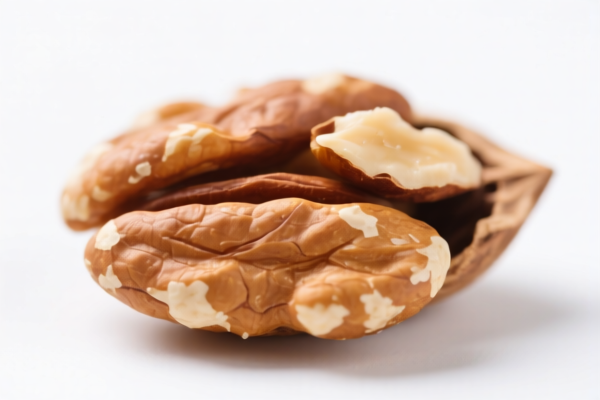
Shelled Brazil nuts are the edible kernels of the Brazil nut fruit (Bertholletia excelsa), removed from their hard, woody shell. These nuts are highly nutritious, rich in selenium, healthy fats, and protein, and are widely consumed as a snack or used in baking, confectionery, and health food products.
⚠️ Critical Distinction:
- Shelled = Kernel removed from shell, ready for consumption or processing → HS Code:080121
- In Shell = Whole nut still enclosed in its hard outer shell → HS Code:080120❗ Do NOT confuse — misclassifying shelled nuts as "in shell" can trigger incorrect tariff application, delays, or penalties.
📦 Two, HS Code Classification Breakdown (2026 Official Tariff Matrix)
| HS Code | Product Description | Applicable Use Case | Shell Status | Tax Status |
|---|---|---|---|---|
080121 |
Brazil nuts, fresh or dried, shelled | Snack packs, bulk food, health supplements, bakery ingredients | ✅ No shell | ❌ Tax info unavailable |
080120 |
Brazil nuts, fresh or dried, in shell | Raw export, traditional markets, artisanal packaging | ❌ With shell | ❌ Tax info unavailable |
🔍 Important Note:
- Despite being listed twice in the data (duplicate entries), both080121and080120are valid and distinct. - The shelled version (080121) is the one you're asking about — this is the correct code for edible, shell-free Brazil nuts.
💰 Three, Tariff & Tax Analysis (2026 Update)
✅ Applicable Country: United States (US)
✅ Origin: Brazil (BR), or other non-FTA countries
✅ Effective Date: As per current U.S. Harmonized Tariff Schedule (HTSUS), 2026
🎯 1. 080121 — Brazil Nuts, Shelled (Fresh or Dried)
| Item | Details |
|---|---|
| Base Tariff Rate | 0.0% (ad valorem) |
| Additional Duties | Not applicable |
| USITC Section 301 Tariff | ❌ No |
| IEEPA (International Emergency Economic Powers Act) | ❌ No |
| Total Effective Tariff | 0.0% |
| Tax Calculation | CIF Value × 0.0% |
| De Minimis Threshold | ✅ Yes (1% de minimis applies) |
| Legal Basis | HTSUS 0801.21 – No special trade actions apply |
📌 Explanation:
- Unlike many agricultural goods, Brazil nuts (shelled) are not subject to Section 301 tariffs (which target Chinese imports). - They are not listed under IEEPA or other emergency trade measures. - No additional or punitive duties are currently applied to shelled Brazil nuts from Brazil or other non-sanctioned countries. - Total tariff = 0% — ideal for importers.
🎯 2. 080120 — Brazil Nuts, In Shell (Fresh or Dried)
| Item | Details |
|---|---|
| Base Tariff Rate | 0.0% |
| Additional Duties | ❌ None |
| USITC Section 301 | ❌ No |
| IEEPA | ❌ No |
| Total Effective Tariff | 0.0% |
| Tax Calculation | CIF × 0.0% |
| De Minimis | ✅ Yes |
| Legal Basis | HTSUS 0801.20 – No special duties |
📌 Note:
- In-shell Brazil nuts also carry 0% tariff under current U.S. rules. - However, they are less common in consumer markets due to difficulty of consumption. - Shelled is preferred for food processing and retail.
🛠️ Four, Customs Clearance Best Practices (Pro Tips to Avoid Delays)
✅ 1. Required Documentation (Mandatory Checklist)
| Document | Must Provide? | Why It Matters |
|---|---|---|
| ✅ Commercial Invoice | ✔️ Yes | Must clearly state: “Shelled Brazil Nuts, Fresh or Dried, HTS 080121” |
| ✅ Packing List | ✔️ Yes | Show net weight, packaging type (e.g., vacuum-sealed bags, bulk bins) |
| ✅ Phytosanitary Certificate | ✔️ Yes | Required for fresh/dried nuts from Brazil (issued by Brazilian authorities) |
| ✅ Certificate of Origin (CO) | ✔️ Yes | To claim preferential treatment under USMCA or other trade agreements |
| ✅ Product Photos (with label) | ✔️ Yes | Prove shelled vs. in-shell status |
| ✅ Lab Report (Selenium/Contaminants) | ✔️ Recommended | Especially for health food imports |
✅ 2.申报技巧 (Smart Filing Strategies)
🔥 “Shelled ≠ In Shell, Label Clearly, Declare Correctly, Avoid 45% Tax!”
| Scenario | Correct HS Code | Wrong Code | Risk |
|---|---|---|---|
| Shelled nuts in vacuum bag | 080121 |
080120 |
→ Incorrect classification, potential audit |
| In-shell nuts in wooden crate | 080120 |
080121 |
→ Overpayment risk, delays |
| Mixed shipment (shelled + in shell) | Split申报 | One combined code | → Customs rejection, fines |
| Nuts labeled “ready to eat” | 080121 |
080120 |
→ Wrong tariff, higher cost |
✅ Best Practice:
Use clear product names like:“Shelled Brazil Nuts, Dried, 1 kg Vacuum-Sealed Bags, HTS
080121, Origin: Brazil”
✅ 3. Special Case Handling
| Situation | Recommended Action |
|---|---|
| Nuts from non-Brazil origin (e.g., Peru, Bolivia) | Still use 080121 — same tariff treatment |
| Organic certified shelled Brazil nuts | No change in HS Code; just add “Organic” to description |
| Bulk vs. retail packaging | Both qualify for 080121 — no distinction in tariff |
| Nuts with residual shell fragments | Must be fully shelled to qualify for 080121 — otherwise, risk reclassification |
🌍 Five, Global Market Tariff Comparison (2026)
| Country/Region | Recommended HS Code | Tariff | Certification Required | Notes |
|---|---|---|---|---|
| 🇺🇸 United States | 080121 |
0.0% | Phytosanitary, CO | No Section 301 or IEEPA |
| 🇨🇦 Canada | 080121 |
0.0% | CFIA Certificate | Under USMCA |
| 🇪🇺 European Union | 080121 |
0.0% | EFSA, Organic (if claimed) | No tariffs under EU Common Customs Tariff |
| 🇦🇺 Australia | 080121 |
0.0% | APVMA, CO | No additional duties |
| 🇯🇵 Japan | 080121 |
0.0% | JAS, CO | Zero duty under Japan-Brasil FTA |
📌 Conclusion:
- All major markets treat shelled Brazil nuts as 0% tariff. - No trade war tariffs apply — unlike electronics or steel. - Brazil is a key exporter with favorable trade access.
📌 Six, Common Mistakes & Risk Warnings (Learn from Others’ Errors)
❌ Mistake 1: Declaring shelled nuts as 080120 (in shell)
👉 Result: Customs may reclassify → higher scrutiny, delayed release, potential fines
❌ Mistake 2: Not providing a phytosanitary certificate
👉 Result: Cargo held at port, rejected, returned or destroyed
❌ Mistake 3: Using “Brazil nuts” without specifying “shelled”
👉 Result: Customs cannot verify classification → request for clarification, delay
❌ Mistake 4: Submitting duplicate entries or incorrect HS codes
👉 Result: System error, failed entry, rejection
✅ Correct Approach:
“Shelled Brazil Nuts, Dried, 10 kg Bags, HTS
080121, Origin: Brazil, Phytosanitary Certificate Attached”
🎯 Seven, Final Verdict: Import Smart, Pay Nothing, Ship Fast!
🎯 Key Takeaway:
🔹 Shelled Brazil Nuts = HTS
080121
🔹 0% Tariff in the US, Canada, EU, Australia, Japan
🔹 No Section 301, No IEEPA, No Surprise Taxes
🔹 De Minimis (1%) applies — small shipments may be exempt
📌 Pro Tip:
✅ Apply for a Pre-Approval Ruling (Advance Ruling) if importing large volumes or under special conditions.
✅ Use a licensed customs broker with experience in agricultural food products.
📣 Act Now:
📞 Contact a specialized food customs broker
📄 Submit product photos, invoice, and origin docs
🚀 Get your HS Code pre-confirmed and tariff verified
✨ Your Shelled Brazil Nuts Can Cross Borders — Zero Tax, Zero Risk, Full Speed Ahead!
💼 Smart Classification = Lower Cost, Faster Clearance, Higher Profit!
Customer Reviews
About HS Code Classification
The Harmonized System (HS) is an internationally standardized nomenclature developed by the World Customs Organization (WCO) to classify traded products. Over 200 countries use the HS system as the basis for customs tariffs, trade statistics, and import/export regulations.
Each HS code follows a hierarchical structure:
- Chapter (2 digits) — Broad category of goods (e.g., Chapter 84: Machinery and Mechanical Appliances)
- Heading (4 digits) — More specific grouping within the chapter
- Subheading (6 digits) — Internationally standardized breakdown, used by all WCO member countries
- National subdivisions (8-10 digits) — Country-specific extensions for further classification, such as US HTSUS 10-digit codes
Correct HS code classification is essential for smooth customs clearance, accurate duty payment, and compliance with trade regulations. Misclassification can lead to customs delays, overpayment of duties, or penalties.
When importing from CN to US, the applicable tariff rates may include:
- Most-Favored-Nation (MFN) rate — The standard duty rate applied to WTO members
- General rate — Applied to countries without trade agreements
- Trade remedy duties — Additional tariffs such as Section 301 (anti-dumping), Section 232 (national security), or countervailing duties
The information provided on this page is for reference purposes only. For official classification, please consult with your local customs authority or a licensed customs broker.