Shock Absorber Buffer
CN → US| HS Code | Tariff Rate | Origin | Destination | Doc |
|---|---|---|---|---|
| 8708801300 | 37.5% | CN | US | Official Doc |
| 4016995500 | 37.5% | CN | US | Official Doc |
| 8708801600 | 37.5% | CN | US | Official Doc |
| 4016993000 | 35.0% | CN | US | Official Doc |
Product Images
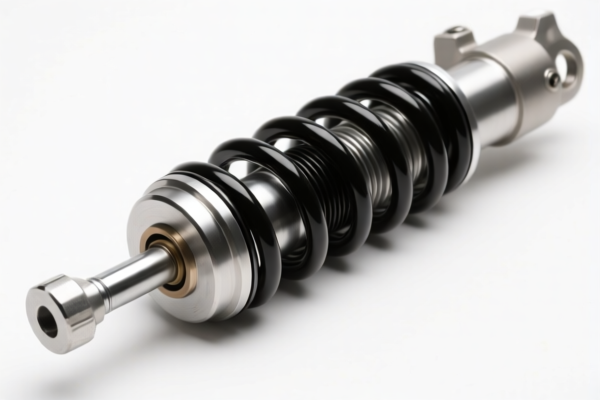
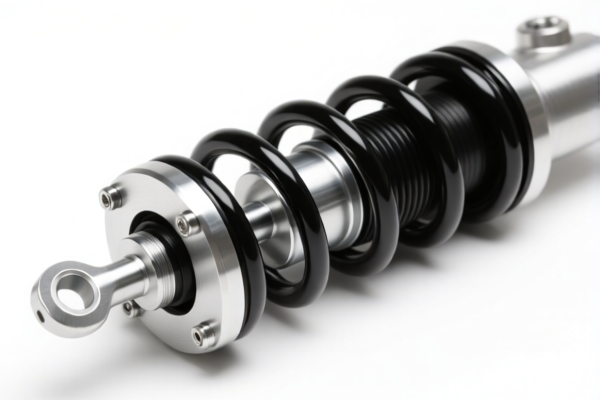
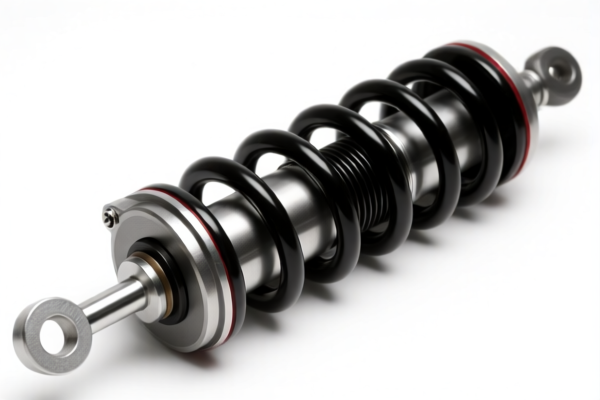
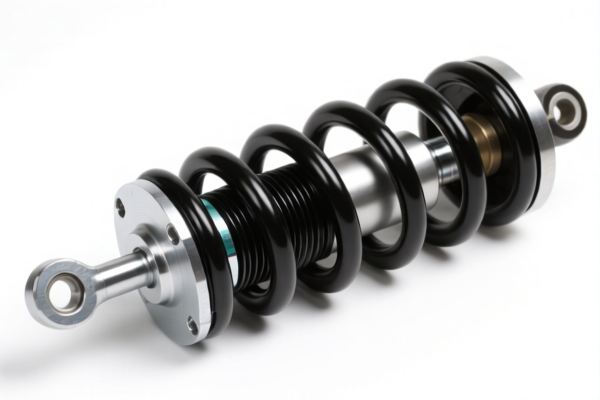
AI Analysis
🚗 Shock Absorber Buffer (Automotive Suspension Components)
🌐 HS Code Reference & Customs Clearance Guide | 2026 Latest Tariff Analysis | Professional Clearance Strategy
📌 I. Product Definition & Classification: Do You Really Understand "Shock Absorbers"?
Shock absorbers (often referred to as "buffers" in industrial contexts, but distinctly classified in automotive trade) are core components of vehicle suspension systems. Their primary function is to dampen oscillations, ensuring ride comfort and vehicle stability. In international trade, they are primarily categorized by their function (suspension system parts) or their material composition (rubber/metal hybrids).
⚠️ Key Distinction Point:
- If the product is a mechanical hydraulic/pneumatic damper or a structural suspension component → It falls under Chapter 87 (Motor Vehicles).
- If the product is purely a rubber/metal elastomeric bushing or mount intended for shock absorption → It may fall under Chapter 40 (Rubber Articles).
- Crucial Note: Most complete "Shock Absorbers" for vehicles are strictly classified as Suspension System Parts, not generic rubber goods, due to their specific mechanical function.
📦 II. HS Code Classification Details (2026 Latest Tariff Authority Comparison)
| HS Code | Product Description | Application Scenario | Material/Function Match |
|---|---|---|---|
8708.80.13.00 |
Parts and accessories of motor vehicles: Suspension systems and parts thereof (including shock absorbers) | Hydraulic/Pneumatic shock absorbers for cars, trucks, buses | ✅ Perfect Match: Explicitly listed in classification notes as "Suspension systems including shock absorbers" |
8708.80.16.00 |
Parts and accessories of motor vehicles: Suspension systems and parts thereof (including shock absorbers) | Specific subtype of suspension components/shock absorbers | ✅ Perfect Match: Directly corresponds to "Suspension systems (including shock absorbers)" in classification explanations |
4016.99.55.00 |
Other articles of vulcanized rubber other than hard rubber: Shock-absorbing control items | Rubber-metal composite shock mounts or buffers | ✅ Reasonable Inference: Name matches "shock-absorbing"; material (rubber + metal) is consistent with vulcanized rubber articles |
4016.99.30.00 |
Other articles of vulcanized rubber other than hard rubber: Other | Rubber-based shock absorbers or buffers (generic category) | ✅ Fallback Logic: Name matches "shock-absorbing products"; material (natural rubber) has no conflict, fits the "other" category logic |
🔍 Important Reminder:
- Automotive Shock Absorbers (hydraulic/pneumatic) should primarily be classified under 8708.80.xxxx because they are specific parts of the vehicle's suspension system.
- Classification under 4016.99.xxxx is typically reserved for rubber-only or rubber-metal composite components where the rubber aspect is dominant and they are not full mechanical dampers. Using 4016 for a complete mechanical shock absorber may lead to customs rejection or reclassification penalties.
💰 III. 2026 Latest Tariff Rate Details (Including Surtaxes & Policy Surcharges)
✅ Applicable Country: United States (US)
✅ Origin: China (CN)
✅ Effective Date: From November 10, 2025 (including subsequent imports)
🎯 1. 8708.80.13.00 & 8708.80.16.00 —— Suspension System Parts (Shock Absorbers)
| Item | Content |
|---|---|
| Base Tariff | 2.5% (ad valorem) |
| USITC Surtax (Section 301) | +25.0% |
| IEEPA Surtax (Section 122) | +10.0% |
| Total Tariff Rate | 37.5% |
| Tax Calculation | CIF Value × 37.5% |
| De Minimis Exemption | ❌ Not Available (deny_de_minimis) |
| Legal Basis Path | USITC:8708.80.13.00 → FOOTNOTE:9903.88.01 → IEEPA:9903.01.25 |
📌 Explanation:
- The 25% USITC surtax is applied under Section 301 of the Trade Act for Chinese-origin goods in this category.
- The 10% IEEPA surtax (often referred to as "Section 122" in trade contexts, though legally under IEEPA authorities for specific national security or emergency provisions) is applied to Chinese/ Hong Kong products.
- Total 37.5% is a high tariff rate. Importers must factor this into their landed cost calculations.
🎯 2. 4016.99.55.00 —— Rubber Shock-Absorbing Control Items
| Item | Content |
|---|---|
| Base Tariff | 2.5% (ad valorem) |
| USITC Surtax (Section 301) | +25.0% |
| IEEPA Surtax (Section 122) | +10.0% |
| Total Tariff Rate | 37.5% |
| Tax Calculation | CIF Value × 37.5% |
| De Minimis Exemption | ❌ Not Available (deny_de_minimis) |
| Legal Basis Path | USITC:4016.99.55.00 → FOOTNOTE:9903.88.01 → IEEPA:9903.01.25 |
📌 Note:
- Same tariff structure as 8708.80 items. Even if classified as rubber goods, the surtaxes apply equally to Chinese origins.
🎯 3. 4016.99.30.00 —— Other Rubber Shock-Absorbing Products
| Item | Content |
|---|---|
| Base Tariff | 0.0% (ad valorem) |
| USITC Surtax (Section 301) | +25.0% |
| IEEPA Surtax (Section 122) | +10.0% |
| Total Tariff Rate | 35.0% |
| Tax Calculation | CIF Value × 35.0% |
| De Minimis Exemption | ❌ Not Available (deny_de_minimis) |
| Legal Basis Path | USITC:4016.99.30.00 → FOOTNOTE:9903.88.01 → IEEPA:9903.01.25 |
📌 Advantage:
- This code has a 0% base tariff, resulting in a 2.5% lower total tariff (35% vs 37.5%) compared to the 8708 and 4016.99.55 codes.
- However, classification must be strictly justifiable as a generic rubber shock absorber/buffer, not a complete automotive suspension shock absorber. Misclassification risks penalties.
🛠️ IV. Customs Clearance Practical Advice (Real-World Pitfall Guide)
✅ 1. Preparation Checklist (Essential Documents)
| Document | Required | Description |
|---|---|---|
| ✅ Product Spec Sheet | ✔️ | Must detail dimensions, pressure ratings, material composition (Rubber/Metal ratio) |
| ✅ Product Photos (Labeled) | ✔️ | Clear images of the item, showing part numbers and any branding |
| ✅ Commercial Invoice | ✔️ | Must clearly state "Shock Absorber for Suspension System" or "Rubber Shock Buffer" |
| ✅ Origin Certificate (CO) | ✔️ | Essential for determining origin (China vs. other) and surtax applicability |
| ✅ Packing List | ✔️ | Details packaging, weight, and dimensions |
| ✅ Material Declaration | ✔️ | Specify if it contains natural rubber, synthetic rubber, and metal components |
✅ 2. Classification Strategy (Key Rules)
🔥 "Function First, Material Second, Name Precise, Tariff Minimized!"
| Scenario | Correct Declaration | Wrong Practice | Consequence |
|---|---|---|---|
| Complete Hydraulic Shock Absorber | 8708.80.13.00 or 8708.80.16.00 |
Classify as 4016.99.30.00 |
Customs may reject and assess 37.5% instead of potential lower rates (if any), or penalty for misclassification |
| Rubber-Metal Mount/Bushing (Non-Mechanical Damper) | 4016.99.55.00 |
Classify as 8708.80.13.00 |
Acceptable, but check if product fits "control item" definition |
| Generic Rubber Buffer (No Metal, No Mechanical Damping) | 4016.99.30.00 |
Classify as 8708.80.13.00 |
Best Tariff Outcome (35%) if product is purely rubber |
✅ 3. Special Considerations
| Scenario | Handling Advice |
|---|---|
| OEM Replacement Parts | Provide original equipment manufacturer (OEM) numbers and compatibility lists (e.g., "Fits Toyota Camry 2020") |
| Mixed Shipments | Ensure shock absorbers are not mixed with unrelated rubber goods in one HS Code declaration |
| Material Composition | If the shock absorber is >50% rubber by weight/value, argue for 4016 classification, but be prepared for customs inquiry |
| Pre-Ruling Application | Strongly recommend applying for a Binding Tariff Information (BTI) or Advance Ruling to lock in the correct HS Code and avoid post-entry audits |
🌍 V. Global Market Customs Comparison (2026 Latest)
| Country/Region | Recommended HS Code | Tariff (China Origin) | Certification Requirements | Notes |
|---|---|---|---|---|
| 🇺🇸 United States | 8708.80.13.00 |
37.5% (with surtaxes) | No specific auto safety certs for parts (unless airbags/brakes) | Highest surtax burden |
| 🇨🇳 China | 8708.80.13.00 |
~2.5% | CCC (if part of complete vehicle) | Low base tariff |
| 🇪🇺 European Union | 8708.80.10 |
0-2.5% | E-Mark (if sold as aftermarket replacement) | No Section 301/122 surtaxes |
| 🇨🇦 Canada | 8708.80.13.00 |
0-6.5% | CMVSS Compliance (for automotive parts) | No US-style surtaxes |
| 🇯🇵 Japan | 8708.80.13.00 |
0% | JIS Standards | Free trade agreement benefits may apply |
📌 Conclusion:
- The US is the most challenging market for shock absorbers from China due to the 37.5% total tariff.
- EU and Japan offer significantly better tariff rates (often 0-2.5%), making them more attractive for Chinese exporters if logistics allow.
- Diversification of supply chain (e.g., manufacturing in Vietnam or Mexico) could help avoid US surtaxes, but must ensure substantial transformation rules are met.
📌 VI. Common Errors & Pitfall Guide (Lessons Learned)
❌ Error 1: Declaring a complete hydraulic shock absorber as "Rubber Buffer" (4016.99.30.00) to get 35% instead of 37.5%
👉 Consequence: Customs may determine it is a "Part of Motor Vehicle" and reassess at 37.5% + penalties for misclassification.
❌ Error 2: Ignoring the "Section 122/10% IEEPA" surtax
👉 Consequence: Underpayment of duties, leading to audits, fines, and potential seizure of goods.
❌ Error 3: Not providing sufficient material documentation
👉 Consequence: Customs may default to the highest duty rate or reject the entry due to lack of information.
❌ Error 4: Using vague descriptions like "Car Part"
👉 Consequence: Delays in clearance, manual examination, and increased storage fees.
✅ Correct Practice:
"Hydraulic Shock Absorber, Steel and Rubber, for Suspension System, Model XYZ, Compatible with [Vehicle Make/Model], Origin: China"
🎯 VII. Conclusion: Professional Declaration Saves Money!
🎯 Remember the Mantra:
🔹 "Shock Absorbers are Auto Parts, Not Just Rubber!"
🔹 "37.5% in the US, 35% if Pure Rubber, But Prove It!"
🔹 "Check Surtaxes, Avoid Fines, Clear Customs Fast!"
📌 Pro Tip:
If your shock absorbers are originating from Vietnam, Mexico, Thailand, or Malaysia, you may be eligible for IEEPA Exemptions or lower Section 301 rates.
Strongly recommend Applying for Advance Rulings to secure your HS Code and tariff rate before shipment.
📣 Immediate Action:
📞 Consult with a licensed customs broker + Provide detailed product specs + Apply for HS Code Pre-Ruling
🚀 Ensure your shock absorbers clear customs smoothly, reduce costs, and boost profits!
✨ Professional Customs Clearance Starts with Accurate Classification!
💼 Every cent of your cost deserves precise calculation!
Customer Reviews
About HS Code Classification
The Harmonized System (HS) is an internationally standardized nomenclature developed by the World Customs Organization (WCO) to classify traded products. Over 200 countries use the HS system as the basis for customs tariffs, trade statistics, and import/export regulations.
Each HS code follows a hierarchical structure:
- Chapter (2 digits) — Broad category of goods (e.g., Chapter 84: Machinery and Mechanical Appliances)
- Heading (4 digits) — More specific grouping within the chapter
- Subheading (6 digits) — Internationally standardized breakdown, used by all WCO member countries
- National subdivisions (8-10 digits) — Country-specific extensions for further classification, such as US HTSUS 10-digit codes
Correct HS code classification is essential for smooth customs clearance, accurate duty payment, and compliance with trade regulations. Misclassification can lead to customs delays, overpayment of duties, or penalties.
When importing from CN to US, the applicable tariff rates may include:
- Most-Favored-Nation (MFN) rate — The standard duty rate applied to WTO members
- General rate — Applied to countries without trade agreements
- Trade remedy duties — Additional tariffs such as Section 301 (anti-dumping), Section 232 (national security), or countervailing duties
The information provided on this page is for reference purposes only. For official classification, please consult with your local customs authority or a licensed customs broker.