Shoe Changing Stool
CN → US| HS Code | Tariff Rate | Origin | Destination | Doc |
|---|---|---|---|---|
| 9401696011 | 35.0% | CN | US | Official Doc |
| 9403608093 | 35.0% | CN | US | Official Doc |
| 9403200050 | 85.0% | CN | US | Official Doc |
| 9401790046 | 35.0% | CN | US | Official Doc |
Product Images
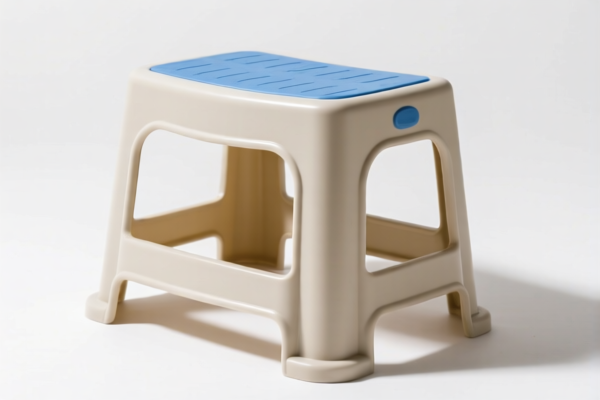
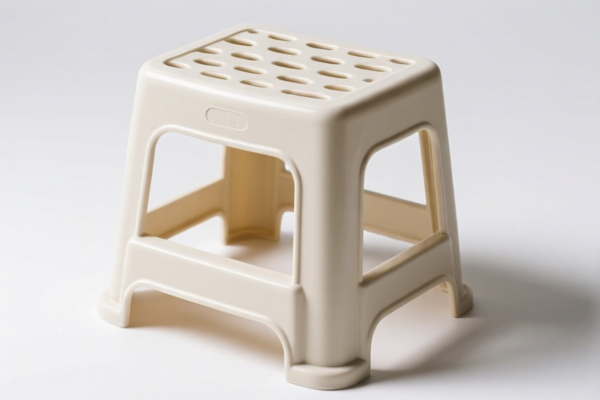

AI Analysis
🪑 Shoe Changing Stool (Furniture & Seating)
🌐 HS Code Reference & Customs Clearance Guide | 2026 Latest Tariff Analysis | Professional Entry Strategy
📌 I. Product Definition & Classification: Do You Really Know What a "Shoe Changing Stool" Is?
A Shoe Changing Stool is a piece of furniture designed for sitting while removing or putting on footwear, typically placed at entryways, closets, or hallways. It falls under the broader category of Household Furniture or Seating Units. In international trade, its classification depends primarily on:
- Material composition (wood, metal, or mixed)
- Design intent (home use vs. public/commercial)
- Structural features (frame material, presence of storage, etc.)
⚠️ Key Classification Points:
- If wooden frame + seat →归类 to 9401.69.60.11 (Wooden frames, stools)
- If metal frame + seat →归类 to 9401.79.00.46 (Metal frames, stools)
- If general wooden furniture (not seat-specific) →归类 to 9403.60.80.93
- If metal furniture (non-seating category) →归类 to 9403.20.00.50
📦 II. HS Code Classification Breakdown (2026 Latest Tariff Reference)
| HS Code | Product Description | Applicable Scenario | Material Type |
|---|---|---|---|
9401.69.60.11 |
Wooden frame stool for household use | Home entryway, bedroom, bathroom | ✅ Wood |
9403.60.80.93 |
Other wooden furniture, general use | Decorative or multi-purpose wooden stool | ✅ Wood |
9403.20.00.50 |
Other metal furniture (not seating) | Metal stool classified as general furniture | ✅ Metal |
9401.79.00.46 |
Other metal frame stools, household use | Home-use metal-framed shoe stool | ✅ Metal |
🔍 Critical Reminder:
- Wooden stools with clear seating function should prioritize 9401.69.60.11.
- Metal stools used in homes should be classified under 9401.79.00.46, not general metal furniture.
- If the product is not clearly a seat, consider 9403.20.00.50 (metal) or 9403.60.80.93 (wood).
💰 III. 2026 Tariff Rate Breakdown (Including Additional Taxes & Policy Surcharges)
✅ Target Country: United States (US)
✅ Country of Origin: China (CN)
✅ Effective Date: November 10, 2025 onward (including future imports)
🎯 1. 9401.69.60.11 —— Wooden Shoe Stool (Household)
| Item | Content |
|---|---|
| Base Tariff | 0% (ad valorem) |
| Section 301 Tariff (USITC) | +25% |
| Section 122 Tariff (China) | +10% |
| Total Tariff Rate | 35% |
| Tax Calculation Basis | CIF Value × 35% |
| De Minimis Exemption | ❌ Not applicable |
| Legal Reference Path | IEEPA:9903.01.25 → USITC:9401.69.60.11 → FOOTNOTE:9903.88.01 |
📌 Explanation:
- 25% is the Section 301 tariff imposed by USITC;
- 10% is the additional Section 122 tariff applied to Chinese-origin goods;
- Combined 35% is very high, requiring early financial planning.
🎯 2. 9403.60.80.93 —— Other Wooden Furniture (General Purpose)
| Item | Content |
|---|---|
| Base Tariff | 0% |
| Section 301 Tariff (USITC) | +25% |
| Section 122 Tariff (China) | +10% |
| Total Tariff Rate | 35% |
| Tax Calculation Basis | CIF × 35% |
| De Minimis Exemption | ❌ Not applicable |
| Legal Reference Path | IEEPA:9901.25 → IEEPA:9903.01.24 → USITC:9403.60.80.93 → FOOTNOTE:9903.88.01 |
📌 Note:
- Same tariff as wooden stools;
- Applies if the stool is not clearly classified as seating, e.g., decorative or storage-integrated.
🎯 3. 9403.20.00.50 —— Other Metal Furniture (Non-Seating)
| Item | Content |
|---|---|
| Base Tariff | 0% |
| Section 301 Tariff (USITC) | +25% |
| Section 122 Tariff (China) | +10% |
| Steel/Aluminum/Copper Add-on | +50% |
| Total Tariff Rate | 85% |
| Tax Calculation Basis | CIF × 85% |
| De Minimis Exemption | ❌ Not applicable |
| Legal Reference Path | IEEPA:9901.25 → IEEPA:9903.01.24 → USITC:9403.20.00.50 → FOOTNOTE:9903.88.01 |
📌 Warning:
- This HS Code applies only if the stool is classified as general metal furniture, not seating;
- Total 85% tariff is extremely high, must be avoided if possible.
🎯 4. 9401.79.00.46 —— Metal Frame Stool (Household)
| Item | Content |
|---|---|
| Base Tariff | 0% |
| Section 301 Tariff (USITC) | +25% |
| Section 122 Tariff (China) | +10% |
| Total Tariff Rate | 35% |
| Tax Calculation Basis | CIF × 35% |
| De Minimis Exemption | ❌ Not applicable |
| Legal Reference Path | IEEPA:9903.01.25 → USITC:9401.79.00.46 → FOOTNOTE:9903.88.01 |
📌 Note:
- Same 35% tariff as wooden stools;
- Preferred for metal-framed household shoe stools.
🛠️ IV. Customs Clearance Practical Advice (Real-World Avoidance Guide)
✅ 1. Required Documentation Checklist
| Document | Required | Purpose |
|---|---|---|
| ✅ Product Specification Sheet | ✔️ | Size, weight, material, load capacity |
| ✅ Material Composition Report | ✔️ | Wood vs. metal, alloy type |
| ✅ Product Photos (Front, Side, Back) | ✔️ | Show frame, seat, and function |
| ✅ Commercial Invoice | ✔️ | Accurate HS Code + description |
| ✅ Packing List | ✔️ | Item count, dimensions, weight |
| ✅ Origin Certificate (CO) | ✔️ | If non-China origin, may reduce tariffs |
| ✅ Third-Party Test Report | ✔️ | Safety standards (if applicable) |
✅ 2. Declaration Best Practices (Golden Rules)
🔥 “Be Specific: Frame + Seat + Function = Correct HS Code!”
| Scenario | Correct Declaration | Common Mistake |
|---|---|---|
| Wooden household stool | 9401.69.60.11 |
Misdeclare as general furniture → 35% |
| Metal household stool | 9401.79.00.46 |
Misdeclare as metal furniture → 85% |
| Metal stool with storage | Still 9401.79.00.46 if seating function exists |
Misclassify as furniture → 85% |
| Non-seating metal frame | 9403.20.00.50 |
Only if no clear seating role |
✅ 3. Special Cases Handling
| Situation | Recommended Action |
|---|---|
| OEM Custom Stool | Provide design specs + customer order to confirm function |
| Stool with Storage | Still classify as stool if seating is primary use |
| Mixed Material (Wood + Metal) | Classify by primary material or structural frame |
| Export to Non-US Markets | Research destination-specific tariffs (e.g., EU, Canada) |
🌍 V. Global Market Comparison (2026 Tariff Outlook)
| Country/Region | Recommended HS Code | Tariff | Certification | Notes |
|---|---|---|---|---|
| 🇺🇸 USA | 9401.69.60.11 / 9401.79.00.46 |
35% (China) | No special | 85% if misclassified |
| 🇪🇺 EU | Same | 0–5% | CE | No Section 301 |
| 🇨🇦 Canada | Same | 5–10% | CSA | Lower risk |
| 🇦🇺 Australia | Same | 5% | RCM | Stable |
| 🇯🇵 Japan | Same | 0–5% | PSE | Low tariff |
📌 Conclusion:
- USA imposes the highest tariffs due to Section 301 & 122;
- Avoid misclassification to prevent 85% tariff on metal stools;
- Consider sourcing from Vietnam/Mexico to bypass USChina tariffs (if eligible).
📌 VI. Common Mistakes & Avoidance (Lessons Learned)
❌ Mistake 1: Classifying a metal stool as general metal furniture
👉 Consequence: 85% tariff instead of 35% → Huge cost increase!
❌ Mistake 2: Not specifying seating function in documentation
👉 Consequence: Customs may reclassify → Delay, fines, or seizure
❌ Mistake 3: Using vague names like "Furniture" or "Stool" only
👉 Consequence: Higher audit risk, need for explanation
✅ Best Practice:
“Shoe Changing Stool, Wooden Frame, Household Use, Model XYZ, 12 kg max load, Made in China”
🎯 VII. Conclusion: Precision Classification = Savings & Success
🎯 Remember the Rule:
🔹 “Frame + Seat + Function = Right HS Code”
🔹 “35% is fine, 85% is dangerous – don’t get fooled!”
📌 Pro Tip:
If your Shoe Stool is manufactured in Vietnam, Mexico, or Thailand, you may qualify for IEEPA exemptions or lower tariffs in the US.
Apply for Advance Ruling to lock in favorable classification.
📣 Call to Action:
📞 Contact a certified customs broker + submit product photos + apply for HS Code pre-ruling
🚀 Get your Shoe Changing Stool into the US smoothly, efficiently, and profitably!
✨ Professional Classification Starts the Journey!
💼 Every dollar saved counts — start with the right HS Code!
Customer Reviews
About HS Code Classification
The Harmonized System (HS) is an internationally standardized nomenclature developed by the World Customs Organization (WCO) to classify traded products. Over 200 countries use the HS system as the basis for customs tariffs, trade statistics, and import/export regulations.
Each HS code follows a hierarchical structure:
- Chapter (2 digits) — Broad category of goods (e.g., Chapter 84: Machinery and Mechanical Appliances)
- Heading (4 digits) — More specific grouping within the chapter
- Subheading (6 digits) — Internationally standardized breakdown, used by all WCO member countries
- National subdivisions (8-10 digits) — Country-specific extensions for further classification, such as US HTSUS 10-digit codes
Correct HS code classification is essential for smooth customs clearance, accurate duty payment, and compliance with trade regulations. Misclassification can lead to customs delays, overpayment of duties, or penalties.
When importing from CN to US, the applicable tariff rates may include:
- Most-Favored-Nation (MFN) rate — The standard duty rate applied to WTO members
- General rate — Applied to countries without trade agreements
- Trade remedy duties — Additional tariffs such as Section 301 (anti-dumping), Section 232 (national security), or countervailing duties
The information provided on this page is for reference purposes only. For official classification, please consult with your local customs authority or a licensed customs broker.