Shoe Components (Upper and Parts)
CN → US| HS Code | Tariff Rate | Origin | Destination | Doc |
|---|---|---|---|---|
| 6401929060 | 55.0% | CN | US | Official Doc |
| 6406106000 | 17.5% | CN | US | Official Doc |
| 6406109040 | 22.0% | CN | US | Official Doc |
| 4203406000 | 35.0% | CN | US | Official Doc |
| 6406109040 | 22.0% | CN | US | Official Doc |
Product Images
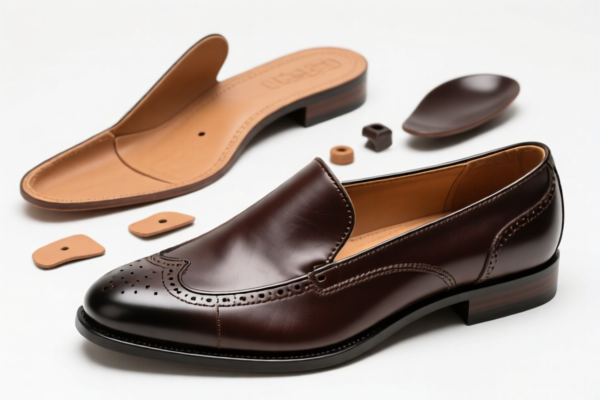
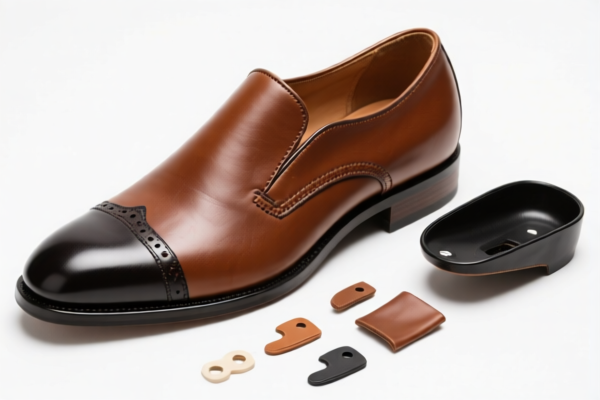
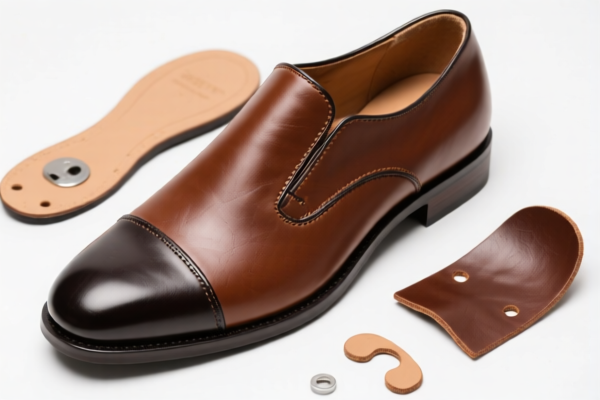
AI Analysis
👟 Shoe Components (Upers and Parts)
🌐 HS Code Reference & Customs Clearance Guide | 2026 Latest Tariff Analysis | Professional Strategy for US Importers
📌 I. Product Definition & Classification: What Exactly Are "Shoe Upers"?
Shoe components, specifically Upers and Parts, are the non-sole elements of footwear. In international trade, they are critical structural parts that determine the aesthetic and protective qualities of the shoe. However, classification is tricky because it depends heavily on material composition and waterproof attributes.
Two Main Categories: 1. Textile/Leather/Synthetic Upers: The main body of the shoe, excluding the outer sole. 2. Waterproof Footwear Parts: Specialized components for waterproof boots, often attracting higher duties due to specific "catch-all" provisions.
⚠️ Key Distinction Point:
- If the item is a complete waterproof shoe part or made of rubber/plastic without specific material labeling → It may fall under General Residual/Catch-all categories, leading to higher tax rates. - If clearly identified as leather or specific fabric → It may qualify for lower base tariffs but face different additional duties.
📦 II. HS Code Classification Matrix (2026 Latest Tariff Authority)
| HS Code | Product Description | Material Assumption | Applicable Scenario | Total Tax Rate |
|---|---|---|---|---|
6401.92.90.60 |
Footwear accessories (upper and related parts), waterproof shoe attribute | Rubber/Plastic/Waterproof Materials | Waterproof boot upers, specialized protective gear | 55.0% |
6406.10.60.00 |
Shoe parts (including upers), unspecified material, inferred rubber/plastic | Rubber/Plastic (Catch-all Inference) | Generic shoe parts where material is unclear but shape suggests rubber/plastic | 17.5% |
6406.10.90.40 |
Uppers and parts, identical use, default to residual category | Unclassified/General | Standard shoe upers where specific material isn't explicitly declared | 22.0% |
4203.40.60.00 |
Uppers and parts, inferred leather or synthetic leather | Leather/Synthetic Leather | Clothing accessories/other leather goods | 35.0% |
6406.10.90.40 |
Uppers and parts, form/function match, default residual | Unclassified/General | Repeated entry for general shoe parts when material is omitted | 22.0% |
🔍 Key Insight:
-6406.10.90.40appears twice because it is the default "catch-all" for shoe parts when material is not explicitly declared. This results in a 22% total tax. -6401.92.90.60carries the highest burden (55%) due to its classification under waterproof footwear attributes, triggering the maximum combination of base and additional tariffs. -4203.40.60.00assumes leather content, shifting it out of Chapter 64 (Footwear) into Chapter 42 (Articles of Leather), resulting in a 35% rate.
💰 III. 2026 Latest Tariff Rate Breakdown (Including Additional Duties)
✅ Applicable Country: United States (US)
✅ Origin: China (CN)
✅ Effective Date: Current rates apply (Section 301 & 122 Clause)
🎯 1. 6401.92.90.60 —— Waterproof Shoe Parts (Highest Risk)
| Item | Content |
|---|---|
| Base Duty | 37.5% (Ad Valorem) |
| Section 301 Additional Duty | +7.5% |
| 122 Clause Duty | +10% |
| Total Effective Rate | 55.0% |
| De Minimis Eligibility | ❌ Not Eligible (High value, restricted category) |
| Legal Basis | Section 301 → 122 Clause → HS:6401.92.90.60 |
📌 Explanation:
- This code attracts the highest total tax (55%). - The 37.5% base duty is already high for footwear parts. - Combined with Section 301 (7.5%) and 122 Clause (10%), the cost impact is severe. - Risk: High probability of customs audit due to "waterproof" classification.
🎯 2. 6406.10.60.00 —— Rubber/Plastic Shoe Parts (Moderate Risk)
| Item | Content |
|---|---|
| Base Duty | 0.0% |
| Section 301 Additional Duty | +7.5% |
| 122 Clause Duty | +10% |
| Total Effective Rate | 17.5% |
| De Minimis Eligibility | ❌ Not Eligible |
| Legal Basis | Section 301 → 122 Clause → HS:6406.10.60.00 |
📌 Explanation:
- 0% Base Duty makes this attractive, but additional duties still apply. - Total 17.5% is significantly lower than the waterproof category. - Caution: This code is used when material is inferred as rubber/plastic. If the product is actually textile, misclassification can lead to penalties.
🎯 3. 6406.10.90.40 —— General Shoe Parts (Default/Catch-All)
| Item | Content |
|---|---|
| Base Duty | 4.5% |
| Section 301 Additional Duty | +7.5% |
| 122 Clause Duty | +10% |
| Total Effective Rate | 22.0% |
| De Minimis Eligibility | ❌ Not Eligible |
| Legal Basis | Section 301 → 122 Clause → HS:6406.10.90.40 |
📌 Explanation:
- This is the most common classification for generic shoe upers when material is not specified. - Base 4.5% is moderate. - Total 22% is a safe middle ground, but specifying material (e.g., leather) could change the code to4203.40.60.00(35%).
🎯 4. 4203.40.60.00 —— Leather Shoe Parts (Leather Chapter)
| Item | Content |
|---|---|
| Base Duty | 0.0% |
| Section 301 Additional Duty | +25.0% |
| 122 Clause Duty | +10% |
| Total Effective Rate | 35.0% |
| De Minimis Eligibility | ❌ Not Eligible |
| Legal Basis | Section 301 → 122 Clause → HS:4203.40.60.00 |
📌 Explanation:
- If your shoe upers are genuinely leather or synthetic leather, they belong in Chapter 42, not Chapter 64. - Base Duty is 0%, but Section 301 jumps to 25% (vs 7.5% in Chapter 64). - Total 35% is higher than the generic6406codes but lower than the waterproof6401code. - Advantage: Clearer classification if material is documented.
🛠️ IV. Customs Clearance Practical Advice (Avoid Pitfalls)
✅ 1. Documentation Checklist (Mandatory)
| Document | Required | Description |
|---|---|---|
| ✅ Product Specifications | ✔️ | Must clearly state Material Composition (e.g., 100% Polyurethane, Leather, Rubber). |
| ✅ Technical Drawings | ✔️ | Show structure: Is it a full upper? Does it include lining? |
| ✅ Photos | ✔️ | Clear images of the part, showing texture and labeling. |
| ✅ Commercial Invoice | ✔️ | Describe as "Shoe Upper, Material: [XXX], Not Waterproof" or "Waterproof Component". |
| ✅ Origin Certificate | ✔️ | Crucial for applying Section 301 exemptions if applicable (rare for China origin). |
✅ 2. Declaration Strategy (Key Mnemonics)
🔥 "Material First, Waterproof Second, Catch-Last!"
| Scenario | Correct HS Code | Wrong Approach | Consequence |
|---|---|---|---|
| Generic Shoe Upper | 6406.10.90.40 (22%) |
Declare as "Shoe Part" without material | Still 22%, but risk of audit |
| Waterproof Boot Upper | 6401.92.90.60 (55%) |
Hide waterproof feature | High penalty risk, potential seizure |
| Leather Upper | 4203.40.60.00 (35%) |
Declare as 6406 (22%) |
Under-declaration, fines + back taxes |
| Rubber/Plastic Upper | 6406.10.60.00 (17.5%) |
Assume 6406.10.90.40 (22%) |
Overpay 4.5% unnecessarily |
📌 Critical Tip:
- Do NOT use "Catch-all" (6406.10.90.40) if you can specify the material.
- Waterproof claims trigger the 55% rate. Only declare waterproof if 100% verified.
✅ 3. Special Case Handling
| Situation | Handling Advice |
|---|---|
| Mixed Material Uppers | Declare based on primary material. If >50% textile, use textile codes; if leather, use 4203. |
| OEM Custom Parts | Provide design sheets. If shape is unique, argue for residual code 6406.10.90.40. |
| Sample Shipments | Even samples are subject to tariffs. Pre-calculate cost including 17.5%-55% tax. |
| Return of Defective Goods | If defective, may qualify for duty drawback. Keep proof of rejection. |
🌍 V. Global Market Comparison (2026 Update)
| Region | Recommended HS Code | Est. Duty Rate | Key Certification | Notes |
|---|---|---|---|---|
| 🇺🇸 USA | 6406.10.90.40 / 6401.92.90.60 |
22% - 55% | None specific, but strict origin rules | Section 301 + 122 Clause significantly increase cost |
| 🇨🇳 China | 6406.10.90.40 |
~10-15% | CCC (if applicable) | Lower base duties, but export checks apply |
| 🇪🇺 EU | 6406.10.90 |
~4-6.5% | CE (if safety gear) | No Section 301 equivalent, much cheaper than US |
| 🇬🇧 UK | 6406.10.90 |
~4-6.5% | UKCA | Post-Brexit rules apply, similar to EU |
📌 Conclusion:
- USA is the most expensive market for shoe components due to Section 301 and 122 Clause. - EU/UK offer significantly lower duty burdens. Consider re-export strategies if possible (though complex).
📌 VI. Common Mistakes & Pitfalls (Lessons Learned)
❌ Mistake 1: Declaring Waterproof parts as Generic (6406.10.90.40)
👉 Consequence: Customs detects waterproof coating → Fines + Retrospective 55% tax.
❌ Mistake 2: Using Leather Code (4203.40.60.00) for Synthetic Leather without disclosure
👉 Consequence: Misclassification → Audit + Penalty. Synthetic leather often falls under Chapter 64 unless specified as "Artificial Leather" in certain contexts.
❌ Mistake 3: Ignoring 122 Clause
👉 Consequence: Forgetting the 10% additional duty → Unexpected cost increase.
❌ Mistake 4: Assuming De Minimis applies
👉 Consequence: Shoe parts are excluded from $800 de minimis exemption for China-origin goods. Full declaration required.
✅ Correct Practice:
"Shoe Upper, 100% Polyurethane, Non-Waterproof, OEM for Model XYZ, Made in China"
🎯 VII. Conclusion: Professional Declaration, Cost Efficiency
🎯 Remember:
🔹 "Material is King, Waterproof is Costly, General is Safe but Higher Tax!"
🔹 "HS Code dictates tax, 33% difference can kill profit!"
📌 Pro Tip:
- If importing to the USA, always request a Binding Ruling from CBP if your product is ambiguous.
- Consider sourcing from Vietnam/Mexico for Section 301 exemption (0% additional duty), reducing total tax to Base Rate Only (e.g., 0% or 4.5%).
📣 Immediate Action:
📞 Contact a licensed customs broker + Provide Material Specs + Request HS Code Pre-Ruling
🚀 Maximize Profit, Minimize Duty, Ensure Compliance!
✨ Professional Clearance Starts with Accurate Classification!
💼 Your Bottom Line Depends on the First Digit of Your HS Code!
Customer Reviews
About HS Code Classification
The Harmonized System (HS) is an internationally standardized nomenclature developed by the World Customs Organization (WCO) to classify traded products. Over 200 countries use the HS system as the basis for customs tariffs, trade statistics, and import/export regulations.
Each HS code follows a hierarchical structure:
- Chapter (2 digits) — Broad category of goods (e.g., Chapter 84: Machinery and Mechanical Appliances)
- Heading (4 digits) — More specific grouping within the chapter
- Subheading (6 digits) — Internationally standardized breakdown, used by all WCO member countries
- National subdivisions (8-10 digits) — Country-specific extensions for further classification, such as US HTSUS 10-digit codes
Correct HS code classification is essential for smooth customs clearance, accurate duty payment, and compliance with trade regulations. Misclassification can lead to customs delays, overpayment of duties, or penalties.
When importing from CN to US, the applicable tariff rates may include:
- Most-Favored-Nation (MFN) rate — The standard duty rate applied to WTO members
- General rate — Applied to countries without trade agreements
- Trade remedy duties — Additional tariffs such as Section 301 (anti-dumping), Section 232 (national security), or countervailing duties
The information provided on this page is for reference purposes only. For official classification, please consult with your local customs authority or a licensed customs broker.