Shoe Covers (Roll)
CN → US| HS Code | Tariff Rate | Origin | Destination | Doc |
|---|---|---|---|---|
| 6406901580 | 32.4% | CN | US | Official Doc |
| 3926204010 | 16.5% | CN | US | Official Doc |
| 3926201020 | 10.0% | CN | US | Official Doc |
| 6401999000 | 47.5% | CN | US | Official Doc |
| 6217909095 | 32.1% | CN | US | Official Doc |
Product Images
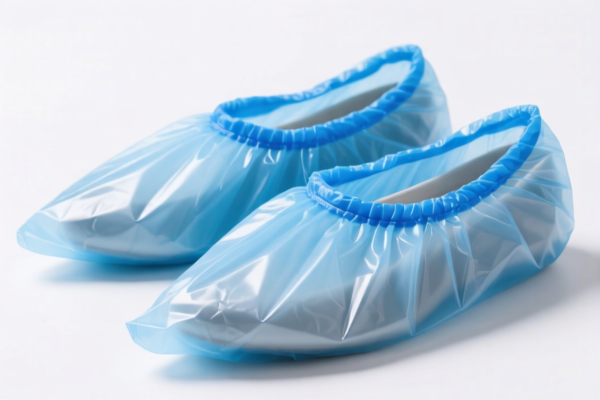
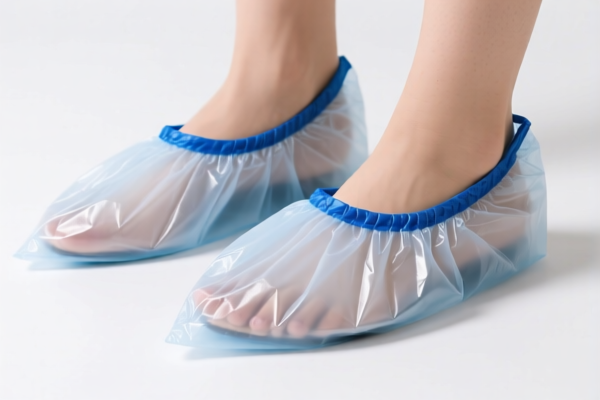
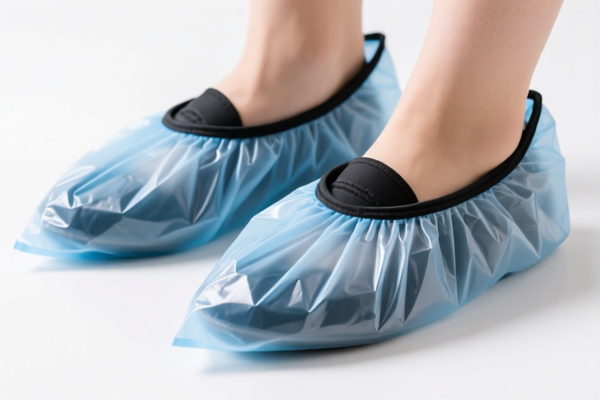

AI Analysis
🥿 Shoe Covers (Roll) | Disposable Foot Protection Solutions
🌐 HS Code Reference & Customs Clearance Guide | 2026 Latest Tariff Analysis | Professional Clearance Strategy
📌 I. Product Definition & Classification: Do You Really Understand "Shoe Covers"?
Shoe covers (often sold in rolls or packs) are protective barriers worn over footwear to prevent contamination, mud, water, or debris from being tracked into cleanrooms, hospitals, construction sites, or homes. In international trade, their classification is not uniform; it depends strictly on material composition and functional intent.
They are generally categorized into two main types:
1. Textile/Fabric-Based or General Footwear Components:
- Made from non-woven fabrics, cotton, or synthetic blends.
- Function: General dust protection, indoor use.
- Customs Logic: Treated as "parts/accessories of footwear" or "other made-up clothing articles."
2. Plastic/Polymer-Based (Disposable/Protective):
- Made from PE (Polyethylene), PVC, or TPU.
- Function: Waterproofing, chemical resistance, sterile environment protection.
- Customs Logic: Treated as "other articles of plastics" or "waterproof footwear," depending on thickness and seamless construction.
⚠️ Key Distinction Point:
- If the item is sewn/fabric-based or lacks specific waterproof/plastic characteristics →归入 6406.90.15.80 / 6217.90.90.95
- If the item is plastic/PVC/PE and designed for single-use/protective purposes →归入 3926.20.40.10 / 3926.20.10.20
- If the item is heavy-duty rubber/plastic and functions effectively as waterproof footwear →归入 6401.99.90.00
📦 II. HS Code Classification Details (2026 Latest Tariff Authority Comparison)
| HS Code | Product Description | Application Scenario | Material/Feature |
|---|---|---|---|
6406.90.15.80 |
Shoe covers, generally regarded as accessory parts of footwear | General indoor use, non-woven fabric, textile-based | ❌ Not primary footwear |
3926.20.40.10 |
Disposable plastic/PE shoe covers, fitting single-use/ppe features | Medical, cleanroom, construction, hygiene protection | ✅ Plastic/PE, Disposable |
3926.20.10.20 |
Plastic shoe covers, fitting seamless/apparel accessory features | Light industrial, anti-static, seamless plastic | ✅ Plastic, Seamless |
6401.99.90.00 |
Waterproof footwear category (plastic/rubber inferred) | Heavy-duty waterproofing, rain protection, rubber-based | ✅ Rubber/Plastic, Footwear-like |
6217.90.90.95 |
Other made-up clothing articles/accessories (non-woven/textile) | Textile-based shoe covers, fashion or general utility | ✅ Textile, Clothing Accessory |
🔍 Critical Reminder:
- Plastic/PE Shoe Covers must be declared under Chapter 39 (Plastics) unless they are explicitly structured as waterproof rubber boots (Chapter 64). - Fabric/Non-woven Shoe Covers fall under Chapter 62/64 as clothing accessories or footwear parts. - Misclassification between "Plastic Article" and "Footwear Part" can lead to significant tariff discrepancies (see below).
💰 III. 2026 Latest Tariff Rate Breakdown (Including Surtaxes & Policy Add-ons)
✅ Applicable Country: United States (US)
✅ Origin: China (CN)
✅ Effective Time: From November 10, 2025 (including subsequent imports)
🎯 1. 6406.90.15.80 —— Shoe Covers (Textile/Footwear Parts)
| Item | Content |
|---|---|
| Base Tariff | 14.9% (ad valorem) |
| Section 301 Surtax | +7.5% |
| 122 Section Tariff | +10% |
| Total Tariff | 32.4% |
| Tax Calculation | CIF Value × 32.4% |
| De Minimis Eligibility | ❌ No (High value threshold/Restriction) |
| Legal Basis Path | USITC:6406.90.15.80 → Section 301: 7.5% → Section 122: 10% |
📌 Explanation:
- Classified as footwear parts/accessories. - Subject to Section 301 and Section 122 additional duties due to China origin. - Moderate-high tariff burden.
🎯 2. 3926.20.40.10 —— Disposable Plastic/PE Shoe Covers
| Item | Content |
|---|---|
| Base Tariff | 6.5% (ad valorem) |
| Section 301 Surtax | 0.0% |
| 122 Section Tariff | +10% |
| Total Tariff | 16.5% |
| Tax Calculation | CIF Value × 16.5% |
| De Minimis Eligibility | ❌ No |
| Legal Basis Path | USITC:3926.20.40.10 → Section 122: 10% |
📌 Note:
- This is a cost-effective classification for plastic shoe covers. - Section 301 does NOT apply to this specific subheading (often due to broader plastic article exemptions or specific duty rate structures). - Significant savings compared to textile or footwear parts.
🎯 3. 3926.20.10.20 —— Seamless Plastic Shoe Covers
| Item | Content |
|---|---|
| Base Tariff | 0.0% (ad valorem) |
| Section 301 Surtax | 0.0% |
| 122 Section Tariff | +10% |
| Total Tariff | 10.0% |
| Tax Calculation | CIF Value × 10.0% |
| De Minimis Eligibility | ❌ No |
| Legal Basis Path | USITC:3926.20.10.20 → Section 122: 10% |
📌 Strategic Advantage:
- Lowest Tariff Option. - Requires the product to be clearly identified as "seamless" or "apparel accessory" made of plastic. - Ideal for thin, roll-based plastic covers that are not thick enough to be considered "footwear."
🎯 4. 6401.99.90.00 —— Waterproof Footwear (Rubber/Plastic)
| Item | Content |
|---|---|
| Base Tariff | 37.5% (ad valorem) |
| Section 301 Surtax | 0.0% |
| 122 Section Tariff | +10% |
| Total Tariff | 47.5% |
| Tax Calculation | CIF Value × 47.5% |
| De Minimis Eligibility | ❌ No |
| Legal Basis Path | USITC:6401.99.90.00 → Section 122: 10% |
📌 Warning:
- Highest Tariff Option. - Applies only if the shoe cover is thick, structured, and clearly functions as waterproof footwear (e.g., heavy rubber boots). - Do NOT use this for thin disposable plastic covers.
🎯 5. 6217.90.90.95 —— Other Made-Up Clothing Articles (Textile)
| Item | Content |
|---|---|
| Base Tariff | 14.6% (ad valorem) |
| Section 301 Surtax | +7.5% |
| 122 Section Tariff | +10% |
| Total Tariff | 32.1% |
| Tax Calculation | CIF Value × 32.1% |
| De Minimis Eligibility | ❌ No |
| Legal Basis Path | USITC:6217.90.90.95 → Section 301: 7.5% → Section 122: 10% |
📌 Note:
- For fabric/non-woven shoe covers classified as "other clothing articles." - Similar tariff burden to footwear parts (6406.90.15.80).
🛠️ IV. Customs Clearance Practical Advice (Real-World Pitfall Guide)
✅ 1. Preparation Checklist (Must-Haves)
| Material | Mandatory? | Description |
|---|---|---|
| ✅ Product Specifications | ✔️ | Material (PE, PVC, Non-woven), Thickness (microns), Dimensions, Packaging type (Roll/Pack) |
| ✅ Material Certificate | ✔️ | Crucial for distinguishing between 3926 (Plastic) and 6217/6406 (Textile/Footwear) |
| ✅ Product Photos | ✔️ | Clear images showing texture, seamlessness (if claiming 3926.20.10.20), and usage context |
| ✅ Commercial Invoice | ✔️ | Describe accurately: "Disposable PE Shoe Covers" vs. "Fabric Shoe Covers" |
| ✅ Packing List | ✔️ | Net/Gross weight, quantity per roll/package |
| ✅ Usage Statement | ✔️ | Clarify end-use: Medical, Industrial, Household |
✅ 2. Declaration Tips (Key Mnemonics)
🔥 "Plastic Roll, Code 39; Fabric Roll, Code 64/62; Don't Wear Boots in Plastic!"
| Scenario | Correct HS Code | Incorrect Approach |
|---|---|---|
| Thin PE Roll (Disposable) | 3926.20.40.10 (16.5%) or 3926.20.10.20 (10%) |
Declare as "Footwear Parts" → 32.4% |
| Seamless Plastic Cover | 3926.20.10.20 (10%) |
Declare as "Other Plastic Articles" → Higher scrutiny |
| Heavy Rubber Rain Cover | 6401.99.90.00 (47.5%) |
Declare as "Plastic Film" → Misclassification penalty |
| Non-woven Fabric Cover | 6406.90.15.80 (32.4%) or 6217.90.90.95 (32.1%) |
Declare as "Plastic" → Rejected by Customs |
✅ 3. Special Case Handling
| Situation | Handling Advice |
|---|---|
| Mixed Materials | If a shoe cover has a plastic outer layer and fabric inner layer, Customs may classify based on the principal material (usually plastic if >50% by value/weight). Prefer 3926. |
| OEM Custom Prints | Ensure branding does not change the nature of the product. "Plastic Shoe Cover with Logo" still falls under 3926. |
| Medical Grade | Provide FDA registration or CE certification if declaring as "Medical Disposable Covers" to justify 3926.20.40.10 under PPE categories. |
| Roll vs. Pack | Clarify if imported as "Rolls" (industrial) or "Pre-cut Packs." Rolls may be scrutinized more for continuous plastic film duties. |
🌍 V. Global Market Comparison (2026 Latest)
| Country/Region | Recommended HS Code | Tariff (China Origin) | Certification | Notes |
|---|---|---|---|---|
| 🇺🇸 USA | 3926.20.10.20 |
10% | None specific | Best for seamless plastic. Avoid 6401 (47.5%). |
| 🇨🇳 China | 3926.20.40.10 |
Varies | N/A | Domestic trade tariffs may differ. |
| 🇪🇺 EU | 3926.20.90 |
~5-6% | CE (if medical) | No Section 301/122 equivalents. |
| 🇬🇧 UK | 3926.20.90 |
~5-6% | UKCA | Post-Brexit alignment with EU. |
| 🇦🇺 Australia | 3926.20.90 |
~5% | TGA (if medical) | No high surtaxes. |
📌 Conclusion:
- USA is the most complex market due to Section 301 and Section 122. - Plastic Shoe Covers are significantly cheaper to import into the US if classified correctly under HS 3926. - Fabric Shoe Covers face similar tariffs in the US regardless of subheading (~32%).
📌 VI. Common Errors & Pitfalls (Blood-Lessons)
❌ Error 1: Declaring thin plastic rolls as "Footwear Parts" (6406)
👉 Consequence: Pay 32.4% instead of 10-16.5%. Overpayment by ~20%!
❌ Error 2: Declaring heavy rubber covers as "Plastic Articles" (3926)
👉 Consequence: Customs may reclassify as "Footwear" (6401) and apply 47.5% + penalties. Risk of High Tax!
❌ Error 3: Ignoring "Seamless" feature for plastic covers
👉 Consequence: Miss out on the 10% rate (3926.20.10.20). Declare as generic plastic (3926.20.40.10) → 16.5%. Missed Savings!
❌ Error 4: No Material Declaration
👉 Consequence: Customs holds shipment for material verification. Delays + Storage Fees.
✅ Correct Declaration Example:
"Disposable PE Plastic Shoe Covers, Roll, Seamless, for Cleanroom Use, 100% Polyethylene, Not Footwear"
🎯 VII. Conclusion: Professional Declaration, Cost Optimization!
🎯 Remember the Mnemonic:
🔹 "Plastic Roll, Code 39 (10-16%); Fabric Roll, Code 64/62 (32%); Rubber Boot, Code 64 (47.5%); Choose Right, Save Big!"
🔹 "HS Code Determines Cost, 20% Difference is Huge; Declare Wrong, Pay More!"
📌 Pro Tip:
If your shoe covers are plastic but you want to avoid the 10% Section 122 tariff, check if any exclusions apply. However, currently, Section 122 applies broadly to many plastic articles.
For textile covers, consider if they can be classified under Chapter 62 with specific duty-free provisions if originating from certain trade agreement countries (e.g., USMCA for Canada/Mexico).
📣 Immediate Action:
📞 Contact your customs broker + Provide Material Certificates + Request HS Code Pre-Ruling if importing large volumes.
🚀 Ensure your shoe covers clear customs smoothly, minimize tariffs, and maximize profit margins!
✨ Professional Clearance Starts with Accurate Classification!
💼 Every Cent Saved is Pure Profit!
Customer Reviews
About HS Code Classification
The Harmonized System (HS) is an internationally standardized nomenclature developed by the World Customs Organization (WCO) to classify traded products. Over 200 countries use the HS system as the basis for customs tariffs, trade statistics, and import/export regulations.
Each HS code follows a hierarchical structure:
- Chapter (2 digits) — Broad category of goods (e.g., Chapter 84: Machinery and Mechanical Appliances)
- Heading (4 digits) — More specific grouping within the chapter
- Subheading (6 digits) — Internationally standardized breakdown, used by all WCO member countries
- National subdivisions (8-10 digits) — Country-specific extensions for further classification, such as US HTSUS 10-digit codes
Correct HS code classification is essential for smooth customs clearance, accurate duty payment, and compliance with trade regulations. Misclassification can lead to customs delays, overpayment of duties, or penalties.
When importing from CN to US, the applicable tariff rates may include:
- Most-Favored-Nation (MFN) rate — The standard duty rate applied to WTO members
- General rate — Applied to countries without trade agreements
- Trade remedy duties — Additional tariffs such as Section 301 (anti-dumping), Section 232 (national security), or countervailing duties
The information provided on this page is for reference purposes only. For official classification, please consult with your local customs authority or a licensed customs broker.