Shoe Dryer
CN → US| HS Code | Tariff Rate | Origin | Destination | Doc |
|---|---|---|---|---|
| 8516790000 | 12.7% | CN | US | Official Doc |
| 3926909989 | 22.8% | CN | US | Official Doc |
| 8479891000 | 35.0% | CN | US | Official Doc |
| 8479896500 | 20.3% | CN | US | Official Doc |
| 8516290060 | 38.7% | CN | US | Official Doc |
Product Images
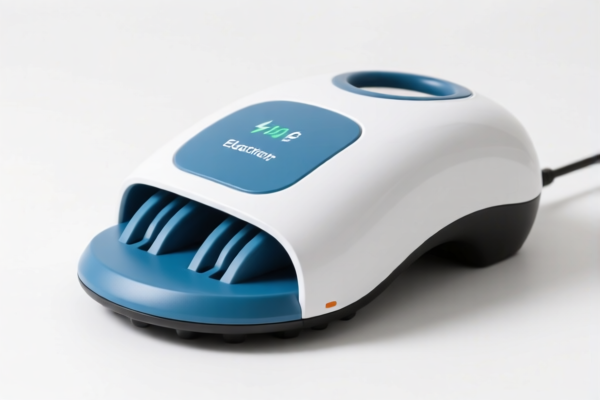
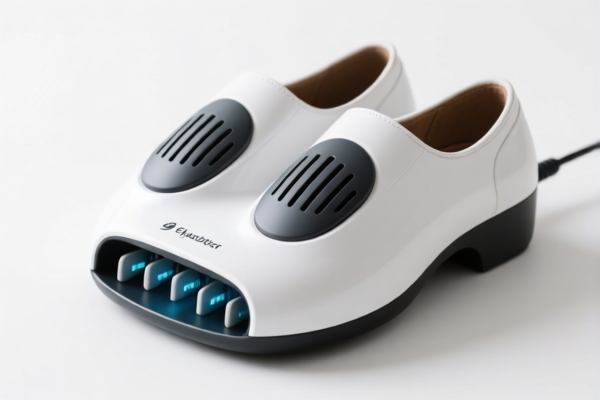
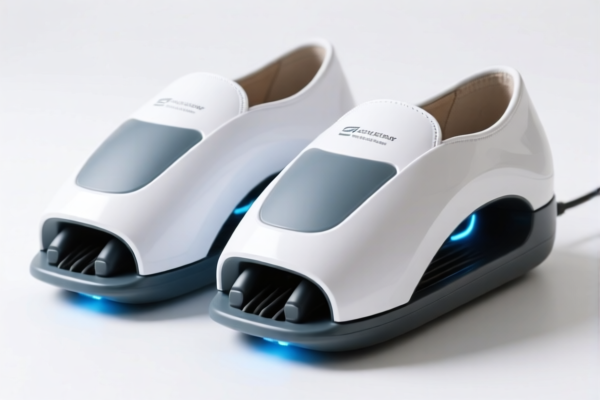
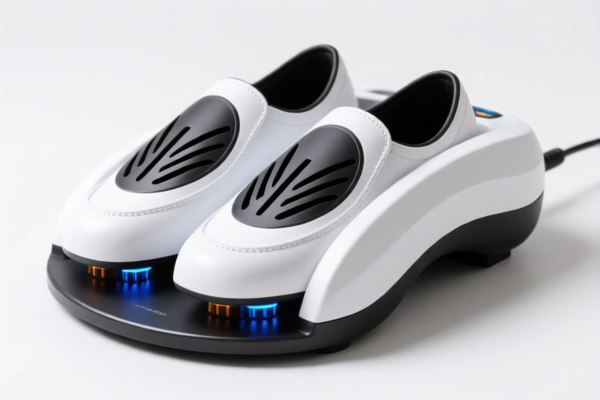
AI Analysis
👟 Shoe Dryer (Electric Foot & Shoe Dryer)
🌐 HS Code Reference & Customs Clearance Guide | 2026 Latest Tariff Analysis | Professional Clearance Strategy
📌 I. Product Definition & Classification: Do You Really Know What a "Shoe Dryer" Is?
A Shoe Dryer is an electrical appliance designed to dry, deodorize, and sanitize footwear. In international trade, its classification heavily depends on its specific function, power source, and structural composition. It is not a single unified category but falls into several distinct HS codes based on whether it is a simple heating element, a standalone dehumidifying unit, or a complex machine with motors.
⚠️ Key Distinction Points:
- If it is a simple heating wire/bulb unit for domestic use → 8516.xxxx
- If it is made primarily of plastic and classified as a general plastic article → 3926.90
- If it has independent functions like dehumidification or specific electrical heating elements not covered elsewhere → 8479.xxxx
- If it is a portable, localized heating device with specific structural features → 8516.29
📦 II. HS Code Classification Details (2026 Latest Tariff Authority Comparison)
Based on the provided data, here are the five possible classifications for Shoe Dryers, ranging from simple household appliances to complex mechanical devices.
| HS Code | Product Description | Applicability | Key Feature |
|---|---|---|---|
8516.79.00.00 |
Electric Room Heaters and Air Warmers, Other | Standard Household Shoe Dryers | Simple heating, no complex mechanics |
3926.90.99.89 |
Other Articles of Plastics | Plastic Housing/Body Shoe Dryers | Material-driven classification (Plastic) |
8479.89.10.00 |
Machines and Mechanical Appliances Having Individual Functions, Not Elsewhere Specified | Specialized Dehumidifying/Heating Units | Independent function (e.g., strong dehumidification) |
8479.89.65.00 |
Other Machines and Mechanical Appliances (With Self-Contained Electric Motor) | Motorized/Air-Circulating Shoe Dryers | Contains electric motor for air flow |
8516.29.00.60 |
Portable Electric Room Heaters and Soil Heaters | Portable/Local Heating Shoe Dryers | Portable, localized heating focus |
🔍 Critical Reminder:
- 8516.79.00.00 is the most common for basic, non-motorized electric shoe warmers.
- 8516.29.00.60 applies if the device is explicitly marketed as "portable" and for "local heating."
- 8479 codes apply if the device has significant mechanical complexity (motors, independent functions like dehumidification).
- 3926 is a fallback if the device is essentially a plastic accessory with minimal electrical functionality.
💰 III. 2026 Latest Tariff Rate Details (Including Additional Taxes, Policy Surcharges)
✅ Applicable Country: United States (US)
✅ Country of Origin: China (CN)
✅ Effective Date: 2025 onwards (Post-Section 301/122 Era)
🎯 1. 8516.79.00.00 —— Electric Room Heaters, Other (Standard Shoe Dryer)
| Item | Detail |
|---|---|
| Base Tariff | 2.7% |
| Section 301 Surcharge | 0.0% (Specific subhead exemption or zero rate for this specific code in some contexts, but check latest ITA) |
| Section 122 Tariff | 10% |
| Total Tariff Rate | 12.7% |
| Tax Calculation | CIF Value × 12.7% |
| De Minimis Eligibility | ✅ Yes (If under $800, may be exempt from duties, but check current CBP enforcement) |
| Legal Path | HTSUS: 8516.79.00.00 → Section 122: 10% |
📌 Explanation:
- This is the lowest tariff option among the listed codes.
- It applies to standard electric heaters/warmers that do not fall under more specific subheads (like hair dryers or water heaters).
- Advantage: Significantly lower cost compared to other classifications.
🎯 2. 3926.90.99.89 —— Other Articles of Plastics
| Item | Detail |
|---|---|
| Base Tariff | 5.3% |
| Section 301 Surcharge | 7.5% |
| Section 122 Tariff | 10% |
| Total Tariff Rate | 22.8% |
| Tax Calculation | CIF Value × 22.8% |
| De Minimis Eligibility | ✅ Yes (Under $800) |
| Legal Path | HTSUS: 3926.90.99.89 → Section 301: 7.5% → Section 122: 10% |
📌 Note:
- This classification is based on material (plastic) rather than function.
- It is usually higher than the electrical appliance code (8516) because it attracts both Section 301 and Section 122 tariffs.
- Risk: Only use this if the device is not primarily classified as an electrical appliance under Chapter 85.
🎯 3. 8479.89.10.00 —— Machines Having Individual Functions (Dehumidifying/Heating)
| Item | Detail |
|---|---|
| Base Tariff | 0.0% |
| Section 301 Surcharge | 25.0% |
| Section 122 Tariff | 10% |
| Total Tariff Rate | 35.0% |
| Tax Calculation | CIF Value × 35.0% |
| De Minimis Eligibility | ❌ No (Often excluded or high-risk) |
| Legal Path | HTSUS: 8479.89.10.00 → Section 301: 25% → Section 122: 10% |
📌 Explanation:
- High Tariff Zone. This code applies if the shoe dryer is considered a "machine" with an independent function like dehumidification.
- The 25% Section 301 tariff is the largest component.
- Recommendation: Avoid this classification unless the product is clearly a dehumidifier first, and a shoe dryer second.
🎯 4. 8479.89.65.00 —— Other Machines with Self-Contained Electric Motor
| Item | Detail |
|---|---|
| Base Tariff | 2.8% |
| Section 301 Surcharge | 7.5% |
| Section 122 Tariff | 10% |
| Total Tariff Rate | 20.3% |
| Tax Calculation | CIF Value × 20.3% |
| De Minimis Eligibility | ✅ Yes (Under $800) |
| Legal Path | HTSUS: 8479.89.65.00 → Section 301: 7.5% → Section 122: 10% |
📌 Note:
- Applies to shoe dryers with fans/motors for air circulation.
- Moderate tariff rate. Lower than the dehumidifier code (8479.89.10.00) but higher than the basic heater code (8516.79.00.00).
- Key Factor: Presence of an electric motor.
🎯 5. 8516.29.00.60 —— Portable Electric Room Heaters (Local Heating)
| Item | Detail |
|---|---|
| Base Tariff | 3.7% |
| Section 301 Surcharge | 25.0% |
| Section 122 Tariff | 10% |
| Total Tariff Rate | 38.7% |
| Tax Calculation | CIF Value × 38.7% |
| De Minimis Eligibility | ❌ No (High risk of scrutiny) |
| Legal Path | HTSUS: 8516.29.00.60 → Section 301: 25% → Section 122: 10% |
📌 Explanation:
- Highest Tariff Rate in the list.
- Applies if the shoe dryer is classified as a "portable heater" under this specific subhead.
- Why so high? The 25% Section 301 tariff is fully applicable here.
- Warning: Misclassifying a standard shoe dryer as "portable heater" under this code can lead to massive cost increases.
🛠️ IV. Customs Clearance Practical Advice (Real-World Pitfall Guide)
✅ 1. Documentation Checklist (Essential for Clearance)
| Document | Required | Purpose |
|---|---|---|
| ✅ Product Specification Sheet | ✔️ | Detail power (Watts), voltage, heating method (resistance vs. fan) |
| ✅ Circuit Diagram / Motor Info | ✔️ | To determine if it falls under 8516 (no motor) or 8479 (motor) |
| ✅ Product Photos (Labeled) | ✔️ | Show brand, model, input/output, and any "Made in China" labels |
| ✅ FCC Certification | ✔️ | Mandatory for any electrical device with electronic components in the US |
| ✅ Commercial Invoice | ✔️ | Must accurately describe the item (e.g., "Electric Shoe Warmer" not just "Dryer") |
| ✅ Packing List | ✔️ | Show units, weight, and dimensions |
✅ 2. Classification Strategy (Key Rules)
🔥 “Function First, Material Second; Motor vs. No Motor is Key!”
| Scenario | Correct HS Code | Tariff Rate | Reason |
|---|---|---|---|
| Basic Electric Heating Pad/Wire for Shoes | 8516.79.00.00 |
12.7% | No motor, simple heating function |
| Plastic Shoe Dryer with No Electrical Parts | 3926.90.99.89 |
22.8% | Rare, only if no heating element (e.g., just a cover) |
| Shoe Dryer with Fan (Motor) | 8479.89.65.00 |
20.3% | Has self-contained electric motor |
| Shoe Dryer + Dehumidifier Function | 8479.89.10.00 |
35.0% | Independent function beyond heating |
| Portable Local Heater (Misclassified) | 8516.29.00.60 |
38.7% | Avoid this if possible due to high 301 tax |
📌 Critical Warning:
- Do not classify a simple electric shoe warmer as8516.29.00.60(38.7%) if it fits8516.79.00.00(12.7%).
- Do not classify a motorized shoe dryer as8516(12.7%) if it has a significant motor function that pushes it into8479.
✅ 3. Special Cases Handling
| Case | Handling Advice |
|---|---|
| OEM Custom Shoe Dryers | Provide clear specs showing it's a standard heater, not a "machine" |
| Combined Shoe Dryer + Sterilizer (UV/Ozone) | Still likely 8516.79.00.00 if heating is primary function |
| Shoe Dryer with Dehumidification | Risk of being classified under 8479.89.10.00 (35%). Provide data showing heating is primary. |
| Small Portable Ones | If under $800, De Minimis may apply, but ensure correct HS code to avoid post-audit penalties |
🌍 V. Global Customs Comparison (2026 Latest)
| Country/Region | Recommended HS Code | Tariff (China Origin) | Certification | Notes |
|---|---|---|---|---|
| 🇺🇸 USA | 8516.79.00.00 |
12.7% | FCC, UL (if marked) | Best Rate. Avoid 8516.29 (38.7%) |
| 🇨🇳 China | 8516.79.00.00 |
5% - 10% | CCC (if applicable) | Lower base tariff |
| 🇪🇺 EU | 8516.79.00.00 |
0% - 6% | CE, RoHS | No Section 301/122 tariffs |
| 🇬🇧 UK | 8516.79.00.00 |
0% - 6% | UKCA, RoHS | Post-Brexit rules apply |
| 🇦🇺 Australia | 8516.79.00.00 |
5% | RCM, SAA | Lower base tariff |
📌 Conclusion:
- USA is the most expensive market due to Section 301 and Section 122 tariffs.
- Classification is everything: A 26% difference exists between8516.79(12.7%) and8516.29(38.7%).
- EU/Asia are far more favorable with 0% - 10% tariffs.
📌 VI. Common Mistakes & Pitfall Guide (Lessons Learned)
❌ Mistake 1: Classifying a motorized shoe dryer as a simple heater (8516.79) to save 7.6%
👉 Consequence: Customs audit, penalty, and retroactive taxes. Motorized devices often fall under 8479.
❌ Mistake 2: Using 8516.29.00.60 (38.7%) for a standard shoe dryer
👉 Consequence: Overpaying 26% in tariffs. This code is for specific "portable heaters" not typically used for shoes.
❌ Mistake 3: Ignoring FCC Certification for any electrical shoe dryer
👉 Consequence: Cargo seized at US border. All electrical devices need FCC ID.
❌ Mistake 4: Declaring "Plastic Shoe Cover" when it's an electrical heater
👉 Consequence: Fraud risk. Misdeclaration leads to severe penalties.
✅ Correct Approach:
"Electric Shoe Warmer, Resistive Heating, 200W, 110V, Non-Motorized, Model XYZ, FCC Certified"
🎯 VII. Conclusion: Precision Classification Saves Money!
🎯 Remember the Golden Rule:
🔹 "Simple Heat = 8516.79 (12.7%)"
🔹 "Motor = 8479.89.65 (20.3%)"
🔹 "Portable Heater = 8516.29 (38.7%) – AVOID!"
🔹 "Dehumidifier = 8479.89.10 (35.0%) – HIGH RISK"
📌 Pro Tip:
- If your shoe dryer is simple resistive heating (no fan/motor), strictly use 8516.79.00.00.
- Always include FCC Certification for US imports.
- For values under $800, ensure the HS code is correct to maximize De Minimis benefits, but be aware that some codes (8479.89.10.00) may be scrutinized more heavily.
📣 Immediate Action:
📞 Consult your freight forwarder with the product spec sheet to confirm if your shoe dryer has a motor.
🚀 Classify correctly to save up to 26% in tariffs!
✨ Professional Clearance Starts with Accurate Classification!
💼 Every Percent Matters in International Trade!
Customer Reviews
About HS Code Classification
The Harmonized System (HS) is an internationally standardized nomenclature developed by the World Customs Organization (WCO) to classify traded products. Over 200 countries use the HS system as the basis for customs tariffs, trade statistics, and import/export regulations.
Each HS code follows a hierarchical structure:
- Chapter (2 digits) — Broad category of goods (e.g., Chapter 84: Machinery and Mechanical Appliances)
- Heading (4 digits) — More specific grouping within the chapter
- Subheading (6 digits) — Internationally standardized breakdown, used by all WCO member countries
- National subdivisions (8-10 digits) — Country-specific extensions for further classification, such as US HTSUS 10-digit codes
Correct HS code classification is essential for smooth customs clearance, accurate duty payment, and compliance with trade regulations. Misclassification can lead to customs delays, overpayment of duties, or penalties.
When importing from CN to US, the applicable tariff rates may include:
- Most-Favored-Nation (MFN) rate — The standard duty rate applied to WTO members
- General rate — Applied to countries without trade agreements
- Trade remedy duties — Additional tariffs such as Section 301 (anti-dumping), Section 232 (national security), or countervailing duties
The information provided on this page is for reference purposes only. For official classification, please consult with your local customs authority or a licensed customs broker.