Shoe Heel Anti slip Stickers
CN → US| HS Code | Tariff Rate | Origin | Destination | Doc |
|---|---|---|---|---|
| 3919102055 | 40.8% | CN | US | Official Doc |
| 4016996050 | 37.5% | CN | US | Official Doc |
| 5907006000 | 35.0% | CN | US | Official Doc |
| 4016910000 | 37.7% | CN | US | Official Doc |
| 3919905060 | 40.8% | CN | US | Official Doc |
Product Images
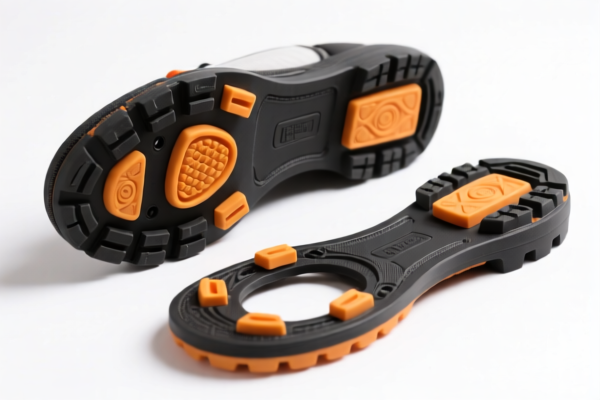
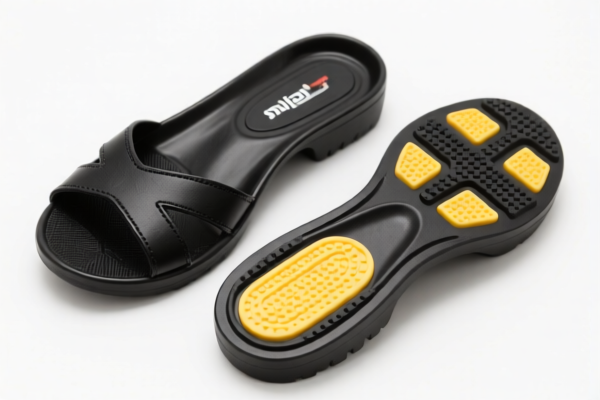
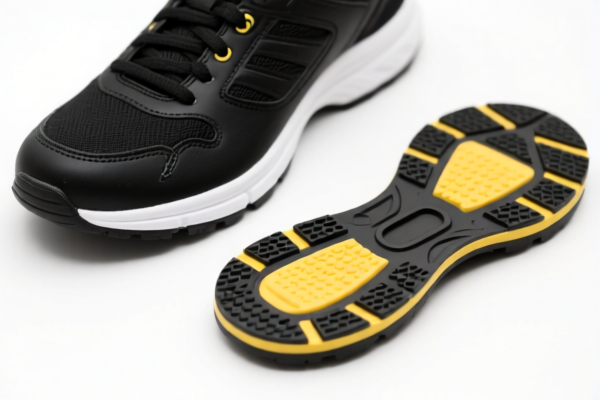
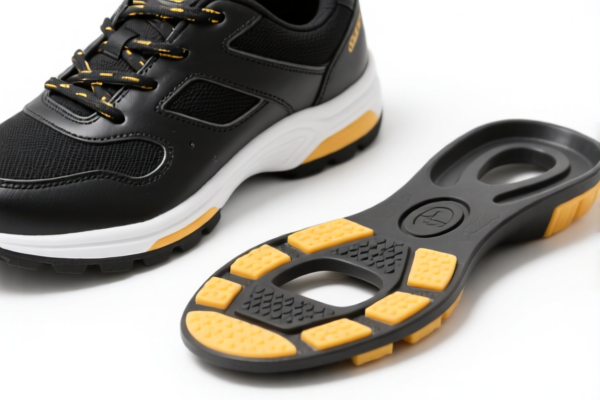
AI Analysis
👠 Shoe Heel Anti-Slip Stickers (Protective Patches)
🌐 HS Code Reference & Customs Clearance Guide | 2026 Latest Tariff Analysis | Professional Clearance Strategy
📌 I. Product Definition & Classification: What Exactly Are "Heel Anti-Slip Stickers"?
Shoe Heel Anti-Slip Stickers are small, adhesive-backed accessories designed to prevent shoe heels from slipping on smooth surfaces (like hardwood or tile) and to protect the heel tip from wear. In international trade, their classification depends heavily on the primary material and the specific function.
While they seem simple, customs authorities scrutinize them based on whether they are classified as plastic sheets, rubber articles, textile materials, or carpet-like items.
⚠️ Critical Distinction:
- If made of Plastic (PVC/PE) with adhesive → Look at Chapter 39
- If made of Rubber/Elastomer → Look at Chapter 40
- If made of Textile/Fabric (impregnated) → Look at Chapter 59
- If shaped like a pad/mat → Look at Chapter 40 (Other Rubber Articles)
📦 II. HS Code Classification Details (2026 Latest Tariff Alignment)
Based on the provided data, here are the 5 possible HS Code classifications for this product, categorized by material composition:
| HS Code | Product Description & Material Basis | Key Characteristics | Total Tax Rate (US/China) |
|---|---|---|---|
| 3919.10.20.55 | Plastic-based: Flat, self-adhesive sheets for anti-slip use. | Made of PVC/PE/Plastic; Pre-cut or in rolls; Adhesive backing is integral. | 40.8% |
| 4016.99.60.50 | Rubber-based: Vulcanized rubber articles, other. | Made of rubber or similar elastic bodies;硫化橡胶 (Vulcanized); Not carpet/pad specific. | 37.5% |
| 5907.00.60.00 | Textile-based: Textile fabric impregnated/coated/covered. | Made of artificial/synthetic fibers; Treated for anti-slip/waterproof properties. | 35.0% |
| 4016.91.00.00 | Rubber/Plastic-based: Carpet and mat articles. | Shaped like a pad/mat; Often used for heel protection but classified under "mats". | 37.7% |
| 3919.90.50.60 | Plastic-based: Other self-adhesive plastic products. | General plastic adhesive products; PVC/PE; Flat shape; Not specifically "sheets for flooring". | 40.8% |
🔍 Key Insight:
- Plastic vs. Rubber: Plastic (Ch. 39) tends to have a higher base tariff (5.8%) but same add-ons. Rubber (Ch. 40) has a lower base tariff (2.5%-2.7%) but still incurs high add-ons.
- Textile (Ch. 59) offers the lowest total tax (35.0%) because the base tariff is 0%, but it must be genuinely textile-based, not just plastic-coated fabric.
💰 III. 2026 Latest Tariff Rate Breakdown (Including Add-on Tariffs)
✅ Applicable Country: United States (US)
✅ Origin: China (CN)
✅ Effective Date: From November 10, 2025 (and subsequent imports)
The tax structure for all these HS Codes follows a consistent pattern of Base Tariff + Section 301 Tariff (25%) + IEEPA Tariff (10%).
🎯 1. Plastic-Based Stickers (HS Codes: 3919.10.20.55 / 3919.90.50.60)
| Item | Detail |
|---|---|
| Base Tariff | 5.8% (Ad Valorem) |
| Section 301 Tariff | +25.0% (From USITC Footnote 9903.88.01) |
| IEEPA Tariff | +10.0% (Against China/HK products, effective Nov 10, 2025) |
| Total Effective Tax Rate | 40.8% |
| Tax Calculation | CIF Value × 40.8% |
| De Minimis Exemption | ❌ NOT Eligible (deny_de_minimis) |
| Legal Path | IEEPA:9903.01.25 → Section 301: 25% → Base: 5.8% |
📌 Explanation:
- These products are made of plastic (PVC/PE) with adhesive.
- The 5.8% base is standard for plastic sheets.
- The 35% add-on (25% + 10%) makes the total cost significant.
- Warning: Misdeclaring as "Textile" to get 35% is risky if the material is plastic.
🎯 2. Rubber-Based Stickers (HS Codes: 4016.99.60.50 / 4016.91.00.00)
| Item | Detail |
|---|---|
| Base Tariff | 2.5% (for 4016.99.60.50) or 2.7% (for 4016.91.00.00) |
| Section 301 Tariff | +25.0% |
| IEEPA Tariff | +10.0% |
| Total Effective Tax Rate | 37.5% (for 4016.99.60.50) or 37.7% (for 4016.91.00.00) |
| Tax Calculation | CIF Value × 37.5% / 37.7% |
| De Minimis Exemption | ❌ NOT Eligible |
📌 Explanation:
- If the anti-slip sticker is made of vulcanized rubber, it falls under Chapter 40.
- The base tariff is lower (2.5-2.7%), resulting in a slightly lower total tax than plastic.
- 4016.91.00.00 is for "Carpet and Mat" articles; if the heel sticker is shaped like a small mat, this might apply, but 4016.99.60.50 ("Other") is more common for small adhesive patches.
🎯 3. Textile-Based Stickers (HS Code: 5907.00.60.00)
| Item | Detail |
|---|---|
| Base Tariff | 0.0% |
| Section 301 Tariff | +25.0% |
| IEEPA Tariff | +10.0% |
| Total Effective Tax Rate | 35.0% |
| Tax Calculation | CIF Value × 35.0% |
| De Minimis Exemption | ❌ NOT Eligible |
📌 Explanation:
- This is the lowest tax option (35.0%).
- Condition: The product MUST be a textile fabric (natural or synthetic fibers) that is impregnated, coated, covered, or laminated (e.g., fabric with rubbery anti-slip dots).
- Risk: If the product is primarily plastic with a fabric backing, customs may reclassify it as Plastic (3919) or Rubber (4016). Evidence of textile composition is required.
🛠️ IV. Customs Clearance Practical Advice (Pitfall Avoidance Guide)
✅ 1. Required Documentation Checklist (Must-Have)
| Document | Mandatory? | Description |
|---|---|---|
| ✅ Product Specification Sheet | ✔️ | Must clearly state Material Composition (e.g., "100% PVC", "Rubber + Adhesive", "Cotton Fabric with TPU Coating"). |
| ✅ Product Photos (Front/Back) | ✔️ | Show the adhesive side, the anti-slip surface, and any packaging. |
| ✅ Commercial Invoice | ✔️ | Accurately describe the item. Avoid vague terms like "Shoe Parts." Use "Plastic Anti-Slip Heel Patches." |
| ✅ Material Test Report | ✔️ | Third-party lab report confirming material (e.g., FTIR test for Plastic vs. Rubber vs. Textile). Crucial for avoiding reclassification. |
| ✅ Packing List | ✔️ | List quantity per box/carton. |
✅ 2. Declaration Tips (Key Mantras)
🔥 "Material Defines Code, Adhesive Defines Chapter 39/59, Rubber Defines 40!"
| Scenario | Correct HS Code | Risk of Wrong Classification |
|---|---|---|
| PVC/Plastic Sheet with Adhesive | 3919.10.20.55 or 3919.90.50.60 |
Misdeclaring as Textile → 5.8% Base vs 0% Base risk. |
| Rubber Patch with Adhesive | 4016.99.60.50 |
Misdeclaring as Plastic → 2.5% Base vs 5.8% Base error. |
| Fabric with Anti-Slip Coating | 5907.00.60.00 |
Must prove textile is primary. If plastic coating is heavy, could be reclassified. |
| Small Rubber "Mat" Shape | 4016.91.00.00 |
If it looks like a tiny floor mat, this may apply. |
✅ 3. Special Handling for "De Minimis" (Section 321)
🚫 CRITICAL WARNING:
Despite being small items (often under $800 per shipment), Shoe Heel Anti-Slip Stickers from China are NOT eligible for De Minimis exemption (Section 321) due to the following:
- Section 301 Tariff (25%) and IEEPA Tariff (10%) explicitly override De Minimis for most goods from China.
- Thedeny_de_minimisflag is active for these HS codes.
- Result: Even small shipments must go through formal entry, pay the full 35-40.8% tax, and incur customs brokerage fees.
- Strategy: Do not rely on "gift" or "low value" loopholes. Plan for formal clearance costs.
🌍 V. Global Market Clearance Comparison (2026 Latest)
| Country/Region | Recommended HS Code | Total Tax Rate (China Origin) | Notes |
|---|---|---|---|
| 🇺🇸 USA | 3919.10.20.55 / 5907.00.60.00 |
35.0% - 40.8% | High add-on tariffs (35%). De Minimis denied. |
| 🇨🇳 China | 3919.10.20.55 |
~5-10% | Lower base tariff, no Section 301. |
| 🇪🇺 EU | 3919.10.00 |
~5-8% | No 25% or 10% add-ons. Much more favorable. |
| 🇬🇧 UK | 3919.10.00 |
~5-8% | Post-Brexit tariffs similar to EU. |
| 🇦🇺 Australia | 3919.10.00 |
~5% | No additional punitive tariffs. |
📌 Conclusion:
- The US market is the most challenging due to the 35%+ effective tax rate.
- For non-US markets (EU, UK, Australia, China), the tax burden is significantly lower.
- If your primary market is the US, consider supply chain diversification (e.g., sourcing from Vietnam or Thailand if eligible for IEEPA exemption) or price absorption.
📌 VI. Common Errors & Pitfalls (Lessons Learned)
❌ Error 1: Declaring "Plastic Stickers" as "Textile Patches" to get 35% tax.
👉 Consequence: Customs requests material test. If FTIR shows plastic, penalty + back taxes.
❌ Error 2: Assuming small quantity = De Minimis exemption.
👉 Consequence: Shipment held at border, delays, and forced formal entry with full taxes.
❌ Error 3: Using vague descriptions like "Shoe Accessories."
👉 Consequence: Customs assigns highest possible tax rate or reclassification risk.
❌ Error 4: Confusing "Anti-Slip Mats" (Carpet) with "Adhesive Stickers."
👉 Consequence: Misclassification under 4016.91.00.00 may be challenged if it's clearly a small adhesive patch, not a mat.
✅ Correct Approach:
"Plastic Anti-Slip Heel Stickers, PVC Material, Self-Adhesive, For Shoe Protection, Model XYZ, HS Code 3919.10.20.55"
🎯 VII. Conclusion: Professional Declaration for Cost Optimization
🎯 Remember the Mantra:
🔹 "Material is King: Plastic=39, Rubber=40, Textile=59."
🔹 "US Market Sucks: 35-40% Tax, No De Minimis, Plan Ahead!"
🔹 "Get a Material Test: Save Money, Avoid Penalties."
📌 Pro Tip:
If you are shipping to the US, apply for an Advance Ruling from CBP (Customs and Border Protection) if you are unsure about the classification. It provides legal certainty. Also, check if your specific product design qualifies for any exclusions under Section 301 (though unlikely for simple plastic/rubber stickers).
📣 Immediate Action:
📞 Contact your customs broker with material test reports.
📦 Ensure your Commercial Invoice matches the HS Code material description.
🚀 Budget for 35-40% tax for US shipments. Do not underestimate the cost!
✨ Professional Clearance Starts with Precise Classification!
💼 Your Every Penny Counts in Cross-Border Trade!
Customer Reviews
About HS Code Classification
The Harmonized System (HS) is an internationally standardized nomenclature developed by the World Customs Organization (WCO) to classify traded products. Over 200 countries use the HS system as the basis for customs tariffs, trade statistics, and import/export regulations.
Each HS code follows a hierarchical structure:
- Chapter (2 digits) — Broad category of goods (e.g., Chapter 84: Machinery and Mechanical Appliances)
- Heading (4 digits) — More specific grouping within the chapter
- Subheading (6 digits) — Internationally standardized breakdown, used by all WCO member countries
- National subdivisions (8-10 digits) — Country-specific extensions for further classification, such as US HTSUS 10-digit codes
Correct HS code classification is essential for smooth customs clearance, accurate duty payment, and compliance with trade regulations. Misclassification can lead to customs delays, overpayment of duties, or penalties.
When importing from CN to US, the applicable tariff rates may include:
- Most-Favored-Nation (MFN) rate — The standard duty rate applied to WTO members
- General rate — Applied to countries without trade agreements
- Trade remedy duties — Additional tariffs such as Section 301 (anti-dumping), Section 232 (national security), or countervailing duties
The information provided on this page is for reference purposes only. For official classification, please consult with your local customs authority or a licensed customs broker.