Shoe Label Paper
CN → US| HS Code | Tariff Rate | Origin | Destination | Doc |
|---|---|---|---|---|
| 4821102000 | 35.0% | CN | US | Official Doc |
| 4821104000 | 35.0% | CN | US | Official Doc |
| 4911996000 | 17.5% | CN | US | Official Doc |
| 4911998000 | 17.5% | CN | US | Official Doc |
Product Images
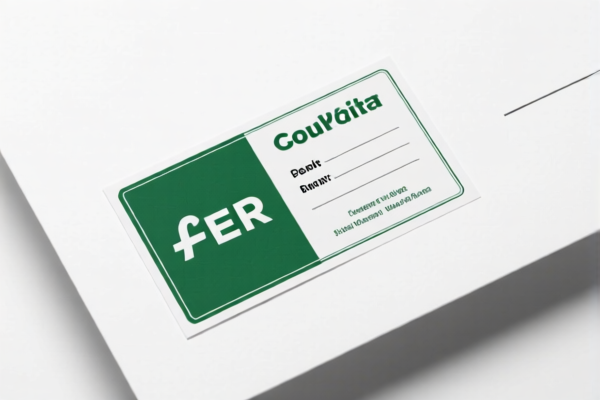

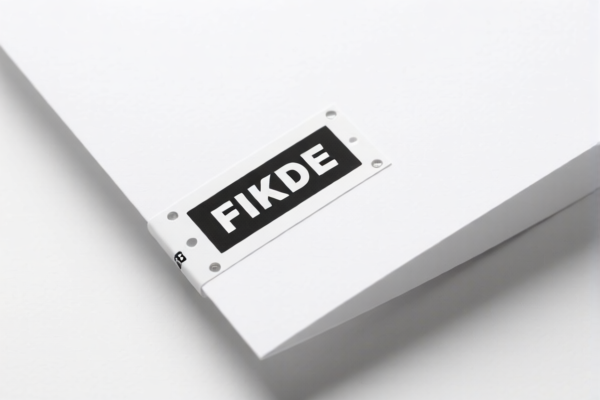
AI Analysis
🏷️ Shoe Label Paper (Labels for Footwear)
🌐 HS Code Reference & Customs Clearance Guide | 2026 Latest Tariff Analysis | Professional通关 Strategy
📌 I. Product Definition & Classification: Do You Really Understand "Shoe Label Paper"?
Shoe label paper refers to adhesive or non-adhesive paper products printed with brand information, size, material composition, and care instructions, specifically designed for attachment to footwear. In international trade, these items are classified based on their material composition, printing technology, and intended use.
Key distinctions in classification: * Paper Labels (HS 4821): Specifically manufactured as labels, made from paper/cardboard, and printed. This is the most direct classification for "Shoe Labels." * Other Printed Paper Goods (HS 4911): General printed paper items that do not fit the specific definition of "labels" in HS 4821, or broader categories of printed matter.
⚠️ Key Distinction Point:
- If the product is explicitly defined as a "label" (small piece of paper for affixing to goods) and made of paper → HS 4821.10 is the primary category.
- If it is a general printed paper item (e.g., a large sheet of printed paper not yet cut into specific label formats, or falling under broader "printed matter" definitions) → HS 4911.99 may apply.
📦 II. HS Code Classification Details (2026 Latest Tariff Authority Comparison)
| HS Code | Product Description | Application Scenario | Material/Feature Match |
|---|---|---|---|
4821.10.20.00 |
Paper labels, falling within the category of paper and paperboard labels, no conflict in printing process | Specific shoe size/brand labels, adhesive paper tags | ✅ Matches paper/cardboard label definition |
4821.10.40.00 |
Paper material labels, used for printing, shape conforms to label definition | General paper labels for footwear, pre-printed label rolls | ✅ Matches paper label definition |
4911.99.60.00 |
Printed paper goods, conforms to features of products printed on paper using planographic printing | General printed paper instructions, brochures, or non-specific printed paper for shoes | ✅ Matches printed paper characteristics |
4911.99.80.00 |
Other printed matter, paper labels fall under the category of printed matter, no material conflict in usage background | Broad category of printed paper items not specified elsewhere | ✅ Matches broad printed paper category |
🔍 Important Reminder:
- HS 4821 is the most precise classification for items explicitly designed and defined as "labels." Customs authorities often prefer this code for dedicated labeling products. - HS 4911 is a broader category for printed papers. It may be used if the item doesn't strictly meet the technical definition of a "label" in HS 4821, or if it's a general printed paper good. - Misclassification Risk: Declaring specific "labels" as "general printed matter" (HS 4911) when they fit HS 4821 may lead to customs queries or reclassification, potentially affecting duty rates and clearance speed.
💰 III. 2026 Latest Tariff Rate Details (Including Surtaxes & Policy Additions)
✅ Applicable Country: United States (US)
✅ Origin: China (CN)
✅ Effective Date: From November 10, 2025 (including subsequent imports)
🎯 1. 4821.10.20.00 & 4821.10.40.00 —— Paper Labels (HS 4821)
| Item | Content |
|---|---|
| Base Tariff Rate | 0% (ad valorem) |
| USITC Surtax | +25% (from USITC Footnote related to Section 301) |
| IEEPA Surtax | +10% (Targeting China/HK products, effective from Nov 10, 2025) |
| Total Tax Rate | 35.0% |
| Tax Calculation | CIF Value × 35% |
| De Minimis Exemption | ❌ Not Available (deny_de_minimis) |
| Legal Basis Path | USITC:4821.10.20.00/40.00 → FOOTNOTE:301_Section → IEEPA:China_Surtax |
📌 Explanation:
- The 25% USITC surtax is part of the Section 301 tariffs on Chinese goods. - The 10% IEEPA surtax is an additional penalty tariff under the International Emergency Economic Powers Act. - Total 35% is a high tariff rate for simple paper products. Accurate classification is crucial to avoid overpayment or underpayment disputes.
🎯 2. 4911.99.60.00 & 4911.99.80.00 —— Other Printed Paper Goods (HS 4911)
| Item | Content |
|---|---|
| Base Tariff Rate | 0% (ad valorem) |
| USITC Surtax | +7.5% (Reduced rate under certain conditions or specific HTS listings) |
| IEEPA Surtax | +10% (Targeting China/HK products, effective from Nov 10, 2025) |
| Total Tax Rate | 17.5% |
| Tax Calculation | CIF Value × 17.5% |
| De Minimis Exemption | ❌ Not Available (deny_de_minimis) |
| Legal Basis Path | USITC:4911.99.60.00/80.00 → FOOTNOTE:301_Section → IEEPA:China_Surtax |
📌 Note:
- While the base rate is the same (0%), the USITC surtax is significantly lower (7.5% vs. 25%) for these codes under certain interpretations or specific tariff exclusions. - However, using HS 4911 for specific "labels" carries compliance risk. Customs may challenge the classification if the product is undeniably a "label" (HS 4821). - Total 17.5% is much lower than the 35% for HS 4821, but only if the classification is defensible.
🛠️ IV. Customs Clearance Practical Advice (Real-World Pitfall Avoidance Guide)
✅ 1. Documentation Checklist (All Mandatory)
| Document | Required | Explanation |
|---|---|---|
| ✅ Product Specification Sheet | ✔️ | Must clearly state "Shoe Label," material (Paper), dimensions, and printing method. |
| ✅ Product Photos (Front & Back) | ✔️ | Show the label attached to a shoe, if possible, or the label itself with printed text. |
| ✅ Commercial Invoice | ✔️ | Must describe the item accurately as "Paper Labels for Shoes" or "Printed Paper Labels." Avoid vague terms like "Paper Goods." |
| ✅ Packing List | ✔️ | Specify quantity, weight, and packaging type (rolls, sheets, cut labels). |
| ✅ Certificate of Origin (CO) | ✔️ | If applicable, to prove origin. |
✅ 2. Declaration Tips (Key Mnemonics)
🔥 "Labels go to 4821, Printed Paper to 4911. Be precise, avoid fines!"
| Scenario | Correct Declaration | Incorrect Practice |
|---|---|---|
| Specific Shoe Labels (Pre-cut, adhesive, printed with brand/size) | 4821.10.20.00 or 4821.10.40.00 |
Declare as "Paper" or "Printed Matter" → Risk of reclassification & penalties |
| General Printed Paper Sheets (Not yet cut into labels, or for general use) | 4911.99.80.00 |
Declare as "Labels" → Potential mismatch with physical item |
| Plain Paper Rolls (Unprinted) | Not applicable (Different HS) | Do not declare as printed label |
✅ 3. Special Considerations
| Situation | Handling Advice |
|---|---|
| OEM Custom Labels | Provide the customer’s design file or sample. Clearly state "Custom Printed Shoe Labels" to justify HS 4821. |
| Adhesive vs. Non-Adhesive | Both can fall under HS 4821 if they are "labels." Ensure the description reflects their adhesive nature if applicable. |
| High-Value Shipment | Consider applying for an HTS Exclusion if available for specific paper labels, though rare. |
| Misclassification Risk | If customs questions the use of HS 4911 for a product clearly identifiable as a label, be prepared to justify why it does not fit HS 4821. |
🌍 V. Global Market Comparison (2026 Latest)
| Country/Region | Recommended HS Code | Tariff (China Origin) | Certification | Notes |
|---|---|---|---|---|
| 🇺🇸 USA | 4821.10.xxxx |
35% | None typically | Highest risk/cost. HS 4911 is 17.5% but risky. |
| 🇨🇳 China | 4821.10.20.00 |
0% | None | Domestic trade, no import tariff. |
| 🇪🇺 EU | 4821.10.20.00 |
4.2% | None | Standard MFN rate. |
| 🇬🇧 UK | 4821.10.20.00 |
4.2% | None | Post-Brexit, similar to EU. |
| 🇯🇵 Japan | 4821.10.20.00 |
6% | None | Standard rate. |
📌 Conclusion:
- The US is the most challenging market due to the 35% total tariff on HS 4821 labels.
- HS 4911 (17.5%) offers savings but carries classification risk.
- Other markets have significantly lower tariffs, making exports from China more competitive.
📌 VI. Common Mistakes & Pitfall Guide (Lessons Learned)
❌ Mistake 1: Declaring "Shoe Labels" as "Paper" (HS 4802)
👉 Consequence: Incorrect classification → Penalties + Back Duties. Labels are specifically covered under HS 4821.
❌ Mistake 2: Using HS 4911 to reduce tariffs without justification
👉 Consequence: Customs audit → Reclassification to HS 4821 → Back 17.5% difference + fines.
❌ Mistake 3: Vague description "Paper Goods" on Invoice
👉 Consequence: Customs delay → Request for additional documentation → Increased clearance time.
❌ Mistake 4: Ignoring IEEPA 10% Surcharge
👉 Consequence: Underpayment of duties → Seizure of goods or Debt collection.
✅ Correct Practice:
"Paper Labels for Footwear, Printed, Adhesive, Model XYZ, 10,000 pcs"
HS Code:4821.10.20.00
🎯 VII. Conclusion: Professional Declaration Saves Money!
🎯 Remember the Key Points:
🔹 "Labels are 4821, Printed Matter is 4911. Choose wisely!"
🔹 "35% vs 17.5% is a big difference, but compliance is key!"
🔹 "Vague descriptions lead to delays, precise ones lead to smooth clearance!"
📌 Pro Tip:
If you are unsure whether your product fits HS 4821 or HS 4911, consult a customs broker before shipment. Consider applying for a Binding Ruling from US Customs to confirm the correct HS code and avoid surprises.
📣 Immediate Action:
📞 Contact a licensed customs broker + Provide clear product photos + Confirm HS Code
🚀 Ensure smooth customs clearance, avoid penalties, and protect your profit margins!
✨ Professional Customs Clearance Starts with Accurate Classification!
💼 Every penny counts in global trade!
Customer Reviews
About HS Code Classification
The Harmonized System (HS) is an internationally standardized nomenclature developed by the World Customs Organization (WCO) to classify traded products. Over 200 countries use the HS system as the basis for customs tariffs, trade statistics, and import/export regulations.
Each HS code follows a hierarchical structure:
- Chapter (2 digits) — Broad category of goods (e.g., Chapter 84: Machinery and Mechanical Appliances)
- Heading (4 digits) — More specific grouping within the chapter
- Subheading (6 digits) — Internationally standardized breakdown, used by all WCO member countries
- National subdivisions (8-10 digits) — Country-specific extensions for further classification, such as US HTSUS 10-digit codes
Correct HS code classification is essential for smooth customs clearance, accurate duty payment, and compliance with trade regulations. Misclassification can lead to customs delays, overpayment of duties, or penalties.
When importing from CN to US, the applicable tariff rates may include:
- Most-Favored-Nation (MFN) rate — The standard duty rate applied to WTO members
- General rate — Applied to countries without trade agreements
- Trade remedy duties — Additional tariffs such as Section 301 (anti-dumping), Section 232 (national security), or countervailing duties
The information provided on this page is for reference purposes only. For official classification, please consult with your local customs authority or a licensed customs broker.