Shoe Leather Components
CN → US| HS Code | Tariff Rate | Origin | Destination | Doc |
|---|---|---|---|---|
| 4205008000 | 35.0% | CN | US | Official Doc |
| 6406909000 | 17.5% | CN | US | Official Doc |
| 4205002000 | 35.0% | CN | US | Official Doc |
| 4205008000 | 35.0% | CN | US | Official Doc |
| 4205001000 | 35.0% | CN | US | Official Doc |
Product Images
AI Analysis
👞 Shoe Leather Components (Leather Parts for Footwear)
🌐 HS Code Reference & Customs Clearance Guide | 2026 Latest Tariff Analysis | Professional Entry Strategy
📌 Part 1: Product Definition & Classification: Do You Really Understand "Leather Shoe Components"?
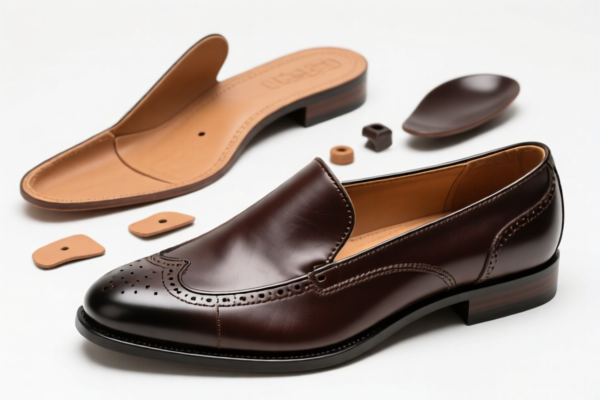
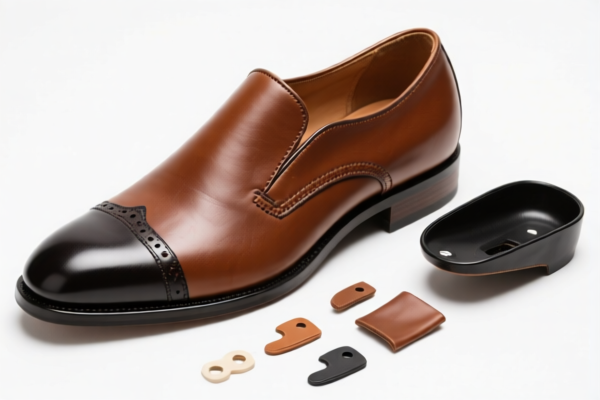
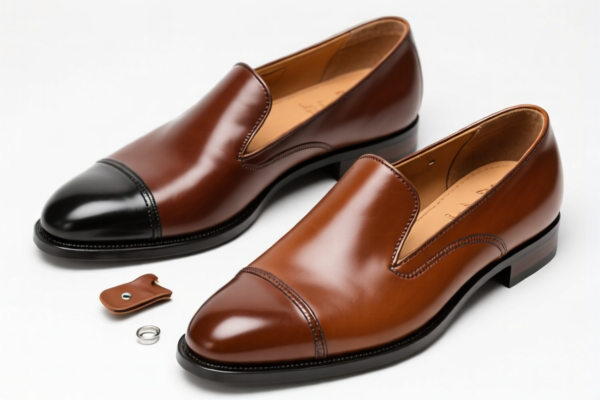
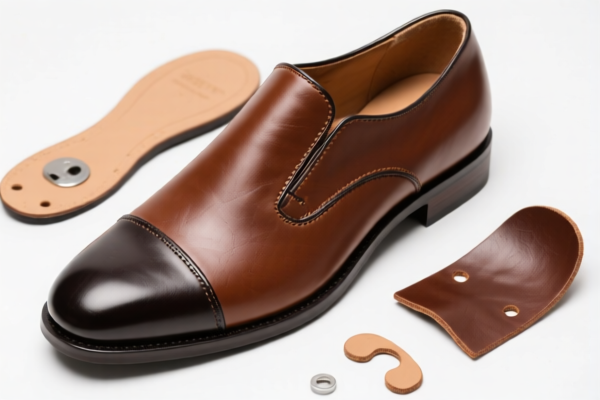
Shoe Leather Components refer to accessories or parts made of leather or composite leather intended for use in footwear manufacturing or repair. In international trade, classification depends heavily on material composition and specific form.
Composite Leather (Reconstituted Leather): Made from leather fibers bonded with chemicals; often classified under "Other Articles of Leather".
Genuine Leather Parts: Solid leather strips, patches, or reinforcements; also typically classified under "Other Articles of Leather" unless specifically listed elsewhere.
⚠️ Key Distinction Point:
- If the item is a general shoe accessory made of leather/composite leather (e.g., patches, lining, decorative strips) → Classified under 4205.00 (Other articles of leather).
- If the item is a structural sole component or specific shoe part not made of leather, or if the material is ambiguous → May fall under 6406.90 (Parts of footwear).
- Shoelaces made of leather? → Often grouped under general leather articles (4205) unless specified otherwise.
📦 Part 2: HS Code Classification Details (2026 Latest Tariff Authority Comparison)
Based on the provided data, here are the applicable HS Codes and their logical reasoning:
| HS Code | Product Description | Application Scenario | Reasoning for Classification |
|---|---|---|---|
4205.00.80.00 |
Other articles of leather (including composite leather), not elsewhere specified | General shoe accessories, leather patches, composite leather parts | ✅ Primary Match: Items made of leather/composite leather that do not fit specific footwear part definitions elsewhere. |
6406.90.90.00 |
Parts of footwear, not specified elsewhere | Structural shoe parts where material is unclear or not explicitly leather | ✅ Fallback Category: Used when material is unconfirmed or non-leather, acting as a catch-all for shoe parts. |
4205.00.20.00 |
Other articles of leather, specifically including leather shoelaces | Leather shoelaces, leather tie-ins | ✅ Specific Match: Explicitly includes shoelaces made of leather/regenerated leather. |
4205.00.10.00 |
Other articles of leather, apparel accessories | Composite leather parts for clothing/shoes that fit "other leather goods" | ✅ Match: Fits composite leather items used as accessories, falling under "other leather articles". |
🔍 Critical Reminder:
- If the material is confirmed leather or composite leather, the primary classification path is Chapter 42 (4205).
- If the material is unclear or non-leather, it defaults to Chapter 64 (6406.90.90.00) as a fallback for "parts of footwear".
- Shoelaces made of leather are explicitly covered under 4205.00.20.00.
💰 Part 3: 2026 Latest Tariff Rate Details (Including Surcharges & Policy Add-ons)
✅ Applicable Country: United States (US)
✅ Origin: China (CN)
✅ Effective Time: 2025 onwards (including imports after policy implementation)
🎯 1. 4205.00.80.00 & 4205.00.10.00 & 4205.00.20.00 —— Other Articles of Leather (Shoe Accessories, Shoelaces, etc.)
| Item | Content |
|---|---|
| Base Duty Rate | 0% (ad valorem) |
| Section 301 Surcharge | +25% (Applicable to Chinese origin goods under USITC rules) |
| Section 122 Tariff | +10% (Specific trade remedy tariff for certain footwear/leather-related imports) |
| Total Rate | 35.0% |
| Tax Calculation | CIF Value × 35% |
| De Minimis Exemption | ❌ Not Eligible (Section 301 and 122 tariffs usually waive de minimis benefits) |
| Legal Basis Path | USITC:4205.00 → Section 301: 25% → Section 122: 10% |
📌 Explanation:
- "Section 301 Surcharge 25%": Derived from U.S. Trade Act Section 301, targeting specific Chinese imports including leather goods and shoe parts.
- "Section 122 Tariff 10%": A separate tariff provision often applied to footwear components and leather articles to protect domestic industries.
- Total 35%: This is a high tariff rate. Accurate classification is crucial to avoid overpayment or customs penalties.
🎯 2. 6406.90.90.00 —— Parts of Footwear (Material Unclear or Non-Leather)
| Item | Content |
|---|---|
| Base Duty Rate | 0% (ad valorem) |
| Section 301 Surcharge | +7.5% (Lower rate for certain non-leather footwear parts) |
| Section 122 Tariff | +10% (Still applicable to footwear components) |
| Total Rate | 17.5% |
| Tax Calculation | CIF Value × 17.5% |
| De Minimis Exemption | ❌ Not Eligible (Subject to Section 301 and 122) |
| Legal Basis Path | USITC:6406.90.90 → Section 301: 7.5% → Section 122: 10% |
📌 Note:
- This classification applies when the material is not confirmed as leather or when the item is a structural part not covered under Chapter 42.
- Total 17.5% is significantly lower than the 35% for leather articles, but only if material proof supports it.
- Misclassifying leather parts as "general parts" to save tax can lead to severe penalties.
🛠️ Part 4: Customs Clearance Practical Advice (Expert Pitfall Guide)
✅ 1. Required Documentation Checklist (Non-negotiable)
| Document | Mandatory? | Explanation |
|---|---|---|
| ✅ Product Specification Sheet | ✔️ | Must specify material: 100% Leather, Composite Leather, or Other. |
| ✅ Material Certificate / Mill Test Report | ✔️ | Proof of leather origin and composition (e.g., split leather, full grain, reconstituted). |
| ✅ Product Photos (Clear Label) | ✔️ | Show texture, edges, and any markings indicating material type. |
| ✅ Commercial Invoice | ✔️ | Clearly state "Shoe Leather Components" or "Leather Shoelaces" with HS Code. |
| ✅ Packing List | ✔️ | Detail quantities and weights; avoid mixing leather and non-leather parts in one shipment without distinction. |
| ✅ Origin Certificate (CO) | ✔️ | If claiming preferential treatment (rare for US-China due to tariffs), but required for origin declaration. |
✅ 2. Declaration Tips (Key Mnemonics)
🔥 "Leather is 35%, Unclear is 17.5%, Honesty Saves Money!"
| Situation | Correct Declaration | Incorrect Practice |
|---|---|---|
| Confirmed Leather/Composite Leather Parts | 4205.00.80.00 or 4205.00.20.00 (35%) |
Misdeclare as "Plastic Parts" → 17.5% (High risk of penalty!) |
| Leather Shoelaces | 4205.00.20.00 (35%) |
Declare as "Textile Shoelaces" → Wrong HS, potential seizure |
| Material Unclear / Mixed Material | 6406.90.90.00 (17.5%) |
Declare as "Leather" without proof → Customs may reassess at 35% + fines |
| Non-Leather Structural Parts | 6406.90.90.00 (17.5%) |
Correctly classified |
✅ 3. Special Cases Handling
| Scenario | Handling Advice |
|---|---|
| Composite Leather (Reconstituted) | Declare as "Composite Leather" under 4205.00. Provide factory specs proving it contains leather fibers. |
| Shoelaces (Leather vs. Synthetic) | Leather: 4205.00.20.00 (35%). Synthetic: May fall under 6406.90 or 6307.90 (check specific tariff). Do not mix declarations. |
| Sample Shipments | Even samples are subject to full duties. Declare accurately to avoid future audits. |
| OEM Custom Parts | Provide customer design specs showing material. If client specifies "leather", you must declare as leather. |
🌍 Part 5: Global Market Comparison (2026 Latest)
| Country/Region | Recommended HS Code | Tariff Rate (China Origin) | Certification Requirements | Notes |
|---|---|---|---|---|
| 🇺🇸 USA | 4205.00.80.00 (Leather) |
35% (25% Sec 301 + 10% Sec 122) | None specific, but material proof critical | High tariff. Misclassification risk is high. |
| 🇺🇸 USA | 6406.90.90.00 (Non-Leather) |
17.5% (7.5% Sec 301 + 10% Sec 122) | None | Lower rate, but only if material is not leather. |
| 🇨🇳 China | 4205.00.80.00 |
5-10% | None | Import duties are much lower. |
| 🇪🇺 EU | 4205.00 |
0-12% (Varies) | REACH, CE (if applicable) | No Section 301/122 equivalents. |
| 🇬🇧 UK | 4205.00 |
0-12% | UKCA | Post-Brexit rules apply. |
📌 Conclusion:
- USA imposes the highest effective tariffs on leather shoe components due to Section 301 and Section 122.
- Material declaration is the single most critical factor.
- Leather = 35%, Non-Leather/Unclear = 17.5%.
- Strategy: If you can legitimately use composite or non-leather materials, consider cost-benefit analysis. If using genuine leather, budget for 35% duty.
📌 Part 6: Common Errors & Pitfall Guide (Lessons from Experience)
❌ Error 1: Declaring Leather Shoelaces as "Textile Shoelaces" (HS 6307) to avoid 35% duty.
👉 Consequence: Customs audit finds leather content → Back taxes + 25% penalty + seizure risk.
❌ Error 2: Declaring Composite Leather Parts as "Plastic Parts" (HS 3926).
👉 Consequence: Rejected by customs → Shipment held, storage fees, eventual return or destruction.
❌ Error 3: Mixing Leather and Non-Leather parts in one HS Code declaration without itemization.
👉 Consequence: Entire shipment may be assessed at the highest applicable rate (35%) if leather content is not clearly separated.
❌ Error 4: Using vague descriptions like "Shoe Parts" without material specification.
👉 Consequence: Customs uses fallback classification (6406.90.90.00 at 17.5%) but may audit later. If leather is found, retroactive penalties apply.
✅ Correct Practice:
"Leather Shoelaces, 100% Genuine Leather, for Use in Footwear Manufacturing, Model XYZ, Origin: China"
OR
"Composite Leather Shoe Patches, Made of Reconstituted Leather Fibers, HS 4205.00.80.00"
🎯 Part 7: Conclusion: Precise Classification, Cost Control, Compliance
🎯 Remember the Mnemonic:
🔹 "Leather Parts? 35% Duty! Unclear Material? 17.5%! Honesty is the Best Policy!"
🔹 "HS Code Defines Your Tax Bill. A 10% Difference Can Mean Thousands in Savings or Penalties!"
📌 Pro Tip:
If your product contains less than 10% leather by weight/value, consult with a customs broker to see if it still qualifies as a "leather article" or if it can be classified under a different chapter (e.g., textiles or plastics) for lower duties.
Pre-Arrangement (Advance Ruling): Highly recommended for large shipments to lock in the HS Code and duty rate before shipping.
📣 Immediate Action:
📞 Engage a Licensed Customs Broker
📸 Provide High-Resolution Photos & Material Specs
📄 Request an Advance Ruling from CBP (U.S. Customs)
🚀 Ensure Smooth Clearance, Minimize Duties, Maximize Profit!
✨ Professional Clearance Starts with Accurate Classification!
💼 Every Dollar of Duty Should Be Earned, Not Overpaid!
Customer Reviews
About HS Code Classification
The Harmonized System (HS) is an internationally standardized nomenclature developed by the World Customs Organization (WCO) to classify traded products. Over 200 countries use the HS system as the basis for customs tariffs, trade statistics, and import/export regulations.
Each HS code follows a hierarchical structure:
- Chapter (2 digits) — Broad category of goods (e.g., Chapter 84: Machinery and Mechanical Appliances)
- Heading (4 digits) — More specific grouping within the chapter
- Subheading (6 digits) — Internationally standardized breakdown, used by all WCO member countries
- National subdivisions (8-10 digits) — Country-specific extensions for further classification, such as US HTSUS 10-digit codes
Correct HS code classification is essential for smooth customs clearance, accurate duty payment, and compliance with trade regulations. Misclassification can lead to customs delays, overpayment of duties, or penalties.
When importing from CN to US, the applicable tariff rates may include:
- Most-Favored-Nation (MFN) rate — The standard duty rate applied to WTO members
- General rate — Applied to countries without trade agreements
- Trade remedy duties — Additional tariffs such as Section 301 (anti-dumping), Section 232 (national security), or countervailing duties
The information provided on this page is for reference purposes only. For official classification, please consult with your local customs authority or a licensed customs broker.