Shoe Storage Bag
CN → US| HS Code | Tariff Rate | Origin | Destination | Doc |
|---|---|---|---|---|
| 6307909891 | 24.5% | CN | US | Official Doc |
| 6307905020 | 17.5% | CN | US | Official Doc |
| 3926909989 | 22.8% | CN | US | Official Doc |
| 3926909905 | 22.8% | CN | US | Official Doc |
Product Images

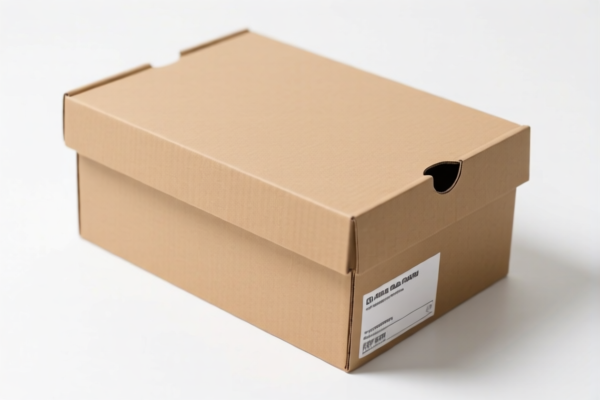
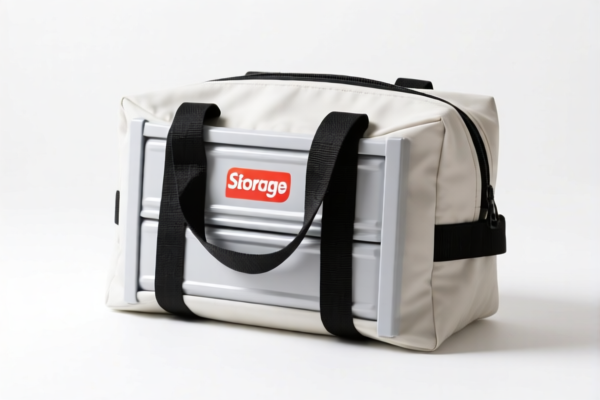

AI Analysis
👠 Shoe Storage Bag (Shoe Organizer Bags)
🌐 HS Code Reference & Clearance Guide | 2026 Tariff Decoded | Expert Customs Strategy
📌 I. Product Definition & Classification: Do You Really Know What a "Shoe Storage Bag" Is?
A Shoe Storage Bag is a non-rigid, textile-based or plastic container designed for storing, organizing, or transporting footwear. It is distinct from a shoe box (which is rigid cardboard) and shoe racks (furniture).
In international trade, these fall into two main categories based on material:
1. Textile Shoe Bags (Fabric/Canvas/Non-Woven):
Soft containers made of nylon, polyester, cotton, or non-woven fabric. Often used for travel, dust protection, or closet organization.
2. Plastic/Non-Woven Shoe Bags (Transparent/Clear):
Often made of PE (polyethylene) or PP (polypropylene) films. Typically used for retail display, vacuum sealing, or dustproof storage.
⚠️ Critical Distinction Point:
- If the item is rigid (e.g., a cardboard box or plastic bin with hard walls) → It is not a "bag." It falls under packaging or furniture categories.
- If the item is flexible (sewn fabric or heat-sealed film) → It is a bag,归类 under 6307 or 3926.
- If the bag contains foam inserts or hard frames to maintain shape → Customs may reclassify as furniture or packaging.
📦 II. HS Code Classification Details (2026 Tariff Authority)
| HS Code | Product Description | Applicable Scenario | Material Type |
|---|---|---|---|
6307.10.00.00 |
Textile shoe bags (sewn or glued fabric) | Canvas, nylon, polyester travel bags, closet organizers | ✅ Fabric/Textile |
6307.90.90.00 |
Other textile articles (incl. non-woven shoe bags) | Non-woven fabric shoe covers, temporary shoe protectors | ✅ Non-woven |
3926.90.99.00 |
Plastic shoe bags (flexible, no textile) | Clear PE bags, vacuum seal bags, shrink wrap | ✅ Plastic/PE |
4819.10.00.00 |
Shoe Boxes (Rigid) | Cardboard shoe boxes, gift boxes | ❌ Rigid Cardboard |
9403.90.00.00 |
Shoe Racks (Furniture) | Wooden/metal shoe stands, shelving units | ❌ Furniture |
6307.90.10.00 |
Shoe covers (Disposable, thin plastic/paper) | One-time use dust covers | ✅ Disposable |
🔍 Key Reminder:
- Do not misclassify a rigid plastic bin as a "bag." It must be declared as packaging or furniture.
- Textile shoe bags with zippers, handles, or dividers are still6307.10.00.00.
- If the bag is sold empty for retail packaging (no shoes inside), it is a packaging article, not a "shoe accessory."
💰 III. 2026 Latest Tariff Rate Breakdown (Including Surcharges & Policy Add-ons)
✅ Target Market: United States (US)
✅ Origin: China (CN)
✅ Effective Date: November 10, 2025 (and onwards)
🎯 1. 6307.10.00.00 — Textile Shoe Bags (Fabric)
| Item | Content |
|---|---|
| Base Rate | 16% (ad valorem) |
| Section 301 (USITC) Surcharge | +25% |
| IEEPA Surcharge | +10% (China/HK specific, effective Nov 2025) |
| Total Rate | 51% |
| Tax Calculation | CIF Value × 51% |
| De Minimis Exemption | ❌ No (Deny de minimis) |
| Legal Path | IEEPA:9903.01.25 → IEEPA:9903.01.24 → USITC:6307.10.00.00 → FOOTNOTE:9903.88.01 |
📌 Explanation:
- 16% Base: Standard MFN rate for textile articles.
- +25% Section 301: Applied due to "Textile & Apparel" being a targeted sector.
- +10% IEEPA: Additional sanction on China-origin textiles.
- Total 51% is extremely high. Many exporters restructure supply chains to avoid this.
🎯 2. 6307.90.90.00 — Other Textile Articles (Non-woven Shoe Bags)
| Item | Content |
|---|---|
| Base Rate | 16% |
| USITC Surcharge | +25% |
| IEEPA Surcharge | +10% |
| Total Rate | 51% |
| Tax Calculation | CIF × 51% |
| De Minimis Exemption | ❌ No |
| Legal Path | Same as above |
📌 Note:
- Even if the bag is made of non-woven fabric (often used for dust covers), it is still subject to the 51% rate.
- "Non-woven" does NOT mean "exempt."
🎯 3. 3926.90.99.00 — Plastic Shoe Bags (PE/PP Film)
| Item | Content |
|---|---|
| Base Rate | 6.5% |
| USITC Surcharge | +25% |
| IEEPA Surcharge | +10% |
| Total Rate | 41.5% |
| Tax Calculation | CIF × 41.5% |
| De Minimis Exemption | ❌ No |
| Legal Path | IEEPA:9903.01.25 → USITC:3926.90.99.00 → FOOTNOTE:9903.88.01 |
📌 Note:
- Plastic bags are cheaper than textile bags (41.5% vs 51%), but still very high.
- Clear PE bags (often used for vacuum storage) fall here.
🛠️ IV. Customs Clearance Practical Tips (Pitfall Avoidance)
✅ 1. Document Checklist (Must Have)
| Document | Required | Purpose |
|---|---|---|
| ✅ Product Photos | ✔️ | Show material, zippers, dividers, clear vs. opaque |
| ✅ Material Composition | ✔️ | e.g., "100% Polyester" or "PE 0.15mm" |
| ✅ Commercial Invoice | ✔️ | Must clearly state "Shoe Storage Bag" (NOT "Shoe") |
| ✅ Packing List | ✔️ | Weight, dimensions, quantity per carton |
| ✅ Certificate of Origin | ✔️ | Essential for proving China origin (or claim exemption if elsewhere) |
| ✅ FCC/CE/ROHS | ❌ (Not required) | Only for electronics; not needed for bags |
✅ 2. Declaration Strategy (Key Mnemonic)
🔥 "Material Matters, Rigid = No Bag, Label Clearly!"
| Scenario | Correct Declaration | Wrong Approach |
|---|---|---|
| Fabric shoe bag | 6307.10.00.00 |
Mislabel as "Shoe" or "Packaging" |
| Clear PE shoe bag | 3926.90.99.00 |
Claim as "Textile" |
| Rigid plastic bin | 3926.90.99.00 (if small) or 9403.90 (if large) |
Call it a "bag" |
| Disposable shoe cover | 6307.90.10.00 |
Misclassified as "Textile Bag" |
✅ 3. Special Cases Handling
| Situation | Handling Advice |
|---|---|
| OEM Custom Bags | Provide customer design图纸 (drawings) to prove it's a "bag" not "furniture" |
| Vacuum Storage Bags | Must declare as plastic bags (3926.90.99.00), not "shoe accessory" |
| Bags with Metal Frames | If frame is dominant → Furniture (9403.90.00.00) → 16% base + surcharges |
| Sold Empty vs. With Shoes | Empty: Declare as "Packaging/Bags". With Shoes: Declare as "Shoes" + "Accessories" |
🌍 V. Global Market Comparison (2026 Latest)
| Country/Region | Recommended HS Code | Tariff (China Origin) | Certifications | Notes |
|---|---|---|---|---|
| 🇺🇸 USA | 6307.10.00.00 |
51% | No specific | High tariff |
| 🇪🇺 EU | 6307.10.00.00 |
5.3% | CE (not required) | No Section 301 |
| 🇨🇦 Canada | 6307.10.00.00 |
6.5% | None | CPTPP free trade |
| 🇦🇺 Australia | 6307.10.00.00 |
5% | RCM | AANZFTA benefits |
| 🇯🇵 Japan | 6307.10.00.00 |
5.3% | PSE (no) | No surcharge |
| 🇲🇽 Mexico | 6307.10.00.00 |
10% | None | USMCA free trade |
📌 Conclusion:
- USA is the only market with 51% tariffs due to Section 301 + IEEPA.
- Europe, Canada, Australia offer 5-6% rates — much more profitable.
- Strategy: Consider re-routing through Vietnam, Mexico, or Malaysia to avoid China surcharges.
📌 VI. Common Mistakes & Pitfall Guide (Lessons Learned)
❌ Mistake 1: Calling a rigid shoe box a "shoe storage bag"
👉 Result: Customs flags it as packaging (4819) or furniture (9403) → 60%+ penalty for misclassification.
❌ Mistake 2: Declaring plastic bags as textile
👉 Result: 6307.10.00.00 (51%) vs 3926.90.99.00 (41.5%) → 10% extra tax + audit risk.
❌ Mistake 3: Mixing "shoe bags" with "shoes" in one shipment
👉 Result: Dual classification required. If mixed, entire shipment may be held for inspection.
❌ Mistake 4: Omitting material composition on invoice
👉 Result: Customs cannot determine HS Code → Delay + Demurrage fees.
✅ Correct Practice:
"Shoe Storage Bag, 100% Polyester, with Zipper & Handle, Empty, Model XYZ, 30x40x15cm, 100pcs/CTN"
🎯 VII. Conclusion: Smart Declaration, Lower Costs, Faster Clearance!
🎯 Remember Mnemonics:
🔹 "Rigid ≠ Bag, Textile = 51%, Plastic = 41.5%, China = High Tax!"
🔹 "Material is King, Invoice is Queen, Declaration is King of Clearance!"
📌 Pro Tip:
If your shoe bags are manufactured in Vietnam, Mexico, or Thailand, you may exempt the 25% + 10% surcharges, reducing total tariff to ~16-25%.
Recommendation: Apply for Pre-Ruling (Advance Classification) with CBP before shipping.
📣 Take Action Now:
📞 Contact a Customs Broker + Provide Material Photos + File Pre-Ruling
🚀 Let your Shoe Storage Bags clear smoothly, avoid 51% tax, and maximize profits!
✨ Professional Customs Clearance Starts with Accurate Classification!
💼 Every cent saved on tariffs is pure profit!
Customer Reviews
About HS Code Classification
The Harmonized System (HS) is an internationally standardized nomenclature developed by the World Customs Organization (WCO) to classify traded products. Over 200 countries use the HS system as the basis for customs tariffs, trade statistics, and import/export regulations.
Each HS code follows a hierarchical structure:
- Chapter (2 digits) — Broad category of goods (e.g., Chapter 84: Machinery and Mechanical Appliances)
- Heading (4 digits) — More specific grouping within the chapter
- Subheading (6 digits) — Internationally standardized breakdown, used by all WCO member countries
- National subdivisions (8-10 digits) — Country-specific extensions for further classification, such as US HTSUS 10-digit codes
Correct HS code classification is essential for smooth customs clearance, accurate duty payment, and compliance with trade regulations. Misclassification can lead to customs delays, overpayment of duties, or penalties.
When importing from CN to US, the applicable tariff rates may include:
- Most-Favored-Nation (MFN) rate — The standard duty rate applied to WTO members
- General rate — Applied to countries without trade agreements
- Trade remedy duties — Additional tariffs such as Section 301 (anti-dumping), Section 232 (national security), or countervailing duties
The information provided on this page is for reference purposes only. For official classification, please consult with your local customs authority or a licensed customs broker.