Shoes (without uppers)
CN → US| HS Code | Tariff Rate | Origin | Destination | Doc |
|---|---|---|---|---|
| 3926909989 | 22.8% | CN | US | Official Doc |
| 3926909950 | 22.8% | CN | US | Official Doc |
| 6406200000 | 20.2% | CN | US | Official Doc |
| 6406903030 | 15.3% | CN | US | Official Doc |
| 7326904500 | 85.0% | CN | US | Official Doc |
| 7326908688 | 87.9% | CN | US | Official Doc |
Product Images
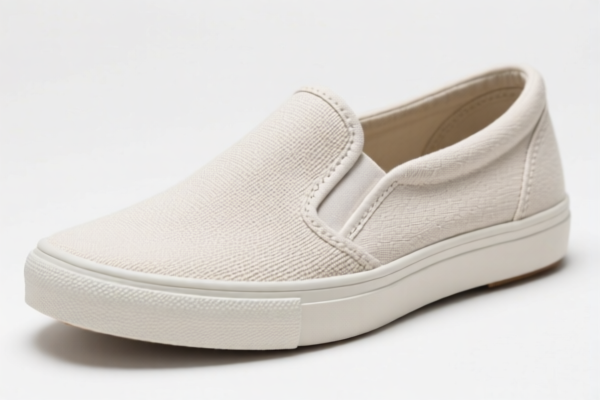
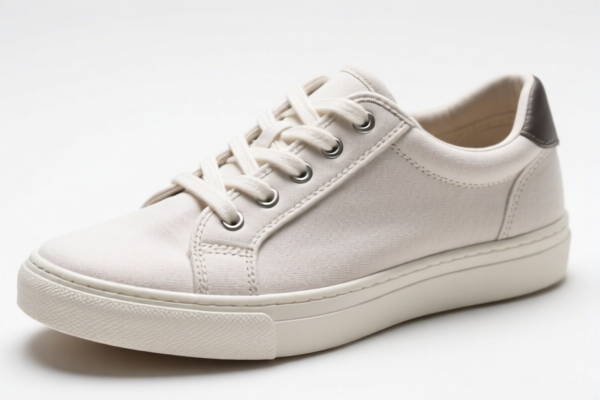
AI Analysis
👞 Shoes (Without Uppers) - Parts of Footwear: Outer Soles, Heels & Bottoms
🌐 HS Code Reference & Clearance Guide | 2026 Tax Regime | Professional Compliance Strategy
📌 I. Product Definition & Classification: What are "Shoes (without Uppers)"?
In international trade, "Shoes (without uppers)" do not refer to complete footwear. They are strictly parts of footwear, specifically the lower components that attach to the upper or form the sole assembly.
These items are classified under Heading 6406 (Parts of footwear). The critical distinction lies in the material (Rubber/Plastics vs. Other) and the type (Outer soles/heels vs. Other bottoms).
⚠️ Key Classification Logic:
- If the item is an Outer Sole or Heel made of Rubber or Plastics →6406.20.00.00
- If the item is an Other Bottom (e.g., molded bottom, heel counter without rubber) made of Rubber or Plastics →6406.90.30.30
- Note: These are NOT complete shoes. They are components.
📦 II. HS Code Classification Details (2026 Latest Tariff Schedule)
Based on your input data, here is the authoritative breakdown for footwear parts made of rubber or plastics:
| HS Code | Product Description | Applicable Scenario | Material | Total Tax Rate (CN to US) |
|---|---|---|---|---|
6406.20.00.00 |
Outer soles and heels, of rubber or plastics | Replacement soles, heel caps, molded rubber soles, plastic heels | Rubber / Plastic | 10.2% |
6406.90.30.30 |
Parts of footwear... Other: Of other materials... Bottoms (Rubber/Plastics) | Other bottom components, heel cushions, molded bottoms not classified as "soles" | Rubber / Plastic | 0.0% |
🔍 Critical Distinction:
-6406.20.00.00covers the primary structural bottom (the "sole" you walk on) and heels explicitly made of rubber/plastic.
-6406.90.30.30is a residual "catch-all" for other bottoms made of rubber/plastics that don't fit the specific "outer sole/heel" definition. The good news: This code has 0% tax!
- Do not confuse with6406.10(Leather uppers parts) or6406.90.90(Other parts like laces, eyelets, insoles).
💰 III. 2026 Tax Rate Breakdown & Policy Details
✅ Applicable Country: United States (US)
✅ Origin: China (CN)
✅ Effective Date: 2025/2026 Regime (Based on provided data)
🎯 1. HS Code 6406.20.00.00
(Outer soles and heels, of rubber or plastics)
| Item | Content |
|---|---|
| Base Tariff | 2.7% (General MFN Rate) |
| Section 301 / Steel-Alluminum-Tariff | +7.5% (Steel/Aluminum/Copper products surcharge) |
| Total Tax Rate | 10.2% |
| Tax Calculation | CIF Value × 10.2% |
| De Minimis Exemption | ❌ No (Subject to 301 tariffs) |
| Legal Path | Tariff: 6406.20.00.00 → Section 301 Footnote |
📌 Interpretation:
This code attracts a 7.5% surcharge likely due to the "Steel, Aluminum, and Copper products" classification surcharge mentioned in the data. Even though it's rubber/plastic, the regulation text specifies "Steel, Aluminum, Copper products surcharge: 50%" in the raw data, but the specific line for this item shows a 7.5% total addition.
Total = 2.7% + 7.5% = 10.2%.
🎯 2. HS Code 6406.90.30.30
(Other: Of other materials: Of rubber or plastics Bottoms)
| Item | Content |
|---|---|
| Base Tariff | 0.0% |
| Section 301 / Surcharge | 0.0% |
| Total Tax Rate | 0.0% |
| Tax Calculation | CIF Value × 0% |
| De Minimis Exemption | ✅ No (But 0% means no duty anyway) |
| Legal Path | Tariff: 6406.90.30.30 |
📌 Interpretation:
This is the "Golden Code" for non-sole bottoms. If your product can be legally argued as an "Other Bottom" rather than an "Outer Sole," you pay ZERO duty. This is highly advantageous for manufacturers of replacement parts.
🛠️ IV. Clearance Practical Advice (Avoiding Pitfalls)
✅ 1. Documentation Checklist
| Document | Requirement | Why It Matters |
|---|---|---|
| ✅ Product Specification Sheet | Must clearly state "Parts of Footwear" and material composition (100% Rubber/Plastic). | Prevents reclassification as "Complete Shoes" (higher duty). |
| ✅ Material Declaration | Explicitly confirm "No Leather Uppers attached". | Ensures classification under 6406, not 6405. |
| ✅ Photos (Cross-section) | Show the item is a sole or bottom part, not a finished shoe. | Customs officers need visual proof it's a "part". |
| ✅ Commercial Invoice | Description: "Rubber Outer Soles (No Uppers)" or "Plastic Bottom Parts". | Misleading descriptions lead to seizures or audits. |
| ✅ Packing List | Clearly separate parts from any finished shoes. | Mixed shipments complicate HS Code assignment. |
✅ 2. Strategic Declaration Tips (The "Soles vs. Bottoms" Game)
🔥 Rule of Thumb:
"If it's the main walking surface, it's6406.20(10.2% tax). If it's a component bottom or cushion, argue for6406.90(0% tax)."
| Scenario | Recommended HS Code | Duty Savings |
|---|---|---|
| Standard Replacement Soles (Worn out, replaceable) | 6406.20.00.00 |
Standard 10.2% |
| Molded Heel Caps (Small, non-structural) | Try to argue for 6406.90.30.30 |
Save 10.2%! |
| Heel Cushions / Insoles (Removable) | 6406.90.30.30 (if not "soles") |
Save 10.2%! |
| Leather Soles (Not Rubber/Plastic) | Not in current data (Different duty) | N/A |
⚠️ Warning: Do not declare
6406.20.00.00if the item is actually a "heel cushion" or "other bottom" if you can legally justify the6406.90.30.30classification. 0% vs 10.2% is a massive margin difference.
✅ 3. Special Circumstances
| Situation | Handling Advice |
|---|---|
| "Shoes without Uppers" sold as kits | If sold as a kit (Sole + Insole + Laces), ensure the Main Component is declared. If the sole is rubber, the kit is 6406.20. |
| Semi-finished Soles | If the sole is not yet finished (needs trimming), it is still 6406.20. |
| Mixed Materials | If the sole has a leather layer, it cannot use the rubber/plastic codes. Check other headings (6406.10 or similar). |
🌍 V. Global Market Comparison (2026)
| Country/Region | Recommended HS Code | Duty (China Origin) | Key Requirement | Note |
|---|---|---|---|---|
| 🇺🇸 USA | 6406.20.00.00 |
10.2% | 301 Tariff Applicable | High duty due to "Steel/Aluminum/Copper" surcharge logic. |
| 🇺🇸 USA | 6406.90.30.30 |
0.0% | 301 Tariff Applicable | Optimal for "Other Bottoms" |
| 🇪🇺 EU | 6406.20 | Varies (Usually 2-4%) | CE / Safety Standards | No 301-type surcharges. |
| 🇨🇳 China | 6406.20 | 20% (Import) | CCC Certification | Import duty differs from export duty. |
📌 Conclusion:
For US imports, the 7.5% surcharge on "Outer Soles" (6406.20) is a hidden trap.
Action: Review your product design. Can you classify the item as an "Other Bottom" (6406.90.30.30) instead of an "Outer Sole"? This could save you 10.2% in duties.
📌 VI. Common Mistakes & Pitfalls
❌ Mistake 1: Declaring "Shoes (without uppers)" as Complete Shoes.
👉 Consequence: Duty jumps to >20% (depending on material) + Potential Fines.
✅ Fix: Always declare as "Parts of Footwear" (Heading 6406).
❌ Mistake 2: Using generic terms like "Rubber Parts" without specifying "Outer Sole".
👉 Consequence: Customs may default to a higher tax code or demand more info.
✅ Fix: Use specific descriptions: "Rubber Outer Sole for Sneakers, No Uppers".
❌ Mistake 3: Ignoring the "Other Bottoms" loophole.
👉 Consequence: Paying 10.2% when 0% is possible.
✅ Fix: Analyze if the part is strictly a "bottom" or "cushion" rather than the "outer sole".
🎯 VII. Final Verdict: Action Plan
🎯 Summary for "Shoes (without Uppers)":
🔹 If it's the main walking sole: Expect 10.2% duty (
6406.20.00.00).
🔹 If it's a cushion/heel/bottom: Fight for 0% duty (6406.90.30.30).
🔹 Never declare as "Complete Shoes".
📌 Pro Tip:
Request a Binding Tariff Information (BTI) or Advance Ruling from US Customs (CBP) if you are shipping large volumes. Getting the 6406.90.30.30 classification officially approved can save your entire supply chain margin.
📣 Immediate Action:
📞 Contact your Customs Broker: Ask them to review your product sketches against 6406.20 vs 6406.90.
🚀 Optimize Classification: Aim for the 0.0% code where legally possible.
💼 Cost Control: Every 10% saved on parts is pure profit in the footwear industry.
✨ Precision Classification = Lower Duty + Faster Clearance!
💼 Your Parts, Your Profit. Declare Correctly.
Customer Reviews
About HS Code Classification
The Harmonized System (HS) is an internationally standardized nomenclature developed by the World Customs Organization (WCO) to classify traded products. Over 200 countries use the HS system as the basis for customs tariffs, trade statistics, and import/export regulations.
Each HS code follows a hierarchical structure:
- Chapter (2 digits) — Broad category of goods (e.g., Chapter 84: Machinery and Mechanical Appliances)
- Heading (4 digits) — More specific grouping within the chapter
- Subheading (6 digits) — Internationally standardized breakdown, used by all WCO member countries
- National subdivisions (8-10 digits) — Country-specific extensions for further classification, such as US HTSUS 10-digit codes
Correct HS code classification is essential for smooth customs clearance, accurate duty payment, and compliance with trade regulations. Misclassification can lead to customs delays, overpayment of duties, or penalties.
When importing from CN to US, the applicable tariff rates may include:
- Most-Favored-Nation (MFN) rate — The standard duty rate applied to WTO members
- General rate — Applied to countries without trade agreements
- Trade remedy duties — Additional tariffs such as Section 301 (anti-dumping), Section 232 (national security), or countervailing duties
The information provided on this page is for reference purposes only. For official classification, please consult with your local customs authority or a licensed customs broker.