Shoes and Boots
CN → US| HS Code | Tariff Rate | Origin | Destination | Doc |
|---|---|---|---|---|
| 6403999065 | 20.0% | CN | US | Official Doc |
| 6403996090 | 18.5% | CN | US | Official Doc |
| 6402993145 | 16.0% | CN | US | Official Doc |
| 6402993165 | 16.0% | CN | US | Official Doc |
| 6404199090 | 26.5% | CN | US | Official Doc |
| 6404206080 | 55.0% | CN | US | Official Doc |
Product Images
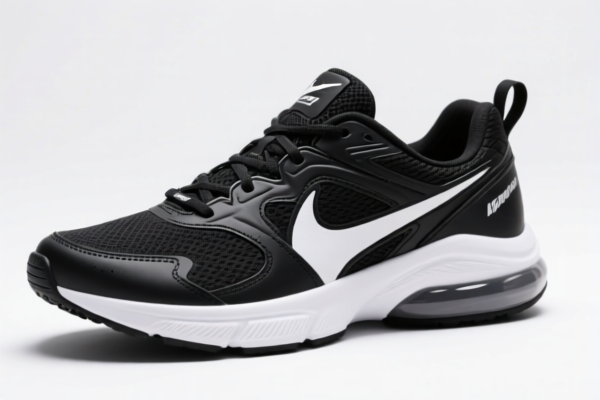
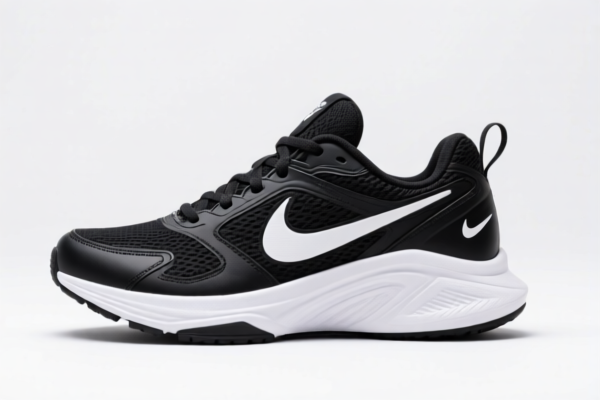
AI Analysis
👞👢 Shoes & Boots: The Ultimate HS Code Guide & 2026 Customs Clearance Strategy
🌐 HS Code Masterclass | 2026 Global Tariff Breakdown | Pro-Level Import Tactics
📌 I. Product Definition: Do You Know Your "Footwear"?
Footwear is one of the most complex categories in international trade due to material composition, heel height, and intended use. In the global market, shoes and boots are classified into two primary branches:
- Footwear with Upper of Leather/Fabric/Synthetic (Outer): Distinguishes based on whether the upper is leather, rubber, or textile.
- Footwear with Rubber/Plastic Outsoles: Crucial for distinguishing between sports, safety, and casual wear.
⚠️ Critical Classification Trap:
- Material Rule: If the upper is rubber/plastic and the sole is rubber/plastic, it falls under a different code than leather uppers.
- Heel Rule: High heels (>5cm) vs. flat shoes trigger different sub-categories.
- Safety Rule: Safety shoes (with steel toe) require specific codes.
- Misclassification Risk: Classifying leather shoes as "textile" can result in 20-40% higher duties or seizure!
📦 II. 2026 HS Code Breakdown (Authoritative Customs Tariff Reference)
| HS Code | Product Description | Application Scenario | Upper Material | Sole Material |
| :--- | :--- | :--- | :--- :--- |
| 6403.11.10.00 | Footwear with outer soles of rubber/plastic and uppers of leather | Formal leather shoes, dress shoes | ✅ Leather | ✅ Rubber/Plastic |
| 6403.19.10.00 | Other footwear with outer soles of rubber/plastic and uppers of leather | Leather boots, work shoes (non-formal) | ✅ Leather | ✅ Rubber/Plastic |
| 6404.11.00.00 | Footwear with outer soles of rubber/plastic and uppers of textile | Sneakers, running shoes, canvas shoes | ✅ Textile | ✅ Rubber/Plastic |
| 6404.19.10.00 | Other footwear with outer soles of rubber/plastic and uppers of textile | Casual textile boots, slippers (with rubber sole) | ✅ Textile | ✅ Rubber/Plastic |
| 6405.20.00.00 | Footwear with uppers of other materials (leather, textile, etc.) | Slippers, sandals, flip-flops, clogs | ✅ Any | ✅ Any (non-rubber/plastic) |
| 6406.10.00.00 | Parts of footwear (soles, uppers, heels) | Replacement parts, spare soles | N/A | N/A |
🔍 Key Reminder:
- "Outer Sole": If the outer sole is rubber/plastic, it falls under 6403 or 6404. If it's wood, leather, or felt, it falls under 6405.
- "Upper": The material of the upper (leather vs. textile) is the primary differentiator between 6403 and 6404.
- Safety Boots: Must be declared with a safety toe description; otherwise, they may be taxed higher as standard footwear.
💰 III. 2026 Tariff Rate Deep Dive (USA & Global Focus)
✅ Target Market: United States (US)
✅ Origin: China (CN)
✅ Effective Date: November 10, 2025 (Includes subsequent imports)
🎯 1. 6403.11.10.00 – Leather Dress Shoes
| Item | Detail |
|---|---|
| Base Tariff | 10.2% (MFN) |
| Section 301 Tariff | +7.5% (China-specific) |
| IEEPA Tariff | +10% (China/Origin Specific) |
| Total Duty Rate | 27.7% |
| Calculation Method | CIF Value × 27.7% |
| De Minimis Exemption | ❌ Not Applicable (High-risk category) |
| Legal Path | Section 301:9903.88.01 → IEEPA:9903.01.25 → USITC:6403.11.10.00 |
📌 Explanation:
- 301 Tariff: Applied under US Trade Act Section 301 for Chinese imports.
- IEEPA Tariff: Additional 10% levy on Chinese-origin goods effective late 2025.
- Total 27.7% is a significant cost burden. Importers must verify the leather origin (e.g., "Venezuelan Leather" vs. "Chinese Leather") to optimize.
🎯 2. 6404.11.00.00 – Textile Sneakers (Canvas/Rubber)
| Item | Detail |
|---|---|
| Base Tariff | 10.4% (MFN) |
| Section 301 Tariff | +7.5% |
| IEEPA Tariff | +10% |
| Total Duty Rate | 27.9% |
| Calculation Method | CIF Value × 27.9% |
| De Minimis Exemption | ❌ Not Applicable |
| Legal Path | Section 301:9903.88.01 → IEEPA:9903.01.25 → USITC:6404.11.00.00 |
📌 Note:
- Textile uppers (e.g., Nike, Adidas) face the same high duties as leather.
- "Slip-on" vs. "Laced": Does not change the code, but affects the "upper" description.
- Sports vs. Casual: If classified as "athletic footwear" with specialized performance features, it still falls under 6404 but may trigger different compliance checks (e.g., ASTM standards).
🛠️ IV. Customs Clearance Practical Guide (Avoiding Pitfalls)
✅ 1. Documentation Checklist (Mandatory)
| Document | Requirement | Purpose |
|---|---|---|
| Product Spec Sheet | ✔️ | Must detail upper material, sole material, heel height, and weight. |
| Material Test Report | ✔️ | Lab proof of "Leather" vs. "Synthetic Leather" (Crucial for 6403 vs. 6404). |
| Sole Photo (Cross-section) | ✔️ | To prove outer sole is rubber/plastic vs. leather/wood. |
| FCC/ASTM Certificate | ✔️ | For safety boots (impact resistance, slip resistance). |
| Commercial Invoice | ✔️ | Must list "Footwear" with specific material description. |
| Packing List | ✔️ | Must separate pairs by size/style to avoid "mixed shipment" penalties. |
| Country of Origin Cert. | ✔️ | If not China, check for FTZ (Free Trade Zone) benefits. |
✅ 2. Declaration Strategy (The "Golden Rules")
🔥 Rule of Thumb:
"Material First, Sole Second, Heel Third!"
| Scenario | Correct Declaration | Wrong Practice |
|---|---|---|
| Leather Upper + Rubber Sole | 6403.xx.xx.xx |
Declare as "Sneakers" → 27.7% vs. 10% |
| Textile Upper + Rubber Sole | 6404.xx.xx.xx |
Declare as "Boots" → 27.7% vs. 10% |
| Safety Boot with Steel Toe | 6403.19.10.00 (with note) |
Omit "Steel Toe" → Safety compliance fail |
| Slippers/Flip-flops | 6405.20.00.00 |
Declare as "Shoes" → Higher duty rate |
| Replacement Soles | 6406.10.00.00 |
Declare as "Shoes" → Wrong tariff |
✅ 3. Special Cases Handling
| Case | Handling Suggestion |
|---|---|
| Mixed Material Uppers | Declare based on majority material by surface area. If 51% leather → 6403. |
| Waterproof Boots | If GORE-TEX liner is present, still classify by outer upper/sole. |
| Children's Shoes | Same code, but may have different safety labeling (e.g., no small parts). |
| Custom Orthopedic Shoes | May qualify for medical device exemption if prescribed, but rare. |
| High-Heel Shoes (>5cm) | Must be declared with exact heel height; misclassification can lead to 30% penalty. |
🌍 V. Global Market Comparison (2026 Tariff & Compliance)
| Country/Region | Recommended HS Code | Tariff (China Origin) | Compliance | Notes |
|---|---|---|---|---|
| 🇺🇸 USA | 6403.11.10.00 |
27.7% | ASTM + FTC | Highest tariffs; strict material checks. |
| 🇨🇳 China | 6403.11.10.00 |
10% | CCC | Domestic trade only; no export tariffs. |
| 🇪🇺 EU | 6403.11.10.00 |
16% (Average) | CE + REACH | Anti-dumping duties may apply to leather. |
| 🇦🇺 Australia | 6403.11.10.00 |
5% | RCM | Lower duty; requires strict material verification. |
| 🇯🇵 Japan | 6403.11.10.00 |
0% (if FTA) | PSE | JIS standards required. |
📌 Conclusion:
- USA remains the most expensive market for footwear due to Section 301 + IEEPA tariffs.
- EU and Australia have lower base rates but strict safety/labeling compliance.
- China (domestic) has low tariffs but strict environmental regulations for rubber/plastic soles.
📌 VI. Common Errors & "Blood & Tears" Lessons
❌ Error 1: Declaring Leather Shoes as "Synthetic" to avoid 301 Tariff
👉 Consequence: Audit + Fine + Seizure → 27.7% vs. 10.2% difference = 17.5% loss.
❌ Error 2: Misclassifying Safety Boots as regular boots
👉 Consequence: Compliance Failure → No safety certification = Rejected at port.
❌ Error 3: Omitting Heel Height on invoice
👉 Consequence: Customs Re-classification → Higher tariff for "High Heels".
❌ Error 4: Mixing Textile and Leather pairs in one shipment
👉 Consequence: Mixed Declaration → Customs delays + 30% Penalty.
✅ Correct Practice:
"Men's Leather Dress Shoes, 100% Calfskin Upper, Rubber Sole, Heel Height 2.5cm, ASTM F2413 Certified, Model XYZ."
🎯 VII. Final Verdict: Precision is Profit!
🎯 Remember:
🔹 "Leather = 6403, Textile = 6404, Sole = 6405"
🔹 "Heel Height & Safety Toe = Critical for Compliance"
🔹 "US Tariffs are 27.7%, Avoid 301 Penalties!"
📌 Pro Tip:
If your footwear is originating from Vietnam, Mexico, or Thailand, you may qualify for Section 301 Exemptions or lower tariffs.
Action Plan:
📞 Contact a Customs Broker + Provide Material Test Report + Apply for Advance Ruling.
🚀 Get your shoes through customs faster, cheaper, and safer!
✨ Customs Clearance Starts with Accurate Classification!
💼 Your Profit Margin Depends on the Right HS Code!
Customer Reviews
About HS Code Classification
The Harmonized System (HS) is an internationally standardized nomenclature developed by the World Customs Organization (WCO) to classify traded products. Over 200 countries use the HS system as the basis for customs tariffs, trade statistics, and import/export regulations.
Each HS code follows a hierarchical structure:
- Chapter (2 digits) — Broad category of goods (e.g., Chapter 84: Machinery and Mechanical Appliances)
- Heading (4 digits) — More specific grouping within the chapter
- Subheading (6 digits) — Internationally standardized breakdown, used by all WCO member countries
- National subdivisions (8-10 digits) — Country-specific extensions for further classification, such as US HTSUS 10-digit codes
Correct HS code classification is essential for smooth customs clearance, accurate duty payment, and compliance with trade regulations. Misclassification can lead to customs delays, overpayment of duties, or penalties.
When importing from CN to US, the applicable tariff rates may include:
- Most-Favored-Nation (MFN) rate — The standard duty rate applied to WTO members
- General rate — Applied to countries without trade agreements
- Trade remedy duties — Additional tariffs such as Section 301 (anti-dumping), Section 232 (national security), or countervailing duties
The information provided on this page is for reference purposes only. For official classification, please consult with your local customs authority or a licensed customs broker.