Shoes without upper
CN → US| HS Code | Tariff Rate | Origin | Destination | Doc |
|---|---|---|---|---|
| 6406200000 | 20.2% | CN | US | Official Doc |
| 6402994980 | 55.0% | CN | US | Official Doc |
| 6402994960 | 55.0% | CN | US | Official Doc |
| 6406109040 | 22.0% | CN | US | Official Doc |
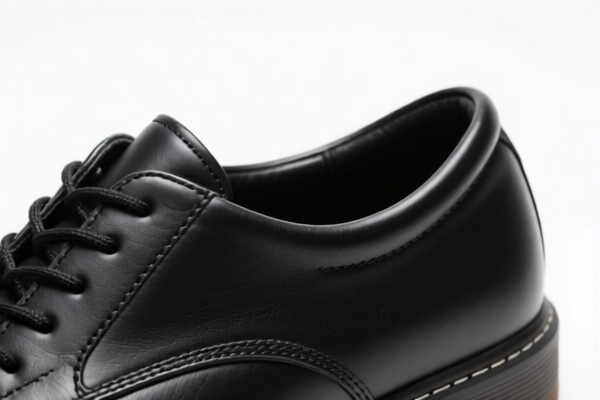
Product Images


AI Analysis
👟 Shoes Without Upper (Footwear Components & Slip-ons)
🌐 HS Code Reference & Customs Clearance Guide | 2024/2025 Latest Tariff Analysis | Professional Clearance Strategy
📌 I. Product Definition & Classification: What Exactly Are "Shoes Without Upper"?
In international trade, "Shoes Without Upper" is a broad term that can refer to two distinct categories depending on the structure: 1. Footwear Parts (Components): Discrete parts of footwear that constitute the "upper" or its structural equivalents (e.g., unsewn shoe uppers, insoles, heels). These are classified as Parts. 2. Slip-on Shoes (Finished Goods): Complete footwear designed to be slipped on without laces or fasteners, where the "upper" is integrated into a seamless or elastic structure (often rubber/plastic). These are classified as Finished Footwear.
⚠️ Critical Distinction:
- If the item is a loose component (e.g., a pre-formed shoe upper made of material, ready to be assembled) → It is a Part (Heading 6406).
- If the item is a complete shoe that is put on by slipping the foot in (no laces/buttons) → It is Finished Footwear (Heading 6402).
- Misclassification Risk: Declaring a complete slip-on shoe as a "part" to avoid higher finished-goods tariffs is a common customs violation.
📦 II. HS Code Classification Details (Based on Provided Data)
Based on the provided dataset, here are the specific HS Codes, their definitions, and tax implications.
| HS Code | Product Description | Classification Logic | Material/Type |
|---|---|---|---|
| 6406.20.00.00 | Shoe Uppers (Parts): Refers to shoe parts without an upper, i.e., components of footwear classified as parts. | Part/Component | Any material (as it's a part) |
| 6402.99.49.80 | Slip-on Shoes: Slip-on style, no fastening devices, typically made of rubber or plastic. | Finished Footwear | Rubber/Plastic |
| 6402.99.49.60 | Women's Slip-on Shoes: Slip-in style, no fasteners, made of rubber or plastic, for women. | Finished Footwear | Rubber/Plastic |
| 6406.10.90.40 | Shoe Parts (Non-Textile): Interpreted as parts related to the upper or unfinished upper components, not made of cotton textile. | Part/Component | Non-cotton textile (e.g., leather, synthetic) |
🔍 Key Interpretation:
- 6406.xxxx codes are for Parts. If you are importing a "shoe upper" that is not yet assembled into a shoe, use these.
- 6402.99.49.xx codes are for Complete Shoes. If you are importing a finished slip-on sandal or clog, use these.
- The tax burden differs drastically between Parts (low base rate) and Finished Footwear (high base rate).
💰 III. 2024/2025 Tariff Rate Breakdown (US Imports from China)
✅ Applicable Country: United States (US)
✅ Origin: China (CN)
✅ Note: Rates include Base Tariff, Section 301 Additional Tariff, and Section 122 Tariff.
🎯 1. 6406.20.00.00 — Shoe Uppers (Parts)
| Item | Detail |
|---|---|
| Base Tariff | 2.7% (Low rate for parts) |
| Section 301 Additional | 7.5% (Standard 301 rate for many footwear parts) |
| Section 122 Tariff | 10% (Specific surcharge on certain footwear components) |
| Total Effective Tax Rate | 20.2% |
| Tax Calculation | CIF Value × 20.2% |
| De Minimis Exemption | ❌ Not Applicable (Section 301 and 122 tariffs usually negate de minimis benefits for this category) |
| Legal Basis Path | USITC:6406.20.00.00 → FOOTNOTE:301 → IEEPA:122 |
📌 Explanation:
- This is the most cost-effective route if you are importing discrete parts (e.g., pre-cut uppers for assembly).
- The "Part" classification avoids the high base tariff of finished shoes.
- Warning: Do not mix parts with finished goods in the same shipment to avoid scrutiny.
🎯 2. 6402.99.49.80 — Slip-on Shoes (General/Rubber-Plastic)
| Item | Detail |
|---|---|
| Base Tariff | 37.5% (High base rate for finished rubber/plastic footwear) |
| Section 301 Additional | 7.5% |
| Section 122 Tariff | 10% |
| Total Effective Tax Rate | 55.0% |
| Tax Calculation | CIF Value × 55.0% |
| De Minimis Exemption | ❌ Not Applicable |
| Legal Basis Path | USITC:6402.99.49.80 → FOOTNOTE:301 → IEEPA:122 |
📌 Explanation:
- This code applies to complete slip-on shoes made of rubber or plastic (e.g., Crocs-style, shower shoes).
- The high base tariff (37.5%) makes this significantly more expensive than importing parts.
- Crucial: If you declare a finished shoe as a "part" to pay 20.2%, you risk severe penalties.
🎯 3. 6402.99.49.60 — Women's Slip-on Shoes (Rubber-Plastic)
| Item | Detail |
|---|---|
| Base Tariff | 37.5% |
| Section 301 Additional | 7.5% |
| Section 122 Tariff | 10% |
| Total Effective Tax Rate | 55.0% |
| Tax Calculation | CIF Value × 55.0% |
| De Minimis Exemption | ❌ Not Applicable |
| Legal Basis Path | USITC:6402.99.49.60 → FOOTNOTE:301 → IEEPA:122 |
📌 Explanation:
- Specific sub-category for Women’s rubber/plastic slip-ons.
- Identical tax burden to general slip-ons. The distinction is purely for statistical/regulatory tracking.
🎯 4. 6406.10.90.40 — Shoe Parts (Non-Cotton Textile)
| Item | Detail |
|---|---|
| Base Tariff | 4.5% |
| Section 301 Additional | 7.5% |
| Section 122 Tariff | 10% |
| Total Effective Tax Rate | 22.0% |
| Tax Calculation | CIF Value × 22.0% |
| De Minimis Exemption | ❌ Not Applicable |
| Legal Basis Path | USITC:6406.10.90.40 → FOOTNOTE:301 → IEEPA:122 |
📌 Explanation:
- For parts made of materials other than cotton textile (e.g., leather uppers, synthetic leather).
- Slightly higher base rate (4.5% vs 2.7%) than6406.20, but still much lower than finished shoes.
- Use this if your "upper" parts are made of leather or non-cotton synthetics.
🛠️ IV. Customs Clearance Practical Advice (Real-World Pitfall Guide)
✅ 1. Documentation Checklist (Non-Negotiable)
| Document | Required | Purpose |
|---|---|---|
| ✅ Product Photographs | ✔️ | Must clearly show if the item is a loose part or a complete shoe. |
| ✅ Technical Data Sheet | ✔️ | Define materials, assembly status, and whether fasteners are present. |
| ✅ Bill of Lading / Invoice | ✔️ | Accurate description: "Shoe Parts (Uppers)" vs. "Slip-on Shoes". |
| ✅ Origin Certificate | ✔️ | Essential for verifying Chinese origin (triggers 301/122 tariffs). |
| ✅ Material Declaration | ✔️ | Specify if rubber, plastic, leather, or textile (affects sub-classification). |
✅ 2. Declaration Strategy (Key Mnemonics)
🔥 "Parts are Parts, Shoes are Shoes. Don't Mix, Don't Lie!"
| Scenario | Correct HS Code | Risk if Misdeclared |
|---|---|---|
| Loose shoe uppers (to be assembled later) | 6406.20.00.00 (20.2%) |
Misdeclaring as "Shoes" → Pay 55%. |
| Finished Slip-ons (Ready to wear) | 6402.99.49.xx (55.0%) |
Misdeclaring as "Parts" → Severe Penalty/Seizure. |
| Leather/Non-Cotton Parts | 6406.10.90.40 (22.0%) |
Confusing material leads to wrong 6406 subcode. |
⚠️ Critical Warning:
Customs officers will physically inspect if the documentation says "Part" but the item looks like a "Shoe". If you import a complete slip-on shoe and label it as a "shoe upper," you will face: 1. Reclassification to 6402.99 (55% tax). 2. Back-taxes on the difference (34.8% per unit). 3. Fines for misdeclaration.
✅ 3. Special Cases
| Case | Handling Advice |
|---|---|
| Kit Assemblies | If you import "upper + sole + laces" in one box, it is Finished Footwear (55%). Do not split the declaration artificially. |
| Custom/Non-Standard | If the slip-on has unique design features, provide detailed sketches to justify the HS code. |
| Material Changes | If your "upper" is made of cotton textile, it may fall under different subcodes (not in current data). Verify if cotton textile parts have different rates. |
🌍 V. Global Market Comparison (2024/2025)
| Country/Region | Recommended HS Code | Base Tariff | Notes |
|---|---|---|---|
| 🇺🇸 USA | 6406.20.00.00 (Parts) |
2.7% + 301/122 | High total cost (20.2%) but low vs. 55% for shoes. |
| 🇺🇸 USA | 6402.99.49.80 (Shoes) |
37.5% + 301/122 | Very high total cost (55%). |
| 🇨🇳 China | 6406.20.00.00 |
~10-15% | Import duties vary by material. |
| 🇪🇺 EU | 6406.20.00.00 |
0-2.7% | No Section 301/122. Much lower costs in EU. |
📌 Conclusion:
- USA imposes heavy tariffs on both parts and shoes, but Parts are significantly cheaper (20.2% vs 55.0%).
- EU/Asia are more favorable. Consider assembly in Mexico or Vietnam to bypass US tariffs if volumes are high.
📌 VI. Common Errors & Pitfalls (Lessons Learned)
❌ Error 1: Calling a finished slip-on shoe a "shoe part" to save 34.8%.
👉 Result: Customs inspection reveals it's a complete product. 100% tax back-payment + fines.
❌ Error 2: Mixing rubber slip-ons with leather parts in one shipment under one HS code.
👉 Result: Customs rejects the declaration or reclassifies the entire shipment at the higher rate.
❌ Error 3: Ignoring Section 122 Tariff.
👉 Result: Underpaying by 10%. Even parts are subject to this surcharge.
✅ Correct Approach:
"Import pre-formed shoe uppers (Parts) under 6406.20.00.00 for local assembly. Or import finished slip-ons under 6402.99.49.80 with clear marketing as 'Slip-Ons'. Never mix."
🎯 VII. Conclusion: Professional Declaration, Cost Control!
🎯 Remember the Golden Rule:
🔹 "Parts Pay ~20%, Shoes Pay ~55%. Structure Your Supply Chain Accordingly!"
🔹 "If it can be worn, it's a Shoe. If it needs assembly, it's a Part."
✨ Professional Clearance Starts with Accurate Classification!
💼 Your Bottom Line Depends on This 10-Digit Code!
📣 Immediate Action:
📞 Consult a Customs Broker to verify the physical structure of your product.
🚀 Apply for an Advance Ruling from US Customs (CBP) if the classification is ambiguous.
Customer Reviews
About HS Code Classification
The Harmonized System (HS) is an internationally standardized nomenclature developed by the World Customs Organization (WCO) to classify traded products. Over 200 countries use the HS system as the basis for customs tariffs, trade statistics, and import/export regulations.
Each HS code follows a hierarchical structure:
- Chapter (2 digits) — Broad category of goods (e.g., Chapter 84: Machinery and Mechanical Appliances)
- Heading (4 digits) — More specific grouping within the chapter
- Subheading (6 digits) — Internationally standardized breakdown, used by all WCO member countries
- National subdivisions (8-10 digits) — Country-specific extensions for further classification, such as US HTSUS 10-digit codes
Correct HS code classification is essential for smooth customs clearance, accurate duty payment, and compliance with trade regulations. Misclassification can lead to customs delays, overpayment of duties, or penalties.
When importing from CN to US, the applicable tariff rates may include:
- Most-Favored-Nation (MFN) rate — The standard duty rate applied to WTO members
- General rate — Applied to countries without trade agreements
- Trade remedy duties — Additional tariffs such as Section 301 (anti-dumping), Section 232 (national security), or countervailing duties
The information provided on this page is for reference purposes only. For official classification, please consult with your local customs authority or a licensed customs broker.