Short Wavelength Thin Film
CN → US| HS Code | Tariff Rate | Origin | Destination | Doc |
|---|---|---|---|---|
| 3920992000 | 39.2% | CN | US | Official Doc |
| 3921190090 | 41.5% | CN | US | Official Doc |
| 3921905050 | 39.8% | CN | US | Official Doc |
| 3920995000 | 40.8% | CN | US | Official Doc |
Product Images
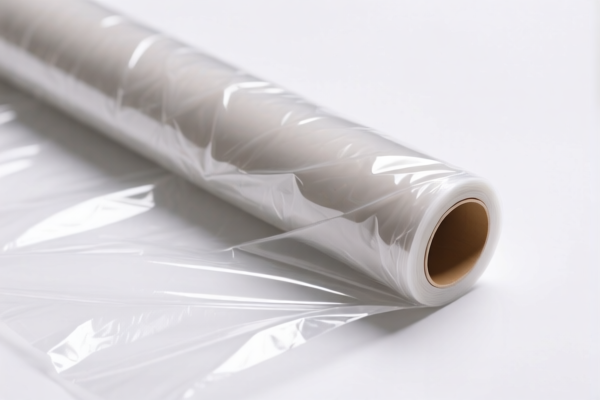
AI Analysis
🎥 Short Wavelength Thin Film (SWTF)
🌐 HS Code Reference & Clearance Guide | 2026 Latest Tariff Analysis | Strategic Customs Strategy
📌 I. Product Definition & Classification: What Exactly is a "Short Wavelength Thin Film"?
Short Wavelength Thin Film (SWTF) refers to flexible, plastic, or composite polymer films engineered for specific optical or material applications. In international trade, these films are generally categorized under Chapter 39 (Plastics and Articles Thereof), specifically focusing on their form (film/sheet) and material composition (plastic/polymer).
⚠️ Key Distinction Point:
- If the film is a standard plastic film (e.g., PVC, PE, PP) used for packaging or general protection → Chapter 39 (e.g., 3920 or 3921)
- If it involves specialized optical coatings but remains primarily plastic-based → Still often falls under Chapter 39, but requires precise description to avoid misclassification into "Optical Instruments" (Chapter 90), which may have different duty structures.
- Crucial for US Imports: Regardless of specific chemical formulation, if the base material is plastic/polymer, it is subject to the Section 301 (25%) and IEEPA (10%) additional tariffs applicable to Chinese-origin plastics.
📦 II. HS Code Classification Matrix (2026 Latest Tariff Authority Match)
Based on the provided data, the product "Short Wavelength Thin Film" matches the following HS Codes. Note that all options imply Plastic/Polymer composition and Film form.
| HS Code | Product Description (Summary) | Material Inference | Application Context | Total Tax Rate (CN→US) |
|---|---|---|---|---|
3920.99.20.00 |
Plastic/Composite Flexible Film | Plastic or Composite Material | General flexible plastic films, composite layers | 39.2% |
3921.19.00.90 |
Short-Wavelength Tech Plastic Film | Plastic/High-Polymer Coating | Films using short-wavelength technology applications, specialized polymer coatings | 41.5% |
3921.90.50.50 |
Other Plastic Plate/Film/Sheet | Plastic | General-purpose plastic sheets/films not elsewhere specified | 39.8% |
3920.99.50.00 |
Other Plastic Polymer Products | Plastic or High-Polymer Material | Generic plastic/high-polymer film products, "Other" category | 40.8% |
🔍 Important Note:
- All these codes fall under Chapter 39 (Plastics).
- The distinction between3920(Plastics, not cellular) and3921(Plastics, cellular or other) depends on whether the material is laminated, reinforced, or has a specific cellular structure.
- "Short Wavelength" in the product name suggests specialized optical properties, but if the base is plastic, customs will likely classify it under Chapter 39 unless it is a finished optical component (e.g., a lens filter assembly). If it is just a raw film, Chapter 39 is the correct classification path.
💰 III. 2026 Latest Tariff Rate Breakdown (Including Surtaxes & Policy Add-ons)
✅ Applicable Country: United States (US)
✅ Country of Origin: China (CN)
✅ Effective Date: Post-2025 policies (Section 301 + IEEPA)
🎯 1. 3920.99.20.00 —— Plastic/Composite Flexible Film
| Item | Details |
|---|---|
| Base Tariff | 4.2% |
| Section 301 Surcharge | +25.0% (USITC Footnote for Chinese plastics) |
| IEEPA Surcharge | +10.0% (122 Clause, targeted Chinese imports) |
| Total Effective Rate | 39.2% |
| Tax Calculation | CIF Value × 39.2% |
| De Minimis Exemption? | ❌ NO (Section 301 and IEEPA surcharges are not eligible for de minimis exemption under Section 321) |
| Legal Authority Path | HTSUS:3920.99.20 → USITC:Footnote301 → IEEPA:122Clause |
📌 Explanation:
- The 4.2% is the standard Most Favored Nation (MFN) duty for other plastic articles.
- The 25% is the aggressive Section 301 tariff on "Plastics and articles thereof" from China.
- The 10% is the additional IEEPA tariff, making the total burden 39.2%.
- Critical Risk: Do not attempt to use "De Minimis" (under $800) to avoid these duties. US Customs and Border Protection (CBP) explicitly denies de minimis entry for goods subject to Section 301 and IEEPA tariffs.
🎯 2. 3921.19.00.90 —— Specialized Polymer Coating Film
| Item | Details |
|---|---|
| Base Tariff | 6.5% |
| Section 301 Surcharge | +25.0% |
| IEEPA Surcharge | +10.0% |
| Total Effective Rate | 41.5% |
| Tax Calculation | CIF Value × 41.5% |
| De Minimis Exemption? | ❌ NO |
| Legal Authority Path | HTSUS:3921.19.90 → USITC:Footnote301 → IEEPA:122Clause |
📌 Explanation:
- This code has a higher base rate (6.5%) due to its specific classification as "Other plastic plates, sheets, film...".
- The 41.5% total rate is the highest among the matched options.
- Use this only if the film is technically classified as "Other" or has cellular/layered properties that fit3921.
🎯 3. 3921.90.50.50 —— Other Plastic Film/Sheet
| Item | Details |
|---|---|
| Base Tariff | 4.8% |
| Section 301 Surcharge | +25.0% |
| IEEPA Surcharge | +10.0% |
| Total Effective Rate | 39.8% |
| Tax Calculation | CIF Value × 39.8% |
| De Minimis Exemption? | ❌ NO |
| Legal Authority Path | HTSUS:3921.90.50 → USITC:Footnote301 → IEEPA:122Clause |
📌 Explanation:
- A middle-ground option. If the product is a general plastic film not fitting specific sub-categories, this may apply.
- 39.8% is still very high.
🎯 4. 3920.99.50.00 —— Other Plastic Products
| Item | Details |
|---|---|
| Base Tariff | 5.8% |
| Section 301 Surcharge | +25.0% |
| IEEPA Surcharge | +10.0% |
| Total Effective Rate | 40.8% |
| Tax Calculation | CIF Value × 40.8% |
| De Minimis Exemption? | ❌ NO |
| Legal Authority Path | HTSUS:3920.99.50 → USITC:Footnote301 → IEEPA:122Clause |
📌 Explanation:
- This code captures "Other" plastic articles. If the film doesn't fit the specific "composite" or "coating" descriptions of the other codes, this may be the default.
- 40.8% total rate.
🛠️ IV. Customs Clearance Practical Advice (Battle-Tested Pitfall Avoidance)
✅ 1. Essential Documentation Checklist
| Document | Required? | Purpose |
|---|---|---|
| ✅ Product Specification Sheet | ✔️ | Must detail: Material composition (e.g., PET, PP, PE), thickness, optical properties (if any), and manufacturing process. |
| ✅ Technical Data Sheet (TDS) | ✔️ | To justify the "Short Wavelength" claim. Is it an optical filter? A protective layer? |
| ✅ Composition Statement | ✔️ | Explicitly state: "100% Plastic/Polymer Film, No Glass, No Metal Substrate." This avoids Chapter 70 (Glass) or Chapter 85 (Electronic Components). |
| ✅ Commercial Invoice | ✔️ | Clearly state "Plastic Thin Film for Optical/Industrial Use." Avoid vague terms like "Material." |
| ✅ Origin Certificate | ✔️ | Proves China origin. If re-routed, ensure no substantial transformation occurs to avoid "Country of Origin" issues. |
| ✅ HS Code Pre-Ruling Request | ✔️ | Highly recommended for this specialized product to avoid post-audit penalties. |
✅ 2. Declaration Strategy (Key Mantra)
🔥 "Material First, Form Second, Optics Tertiary!"
| Scenario | Correct Declaration | Incorrect Practice | Risk |
|---|---|---|---|
| Pure Plastic Film | 3920.99.20.00 or 3921.19.00.90 |
Misclassifying as "Optical Lens" (9001) | Penalty + Back Taxes |
| Composite Film | 3920.99.20.00 |
Splitting into layers for lower duty | CBP will consolidate and charge higher rate |
| Finished Optical Filter | Check Chapter 90 (if applicable) | Declaring as "Plastic Film" | Misclassification |
📌 Critical Reminder:
- Even if the film is used for "Short Wavelength" applications (e.g., UV protection, specialized lighting), if it is not a finished optical instrument (like a lens in a holder), it remains a plastic article.
- Do not try to hide the "Short Wavelength" technical nature if it implies specialized chemical composition, but emphasize the plastic base to stay in Chapter 39.
🌍 V. Global Market Clearance Comparison (2026)
| Country/Region | Recommended HS Code | Approx. Tariff (China Origin) | Key Requirements | Note |
|---|---|---|---|---|
| 🇺🇸 USA | 3920.99.20.00 |
39.2% | Section 301 + IEEPA | Highest barrier. No de minimis. |
| 🇨🇳 China | 3920.99.20.00 |
~5-6% | Standard Import | Low tariff, easy entry. |
| 🇪🇺 EU | 3920.99.20.00 |
~6% | REACH Compliance | No Section 301. REACH registration required for chemicals. |
| 🇯🇵 Japan | 3920.99.20.00 |
~6% | JIS Standards | Moderate tariff. |
📌 Conclusion:
- USA is the primary risk market due to the 39-41% effective tariff rate.
- Europe and Japan offer significantly lower tariffs (6-7%) but require strict chemical compliance (REACH).
- Strategy: If importing to the US, consider supply chain diversification (e.g., sourcing from Vietnam or Mexico) if possible, to potentially mitigate Section 301 duties (though IEEPA may still apply depending on current rules).
📌 VI. Common Errors & Pitfalls (Blood & Tears Lessons)
❌ Error 1: Claiming "Optical Product" to get a lower base rate (e.g., 0% for some optics).
👉 Consequence: CBP rejects it, reclassifies as Plastic, and charges 39.2% + penalties.
✅ Correct: Declare as Plastic Film, accept the 39.2% duty.
❌ Error 2: Using De Minimis (Under $800) for small shipments.
👉 Consequence: Shipment seized. Section 301 and IEEPA tariffs do not apply to de minimis exemptions anymore.
✅ Correct: Pay full duties on all shipments, regardless of value.
❌ Error 3: Vague description "Thin Film for Short Wavelength."
👉 Consequence: CBP audit. Lack of material proof leads to highest applicable rate.
✅ Correct: Specify "Polyethylene Terephthalate (PET) Film, UV-Resistant, Thickness 50 microns."
🎯 VII. Conclusion: Professional Declaration, Save Cost, Ensure Compliance
🎯 Remember the Mantra:
🔹 "Plastic Base, Chapter 39, 39% Duty, No De Minimis!"
🔹 "HS Code Determines Cost, 301 Clause is the Killer, Pre-Ruling is Your Shield!"
📌 Pro Tip:
If your film contains metal layers or glass substrates, the HS Code changes completely (Chapter 70 or 85). Ensure your product is purely plastic/polymer before using these codes.
For US imports, apply for an Advance Ruling from CBP to lock in the HS Code and tariff rate before shipping.
📣 Immediate Action:
📞 Contact a licensed US Customs Broker
📄 Prepare Technical Data Sheets (Material Composition)
🚀 Ship Smart, Declare Accurately, Avoid Seizure!
✨ Professional Clearance Starts with Accurate Classification!
💼 Your Bottom Line Depends on the First 8 Digits!
Customer Reviews
About HS Code Classification
The Harmonized System (HS) is an internationally standardized nomenclature developed by the World Customs Organization (WCO) to classify traded products. Over 200 countries use the HS system as the basis for customs tariffs, trade statistics, and import/export regulations.
Each HS code follows a hierarchical structure:
- Chapter (2 digits) — Broad category of goods (e.g., Chapter 84: Machinery and Mechanical Appliances)
- Heading (4 digits) — More specific grouping within the chapter
- Subheading (6 digits) — Internationally standardized breakdown, used by all WCO member countries
- National subdivisions (8-10 digits) — Country-specific extensions for further classification, such as US HTSUS 10-digit codes
Correct HS code classification is essential for smooth customs clearance, accurate duty payment, and compliance with trade regulations. Misclassification can lead to customs delays, overpayment of duties, or penalties.
When importing from CN to US, the applicable tariff rates may include:
- Most-Favored-Nation (MFN) rate — The standard duty rate applied to WTO members
- General rate — Applied to countries without trade agreements
- Trade remedy duties — Additional tariffs such as Section 301 (anti-dumping), Section 232 (national security), or countervailing duties
The information provided on this page is for reference purposes only. For official classification, please consult with your local customs authority or a licensed customs broker.