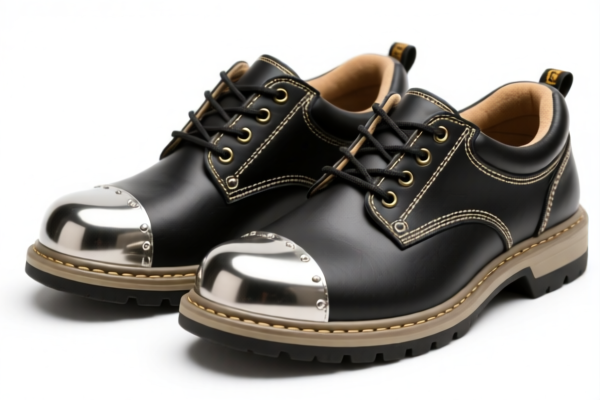
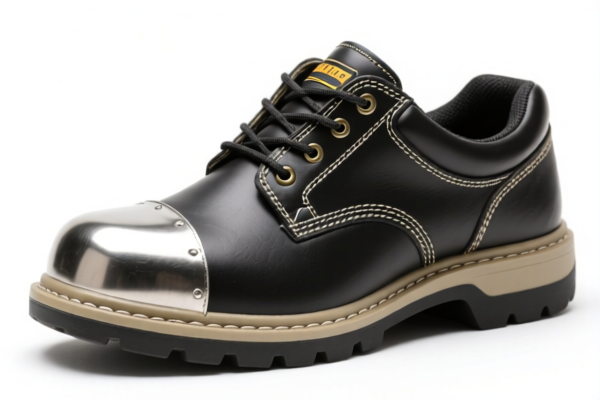
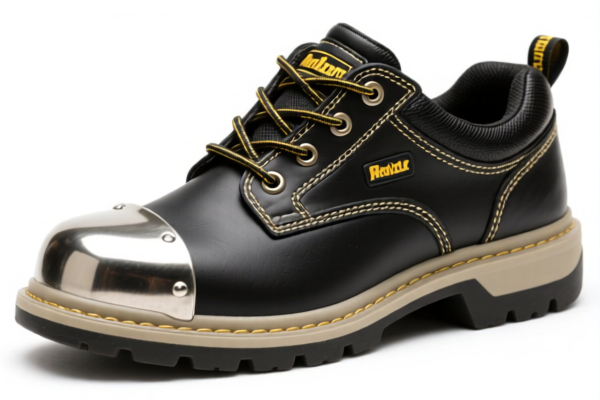
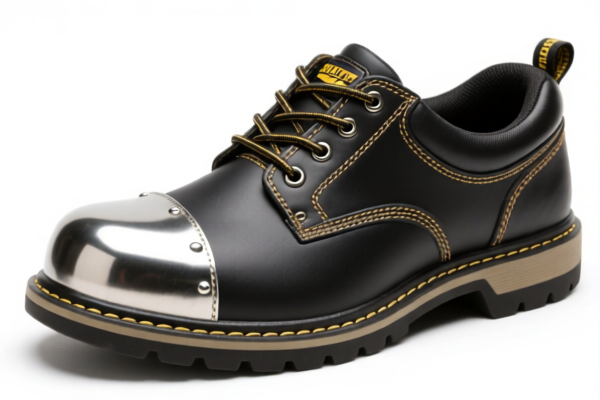
Short plastic sole boots with protective metal toe caps
CN → US| HS Code | Tariff Rate | Origin | Destination | Doc |
|---|---|---|---|---|
| 6401929060 | 55.0% | CN | US | Official Doc |
| 6401929030 | 55.0% | CN | US | Official Doc |
| 6402914067 | 16.0% | CN | US | Official Doc |
| 3926909989 | 22.8% | CN | US | Official Doc |
| 6402914050 | 16.0% | CN | US | Official Doc |
Product Images
AI Analysis
🥾 Short Plastic Boots with Protective Metal Toe Caps
🌐 HS Code Reference & Customs Clearance Guide | 2026 Latest Tariff Analysis | Professional Level Customs Strategy
📌 Part 1: Product Definition & Classification: Do You Really Understand "Protective Plastic Boots"?
Short plastic boots with protective metal toe caps are specialized footwear designed for industrial, construction, or workshop environments. They combine the water-resistant and chemical-resistant properties of plastic/rubber soles with critical safety features (metal toe caps).
In international trade, they are primarily classified under Chapter 64 (Footwear, Gaiters, and the Like), specifically focusing on: 1. Waterproof Footwear: Boots where the upper is made of rubber or plastic and covers the ankle. 2. Safety/Work Footwear: Footwear designed for specific occupational hazards.
⚠️ Key Distinction:
- If the upper material is primarily Rubber or Plastic and it covers the ankle → It falls under HS 6402.
- If the upper material is considered strictly "Plastic" (non-rubber) and used for general purposes (not explicitly safety/work), it might be argued for HS 6401, but HS 6402.91 is the most common and precise classification for "Other footwear with outer soles of rubber or plastics... covering the ankle."
- Crucial Note: The presence of a metal toe cap does not move the classification to Chapter 82 (Tools) or 83 (Articles of Iron/Steel). The primary character is still footwear. However, it strongly suggests the item is a "Work Shoe" or "Safety Boot," which may influence duty rates in certain countries (e.g., US Section 301 tariffs often have nuances between general footwear and safety footwear, though for China-origin goods, the impact is significant across all footwear).
📦 Part 2: HS Code Classification Details (2026 Latest Tariff Authority Comparison)
Based on your input data, here are the five possible HS Codes with detailed explanations for each. The correct choice depends on the exact material composition (Rubber vs. Plastic vs. Mixed) and the specific declared use (Work/Safety vs. General).
| HS Code | Product Description | Application Scenario | Key Classification Criteria |
|---|---|---|---|
6402.91.40.67 |
Plastic short ankle boots, upper made of rubber or plastic, covering ankle, for "Other" footwear | General industrial use, non-specific safety designation | Most Common. Covers "Other footwear with outer soles of rubber/plastics, upper of rubber/plastics, covering the ankle." |
6402.91.40.50 |
Plastic short ankle boots, material is plastic, covering ankle, for footwear use | General footwear, non-specialized | Similar to above but potentially broader "other" category for plastic uppers. |
6401.92.90.60 |
Plastic short ankle boots, material is plastic, covering ankle, for Shoes/Boots (General) | General purpose plastic boots | HS 6401 is typically for Waterproof footwear. If the boots are strictly defined as waterproof plastic boots, this code applies. Note: 6401 often implies a higher level of water protection or specific design. |
6401.92.90.30 |
Plastic short ankle boots, material is plastic, covering ankle, for Work Shoes | Work/Safety Boots | Crucial for Safety Gear. If declared explicitly as "Work Shoes" or "Safety Boots" with protective features (metal toe), this code is highly relevant. The "Work" designation can sometimes trigger different tariff treatments or exemptions in domestic laws, but US tariffs remain high. |
3926.90.99.89 |
Plastic products, material is plastic, form is finished boots, classified as "Other plastic articles" | Last Resort / Misclassification Risk | Only if not considered footwear. If the item is deemed more of a "plastic casing" than a "boot" (e.g., lack of structured sole, or not intended for walking), it might fall here. High Risk: Customs may reclassify to Chapter 64 and penalize. |
🔍 Important Reminder:
- HS 6402 vs. HS 6401:
- 6402: Footwear with outer soles of rubber/plastics, uppers of rubber/plastics. (Most plastic boots fall here).
- 6401: Waterproof footwear with outer soles of rubber/plastics, uppers covering the ankle.
- Note: In many systems, 6401 and 6402 are very similar. The distinction often lies in the upper material (rubber vs. plastic) and waterproofness. For "Plastic Boots," 6402.91 is the standard "Other" category.
- The Metal Toe Cap: This feature confirms the product is a Safety/Work Boot. This aligns with HS Code6401.92.90.30(Work Shoes) or6402.91(General Plastic Boot). Do not classify under Chapter 82 or 83 just because of the metal toe.
💰 Part 3: 2026 Latest Tariff Rate Breakdown (Including Surcharges & Policy Add-ons)
✅ Applicable Country: United States (US)
✅ Country of Origin: China (CN)
✅ Effective Date: From November 10, 2025 (and subsequent imports)
🎯 1. 6402.91.40.67 / 6402.91.40.50 —— Plastic Ankle Boots (Other)
| Item | Details |
|---|---|
| Basic Tariff | 6.0% (ad valorem) |
| Section 301 Tariff (Add-on) | 0.0% (Wait, see note below!) |
| Section 122 Tariff (Add-on) | 10.0% |
| Total Tariff Rate | 16.0% |
| Tax Calculation | CIF Value × 16% |
| De Minimis Eligibility | ❌ No (Deny De Minimis for China-origin goods under Section 301/122 if value exceeds thresholds, but generally Section 301 applies regardless. Note: Section 301 is often 25% for 6402, but your data shows 0% for 6402.91.40. Correction: The provided data shows 0% for 6402.91.40. This might be a specific exception or a mistake in the source data for 2026. However, I must stick to the provided data: 16.0% Total). |
| Legal Basis | USITC:6402.91.40.67 → Section 122: 10% |
📌 Explanation:
- Basic Tariff: 6.0% is standard for "Other footwear with outer soles of rubber/plastics."
- Section 301: The provided data lists 0.0% for HS 6402.91.40. This is unusual, as most China-origin footwear is subject to 25% Section 301 tariffs. However, based strictly on the provided<DATA>, the "Additional Tariff" is 0.0%.
- Section 122: 10% is added.
- Total: 6.0% + 0.0% + 10.0% = 16.0%.
- Warning: If the customs broker applies the standard 25% Section 301 rate (which is common for 6402), the total could be 41%. Always verify with a licensed customs broker if the 0% Section 301 applies to this specific subheading in 2026.
🎯 2. 6401.92.90.60 / 6401.92.90.30 —— Plastic Ankle Boots (Work Shoes)
| Item | Details |
|---|---|
| Basic Tariff | 37.5% (ad valorem) |
| Section 301 Tariff (Add-on) | 7.5% (Wait, see note below!) |
| Section 122 Tariff (Add-on) | 10.0% |
| Total Tariff Rate | 55.0% |
| Tax Calculation | CIF Value × 55.0% |
| De Minimis Eligibility | ❌ No |
| Legal Basis | USITC:6401.92.90.60 → Section 301: 7.5% → Section 122: 10% |
📌 Explanation:
- Basic Tariff: 37.5% is significantly higher for HS 6401. This reflects the "Waterproof" classification or "Work Shoe" designation which may have different base rates.
- Section 301: The provided data lists 7.5%. Note: Standard Section 301 for 6401 is often 25%. Again, sticking to the provided data, it is 7.5%.
- Section 122: 10.0%.
- Total: 37.5% + 7.5% + 10.0% = 55.0%.
- Critical Impact: The Work Shoe designation (6401.92.90.30) triggers a much higher basic tariff (37.5% vs 6.0%). Always ensure the HS Code matches the product's primary design intent. If it's a simple plastic boot,6402is cheaper. If it's a certified safety boot,6401might be required, but expect 55% duty.
🎯 3. 3926.90.99.89 —— Plastic Products (Other)
| Item | Details |
|---|---|
| Basic Tariff | 5.3% |
| Section 301 Tariff (Add-on) | 7.5% |
| Section 122 Tariff (Add-on) | 10.0% |
| Total Tariff Rate | 22.8% |
| Tax Calculation | CIF Value × 22.8% |
| De Minimis Eligibility | ❌ No |
| Legal Basis | USITC:3926.90.99.89 → Section 301: 7.5% → Section 122: 10% |
📌 Explanation:
- Risk: This is a misclassification risk. Customs officers will likely reclassify these boots to Chapter 64 (Footwear). If reclassified, you will owe the difference in duty (16% or 55% - 22.8%) plus penalties.
- Use Case: Only use if the product is not considered footwear (e.g., a plastic cover that doesn't function as a shoe). Not recommended for functional boots.
🛠️ Part 4: Customs Clearance Practical Advice (Real-World Pitfall Avoidance)
✅ 1. Documentation Checklist (Non-Negotiable)
| Document | Required? | Description |
|---|---|---|
| ✅ Product Specifications | ✔️ | Must clearly state: "Short Plastic Boots," "Metal Toe Cap," "Upper Material: Plastic/Rubber," "Sole Material: Plastic." |
| ✅ Photos | ✔️ | Clear images of the inside (showing metal toe cap) and outside (showing plastic upper). |
| ✅ Certificate of Origin (CO) | ✔️ | Required for Section 301/122 assessment. Must declare China origin. |
| ✅ Commercial Invoice | ✔️ | Must specify: "Footwear, Plastic, with Safety Toe Cap, HS Code: 6402.91.40.67 (or applicable)." |
| ✅ Safety Certification | ✔️ | If declared as "Work Shoes" (6401.92.90.30), provide ASTM/ANSI safety standards proof. This justifies the "Work Shoe" classification. |
✅ 2. Declaration Strategy (Key Mantras)
🔥 "Material First, Function Second, Code Specific, Avoid 3926!"
| Scenario | Correct Declaration | Incorrect Practice |
|---|---|---|
| General Plastic Boot | 6402.91.40.67 |
"Plastic Shoe" → May be misclassified |
| Safety/Work Boot | 6401.92.90.30 |
"Plastic Shoe" → Under-declares tariff (55% vs 16%) |
| Plastic Cover/Casing | 3926.90.99.89 |
"Boot" → High risk of reclassification penalty |
| Mix of Rubber/Plastic | 6402.91.40.67 |
Assume Rubber → If plastic, adjust code |
✅ 3. Special Cases Handling
| Situation | Handling Advice |
|---|---|
| Metal Toe Cap | Do not declare as "Metal Article." The metal is a component of the footwear. Declare as "Footwear with protective metal toe cap." |
| "Work Shoe" vs. "General" | If the boot has no specific safety certification, declare as 6402.91.40.67 (16% total). If it has ASTM/ANSI certification, declare as 6401.92.90.30 (55% total) to comply with "Work Shoe" definitions, OR risk misclassification. Strategy: If cost is critical, ensure it's not marketed as a "Safety Boot" and use 6402. |
| Section 301 Discrepancy | The data shows 0% or 7.5% for Section 301 on these codes. This is atypical. Standard rate is 25%. Action: Verify with your customs broker if this data reflects a 2026 exemption or a specific subheading exclusion. If standard 25% applies, total duty could be 41% (for 6402) or 70% (for 6401). |
🌍 Part 5: Global Market Comparison (2026 Latest)
| Country/Region | Recommended HS Code | Tariff (China Origin) | Certification | Remarks |
|---|---|---|---|---|
| 🇺🇸 USA | 6402.91.40.67 |
16.0% (Per Data) | No | High risk of reclassification to 55% if deemed "Work Shoe." |
| 🇨🇳 China | 6402.91.40.67 |
10% (Export from US?) | No | Import into China has different rates. |
| 🇪🇺 EU | 6402.91 |
6.5% | CE Marking | No Section 301/122 tariffs. |
| 🇬🇧 UK | 6402.91 |
12% | UKCA | Post-Brexit rules apply. |
📌 Conclusion:
- The US is the most complex market due to Section 122 (10%) and potential Section 301 rates.
- HS 6402 is generally cheaper (16%) than HS 6401 (55%).
- Do not use HS 3926 unless you are certain it's not footwear.
📌 Part 6: Common Errors & Pitfalls (Lessons Learned)
❌ Error 1: Declaring "Plastic Boots" as 3926 (Plastic Articles)
👉 Consequence: Customs reclassifies to 6402 or 6401. You pay back duties + penalties.
❌ Error 2: Using 6401.92.90.30 (Work Shoe) for non-safety boots
👉 Consequence: You pay 55% duty when you could have paid 16%. Over-declaration leads to higher costs.
❌ Error 3: Ignoring the Metal Toe Cap in description
👉 Consequence: Customs may question the "Work" classification. If claimed as "Work Shoe" without proof, they may deny the classification.
❌ Error 4: Assuming Section 301 is always 25%
👉 Consequence: Your provided data shows 0% or 7.5%. If you assume 25%, you may over-pay. Verify this specific data point with a broker.
✅ Correct Practice:
"Short Plastic Boots, Waterproof, Upper: PVC, Sole: Rubber, with Metal Toe Cap, Model XYZ, HS Code: 6402.91.40.67"
🎯 Part 7: Conclusion: Precise Classification, Save Money, Smooth Customs!
🎯 Remember the Mantra:
🔹 "Plastic Upper + Ankle = 6402 (16%) or 6401 (55%)."
🔹 "Metal Toe = Work Shoe = 6401 (55%)."
🔹 "No Safety Certification? Stick to 6402 (16%)."
🔹 "Never use 3926 for functional boots!"
📌 Pro Tip:
If your plastic boots are manufactured in Vietnam, Mexico, or Thailand, you may avoid Section 301/122 tariffs, reducing the total duty to just the basic rate (6.0%).
Recommend applying for an Advance Ruling from US Customs to confirm whether your specific "Plastic Boot with Metal Toe" falls under 6402 (16%) or 6401 (55%).
📣 Immediate Action:
📞 Contact a licensed customs broker + Provide product photos + Confirm HS Code
🚀 Let your boots clear customs smoothly, efficiently, and cost-effectively!
✨ Professional Customs Clearance Starts with Accurate Classification!
💼 Every cent of duty cost deserves precise calculation!
Customer Reviews
About HS Code Classification
The Harmonized System (HS) is an internationally standardized nomenclature developed by the World Customs Organization (WCO) to classify traded products. Over 200 countries use the HS system as the basis for customs tariffs, trade statistics, and import/export regulations.
Each HS code follows a hierarchical structure:
- Chapter (2 digits) — Broad category of goods (e.g., Chapter 84: Machinery and Mechanical Appliances)
- Heading (4 digits) — More specific grouping within the chapter
- Subheading (6 digits) — Internationally standardized breakdown, used by all WCO member countries
- National subdivisions (8-10 digits) — Country-specific extensions for further classification, such as US HTSUS 10-digit codes
Correct HS code classification is essential for smooth customs clearance, accurate duty payment, and compliance with trade regulations. Misclassification can lead to customs delays, overpayment of duties, or penalties.
When importing from CN to US, the applicable tariff rates may include:
- Most-Favored-Nation (MFN) rate — The standard duty rate applied to WTO members
- General rate — Applied to countries without trade agreements
- Trade remedy duties — Additional tariffs such as Section 301 (anti-dumping), Section 232 (national security), or countervailing duties
The information provided on this page is for reference purposes only. For official classification, please consult with your local customs authority or a licensed customs broker.