Short staple woven fabric
CN → US| HS Code | Tariff Rate | Origin | Destination | Doc |
|---|---|---|---|---|
| 5514303990 | 35.0% | CN | US | Official Doc |
| 5515999090 | 43.5% | CN | US | Official Doc |
| 5515190090 | 47.0% | CN | US | Official Doc |
| 5516930090 | 43.5% | CN | US | Official Doc |
| 5516920090 | 47.0% | CN | US | Official Doc |
Product Images
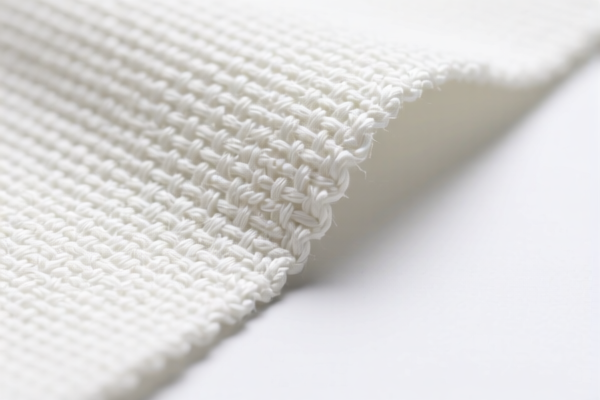
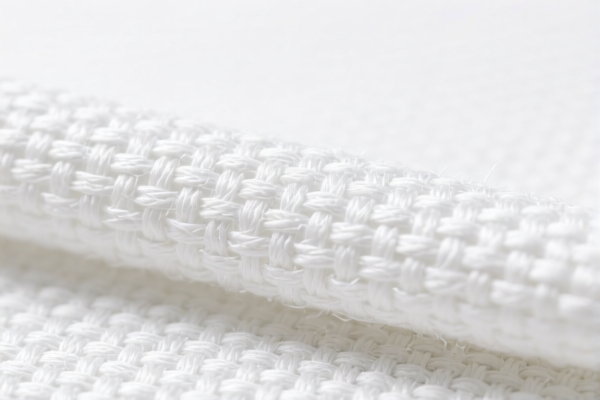
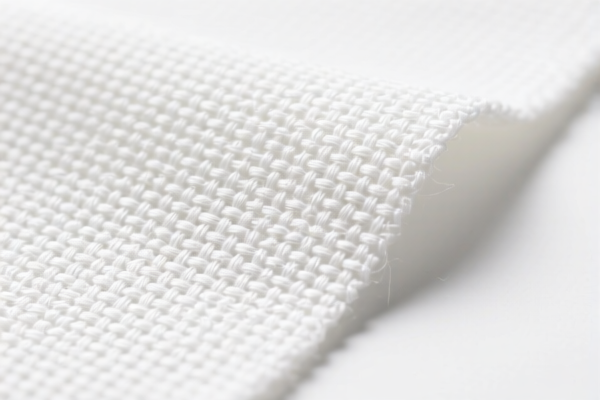
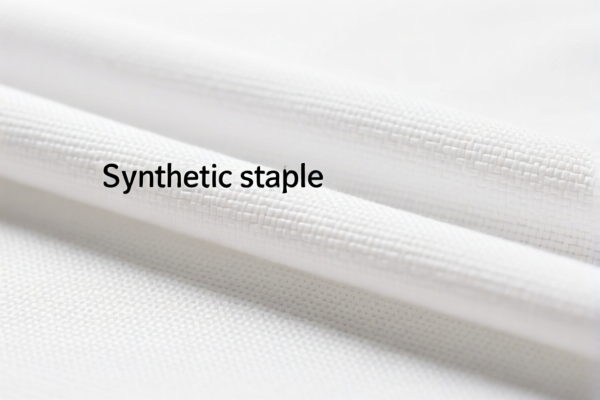
AI Analysis
🧵 Short Staple Woven Fabric: The Ultimate Guide to HS Code Classification & US Tariff Strategy (2026 Update)
🌐 HS Code Reference & Customs Clearance Guide | 2026 Latest Tariff Analysis | Strategic Clearance Strategy
📌 I. Product Definition & Classification: Do You Really Understand "Short Staple Woven Fabric"?
Short staple woven fabric refers to textiles woven from fibers that are relatively short in length (typically less than a few centimeters), as opposed to long filament fibers. These fabrics are ubiquitous in the apparel industry, used for shirts, suits, uniforms, and home textiles.
In international trade, classification depends heavily on the fiber content (Synthetic vs. Artificial/Man-made) and the weight/composition (Percentage of specific fiber).
⚠️ Key Distinction Points:
- Synthetic Short Staple Fibers (e.g., Polyester, Nylon): Derived from petrochemicals.
- Artificial (Man-made) Short Staple Fibers (e.g., Viscose, Rayon, Modal): Derived from cellulose (wood pulp/cotton linter).
- Composition Matters: Is the fabric predominantly Synthetic? Or is it Artificial? Or is it a mix? This determines the HS Code chapter (55.14, 55.15, or 55.16).
📦 II. HS Code Classification Matrix (Based on Provided Data)
The following HS Codes are extracted strictly from the provided <DATA> source. They all fall under the general category of "Other woven fabrics of synthetic or artificial short staple fibres."
| HS Code | Product Description (Summary) | Fiber Type | Total Tax Rate |
|---|---|---|---|
5514.30.39.90 |
Other woven fabrics of synthetic short staple fibres; Matched synthetic short fiber material & woven form | Synthetic | 35.0% |
5515.99.90.90 |
Other woven fabrics of synthetic/short staple fibres; Covers synthetic fiber category with consistent form | Synthetic (Mixed/Other) | 43.5% |
5515.19.00.90 |
Other woven fabrics of short staple fibres; Fits bottom-up logic, no material conflict | Mixed/Unspecified | 47.0% |
5516.93.00.90 |
Other woven fabrics of artificial short staple fibres; Belongs to artificial short fiber & other categories | Artificial | 43.5% |
5516.92.00.90 |
Other woven fabrics of artificial short staple fibres; Corresponds to artificial short fiber material | Artificial | 47.0% |
🔍 Critical Insight:
- Synthetic vs. Artificial:5514and5515generally refer to Synthetic fibers (like polyester/nylon).5516refers to Artificial fibers (like rayon/viscose).
- Tax Gradient: The tax rate varies from 35.0% to 47.0% depending on the precise fiber composition and whether it is a primary synthetic, a blend, or artificial.
- No Free Trade: None of these codes enjoy a 0% base duty for Chinese origin under the provided tax details due to additional tariffs.
💰 III. 2026 Latest Tariff Rate Breakdown (Including Additional Taxes)
✅ Applicable Country: United States (US)
✅ Country of Origin: China (CN) (Implied by "Section 122" and current trade context)
✅ Effective Time: Current 2026 Regulations
🎯 1. 5514.30.39.90 —— Synthetic Short Staple Woven Fabric (Lowest Tier)
| Item | Content |
|---|---|
| Base Duty | 0.0% |
| Section 301 Additional Duty | +25.0% |
| Section 122 Duty | +10.0% |
| Total Tax Rate | 35.0% |
| Calculation Basis | CIF Value × 35% |
| De Minimis Eligibility | ❌ NO (Denied) |
| Legal Authority Path | HTSUS:5514.30.39.90 → USITC Sec 301 → USITC Sec 122 |
📌 Explanation:
- This code offers the lowest total tax burden (35%) among the listed options.
- It applies to specific synthetic short staple fabrics that meet precise matching criteria.
- Base duty is 0%, meaning the entire 35% burden comes from retaliatory/trade war tariffs (301 & 122).
🎯 2. 5515.99.90.90 —— Other Synthetic Short Staple Fabrics
| Item | Content |
|---|---|
| Base Duty | 8.5% |
| Section 301 Additional Duty | +25.0% |
| Section 122 Duty | +10.0% |
| Total Tax Rate | 43.5% |
| Calculation Basis | CIF Value × 43.5% |
| De Minimis Eligibility | ❌ NO (Denied) |
| Legal Authority Path | HTSUS:5515.99.90.90 → USITC Sec 301 → USITC Sec 122 |
📌 Explanation:
- The base duty jumps to 8.5% for this "other" synthetic category.
- Combined with the same 35% in additional tariffs, the total cost is significantly higher than5514.30.39.90.
🎯 3. 5515.19.00.90 —— Mixed/Unspecified Short Staple Fabrics
| Item | Content |
|---|---|
| Base Duty | 12.0% |
| Section 301 Additional Duty | +25.0% |
| Section 122 Duty | +10.0% |
| Total Tax Rate | 47.0% |
| Calculation Basis | CIF Value × 47.0% |
| De Minimis Eligibility | ❌ NO (Denied) |
| Legal Authority Path | HTSUS:5515.19.00.90 → USITC Sec 301 → USITC Sec 122 |
📌 Explanation:
- This is the "Bottom-Up" or residual category. If your fabric doesn't fit neatly into the primary synthetic definitions, it falls here.
- Highest base duty (12.0%) leads to the highest total rate (47.0%).
🎯 4. 5516.93.00.90 —— Artificial (Man-Made) Short Staple Fabrics
| Item | Content |
|---|---|
| Base Duty | 8.5% |
| Section 301 Additional Duty | +25.0% |
| Section 122 Duty | +10.0% |
| Total Tax Rate | 43.5% |
| Calculation Basis | CIF Value × 43.5% |
| De Minimis Eligibility | ❌ NO (Denied) |
| Legal Authority Path | HTSUS:5516.93.00.90 → USITC Sec 301 → USITC Sec 122 |
📌 Explanation:
- Applies to Artificial fibers (e.g., Viscose/Rayon blends).
- Tax rate is identical to5515.99.90.90(43.5%).
- Crucial: You must prove the fiber is artificial (cellulose-based), not synthetic (petrochemical-based), to use this code.
🎯 5. 5516.92.00.90 —— Specific Artificial Short Staple Fabrics
| Item | Content |
|---|---|
| Base Duty | 12.0% |
| Section 301 Additional Duty | +25.0% |
| Section 122 Duty | +10.0% |
| Total Tax Rate | 47.0% |
| Calculation Basis | CIF Value × 47.0% |
| De Minimis Eligibility | ❌ NO (Denied) |
| Legal Authority Path | HTSUS:5516.92.00.90 → USITC Sec 301 → USITC Sec 122 |
📌 Explanation:
- Similar to5515.19.00.90, this is a specific but higher-duty category for artificial fibers.
- Total tax hits the ceiling at 47.0%.
🛠️ IV. Customs Clearance Practical Advice (Avoiding Pitfalls)
✅ 1. Essential Documentation Checklist
| Document | Must Provide | Description |
|---|---|---|
| ✅ Fiber Analysis Report | ✔️ | MOST CRITICAL. Must clearly state % of Synthetic vs. Artificial fibers. Lab report from ISO 17025 accredited lab recommended. |
| ✅ Product Specification Sheet | ✔️ | Weight (GSM), Weave Type (Plain/Twill/Satin), Width, Composition. |
| ✅ Commercial Invoice | ✔️ | Must explicitly state "Woven Fabric, Short Staple Fibers" and HS Code. |
| ✅ Packing List | ✔️ | Include roll length, width, and net/gross weight. |
| ✅ Supply Chain Proof | ✔️ | Bill of Lading, Purchase Orders to prove Origin (China). |
✅ 2. Classification Strategy (Key Formulas)
🔥 “Check Fiber, Check Weight, Choose Code Wisely!”
| Scenario | Correct HS Code Strategy | Why? |
|---|---|---|
| 100% Polyester Short Staple | Aim for 5514.30.39.90 |
Lowest base duty (0%) if it fits the "matched" criteria. |
| Polyester/Cotton Blend | Likely 5514.30.39.90 or 5515.19.00.90 |
Depends on if Polyester is the predominant fiber. If predominant, often 5514. |
| Viscose (Rayon) Fabric | 5516.93.00.90 or 5516.92.00.90 |
Must be classified under Chapter 55.16 (Artificial). |
| Mixed Synthetic & Artificial | 5515.19.00.90 |
"Other" category. Highest risk of misclassification. |
| Fabric with <10% Synthetic | NOT APPLICABLE in this dataset | This dataset assumes short staple fabrics are primarily synthetic/artificial. If mostly cotton, it would be Chapter 52 (not listed). |
✅ 3. Special Considerations
| Situation | Handling Advice |
|---|---|
| De Minimis (Section 321) Risk | ❌ DO NOT use de minimis for these HS codes. The dataset explicitly shows total taxes >0%. US Customs (CBP) will likely seize or deny entry for shipments under $800 claiming these textiles. |
| Section 122 Impact | The 10% Section 122 duty applies specifically to textiles and apparel from China/Canada/Mexico. It is non-negotiable and stacks on top of 301 tariffs. |
| Misclassification Penalty | Misclassifying a 5514 (35%) item as a lower-duty code can result in seizure, fines, and retroactive duties. Always use a certified lab report. |
| Roll Count Verification | CBP often checks if the roll count matches the invoice. Ensure packaging matches declarations exactly. |
🌍 V. Global Market Comparison (2026 Context)
| Market | Recommended HS Code | Base Duty | Additional Taxes | Total Effective Rate | Notes |
|---|---|---|---|---|---|
| 🇺🇸 USA | 5514.30.39.90 |
0.0% | 35.0% (301+122) | 35.0% | Highest barrier. Avoid if possible. |
| 🇺🇸 USA | 5515.19.00.90 |
12.0% | 35.0% (301+122) | 47.0% | Worst-case scenario. |
| 🇨🇳 China | 5514.30.39.90 |
9.0%-10%* | 0% | ~10% | Export from China to China is rare; mainly for processing trade. |
| 🇪🇺 EU | 5514.30.99 |
9.0% | 0% (Most Favored Nation) | 9.0% | Significant Savings vs. USA. Consider transshipment (risky) or sourcing from Vietnam/Mexico. |
| 🇬🇧 UK | 5514.30.99 |
9.0% | 0% | 9.0% | Post-Brexit rules apply. |
📌 Conclusion:
- The US is the most expensive market for short staple woven fabrics from China due to the combination of 301 and 122 tariffs.
- Total tax ranges from 35% to 47%.
- Cost Saving Strategy: If feasible, source fabrics from Vietnam, Bangladesh, or Mexico (subject to their own rules of origin) to avoid Section 301/122 duties.
📌 VI. Common Errors & Pitfall Guide (Lessons Learned)
❌ Error 1: Claiming "Cotton" when it is actually "Polyester Blend"
👉 Consequence: HS Code mismatch. 5514 (Synthetic) vs 5208 (Cotton). Penalty + Back Taxes.
❌ Error 2: Ignoring Section 122
👉 Consequence: Assuming only 301 (25%) applies. Missing the extra 10% leads to underpayment and audits.
❌ Error 3: Using De Minimis ($800 threshold) for Textiles
👉 Consequence: CBP frequently cracks down on textile de minimis. Shipments may be held, inspected, or returned.
❌ Error 4: Vague Description "Fabric"
👉 Consequence: CBP will request detailed specifications. If you cannot prove the fiber type, they may assign a penalty rate or require reclassification.
✅ Correct Practice:
"100% Polyester Woven Fabric, Short Staple, 150 GSM, Plain Weave, HS 5514.30.39.90, Origin: China"
🎯 VII. Conclusion: Precision Classification Saves Money
🎯 Remember the Formula:
🔹 "Synthetic Low? Try 5514 (35%).
🔹 Artificial? 5516 (43.5%-47%).
🔹 Mixed? 5515 (43.5%-47%).
🔹 Always Add 35% for US-China Trade!
📌 Pro Tip:
If you are importing into the US, pre-clearance is mandatory. Use a customs broker to verify the fiber content against the HS code. Consider bonded warehouses or foreign trade zones (FTZs) if you need to delay duty payment, but note that Section 122/301 duties still apply upon entry.
📣 Immediate Action:
📞 Audit Your Fiber Reports.
📄 Verify HS Code against Lab Tests.
💰 Calculate Landed Cost including 35%-47% Taxes.
🚀 Optimize Your Supply Chain to Avoid High Tariffs!
✨ Professional Clearance, Start with Accurate Classification!
💼 Every Percentage Point Counts in the World of Textiles!
Customer Reviews
About HS Code Classification
The Harmonized System (HS) is an internationally standardized nomenclature developed by the World Customs Organization (WCO) to classify traded products. Over 200 countries use the HS system as the basis for customs tariffs, trade statistics, and import/export regulations.
Each HS code follows a hierarchical structure:
- Chapter (2 digits) — Broad category of goods (e.g., Chapter 84: Machinery and Mechanical Appliances)
- Heading (4 digits) — More specific grouping within the chapter
- Subheading (6 digits) — Internationally standardized breakdown, used by all WCO member countries
- National subdivisions (8-10 digits) — Country-specific extensions for further classification, such as US HTSUS 10-digit codes
Correct HS code classification is essential for smooth customs clearance, accurate duty payment, and compliance with trade regulations. Misclassification can lead to customs delays, overpayment of duties, or penalties.
When importing from CN to US, the applicable tariff rates may include:
- Most-Favored-Nation (MFN) rate — The standard duty rate applied to WTO members
- General rate — Applied to countries without trade agreements
- Trade remedy duties — Additional tariffs such as Section 301 (anti-dumping), Section 232 (national security), or countervailing duties
The information provided on this page is for reference purposes only. For official classification, please consult with your local customs authority or a licensed customs broker.