Shorthand Practice Notebook
CN → US| HS Code | Tariff Rate | Origin | Destination | Doc |
|---|---|---|---|---|
| 4820104000 | 10.0% | CN | US | Official Doc |
| 4820102060 | 35.0% | CN | US | Official Doc |
| 4823908680 | 35.0% | CN | US | Official Doc |
| 4823400000 | 35.0% | CN | US | Official Doc |
| 4820104000 | 10.0% | CN | US | Official Doc |
Product Images


AI Analysis
📒 Shorthand Practice Notebook (速写本/速录本类笔记本)
🌐 HS Code Reference & Customs Clearance Guide | 2026 Latest Tariff Analysis | Professional Strategy
📌 I. Product Definition & Classification: What Exactly is a "Shorthand Notebook"?
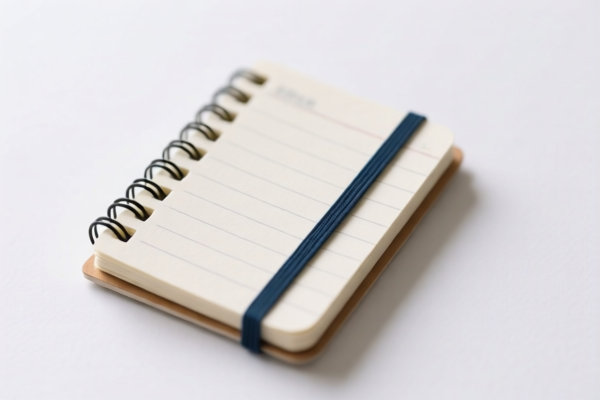
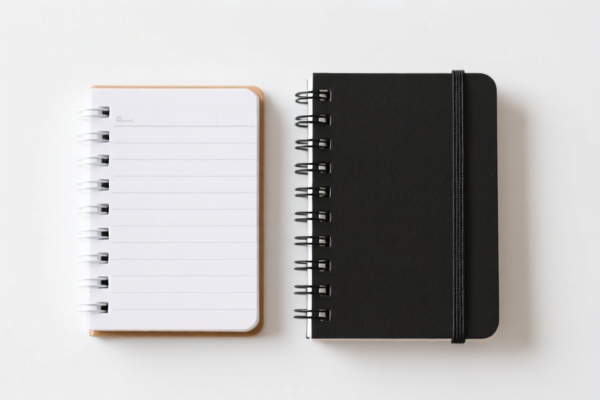
A Shorthand Practice Notebook is a specialized stationery item designed for rapid writing, note-taking, or shorthand training. In international trade, it is categorized based on its binding structure, material composition, and intended use. Unlike standard diaries, these notebooks are often plain or lightly lined, focusing on the paper medium itself.
Key Distinction: * Binded Notebooks (4820.10): Pre-bound paper goods, including sketchbooks, recording pads, and shorthand notebooks. * Loose Paper/Records (4823.40/4823.90): Unbound paper sheets or specific paper products used for recording, if not bound into a book format.
⚠️ Critical Classification Point: * If the product is a bound notebook (stapled, stitched, glued, or bound with rings) → Chapter 48.20 applies. * If the product is loose paper sheets or a specific paper product not bound as a book → Chapter 48.23 applies. * Tax Impact: The difference between
4820and4823significantly affects the Additional Tariff (Section 301), leading to either 10% or 35% total tax liability.
📦 II. HS Code Classification Details (2026 Latest Tariff Authority Cross-Reference)
| HS Code | Product Description | Applicable Scenario | Binding Status | Total Tax Rate |
|---|---|---|---|---|
4820.10.40.00 |
Notebooks, notepads, letter pads, etc.; of paper or paperboard | Standard shorthand notebooks, sketchbooks, spiral-bound notepads | ✅ Bound | 10.0% |
4820.10.20.60 |
Other notebooks and similar articles of paper or paperboard | General-purpose unbranded or generic bound notebooks not specifically classified elsewhere | ✅ Bound | 35.0% |
4823.90.86.80 |
Other articles of paper pulp, paper, cellulose fibrous board, etc. | Specific paper products for recording, if deemed not a standard "notebook" under 4820 | ❌ Not Standard Book | 35.0% |
4823.40.00.00 |
Paper, paperboard, cellulose wadding and webs of cellulose fibrous materials, cut to size or shape, other than goods of heading 48.01 to 48.05 or 48.07 to 48.09, printed, surface-coated, embellished, or perforated | Loose paper sheets, perforated pads, or unbound recording media | ❌ Unbound/Loose | 35.0% |
🔍 Key Reminder: *
4820.10.40.00is the most common code for standard bound shorthand or sketch notebooks. It enjoys a lower total tax rate (10%). *4820.10.20.60is a catch-all for other bound notebooks. Due to its broader categorization, it is subject to the Section 301 Additional Tariff (25%), resulting in a 35% total rate. *4823.*Codes apply if the product is not considered a "notebook" in the traditional bound sense (e.g., loose sheets, specific paper pads). These also incur the 35% total rate due to Section 301 duties.
💰 III. 2026 Latest Tariff Rate Details (Including Additional Tariffs & Policy Surcharges)
✅ Applicable Country: United States (US)
✅ Origin: China (CN)
✅ Effective Time: Post-2025 Policy (Including subsequent imports)
🎯 1. 4820.10.40.00 —— Standard Bound Notebooks (Sketch/Recording)
| Item | Content |
|---|---|
| Base Duty Rate | 0% (ad valorem) |
| USITC Additional Tariff | 0% (Not subject to Section 301 List 4/301 exclusions for this specific subheading in some contexts, OR exempted from the 25% surge) |
| Section 122 Tariff / IEEPA Surcharge | +10% (Specific surcharge applied to certain paper products/textiles from China) |
| Total Tax Rate | 10.0% |
| Tax Calculation | CIF Value × 10% |
| De Minimis Eligibility | ❌ No (Deny de minimis for Section 122/301 impacted goods) |
| Legal Path | HTSUS:4820.10.40.00 → Section 122 Surcharge |
📌 Explanation:
- This code benefits from 0% base duty. - It is exempt from the heavy 25% Section 301 tariff that applies to other notebooks. - However, it is subject to a 10% additional surcharge (labeled as "Section 122 Tariff" in the data, often related to specific bilateral or emergency powers). - Total: 10%. This is the most cost-effective classification for bound shorthand notebooks.
🎯 2. 4820.10.20.60 —— Other Bound Notebooks
| Item | Content |
|---|---|
| Base Duty Rate | 0% |
| USITC Additional Tariff | +25% (Section 301, List 4/301 applicable to "Other" paper products) |
| Section 122 Tariff / IEEPA Surcharge | +10% |
| Total Tax Rate | 35.0% |
| Tax Calculation | CIF Value × 35% |
| De Minimis Eligibility | ❌ No |
| Legal Path | HTSUS:4820.10.20.60 → USITC:301 Section 301 → Section 122 Surcharge |
📌 Warning:
- If your product is classified here instead of4820.10.40.00, you pay 25% more in duties. - This often happens if the product is not clearly identified as a "sketchbook" or "recording pad" but falls into a generic "other" category.
🎯 3. 4823.90.86.80 & 4823.40.00.00 —— Paper Products/Loose Sheets
| Item | Content |
|---|---|
| Base Duty Rate | 0% |
| USITC Additional Tariff | +25% |
| Section 122 Tariff / IEEPA Surcharge | +10% |
| Total Tax Rate | 35.0% |
| Tax Calculation | CIF Value × 35% |
| De Minimis Eligibility | ❌ No |
📌 Explanation:
- These codes apply to unbound paper or non-standard paper products. - They attract the full 25% Section 301 tariff + 10% surcharge. - Recommendation: Avoid this classification if the product is a bound notebook, as it offers no tariff advantage and may raise customs scrutiny on product identity.
🛠️ IV. Customs Clearance Practical Advice (Real-World Pitfall Guide)
✅ 1. Documentation Checklist (Mandatory)
| Document | Required? | Note |
|---|---|---|
| ✅ Product Specification Sheet | ✔️ | Must clearly state: "Shorthand Notebook," "Sketchbook," or "Recording Pad." |
| ✅ Product Photos | ✔️ | Show binding type (spiral, stitched, glued). Prove it is a book, not loose paper. |
| ✅ Commercial Invoice | ✔️ | Description must match HS Code definition. Use terms like "Bound Paper Notebook." |
| ✅ Packing List | ✔️ | Confirm quantity and unit type. |
| ✅ Material Composition | ✔️ | Confirm 100% paper/paperboard. No electronic components (which would change HS Code). |
✅ 2. Declaration Tips (Key Mantras)
🔥 “Bound Book, Code 40, Ten Percent. Loose Paper, Code 86, Thirty-Five Percent.”
| Scenario | Correct HS Code | Risk if Wrong |
|---|---|---|
| Standard Spiral/Stitched Shorthand Notebook | 4820.10.40.00 |
Misclassifying as 4820.10.20.60 → Extra 25% Tax |
| Generic Bound Notebook (No Specific Type) | 4820.10.20.60 |
Higher tax burden. Try to justify specific use (sketch/recording) for 4820.10.40.00. |
| Loose Paper Sheets for Shorthand | 4823.40.00.00 |
If shipped bound but declared as loose → Customs Penalty |
| Notebook with Pen Attached | Separate Lines | Pen may have different HS. Combining them may trigger misclassification. |
✅ 3. Special Case Handling
| Case | Handling Advice |
|---|---|
| OEM Notebooks for Schools | Provide school purchase orders to prove "educational/recording" use, supporting 4820.10.40.00. |
| Notebooks with Logo Printing | Ensure it doesn't fall under "printed newspapers" or other excluded categories. Paper content is key. |
| Mixed Containers (Notebooks + Pens) | Always separate line items. Declaring a notebook and pen together under one HS code is high-risk. |
| "Smart" Notebooks (with App) | If it has electronic components (e.g., Bluetooth syncing), it is NO LONGER a simple paper product. It may fall under Chapter 85 or 90, drastically changing the tariff and compliance (FCC/CE). |
🌍 V. Global Market Comparison (2026 Latest)
| Country/Region | Recommended HS Code | Duty Rate (China Origin) | Notes |
|---|---|---|---|
| 🇺🇸 USA | 4820.10.40.00 |
10% (Base 0% + Surcharge 10%) | Best for bound notebooks. Avoid 4820.10.20.60 due to 25% extra. |
| 🇪🇺 EU | 4820.10.40.00 |
0% (General Duty) | No Section 301 equivalent. Low tax barrier. |
| 🇨🇳 China | 4820.10.40.00 |
8% | Import duty. VAT 13% applies. |
| 🇬🇧 UK | 4820.10.40.00 |
0% | Post-Brexit, many paper products have 0% duty. |
📌 Conclusion:
- The USA is the most critical market for tariff optimization due to the 25% Section 301 difference between4820.10.40.00and4820.10.20.60. - Always aim for4820.10.40.00for bound shorthand/sketch notebooks to save 25% in duties.
📌 VI. Common Mistakes & Pitfalls (Lessons Learned)
❌ Mistake 1: Declaring all bound notebooks as 4820.10.20.60 ("Other")
👉 Consequence: Paying 35% instead of 10%. Unnecessary loss of profit.
👉 Fix: Clearly describe product as "Sketchbook," "Shorthand Notebook," or "Recording Pad" to qualify for 4820.10.40.00.
❌ Mistake 2: Declaring bound notebooks as loose paper (4823.*)
👉 Consequence: Customs rejection due to mismatch between physical product (bound) and description (loose). Delays and fines.
❌ Mistake 3: Ignoring the "Section 122/10% Surcharge"
👉 Consequence: Underestimating total landed cost. Even the "best" rate (10%) includes this surcharge. Budget accordingly.
✅ Correct Practice:
"Shorthand Practice Notebook, Bound, Paper, Spiral Binding, For Educational Use"
HS Code:4820.10.40.00
Total Duty: 10%
🎯 VII. Conclusion: Precise Classification Saves Money!
🎯 Remember the Mantra:
🔹 "Bound & Specific: Code 40, 10% Only. Generic Bound: Code 60, 35% Ouch. Loose Paper: Code 86, 35% Too. Don't Mix!"
🔹 "HS Code Choice Determines Profit Margin. A 25% Gap is Huge!"
📌 Pro Tip:
If you are exporting to the USA, ensure your commercial invoice and product description explicitly support the "Sketchbook/Recording Pad" classification to qualify for 4820.10.40.00. Consider applying for a CBP Ruling if you have large volumes, to lock in the lower 10% rate.
📣 Action Item:
📞 Consult a customs broker with product photos.
📝 Verify if your notebook qualifies as a "Sketch/Recording" pad.
🚀 Optimize your HS Code to4820.10.40.00and save 25% in US duties!
✨ Professional Customs Clearance Starts with Accurate Classification!
💼 Every Percentage Point Counts in Global Trade!
Customer Reviews
About HS Code Classification
The Harmonized System (HS) is an internationally standardized nomenclature developed by the World Customs Organization (WCO) to classify traded products. Over 200 countries use the HS system as the basis for customs tariffs, trade statistics, and import/export regulations.
Each HS code follows a hierarchical structure:
- Chapter (2 digits) — Broad category of goods (e.g., Chapter 84: Machinery and Mechanical Appliances)
- Heading (4 digits) — More specific grouping within the chapter
- Subheading (6 digits) — Internationally standardized breakdown, used by all WCO member countries
- National subdivisions (8-10 digits) — Country-specific extensions for further classification, such as US HTSUS 10-digit codes
Correct HS code classification is essential for smooth customs clearance, accurate duty payment, and compliance with trade regulations. Misclassification can lead to customs delays, overpayment of duties, or penalties.
When importing from CN to US, the applicable tariff rates may include:
- Most-Favored-Nation (MFN) rate — The standard duty rate applied to WTO members
- General rate — Applied to countries without trade agreements
- Trade remedy duties — Additional tariffs such as Section 301 (anti-dumping), Section 232 (national security), or countervailing duties
The information provided on this page is for reference purposes only. For official classification, please consult with your local customs authority or a licensed customs broker.