Shower Curtain Rod
CN → US| HS Code | Tariff Rate | Origin | Destination | Doc |
|---|---|---|---|---|
| 7326200090 | 88.9% | CN | US | Official Doc |
| 7326908688 | 87.9% | CN | US | Official Doc |
| 7616995190 | 87.5% | CN | US | Official Doc |
| 7616995175 | 37.5% | CN | US | Official Doc |
| 3926909989 | 22.8% | CN | US | Official Doc |
| 3926305000 | 22.8% | CN | US | Official Doc |
Product Images

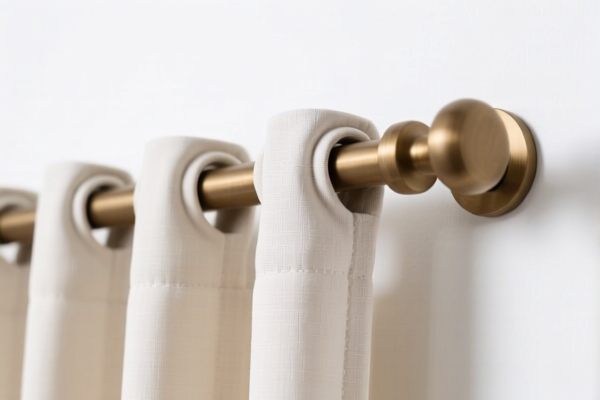
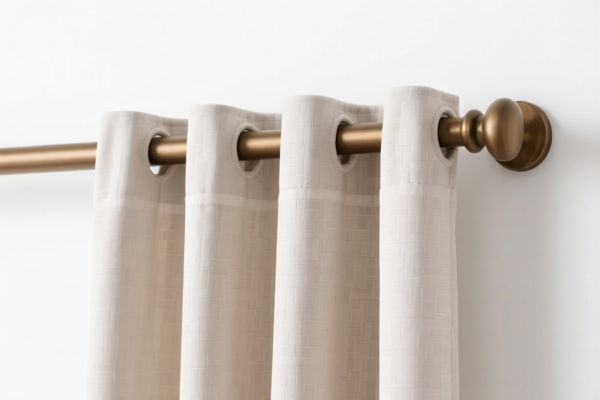
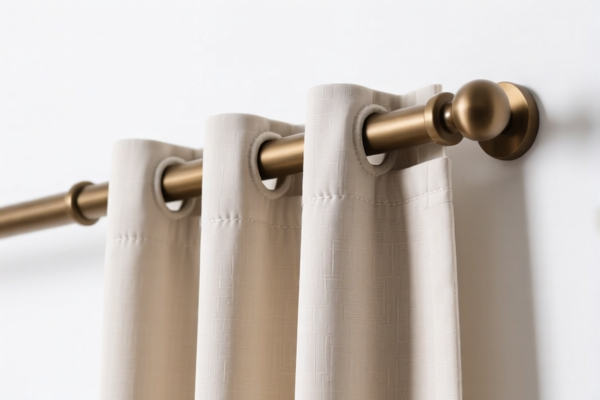
AI Analysis
🚿 Shower Curtain Rods (Hardware & Accessories)
🌐 HS Code Reference & Customs Clearance Guide | 2026 Latest Tariff Analysis | Professional Clearance Strategy
📌 I. Product Definition & Classification: Do You Know Your "Rod" Well?
Shower curtain rods are essential bathroom hardware items used to support shower curtains. In international trade, they are generally classified based on their primary material. Unlike decorative items that might fall under plastics or ceramics, curtain rods are predominantly made of metal (iron/steel or aluminum).
Key Classification Logic: 1. Material is Key: If the rod is primarily metal (even if it has plastic clips or rubber ends), it falls under Chapter 73 (Iron/Steel) or Chapter 76 (Aluminum). 2. Function vs. Material: While it is a "fixture," customs duties are driven by material composition for simple hardware items like rods, unless they contain complex mechanical parts (which shower rods do not). 3. Specific HS Codes Provided: Based on the data provided, we must distinguish between Iron/Steel and Aluminum constructions, as the tax rates differ significantly.
⚠️ Critical Distinction:
- If the rod is made of Iron/Steel wire or articles thereof → 7326.20.00.90 or 7326.90.86.88
- If the rod is made of Aluminum → 7616.99.51.90 or 7616.99.51.75
- Plastic parts (like end caps) do NOT change the classification to Chapter 39 if the metal forms the core structure.
📦 II. HS Code Classification Details (Based on Provided Data)
| HS Code | Product Description | Material Type | Applicable Scenario | Key Tax Impact |
|---|---|---|---|---|
7326.20.00.90 |
Other articles of iron or steel: Articles of iron or steel wire Other | Iron/Steel | Wire-frame curtain rods, steel tension rods, coated steel rods | 🔴 High Tax (78.9%) |
7326.90.86.88 |
Other articles of iron or steel: Other: Other: Other: Other Other | Iron/Steel | Solid steel rods, thick-bar steel rods, decorative steel fixtures | 🔴 High Tax (77.9%) |
7616.99.51.90 |
Other articles of aluminum: Other: Other: Other Other: Other: Other | Aluminum | Aluminum alloy rods, standard lightweight shower rods | 🔴 Very High Tax (77.5%) |
7616.99.51.75 |
Other articles of aluminum: Other: Other: Other Other: Other: Articles of wire | Aluminum | Aluminum wire based rods (less common for main rods, but possible for specific designs) | 🟡 Lower Tax (27.5%) |
3926.90.99.89 |
Other articles of plastics... | Plastic | Not Applicable for standard metal rods. Only if the product is entirely plastic (e.g., cheap disposable or pure plastic tension rods). | 🟢 Low Tax (12.8%) |
3926.30.50.00 |
Other articles of plastics... Fittings for furniture... | Plastic | Not Applicable for the rod itself. Only applies to plastic brackets or mounting plates if shipped separately. | ✅ Zero Tax (0.0%) |
🔍 Important Note:
- The provided data focuses heavily on metal (73xx/76xx) and plastic (39xx) items.
- Shower Curtain Rods are predominantly metal.
- If your product is Metal, you cannot use the 0% or 12.8% rates unless you split the shipment and misdeclare the rod as a plastic fitting (which is illegal and risky).
- 7616.99.51.75 offers the most significant tax advantage (27.5%) but requires the product to be classified specifically as an "article of wire" made of aluminum, not a solid tube.
💰 III. 2026 Latest Tariff Rate Breakdown (Detailed Analysis)
✅ Applicable Country: USA
✅ Origin: China (CN)
✅ Effective Time: Current (2025/2026 Tariff Regime)
🎯 1. Iron/Steel Articles (7326.xxxxx.xxxx)
A. 7326.20.00.90 (Steel Wire Articles)
| Item | Content |
|---|---|
| Basic Duty | 3.9% |
| Section 301 Duty | +25.0% |
| Section 232 / 301 Supplement | +50% (Steel, Aluminum, Copper Products Surcharge) |
| Total Effective Tax Rate | 78.9% |
| Calculation | CIF Value × 78.9% |
| Legal Path | Base Tariff → Sec 301 → Steel Surcharge |
B. 7326.90.86.88 (Other Steel Articles)
| Item | Content |
|---|---|
| Basic Duty | 2.9% |
| Section 301 Duty | +25.0% |
| Section 232 / 301 Supplement | +50% (Steel, Aluminum, Copper Products Surcharge) |
| Total Effective Tax Rate | 77.9% |
| Calculation | CIF Value × 77.9% |
📌 Explanation:
- The 50% surcharge on "Steel, Aluminum, Copper Products" drastically increases the cost for metal rods.
- Whether it is classified as "wire" (7326.20) or "other" (7326.90), the total tax exceeds 77%.
- This is extremely high for a low-value item like a curtain rod.
🎯 2. Aluminum Articles (7616.99.51.xxxx)
A. 7616.99.51.90 (Other Aluminum Articles)
| Item | Content |
|---|---|
| Basic Duty | 2.5% |
| Section 301 Duty | +25.0% |
| Section 232 / 301 Supplement | +50% (Steel, Aluminum, Copper Products Surcharge) |
| Total Effective Tax Rate | 77.5% |
| Calculation | CIF Value × 77.5% |
B. 7616.99.51.75 (Aluminum Wire Articles)
| Item | Content |
|---|---|
| Basic Duty | 2.5% |
| Section 301 Duty | +25.0% |
| Supplemental Duty | None (Data shows no +50% for this specific subheading in the provided text) |
| Total Effective Tax Rate | 27.5% |
| Calculation | CIF Value × 27.5% |
📌 Explanation:
- This is the critical loophole/opportunity.
- If the aluminum shower rod can be legally classified as an "article of wire" (e.g., made from aluminum wire mesh or specific wire structures) rather than a solid "tube" or "bar," the tax drops from 77.5% to 27.5%.
- Warning: This classification must be technically accurate. Solid tubes are usually not "wire." If you misclassify a solid tube as "wire," you risk penalties.
🎯 3. Plastic Articles (3926.xxxx) - Only if Applicable
A. 3926.90.99.89 (Other Plastic Articles)
| Item | Content |
|---|---|
| Basic Duty | 5.3% |
| Section 301 Duty | +7.5% |
| Total Effective Tax Rate | 12.8% |
B. 3926.30.50.00 (Plastic Fittings)
| Item | Content |
|---|---|
| Basic Duty | 0.0% |
| Section 301 Duty | 0.0% |
| Total Effective Tax Rate | 0.0% |
📌 Explanation:
- These rates apply ONLY if the product is primarily plastic.
- For metal rods, these codes are incorrect.
- However, if you sell plastic curtain rod ends or plastic mounting brackets separately, they may qualify for 0% tax.
🛠️ IV. Customs Clearance Practical Advice (Actionable Guide)
✅ 1. Material Verification is Paramount
Before shipping, confirm the exact material composition: - Is it 100% Metal? → Expect 77-79% tax. - Is it Aluminum Wire Structure? → Attempt to classify under 7616.99.51.75 (27.5% tax). Consult a customs broker to validate if your specific rod design qualifies as "wire." - Is it Plastic? → Use 3926.90.99.89 (12.8% tax).
✅ 2. Avoid Misclassification Risks
- Do NOT declare a steel rod as a "plastic fitting" to save taxes. Customs will inspect, find the metal, and impose heavy penalties + back taxes.
- Do NOT split a single metal rod into "metal rod" and "plastic caps" to assign different HS codes. The rod is the principal component.
✅ 3. Strategic Sourcing & Pricing
- High Tax Impact: With ~78% tax, the landed cost of a $10 rod becomes $17.80. This severely impacts margins.
- Alternative 1 (Material Change): If possible, switch to Aluminum Wire Construction to leverage the 27.5% rate.
- Alternative 2 (Origin Change): Consider sourcing from countries not subject to Section 301 (e.g., Vietnam, Mexico) if available, though you must ensure no transshipment violations.
- Alternative 3 (Value Adjustment): Since the tax is ad valorem (percentage-based), high-value designer rods are less affected in absolute terms than low-value basic rods.
✅ 4. Documentation Checklist
| Document | Requirement |
|---|---|
| Commercial Invoice | Clearly state: "Shower Curtain Rod, Material: [Aluminum/Steel], Construction: [Wire/Tube]" |
| Product Photos | Show cross-section to prove if it is "wire" (hollow/thin) or "solid tube." |
| Bill of Lading | Ensure weight and volume match commercial invoice. |
| Customs Broker Consultation | Mandatory for 7616.99.51.75 classification to avoid audit risk. |
🌍 V. Global Market Comparison (2026)
| Country | HS Code (Metal Rod) | Est. Tax Rate | Notes |
|---|---|---|---|
| 🇺🇸 USA | 7326.20.00.90 / 7326.90.86.88 / 7616.99.51.90 | 77.5% - 78.9% | Extremely High due to steel/aluminum surcharges. |
| 🇨🇳 China | 7616.99 / 7326.90 | ~0% - 5% | Low import duty, no Section 301. |
| 🇪🇺 EU | Varies by Chapter | 0% - 4% | No general steel surcharge like US. |
| 🇬🇧 UK | Varies by Chapter | 0% - 5% | Post-Brexit tariffs, generally favorable for hardware. |
📌 Conclusion:
The USA market is highly unfavorable for imported metal shower curtain rods from China due to the 50% steel/aluminum surcharge combined with Section 301 tariffs.
Profit margins will be crushed unless:
1. You can legally classify aluminum rods as "wire articles" (27.5% tax).
2. You shift production to a non-tariff-susceptible origin.
3. You price in the tax fully to the consumer.
📌 VI. Common Mistakes & Pitfalls
❌ Mistake 1: Assuming all "Home Hardware" has low taxes.
👉 Reality: Metal hardware faces punitive tariffs in the US.
❌ Mistake 2: Declaring aluminum rods as "Steel" to find a lower code.
👉 Reality: Customs can test material composition. Mismatch leads to fines.
❌ Mistake 3: Ignoring the "Wire" vs. "Tube" distinction for Aluminum.
👉 Reality: 7616.99.51.75 (27.5%) vs 7616.99.51.90 (77.5%) is a 50% tax difference. Getting this right is crucial.
✅ Correct Action:
"Classify by Material + Construction. Verify 'Wire' status for Aluminum. Prepare for 78% tax on Steel/Aluminum Tubes unless proven otherwise."
🎯 VII. Conclusion: Strategic Recommendations
🎯 Key Takeaway:
Shower curtain rods are low-margin, high-tax items for US imports from China due to Section 301 + Steel/Aluminum Surcharges.
Recommended Actions: 1. Audit Product Design: Can the aluminum rod be redesigned to be a "wire" structure? If yes, pursue 7616.99.51.75. 2. Diversify Supply Chain: Explore sourcing from Vietnam or Mexico to bypass China-specific tariffs (though verify origin rules carefully). 3. Price Strategy: Ensure your US selling price includes the ~78% landed cost for steel/tube aluminum rods. 4. Pre-Ruling: Apply for a Binding Ruling from US Customs (CBP) to confirm the correct HS code (especially for the "wire" classification) before bulk shipment.
📣 Immediate Step:
📞 Contact your customs broker today. Provide photos of the rod's cross-section. Ask explicitly: "Does this aluminum rod qualify as an 'article of wire' under HTS 7616.99.51.75?"
🚀 Save up to 50% in taxes if the answer is YES.
✨ Smart Classification Saves Millions!
💼 Don't let tariffs wash away your profits!
Customer Reviews
About HS Code Classification
The Harmonized System (HS) is an internationally standardized nomenclature developed by the World Customs Organization (WCO) to classify traded products. Over 200 countries use the HS system as the basis for customs tariffs, trade statistics, and import/export regulations.
Each HS code follows a hierarchical structure:
- Chapter (2 digits) — Broad category of goods (e.g., Chapter 84: Machinery and Mechanical Appliances)
- Heading (4 digits) — More specific grouping within the chapter
- Subheading (6 digits) — Internationally standardized breakdown, used by all WCO member countries
- National subdivisions (8-10 digits) — Country-specific extensions for further classification, such as US HTSUS 10-digit codes
Correct HS code classification is essential for smooth customs clearance, accurate duty payment, and compliance with trade regulations. Misclassification can lead to customs delays, overpayment of duties, or penalties.
When importing from CN to US, the applicable tariff rates may include:
- Most-Favored-Nation (MFN) rate — The standard duty rate applied to WTO members
- General rate — Applied to countries without trade agreements
- Trade remedy duties — Additional tariffs such as Section 301 (anti-dumping), Section 232 (national security), or countervailing duties
The information provided on this page is for reference purposes only. For official classification, please consult with your local customs authority or a licensed customs broker.