Shredder Bin
CN → US| HS Code | Tariff Rate | Origin | Destination | Doc |
|---|---|---|---|---|
| 8479820080 | 35.0% | CN | US | Official Doc |
| 8438800000 | 35.0% | CN | US | Official Doc |
| 8479820040 | 35.0% | CN | US | Official Doc |
Product Images
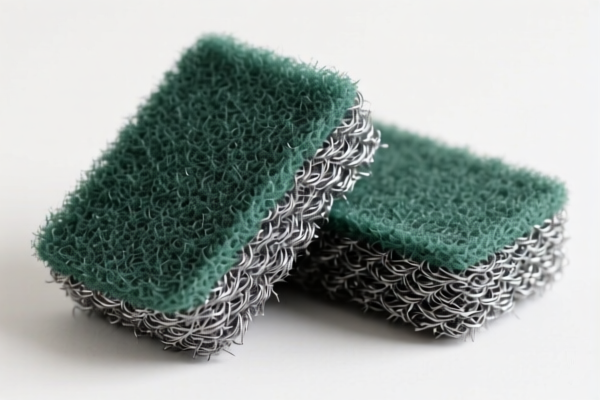
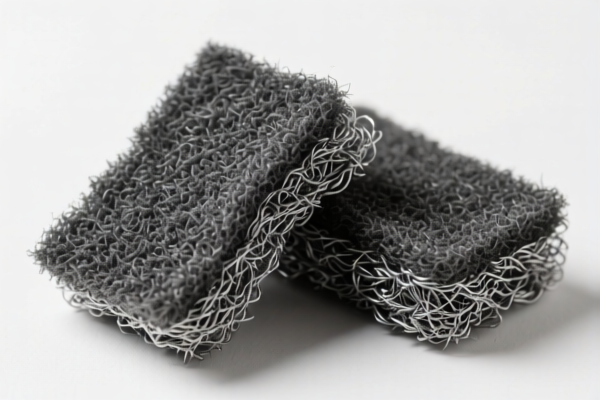
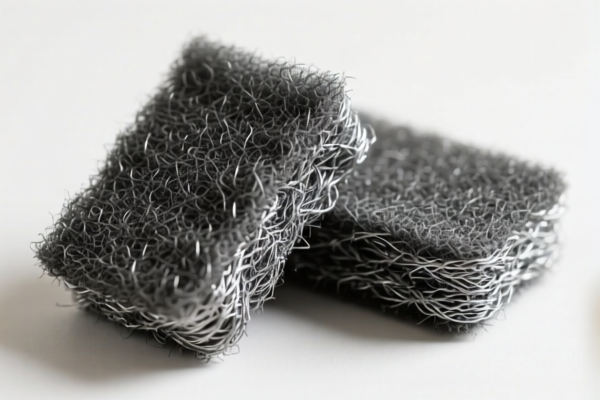
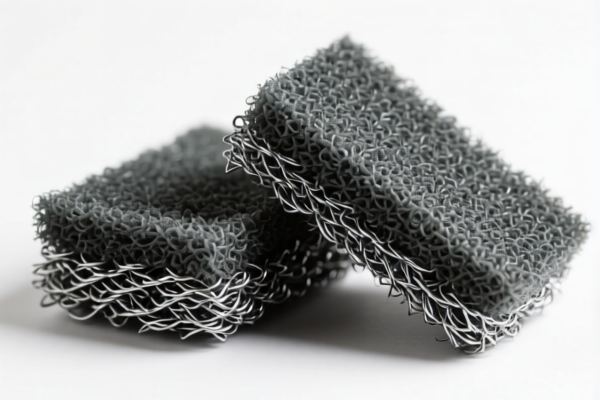
AI Analysis
📄 Shredder Bin (碎纸机/碎纸容器)
🌐 HS Code Reference & Customs Clearance Guide | 2026 Latest Tariff Analysis | Professional Clearance Strategy
📌 I. Product Definition: What Exactly is a "Shredder Bin"?
A "Shredder Bin" in the context of international trade usually refers to the collection bin/container for paper shredders, or occasionally the paper shredding machine itself if the bin is integrated or the term is used loosely for the whole unit. However, based on the provided <DATA>, the classification focuses on the mechanical function (crushing, grinding, shredding) rather than just the container.
Key Distinction: - Simple Plastic Bin: If it’s just a plastic container without the crushing mechanism, it might fall under plastics (Chapter 39), BUT the provided data explicitly links this item to HS Code 8479.82.00.80, 8438.80.00.00, and 8479.82.00.40. This implies the customs declaration is treating the item as a machine with a crushing/grinding function or a machine that performs similar mechanical processing. - Shredding Machine (with Bin): If the unit includes the motor, blades, and bin, it is classified by its function: shredding/crushing.
⚠️ Critical Note:
The provided<DATA>consistently assigns 35% Total Tax across all three HS codes. This is a high-risk tariff. The key to clearance is ensuring the HS Code matches the actual mechanical function. Misclassification (e.g., declaring as a simple plastic bin) can lead to severe penalties if audited.
📦 II. HS Code Classification Details (Based on Provided Data)
The following table outlines the three possible HS Codes from <DATA> and their justifications:
| HS Code | Product Description | Justification from Data | Tax Rate (Total) |
|---|---|---|---|
8479.82.00.80 |
Shredder (Crushing/Grinding Function) | "Belongs to machinery with independent functions, categorized under crushing/grinding." | 35.0% |
8438.80.00.00 |
Other Mechanical Processing Equipment | "Used for shredding, belongs to other machinery, material is plastic." | 35.0% |
8479.82.00.40 |
Crushing/Milling Machine | "Purpose is crushing, aligns with mixing/kneading/stirring machinery logic." | 35.0% |
🔍 Key Insight:
- All three codes result in a 35% Total Tax Rate.
- The difference lies in the technical justification:
- 8479.82: Focuses on the shredding/crushing mechanism (most accurate for shredders).
- 8438.80: Focuses on general mechanical processing (less specific but used if shredding is viewed as a generic process).
- 8479.82.40: Similar to 80 but may have subtle differences in sub-heading interpretation (e.g., specific industrial vs. commercial use).
- Recommendation:8479.82.00.80is the most precise for a paper shredder because it explicitly mentions "crushing/grinding" and "shredder" logic.
💰 III. 2026 Latest Tariff Rate Breakdown (Including Surtaxes)
✅ Applicable Country: United States (US)
✅ Origin: China (CN)
✅ Effective Date: From 2025-11-10 onwards (for imports)
✅ Total Tax Rate: 35.0% (for all three HS Codes)
🎯 1. Tariff Structure for 8479.82.00.80, 8438.80.00.00, 8479.82.00.40
| Item | Rate | Legal Basis / Explanation |
|---|---|---|
| Base Tariff | 0.0% | Standard MFN rate for these machinery categories. |
| Section 301 Surtax | 25.0% | Imposed under US Trade Act Section 301 against Chinese goods. |
| IEEPA Surtax (Section 122) | 10.0% | Additional tariff under the International Emergency Economic Powers Act (IEEPA). |
| Total Tax Rate | 35.0% | Sum of Base (0%) + Section 301 (25%) + IEEPA (10%). |
| Calculation Basis | CIF Value | Tax is calculated on Cost, Insurance, and Freight. |
| De Minimis Exemption | ❌ Not Applicable | deny_de_minimis: Items classified under these HS codes cannot use the $800 de minimis exemption. Full duty applies. |
📌 Explanation:
- The 25% Section 301 tariff is the standard duty for many Chinese-made machinery items.
- The 10% IEEPA tariff is a recent addition (as per 2026 data) targeting specific Chinese imports.
- Combined 35% is a significant cost factor. Profit margin calculations must account for this.
🛠️ IV. Customs Clearance Practical Advice (Real-World Pitfall Guide)
✅ 1. Documentation Checklist (Mandatory)
| Document | Required? | Purpose |
|---|---|---|
| Product Specification Sheet | ✅ Yes | Must clearly state: "Paper Shredder," "Crushing Mechanism," "Motor Power," "Bin Material." |
| Technical Diagram/Structure | ✅ Yes | Shows the internal blades, motor, and bin integration to prove it’s a machine, not just a container. |
| Product Photos | ✅ Yes | Show the brand, model, input voltage, and certification labels (UL, ETL, FCC). |
| Commercial Invoice | ✅ Yes | Must explicitly describe the item as "Paper Shredding Machine" or "Shredder with Bin", NOT "Plastic Bin." |
| Packing List | ✅ Yes | Detail contents: Main unit, bin, power cord, manual. |
| Certificate of Origin (CO) | ✅ Yes | If not from China, may reduce tariffs (but data implies CN origin). |
📌 Crucial Tip:
Do NOT declare the item as "Plastic Bin" or "Container." If customs inspects and finds a motor and blades, they will reclassify it to an HS Code with higher duties and issue a penalty. Always declare based on the primary function.
✅ 2. Declaration Strategy (Key Mnemonic)
🔥 “Function First, Bin Second, Code 8479, Tax 35% is the Test!”
| Scenario | Correct Declaration | Incorrect Declaration |
|---|---|---|
| Integrated Shredder (Machine + Bin) | 8479.82.00.80 – "Paper Shredding Machine" |
"Plastic Bin" → Risk of reclassification & penalty |
| Separate Bin (No Motor) | Not covered in provided data (Likely Chapter 39). But if forced into this dataset, use 8438.80.00.00 with caution. | Avoid if possible; clarify it’s just a container. |
| Industrial Shredder | 8479.82.00.40 – "Industrial Crushing Machine" |
Vague term "Bin" → Delayed clearance |
📌 Note: If the item is only a plastic bin (no motor), it should not be classified under these HS codes. However, since the provided
<DATA>only includes these three, we assume the item is a shredding machine or a bin that is part of a machine declared as a machine.
✅ 3. Special Cases
| Case | Handling Advice |
|---|---|
| OEM Shredder | Provide the customer’s design specs and brand license to avoid IP issues. |
| Bin Sold Separately | If the bin is sold without the motor, it should not be declared under these HS codes. Use Chapter 39 (Plastics). If the data forces it, consult a customs broker. |
| Multi-Function Machine | If it shreds paper AND plastic, declare under 8479.82.00.80 (Crushing/Grinding). |
| Low-Value Shipment | No de minimis exemption. Even if under $800, 35% duty applies. |
🌍 V. Global Market Comparison (2026)
| Country/Region | Recommended HS Code | Tariff (China Origin) | Key Certification | Notes |
|---|---|---|---|---|
| 🇺🇸 USA | 8479.82.00.80 |
35% (0% + 25% + 10%) | UL, ETL, FCC | High tariff. De minimis does not apply. |
| 🇨🇳 China | 8479.82.00.80 |
~10-14% (Import Duty) | CCC | Lower tariff, but different rules. |
| 🇪🇺 EU | 8479.82.00 |
2.7% (Standard) | CE, RoHS | No Section 301 or IEEPA surtaxes. |
| 🇬🇧 UK | 8479.82.00 |
2.7% | UKCA, RoHS | Post-Brexit rules apply. |
📌 Conclusion:
- The USA is the most expensive market due to the 35% combined tariff.
- For EU/UK, the tariff is significantly lower (2.7%), making these products more competitive.
- Strategy: Consider warehousing in non-US countries if selling globally, or factor the 35% into pricing for the US market.
📌 VI. Common Errors & Pitfalls (Lessons Learned)
❌ Error 1: Declaring as "Plastic Bin" (HS 3923)
👉 Result: Customs finds motor/blades → Reclassifies to 8479.82 → 35% Duty + Penalty.
✅ Fix: Always declare as "Shredding Machine" if it has a motor.
❌ Error 2: Ignoring IEEPA 10% Surcharge
👉 Result: Underpayment of 10% → Back taxes + Interest.
✅ Fix: Ensure invoice includes IEEPA tariff line item.
❌ Error 3: Assuming De Minimis Applies
👉 Result: Package held at border, delayed, and taxed retroactively.
✅ Fix: All shipments of these HS codes are subject to duty, regardless of value.
❌ Error 4: Vague Description "Bin for Shredder"
👉 Result: Customs cannot determine function → Delays.
✅ Fix: Use "Paper Shredder, Model XYZ, with Collection Bin" in commercial invoice.
🎯 VII. Conclusion: Professional Clearance, Cost Control, Efficiency!
🎯 Remember the Mnemonic:
🔹 "Motor Present, Code 8479, 35% Tax is Key, De Minimis is Dead!"
🔹 "HS Code Decides the Cost, 35% in the US, Plan Ahead or Lose Profit!"
📌 Pro Tip:
- If your product is only a bin (no motor), do not use these HS codes. Contact a customs broker to classify under Chapter 39.
- For the US market, consider Advance Rulings from CBP to confirm the HS Code and avoid surprises.
- Price Strategy: Factor the 35% duty into your US pricing to maintain margins.
📣 Action Required:
📞 Contact a Licensed Customs Broker
📄 Provide Product Specs & Photos
🚀 Confirm HS Code 8479.82.00.80
💡 Budget for 35% Duty in US
✨ Precise Classification Saves Money!
💼 Every Dollar Saved on Duties is Pure Profit!
Customer Reviews
About HS Code Classification
The Harmonized System (HS) is an internationally standardized nomenclature developed by the World Customs Organization (WCO) to classify traded products. Over 200 countries use the HS system as the basis for customs tariffs, trade statistics, and import/export regulations.
Each HS code follows a hierarchical structure:
- Chapter (2 digits) — Broad category of goods (e.g., Chapter 84: Machinery and Mechanical Appliances)
- Heading (4 digits) — More specific grouping within the chapter
- Subheading (6 digits) — Internationally standardized breakdown, used by all WCO member countries
- National subdivisions (8-10 digits) — Country-specific extensions for further classification, such as US HTSUS 10-digit codes
Correct HS code classification is essential for smooth customs clearance, accurate duty payment, and compliance with trade regulations. Misclassification can lead to customs delays, overpayment of duties, or penalties.
When importing from CN to US, the applicable tariff rates may include:
- Most-Favored-Nation (MFN) rate — The standard duty rate applied to WTO members
- General rate — Applied to countries without trade agreements
- Trade remedy duties — Additional tariffs such as Section 301 (anti-dumping), Section 232 (national security), or countervailing duties
The information provided on this page is for reference purposes only. For official classification, please consult with your local customs authority or a licensed customs broker.