Shrimp Trawl Net
CN → US| HS Code | Tariff Rate | Origin | Destination | Doc |
|---|---|---|---|---|
| 5608110090 | 43.0% | CN | US | Official Doc |
| 5608191020 | 43.5% | CN | US | Official Doc |
| 9507906000 | 65.0% | CN | US | Official Doc |
| 9507908000 | 19.0% | CN | US | Official Doc |
Product Images
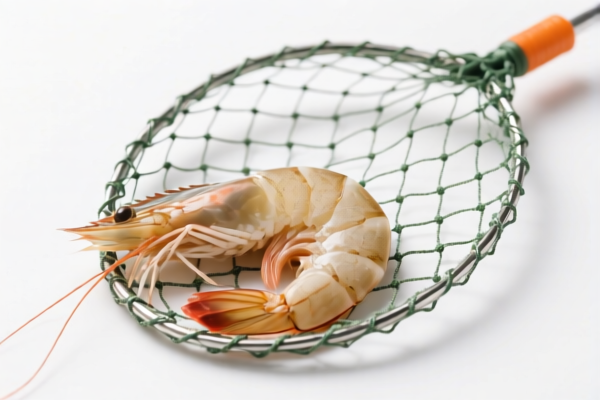
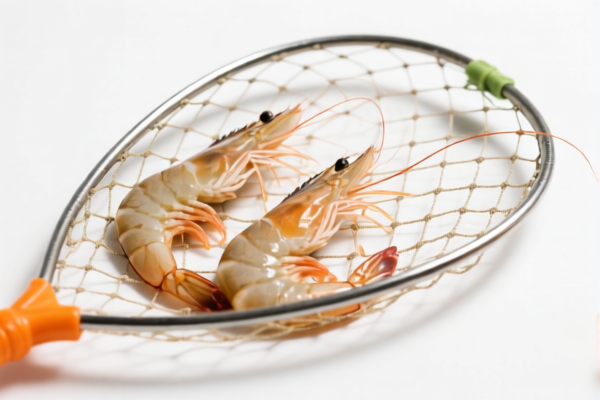


AI Analysis
🦐 Shrimp Trawl Net (Fishery Netting & Gear)
🌐 HS Code Reference & Customs Clearance Guide | 2026 Latest Tariff Analysis | Professional Clearance Strategy
📌 I. Product Definition & Classification: What Exactly is a "Shrimp Trawl Net"?
A Shrimp Trawl Net is a large-scale fishing net used to catch shrimp and other bottom-dwelling species by dragging it along the sea floor or through the water column. In international trade, its classification depends heavily on its manufacturing method, material, and specific structural design.
Because these nets can be constructed differently, they fall into multiple HS Code categories, leading to significantly different tax liabilities. The core distinction lies in whether it is classified as a "knotted net made of textile materials," "other fishing nets," or "other sports/recreational netting."
⚠️ Critical Distinction:
- Knotted vs. Other: Is it strictly knotted? Does it use synthetic textile materials? → 5608.11 or 5608.19
- General Fishing Gear vs. Sport/Recreational: Is it for industrial/commercial fishing or general "copying" (scooping)? → 9507.90
- Material Composition: Is it primarily textile fiber or does it contain significant metal/aluminum components? → Affects 122-Clause Tariffs.
📦 II. HS Code Classification Details (2026 Latest Tariff Authority Comparison)
Based on the provided data, the Shrimp Trawl Net can be classified into four potential HS Codes depending on its specific characteristics:
| HS Code | Product Description (Summary) | Key Characteristics | Estimated Total Tax |
|---|---|---|---|
5608.11.00.90 |
Knotted Nets - Manufactured Fishing Nets | Material: Textile; Form: Knotted; Specific: Shrimp Trawl | 43.0% |
5608.19.10.20 |
Other Fishing Nets - Non-Knotted/Other Types | Material: Artificial Textile; Form: Trawl; Type: Other | 43.5% |
9507.90.60.00 |
Fishing Scoops & Similar | Material: Fiber Rope; Usage: Scooping/Catching; Includes Metal/Aluminum | 65.0% |
9507.90.80.00 |
Other Nets (Fishing/Butterfly) | General Category: Fishing nature nets not elsewhere specified | 19.0% |
🔍 Key Insight:
- The tax rate varies drastically from 19.0% to 65.0% depending on the precise classification.
- Chapter 56 (5608) is the standard chapter for "Twine, Cordage, Ropes and Cables, and Articles Thereof," specifically fishing nets.
- Chapter 95 (9507) covers "Fishing Rods, Fish-hooks and Other Fishing Tackle," which includes some nets but often applies to recreational or specific "scoop" types.
- 122-Clause Tariffs (Section 301/IEEPA additions) play a huge role, especially if metal/aluminum is involved.
💰 III. 2026 Latest Tariff Rate Breakdown (Detailed Tax Structure)
✅ Applicable Market: United States (US)
✅ Origin: China (CN) (Assumed based on 122-Clause/Section 301 context)
✅ Effective Time: Current trade restrictions apply
🎯 1. 5608.11.00.90 — Knotted Nets (Textile Material)
This is the most standard classification for industrial shrimp trawl nets made of knotted synthetic fibers (nylon, polyethylene).
| Item | Detail |
|---|---|
| Base Tariff | 8.0% |
| Section 301 Additional Tariff | +25.0% |
| 122-Clause Tariff | +10.0% |
| Total Tax Rate | 43.0% |
| Calculation | CIF Value × 43% |
| Legal Basis | Base Duty + USITC Footnote (301) + 122-Clause Add-on |
📌 Explanation:
- This code is ideal if the net is primarily textile and knotted.
- It does not trigger the high "Steel/Aluminum" surcharge of the 122-Clause (50%), keeping the total at 43%.
🎯 2. 5608.19.10.20 — Other Fishing Nets (Artificial Textile)
Used if the net does not fit the strict "knotted" definition of 5608.11 but is still a manufactured fishing net made of artificial textile materials.
| Item | Detail |
|---|---|
| Base Tariff | 8.5% |
| Section 301 Additional Tariff | +25.0% |
| 122-Clause Tariff | +10.0% |
| Total Tax Rate | 43.5% |
| Calculation | CIF Value × 43.5% |
| Legal Basis | Base Duty + USITC Footnote (301) + 122-Clause Add-on |
📌 Explanation:
- Slightly higher base tariff (8.5% vs 8.0%) due to being a "other" category under 5608.19.
- Tax impact is negligible compared to Code 1, but compliance requires accurate material declaration.
🎯 3. 9507.90.60.00 — Fishing Scoops & Similar (High Risk)
This classification applies if the net is considered a "scoop net" or similar device, particularly if it contains steel, aluminum, or copper components.
| Item | Detail |
|---|---|
| Base Tariff | 5.0% |
| Section 301 Additional Tariff | 0.0% |
| 122-Clause Tariff | +10.0% |
| Metal/Alloy Surcharge | +50.0% (If containing Steel/Aluminum/Copper) |
| Total Tax Rate | 65.0% |
| Calculation | CIF Value × 65% |
| Legal Basis | Base + 122-Clause + Section 301/IEEPA Metal Surcharge |
🚨 CRITICAL WARNING:
- Do NOT classify here unless necessary.
- The 50% surcharge on Steel/Aluminum/Copper makes this the most expensive option.
- Even if the net is mostly rope, if it has metal floats, weights, or rings, Customs may apply this higher tier or challenge the classification.
🎯 4. 9507.90.80.00 — Other Nets (Lowest Tax)
This is a "catch-all" for nets that do not fit 5608 or 9507.60, often used for recreational or specific non-industrial fishing nets.
| Item | Detail |
|---|---|
| Base Tariff | 9.0% |
| Section 301 Additional Tariff | 0.0% |
| 122-Clause Tariff | +10.0% |
| Total Tax Rate | 19.0% |
| Calculation | CIF Value × 19% |
| Legal Basis | Base Duty + 122-Clause Add-on |
📌 Explanation:
- Lowest Tax Rate (19%).
- Risk: Customs may reject this classification for a large industrial shrimp trawl net, viewing it as improper classification under Chapter 56 (Fishing Nets).
- Use only if the net is clearly for recreational, butterfly catching, or small-scale non-industrial use, or if it lacks standard "fishing net" characteristics defined in Chapter 56.
🛠️ IV. Customs Clearance Practical Advice (Expert Pitfall Avoidance)
✅ 1. Preparation Checklist (Essential Documents)
| Document | Requirement | Purpose |
|---|---|---|
| Product Specification Sheet | ✔️ | Detail material (e.g., 100% Nylon, Polyethylene), mesh size, knot type. |
| Material Composition Report | ✔️ | Crucial to prove NO significant steel/aluminum content to avoid the 50% surcharge (Code 9507.90.60.00). |
| Technical Drawings | ✔️ | Show structure: Is it knotted? Is it a trawl net or a scoop? |
| Commercial Invoice | ✔️ | Must match the declared HS Code description accurately. |
| Packing List | ✔️ | Clearly separate nets from any metal accessories (weights, floats). |
✅ 2. Declaration Strategy (Key Keywords)
| Scenario | Recommended HS Code | Declaration Text |
|---|---|---|
| Industrial Shrimp Trawl (Knotted, Textile) | 5608.11.00.90 |
"Industrial Shrimp Trawl Net, Knotted, Made of Synthetic Textile Material, No Metal Components" |
| Industrial Shrimp Trawl (Other Textile) | 5608.19.10.20 |
"Other Manufactured Fishing Net, Trawl Type, Artificial Textile Material" |
| Small/Recreational Scoop Net | 9507.90.80.00 |
"Small Handheld Fishing Scoop Net, Recreational Use, Fiber Rope" |
| Net with Metal Hardware | ⚠️ High Risk | Avoid 9507.90.60.00 unless unavoidable. If metal parts are minor, consider removing them or declaring as "Textile Net with Minor Non-Metal Accessories." |
🔥 Golden Rule:
"Industrial nets belong in Chapter 56. Recreational/Scoop nets in Chapter 95. Metal contents trigger 50% surcharges!"
✅ 3. Special Circumstances Handling
| Situation | Advice |
|---|---|
| Mixed Materials (Rope + Metal Rings) | If metal is <5% by weight, argue for Chapter 56. If >5%, Customs may force 9507.90.60.00 with 50% surcharge. Negotiate or redesign. |
| OEM Custom Nets | Provide design specs proving it is a "fishing net" (Chapter 56) rather than a "sports accessory" (Chapter 95) to access the 19% rate? No, Chapter 56 rates are ~43%. Chapter 95 is 19% but risky. Verify with a ruling. |
| Transshipment (Vietnam/Malaysia) | If shipped from Vietnam with substantial transformation, you may avoid 122-Clause/Section 301 tariffs. Apply for Certificate of Origin (CO) and Advance Ruling. |
🌍 V. Global Market Comparison (2026 Latest)
| Country/Region | Recommended HS Code | Tariff (China Origin) | Notes |
|---|---|---|---|
| 🇺🇸 USA | 5608.11.00.90 |
43.0% | Includes 301 + 122-Clause. High cost. |
| 🇺🇸 USA | 9507.90.80.00 |
19.0% | Risky. May be reclassified by Customs. |
| 🇨🇳 China | 5608.11.00.90 |
~8-15% | Standard import duty. No 301/122 clauses. |
| 🇪🇺 EU | 5608.11 |
~8-12% | No Section 301/122. Lower burden. |
| 🇦🇺 Australia | 5608.11 |
~5% | Preferential rates may apply. |
📌 Conclusion:
- USA is the most challenging market due to Section 301 and 122-Clause tariffs.
- Chapter 56 (Fishing Nets) is the most legally robust classification for industrial trawl nets, despite the 43% tax.
- Chapter 95 (19%) is tempting but carries high audit risk for industrial gear.
📌 VI. Common Mistakes & Pitfall Guide (Lessons Learned)
❌ Mistake 1: Declaring a large industrial shrimp trawl net as 9507.90.80.00 (19%) to save taxes.
👉 Consequence: Customs reclassifies to 5608.11.00.90 (43%). Back taxes + penalties!
❌ Mistake 2: Ignoring metal components (rings, weights) in the net.
👉 Consequence: If declared as textile-only but metal is found, Customs may apply the 50% metal surcharge under 9507.90.60.00. Total tax jumps to 65%!
❌ Mistake 3: Using vague descriptions like "Fishing Net" on the invoice.
👉 Consequence: Delays for inspection. Provide detailed specs: "Knotted, Synthetic, Shrimp Trawl."
❌ Mistake 4: Assuming "122-Clause" applies to all goods.
👉 Correction: 122-Clause applies to specific sectors. For fishing nets, it adds 10%. Ensure you are not missing any exemptions or misapplying it.
✅ Correct Approach:
"Industrial Shrimp Trawl Net, Knotted, 100% Nylon, Mesh Size 50mm, Weight 200kg, No Metal Components."
🎯 VII. Conclusion: Professional Classification, Cost Optimization
🎯 Key Takeaways:
🔹 For Industrial Nets: Stick to
5608.11.00.90(43%) or5608.19.10.20(43.5%). It is legally safe and avoids the 50% metal surcharge.
🔹 For Recreational/Small Nets: Consider9507.90.80.00(19%) only if clearly non-industrial.
🔹 Avoid Metal: Minimize or eliminate steel/aluminum parts to escape the 50% surcharge.
🔹 Documentation is Key: Detailed material specs and technical drawings are your best defense against misclassification.
📌 Pro Tip:
If you are importing large volumes, consider applying for an Advance Ruling (PB Ruling) from US Customs and Border Protection (CBP) to lock in the HS Code and avoid future disputes.
📣 Immediate Action:
📞 Consult a Licensed Customs Broker: Confirm if your specific net design qualifies for
5608(Safe) vs.9507(Risky).
📄 Prepare Technical Files: Ensure your supplier provides material breakdowns.
🚀 Optimize Supply Chain: Consider sourcing from non-China origins if tariffs become prohibitive.
✨ Professional Clearance Starts with Accurate Classification!
💼 Your Profit Margin Depends on the Right HS Code!
Customer Reviews
About HS Code Classification
The Harmonized System (HS) is an internationally standardized nomenclature developed by the World Customs Organization (WCO) to classify traded products. Over 200 countries use the HS system as the basis for customs tariffs, trade statistics, and import/export regulations.
Each HS code follows a hierarchical structure:
- Chapter (2 digits) — Broad category of goods (e.g., Chapter 84: Machinery and Mechanical Appliances)
- Heading (4 digits) — More specific grouping within the chapter
- Subheading (6 digits) — Internationally standardized breakdown, used by all WCO member countries
- National subdivisions (8-10 digits) — Country-specific extensions for further classification, such as US HTSUS 10-digit codes
Correct HS code classification is essential for smooth customs clearance, accurate duty payment, and compliance with trade regulations. Misclassification can lead to customs delays, overpayment of duties, or penalties.
When importing from CN to US, the applicable tariff rates may include:
- Most-Favored-Nation (MFN) rate — The standard duty rate applied to WTO members
- General rate — Applied to countries without trade agreements
- Trade remedy duties — Additional tariffs such as Section 301 (anti-dumping), Section 232 (national security), or countervailing duties
The information provided on this page is for reference purposes only. For official classification, please consult with your local customs authority or a licensed customs broker.