Shrink Rod
CN → US| HS Code | Tariff Rate | Origin | Destination | Doc |
|---|---|---|---|---|
| 7326908605 | 87.9% | CN | US | Official Doc |
| 7326908688 | 87.9% | CN | US | Official Doc |
| 8466201010 | 39.6% | CN | US | Official Doc |
| 8466208035 | 38.7% | CN | US | Official Doc |
| 8207903085 | 40.0% | CN | US | Official Doc |
| 8207907585 | 38.7% | CN | US | Official Doc |
Product Images
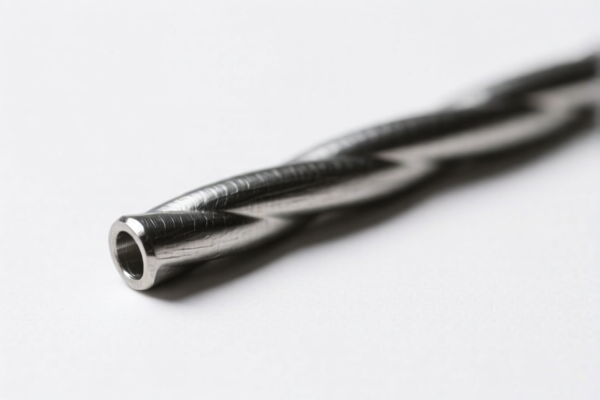
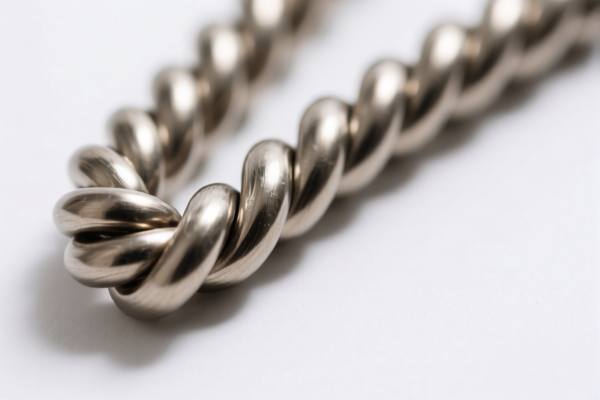
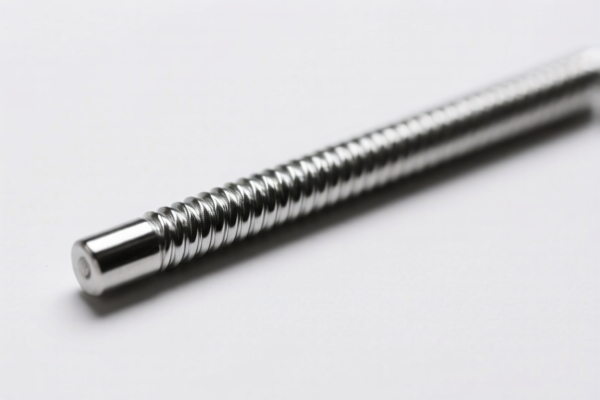
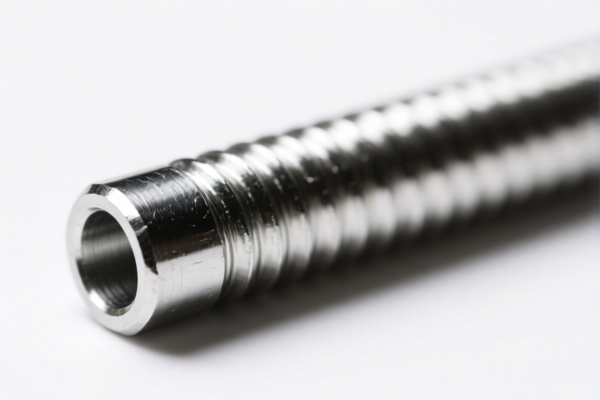
AI Analysis
🔥 Shrink Rods (Rods for Electrical Grounding / Base Metal Parts)
🌐 HS Code Reference & Customs Clearance Guide | 2026 Latest Tariff Analysis | Professional Clearance Strategy
📌 Part I: Product Definition & Classification: What Exactly is a "Shrink Rod"?
In the context of international trade and electrical engineering, "Shrink Rods" typically refer to grounding rods (often copper-clad steel or galvanized steel) used in electrical grounding systems. The term "shrink" may refer to the manufacturing process (shrink-fit cladding) or specific installation methods.
These products fall under two main categories depending on their specific material and end-use: 1. Electrical Grounding Rods: Specifically designed for electrical safety and grounding. 2. General Steel Articles: If not specifically identified for grounding, they may be classified as general steel hardware.
⚠️ Key Distinction:
- If the product is explicitly marketed and used for electrical grounding, it falls under specific subheadings for "Other articles of iron or steel."
- If it is a general-purpose metal rod (e.g., for construction, fencing, or mechanical use) without specific grounding attributes, it falls under "Other articles of iron or steel: Other."
📦 Part II: HS Code Classification Details (Based on Provided Data)
| HS Code | Product Description | Applicable Scenario | Tax Rate (China Origin to US) |
|---|---|---|---|
7326.90.86.05 |
Other articles of iron or steel: Other: Other: Other: Rods for electrical grounding | Copper-clad grounding rods, galvanized steel grounding rods, specialized electrical earth electrodes | 50.0% |
7326.90.86.88 |
Other articles of iron or steel: Other: Other: Other: Other | General steel rods, rebar, structural steel parts, non-grounding specific steel hardware | 77.9% |
🔍 Critical Note:
-7326.90.86.05is the correct classification if the product is clearly identified as a "Grounding Rod."
-7326.90.86.88applies if the product is a general steel rod not specifically for electrical grounding.
- Misclassification Risk: Declaring a general steel rod as a "grounding rod" to get a lower base rate is risky if customs verifies the product's actual use. However, note that both categories suffer from high additional tariffs.
💰 Part III: 2026 Latest Tariff Rate Breakdown (Detailed Tax Clauses)
✅ Applicable Country: United States (US)
✅ Country of Origin: China (CN)
✅ Effective Date: Includes subsequent imports (Subject to ongoing Section 301 and IEEPA rules)
🎯 1. 7326.90.86.05 — Rods for Electrical Grounding
| Item | Content |
|---|---|
| Base Tariff | 0.0% (Ad Valorem) |
| Section 301 Additional Tariff | +50% (Steel, Aluminum, Copper Products Surcharge) |
| Total Tariff Rate | 50.0% |
| Tax Calculation | CIF Value × 50% |
| De Minimis Exemption | ❌ Not Eligible (Section 301 tariffs generally apply regardless of value for these categories) |
| Legal Basis Path | USITC:7326.90.86.05 → Section 301: Steel/Copper/Aluminum Surcharge 50% |
📌 Explanation:
- Although the base tariff is 0%, the 50% additional tariff for "Steel, Aluminum, Copper Products" (often associated with Section 301 or specific IEEPA footnotes for strategic materials) applies aggressively.
- This results in a flat 50% duty on the declared value.
🎯 2. 7326.90.86.88 — Other Steel Articles (Non-Grounding)
| Item | Content |
|---|---|
| Base Tariff | 2.9% (Ad Valorem) |
| Section 301 Additional Tariff | +50% (Steel, Aluminum, Copper Products Surcharge) |
| Other Additional Tariff | +25.0% (General Section 301 List 4B/Other) |
| Total Tariff Rate | 77.9% |
| Tax Calculation | CIF Value × 77.9% |
| De Minimis Exemption | ❌ Not Eligible |
| Legal Basis Path | USITC:7326.90.86.88 → Section 301: 25% → Steel/Copper/Aluminum Surcharge 50% |
📌 Note:
- This category is significantly more expensive. The combination of the 2.9% base rate, 25% general Section 301 tariff, and 50% steel/copper surcharge leads to a 77.9% total duty.
- Crucial: If your "Shrink Rod" is indeed a grounding rod, ensure it is classified under.05, not.88, to save 27.9% in duties. However, both are still very high.
🛠️ Part IV: Customs Clearance Practical Advice (Pitfall Avoidance)
✅ 1. Documentation Checklist (Non-Negotiable)
| Document | Required | Explanation |
|---|---|---|
| ✅ Product Specification Sheet | ✔️ | Must explicitly state: "For Electrical Grounding," material composition (e.g., "Copper-clad Steel"), and dimensions. |
| ✅ Commercial Invoice | ✔️ | Description must read: "Steel Grounding Rods for Electrical Systems" (Avoid vague terms like "Metal Rod" or "Shrink Fit Part"). |
| ✅ Certificate of Origin | ✔️ | Confirms China origin, triggering the 50%+ tariffs. |
| ✅ HS Code Pre-Ruling (Optional but Recommended) | ✔️ | Submit a request to CBP to confirm classification as 7326.90.86.05 vs. .88. |
| ✅ Photos of Product & Packaging | ✔️ | Show labels, markings, and intended use (e.g., installation diagrams). |
✅ 2. Declaration Tips (Key Strategies)
🔥 "Specify Use, Avoid Generic Terms, Verify Material!"
| Scenario | Correct Declaration | Incorrect Declaration |
|---|---|---|
| Grounding Rod | "Electrical Grounding Rods, Copper-Clad Steel, ASTM B848" | "Steel Rods" or "Hardware Parts" |
| General Steel Rod | "Steel Rods, Galvanized, for Structural Support" | "Grounding Rods" (If not true) |
| Mixed Shipment | Declare separately by HS Code | Mix grounding and non-grounding rods |
✅ 3. Special Circumstances Handling
| Situation | Handling Advice |
|---|---|
| "Shrink" Refers to Cladding | If "Shrink" means shrink-fit copper cladding, emphasize copper-clad steel and electrical grounding use to target 7326.90.86.05. |
| Mixed Use | If rods can be used for both grounding and fencing, provide documentation proving the principal use is electrical grounding. |
| Origin Verification | Ensure the steel coil/core is not from a third country if "substantial transformation" is claimed. If purely Chinese, tariffs apply fully. |
| High Duty Cost | Consider bonded warehouses or Foreign Trade Zones (FTZs) if storage is needed, but duties are still payable upon entry into US commerce. |
🌍 Part V: Global Market Clearance Comparison (2026)
| Country/Region | Recommended HS Code | Tariff (China Origin) | Certification | Notes |
|---|---|---|---|---|
| 🇺🇸 USA | 7326.90.86.05 |
50.0% | UL/NEC Compliance | High tariffs due to steel/copper surcharge. |
| 🇺🇸 USA | 7326.90.86.88 |
77.9% | UL/NEC Compliance | Avoid if product is grounding-specific. |
| 🇨🇳 China | 7326.90.90.00 (Est.) |
~5-10% | CCC | Low tariffs for import into China. |
| 🇪🇺 EU | 7326.90.98 |
~6% | CE/RoHS | No Section 301 equivalents, but anti-dumping may apply. |
| 🇬🇧 UK | 7326.90.98 |
~6% | UKCA | Post-Brexit rules apply. |
📌 Conclusion:
- The USA imposes a punitive 50% tariff on grounding rods (and 77.9% on other steel articles) due to steel/copper and Section 301 measures.
- No significant duty exemptions are currently available for standard Chinese-origin grounding rods.
- Cost Optimization: Ensure precise classification to avoid the higher 77.9% rate, but expect 50% as the baseline cost for grounding rods.
📌 Part VI: Common Errors & Pitfalls (Lessons Learned)
❌ Error 1: Using vague terms like "Metal Rod" or "Shrink Fit Part" on the invoice.
👉 Consequence: Customs may classify it under 7326.90.86.88 (77.9%) due to lack of specific grounding evidence.
❌ Error 2: Claiming the product is "Not for Electrical Use" to avoid Section 301.
👉 Consequence: If the product has grounding markings or packaging, this is fraud. Penalties + Back Duties.
❌ Error 3: Ignoring the "Steel, Aluminum, Copper Products Surcharge: 50%".
👉 Consequence: Many importers miss this 50% layer, thinking only the 25% Section 301 applies. Total duty is 50%, not 25%.
✅ Correct Practice:
"Grounding Rods, Copper-Clad Steel, 5/8" Diameter, 8ft Length, UL Listed, for Electrical Earthing Systems."
🎯 Part VII: Conclusion: Precision in Classification Saves Money
🎯 Remember the Golden Rule:
🔹 "Grounding Rods = 50% Duty. Other Steel = 77.9% Duty. Specify Clearly!"
🔹 "Steel & Copper Surcharge is 50% on TOP of base rates. Do not ignore it!"
📌 Pro Tip:
If your "Shrink Rods" are not intended for electrical grounding (e.g., they are purely mechanical fasteners or structural pins), consider declaring them under 7326.90.86.88 but ensure they are not mislabeled as grounding equipment. However, be aware that even "other" steel articles face a 77.9% effective duty rate from China to the US.
📞 Immediate Action:
- Contact your freight forwarder to confirm HS Code classification (7326.90.86.05vs..88).
- Prepare product data sheets proving electrical grounding use if claiming.05.
- Budget for 50% duty minimum.
✨ Professional Clearance Starts with Accurate Classification!
💼 Every percentage point of duty impacts your profit margin significantly.
Customer Reviews
About HS Code Classification
The Harmonized System (HS) is an internationally standardized nomenclature developed by the World Customs Organization (WCO) to classify traded products. Over 200 countries use the HS system as the basis for customs tariffs, trade statistics, and import/export regulations.
Each HS code follows a hierarchical structure:
- Chapter (2 digits) — Broad category of goods (e.g., Chapter 84: Machinery and Mechanical Appliances)
- Heading (4 digits) — More specific grouping within the chapter
- Subheading (6 digits) — Internationally standardized breakdown, used by all WCO member countries
- National subdivisions (8-10 digits) — Country-specific extensions for further classification, such as US HTSUS 10-digit codes
Correct HS code classification is essential for smooth customs clearance, accurate duty payment, and compliance with trade regulations. Misclassification can lead to customs delays, overpayment of duties, or penalties.
When importing from CN to US, the applicable tariff rates may include:
- Most-Favored-Nation (MFN) rate — The standard duty rate applied to WTO members
- General rate — Applied to countries without trade agreements
- Trade remedy duties — Additional tariffs such as Section 301 (anti-dumping), Section 232 (national security), or countervailing duties
The information provided on this page is for reference purposes only. For official classification, please consult with your local customs authority or a licensed customs broker.