Sideboard
CN → US| HS Code | Tariff Rate | Origin | Destination | Doc |
|---|---|---|---|---|
| 9403608093 | 35.0% | CN | US | Official Doc |
| 9403200090 | 85.0% | CN | US | Official Doc |
| 3926305000 | 22.8% | CN | US | Official Doc |
| 3926301000 | 24.0% | CN | US | Official Doc |
Product Images
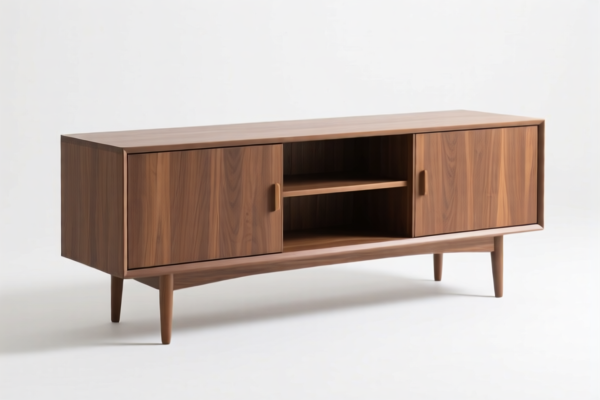
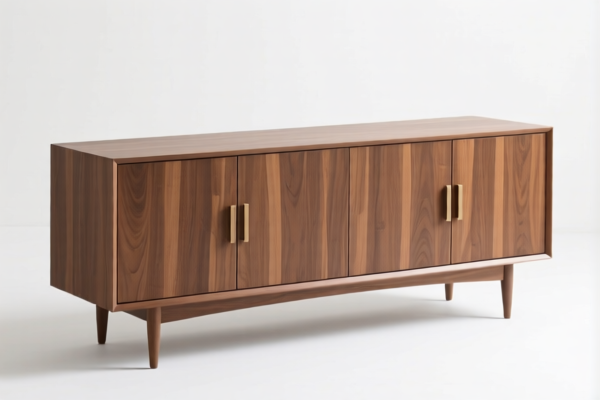
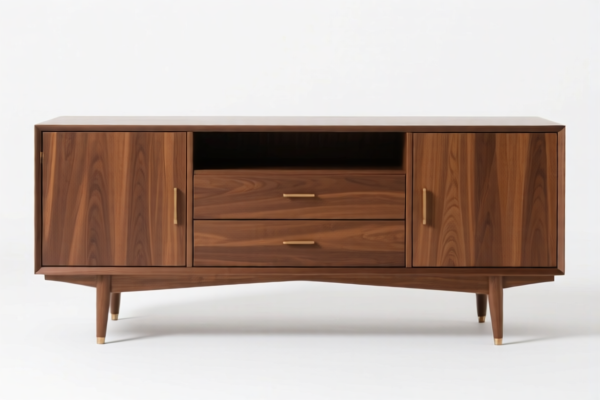
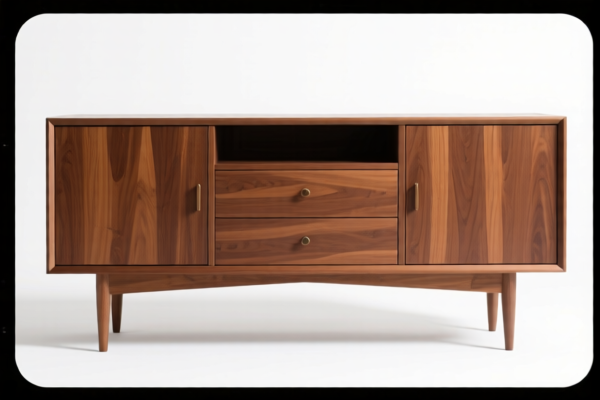
AI Analysis
🏠 Sideboard (Credenza / Buffet Table)
🌐 HS Code Reference & Clearance Guide | 2026 Latest Tariff Analysis | Professional Customs Strategy
📌 I. Product Definition & Classification: What Exactly is a "Sideboard"?
A Sideboard is a piece of furniture typically used in dining rooms, living rooms, or hallways for storage and display. In international trade, it is classified based on its material composition. The key distinction lies in whether the primary structure is made of wood or metal.
⚠️ Key Distinction Point:
- If the main structure is Wood (including bamboo, rattan, or engineered wood like MDF/Particle Board): It falls under Heading 9403.
- If the main structure is Metal (Steel, Aluminum, Copper, etc.): It also falls under Heading 9403, but with different sub-headings and potentially higher tariffs.
- Note: Plastic fittings (handles/knobs) are included in the assembly and do not change the primary classification of the furniture itself.
📦 II. HS Code Classification Details (2026 Latest Tariff Authority Comparison)
| HS Code | Product Description | Applicable Scenario | Primary Material |
|---|---|---|---|
9403.60.80.93 |
Other furniture and parts thereof: Other wooden furniture: Other | Solid wood, MDF, or engineered wood sideboards; standard home furniture | 🪵 Wood |
9403.20.00.90 |
Other furniture and parts thereof: Other metal furniture: Other | Steel, aluminum, copper, or iron sideboards; industrial or modern metal designs | 🛠️ Metal |
3926.30.50.00 |
Other articles of plastics...: Fittings for furniture...: Other | ONLY plastic decorative fittings or non-structural parts (NOT the sideboard itself) | 🧩 Plastic (Fitting) |
3926.30.10.00 |
Other articles of plastics...: Fittings for furniture...: Handles and knobs | ONLY plastic handles/knobs detached from furniture or sold as accessories | 🧩 Plastic (Handle) |
🔍 Critical Reminder:
- Do NOT misclassify a wooden sideboard as3926.30.xxxxjust because it has plastic handles. The primary material of the furniture determines the HS Code. -9403.60.80.93and9403.20.00.90are the correct codes for the complete sideboard. -3926codes are only for plastic accessories if declared separately (rare for finished goods).
💰 III. 2026 Latest Tariff Rate Details (Including Surtaxes & Policy Add-ons)
✅ Applicable Country: United States (US)
✅ Country of Origin: China (CN)
✅ Effective Date: Current (Section 301 / IEEPA measures apply)
🎯 1. 9403.60.80.93 —— Wooden Sideboard
| Item | Content |
|---|---|
| Base Tariff Rate | 0.0% (ad valorem) |
| Surtax (Section 301) | +25.0% (Additional duties on Chinese goods) |
| Total Tariff Rate | 25.0% |
| Tax Calculation | CIF Value × 25% |
| De Minimis Exemption? | ❌ No (Deny de minimis for Section 301 goods) |
| Legal Basis Path | USITC:9403.60.80.93 → FOOTNOTE:301.04.03 |
📌 Explanation:
- Although the base duty is 0%, the 25% surtax applies due to the material (wood) and origin (China). - This is a moderate-high tariff risk. Ensure your bill of lading and commercial invoice clearly state "Wooden Sideboard" to avoid being misclassified as metal (which has higher rates).
🎯 2. 9403.20.00.90 —— Metal Sideboard (Steel/Aluminum/Copper)
| Item | Content |
|---|---|
| Base Tariff Rate | 0.0% (ad valorem) |
| Surtax (Section 301) | +25.0% |
| Steel/Aluminum/Copper Surtax | +50.0% (Specific surtax for metal products from China) |
| Total Tariff Rate | 75.0% |
| Tax Calculation | CIF Value × 75% |
| De Minimis Exemption? | ❌ No |
| Legal Basis Path | USITC:9403.20.00.90 → FOOTNOTE:751.01.05 → FOOTNOTE:301.04.03 |
📌 Explanation:
- CRITICAL WARNING: Metal furniture from China faces extremely high tariffs (75%). - The +50% is applied specifically because the product contains steel, aluminum, or copper. - This rate makes importing metal sideboards from China to the US economically unviable for most businesses unless sold in high-margin luxury markets.
🎯 3. 3926.30.50.00 & 3926.30.10.00 —— Plastic Fittings (Rare for Whole Sideboard)
| Item | Content |
|---|---|
| Base Tariff Rate | 0.0% |
| Surtax | 0.0% |
| Total Tariff Rate | 0.0% |
| Tax Calculation | CIF Value × 0% |
| Note | These codes apply ONLY if you are importing standalone plastic handles/knobs or plastic decorative parts, NOT the furniture itself. |
🛠️ IV. Clearance Operational Advice (Practical Pitfall Avoidance)
✅ 1. Preparation Checklist (No Missing Documents)
| Document | Required | Notes |
|---|---|---|
| ✅ Product Specification Sheet | ✔️ | Must clearly state primary material (Wood vs. Metal). |
| ✅ BOM (Bill of Materials) | ✔️ | Breakdown of wood/metal/plastic percentages. |
| ✅ Product Photos | ✔️ | Show whole unit, close-up of joints, and legs. |
| ✅ Commercial Invoice | ✔️ | Describe as "Wooden Sideboard" or "Metal Sideboard", NOT just "Furniture". |
| ✅ Packing List | ✔️ | Weight and dimensions. |
| ✅ Fumigation Certificate | ✔️ | Required for Wood (ISPM 15 standard) to prevent pest entry. |
✅ 2. Declaration Skills (Key Mantra)
🔥 “Material First, Fittings Second; Wood is 25%, Metal is 75%!”
| Scenario | Correct Declaration | Wrong Practice |
|---|---|---|
| Wooden Sideboard with Plastic Handles | 9403.60.80.93 |
Declaring as 3926.30.10.00 → Misclassification Risk |
| Metal Sideboard (Steel Frame) | 9403.20.00.90 |
Declaring as 9403.60.80.93 → Penalty for Undervaluation/Tariff Evasion |
| Wooden Sideboard without Fumigation | Blocked at Customs | Shipping without ISPM 15 mark → Re-export or Destruction |
✅ 3. Special Case Handling
| Situation | Handling Advice |
|---|---|
| Mixed Material Sideboard | If >50% by weight is wood → Use Wood HS Code (9403.60). If >50% is metal → Use Metal HS Code (9403.20). |
| OEM Custom Sideboard | Provide design drawings to prove material composition. Avoid vague terms like "Household Item". |
| Wood with Plastic Veneer | Still classified as Wood (9403.60). Veneer does not change the core material classification. |
| Metal Frame with Wood Top | High Risk. Usually classified as Metal (9403.20) due to structural dominance. Expect 75% tax. |
🌍 V. Global Market Comparison (2026 Latest)
| Country/Region | Recommended HS Code | Tariff Rate (China Origin) | Certification Requirements | Notes |
|---|---|---|---|---|
| 🇺🇸 USA | 9403.60.80.93 (Wood) |
25% (Total) | None specific | 9403.20 (Metal) is 75% |
| 🇺🇸 USA | 9403.20.00.90 (Metal) |
75% (Total) | None specific | Avoid unless necessary |
| 🇨🇳 China | 9403.60.80.93 |
5% | FSC (if certified wood) | Lower entry barrier |
| 🇪🇺 EU | 9403.60.80.93 |
0-4% | CE (if electrical), FSC | Wood must be legally sourced |
| 🇬🇧 UK | 9403.60.80.93 |
0-4% | UKCA | Post-Brexit rules apply |
📌 Conclusion:
- Wooden sideboards are the preferred choice for US imports from China due to the 25% vs 75% tariff gap. - Metal sideboards are heavily penalized. Consider sourcing metal furniture from Vietnam or Thailand to avoid the 50% metal surtax.
📌 VI. Common Mistakes & Pitfall Guide (Blood Lessons)
❌ Mistake 1: Declaring a Wooden Sideboard as "Plastic Fittings" (3926) to avoid tariffs.
👉 Consequence: Customs audit reveals wood structure → Refusal of entry + 3x Penalty.
❌ Mistake 2: Declaring a Metal Sideboard as "Wooden Furniture" (9403.60).
👉 Consequence: Tariff Evasion Detection → Heavy fines + seizure of goods.
❌ Mistake 3: Shipping Wooden Sideboards without ISPM 15 Fumigation.
👉 Consequence: Rejection at US Port → Must be fumigated at importer’s cost or re-exported.
❌ Mistake 4: Using vague description "Household Furniture".
👉 Consequence: Customs may assign a worst-case HS code or delay clearance for manual classification.
✅ Correct Approach:
“Solid Wood Sideboard, 60x40x30 inches, with Plastic Handles, Fumigated, Model XYZ”
🎯 VII. Conclusion: Professional Declaration, Save Money & Time!
🎯 Remember the Mantra:
🔹 “Wood is 25%, Metal is 75%; Don’t Risk the 75%!”
🔹 “Fumigation is Key for Wood; No Fumigation, No Entry!”
📌 Pro Tip:
If your sideboard has a metal frame, consider if it can be redesigned with wood veneer over MDF to fall under the 25% tariff bracket.
For Metal Sideboards, explore Tariff Engineering or supply chain diversification (e.g., Vietnam/Thailand) to bypass the 50% metal surtax.
📣 Immediate Action:
📞 Consult your customs broker for a Pre-Ruling (Advance Ruling) on mixed-material furniture.
🚀 Ensure ISPM 15 compliance for all wood products to avoid port delays.
✨ Professional clearance starts with precise classification!
💼 Every percentage point of tariff difference is pure profit lost!
Customer Reviews
About HS Code Classification
The Harmonized System (HS) is an internationally standardized nomenclature developed by the World Customs Organization (WCO) to classify traded products. Over 200 countries use the HS system as the basis for customs tariffs, trade statistics, and import/export regulations.
Each HS code follows a hierarchical structure:
- Chapter (2 digits) — Broad category of goods (e.g., Chapter 84: Machinery and Mechanical Appliances)
- Heading (4 digits) — More specific grouping within the chapter
- Subheading (6 digits) — Internationally standardized breakdown, used by all WCO member countries
- National subdivisions (8-10 digits) — Country-specific extensions for further classification, such as US HTSUS 10-digit codes
Correct HS code classification is essential for smooth customs clearance, accurate duty payment, and compliance with trade regulations. Misclassification can lead to customs delays, overpayment of duties, or penalties.
When importing from CN to US, the applicable tariff rates may include:
- Most-Favored-Nation (MFN) rate — The standard duty rate applied to WTO members
- General rate — Applied to countries without trade agreements
- Trade remedy duties — Additional tariffs such as Section 301 (anti-dumping), Section 232 (national security), or countervailing duties
The information provided on this page is for reference purposes only. For official classification, please consult with your local customs authority or a licensed customs broker.