Sifting Machine
CN → US| HS Code | Tariff Rate | Origin | Destination | Doc |
|---|---|---|---|---|
| 8421290065 | 35.0% | CN | US | Official Doc |
| 8437100000 | 35.0% | CN | US | Official Doc |
| 8437800090 | 35.0% | CN | US | Official Doc |
| 8474100090 | 35.0% | CN | US | Official Doc |
| 8474100010 | 35.0% | CN | US | Official Doc |
| 8421190000 | 36.3% | CN | US | Official Doc |
Product Images
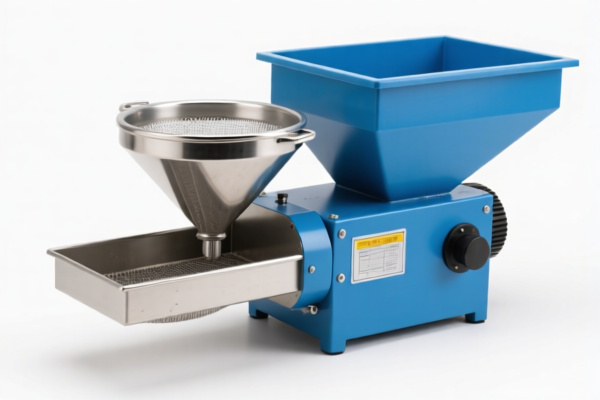
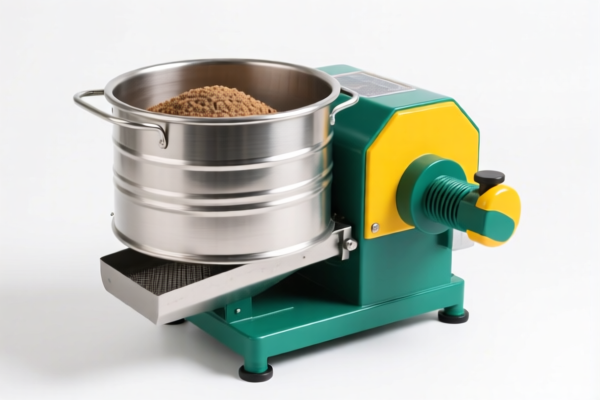
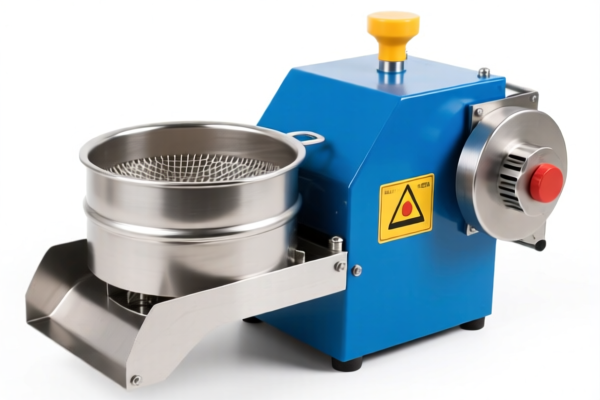
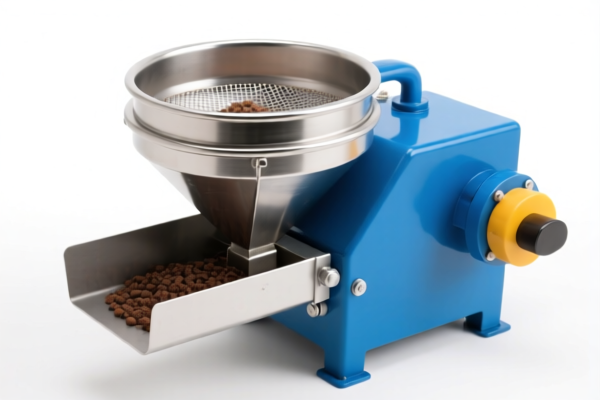
AI Analysis
🏭 Sifting Machine (Sieving Equipment)
🌐 HS Code Reference & Customs Clearance Guide | 2026 Latest Tariff Analysis | Professional Clearance Strategy
📌 Part 1: Product Definition & Classification: Do You Really Know "Sifting Machines"?
A "Sifting Machine" is a broad term used in international trade to describe mechanical devices for separating, classifying, or purifying materials. However, HS Codes are strictly function-based, not name-based. The correct classification depends entirely on what material it sifts (liquids, gases, seeds, grains, or general solids) and its specific industrial application.
⚠️ Key Distinction Point:
- If it filters liquids or gases → Look at Chapter 84 (Section 8421).
- If it cleans/classifies seeds, grains, or beans → Look at Chapter 84 (Section 8437).
- If it categorizes, sorts, or separates general goods (non-food) → Look at Chapter 84 (Section 8474).
📦 Part 2: HS Code Classification Details (2026 Latest Tariff Authority Mapping)
Based on the provided data, here are the 6 potential HS Codes for "Sifting Machines," categorized by function:
| HS Code | Product Description | Application Scenario | Tax Rate Summary |
|---|---|---|---|
8421.19.00.00 |
Other machinery for filtering or purifying liquids or gases | Industrial liquid/gas filtration systems | 36.3% |
8421.29.00.65 |
Machinery for filtering or purifying liquids or gases | Specific liquid/gas purification units | 35.0% |
8437.10.00.00 |
Machinery for cleaning, grading, or sorting seeds, grain, or dried legumes | Agricultural seed processing | 35.0% |
8437.80.00.90 |
Other machinery for cleaning, grading, or sorting seeds, grain, or dried legumes | Specialized agricultural sorting | 35.0% |
8474.10.00.90 |
Machinery for classifying, sifting, or separating goods (other than food) | General industrial sorting (minerals, plastics, etc.) | 35.0% |
8474.10.00.10 |
Machinery for classifying, sifting, or separating goods (other than food) | General industrial sorting (specific subtype) | 35.0% |
🔍 Critical Note:
- 8421 codes are for Liquid/Gas filtration.
- 8437 codes are for Agricultural/Seed sorting.
- 8474 codes are for General Industrial sorting/separation.
- Misclassifying a grain sifter as a general industrial sifter (or vice versa) can lead to customs delays or penalties, although the total tax rate in this specific dataset is similar (35-36.3%).
💰 Part 3: 2026 Latest Tariff Rate Breakdown (Including Surtaxes & Policy Add-ons)
✅ Applicable Country: United States (US)
✅ Origin: China (CN)
✅ Effective Time: 2025 onwards (Post-122 Clause & Section 301)
🎯 1. 8421.19.00.00 — Other Machinery for Filtering/Purifying Liquids/Gases
| Item | Detail |
|---|---|
| Base Duty | 1.3% (Ad Valorem) |
| Section 301 Surtax | +25.0% |
| 122 Clause Surtax | +10.0% |
| Total Tax Rate | 36.3% |
| Tax Calculation | CIF Value × 36.3% |
| De Minimis Exemption | ❌ Not Eligible (Deemed Denied) |
| Legal Basis | Base Tariff + Section 301 (122 Clause) |
📌 Explanation:
- This is the highest tax rate in the dataset due to the 1.3% base duty combined with surtaxes. - Applies to general-purpose liquid/gas filtration machinery not specified elsewhere in 8421.
🎯 2. 8421.29.00.65 — Machinery for Filtering/Purifying Liquids/Gases
| Item | Detail |
|---|---|
| Base Duty | 0.0% |
| Section 301 Surtax | +25.0% |
| 122 Clause Surtax | +10.0% |
| Total Tax Rate | 35.0% |
| Tax Calculation | CIF Value × 35.0% |
| De Minimis Exemption | ❌ Not Eligible |
| Legal Basis | Base Tariff (0%) + Section 301 + 122 Clause |
📌 Explanation:
- Lower than8421.19because the base duty is 0%. - Specific subheading for certain types of liquid/gas filtration equipment.
🎯 3. 8437.10.00.00 & 8437.80.00.90 — Agricultural Seed/Grain Machinery
| Item | Detail |
|---|---|
| Base Duty | 0.0% |
| Section 301 Surtax | +25.0% |
| 122 Clause Surtax | +10.0% |
| Total Tax Rate | 35.0% |
| Tax Calculation | CIF Value × 35.0% |
| De Minimis Exemption | ❌ Not Eligible |
| Legal Basis | Base Tariff (0%) + Section 301 + 122 Clause |
📌 Explanation:
- 8437.10: For cleaning, grading, or sorting seeds, grain, or dried legumes. - 8437.80: For other similar agricultural sorting machinery. - Both have a 0% base duty, resulting in a 35.0% total rate.
🎯 4. 8474.10.00.90 & 8474.10.00.10 — General Industrial Sorting/Sifting Machinery
| Item | Detail |
|---|---|
| Base Duty | 0.0% |
| Section 301 Surtax | +25.0% |
| 122 Clause Surtax | +10.0% |
| Total Tax Rate | 35.0% |
| Tax Calculation | CIF Value × 35.0% |
| De Minimis Exemption | ❌ Not Eligible |
| Legal Basis | Base Tariff (0%) + Section 301 + 122 Clause |
📌 Explanation:
- 8474.10: Machines for classifying, sifting, or separating goods (e.g., minerals, chemicals, plastics). - 10.00.10 vs 10.00.90: Specific sub-segmentation within the general sorting category. - Ideal for non-food industrial applications.
🛠️ Part 4: Practical Customs Clearance Advice (Avoid Pitfalls)
✅ 1. Required Documentation Checklist
| Document | Mandatory | Notes |
|---|---|---|
| ✅ Product Specification Sheet | ✔️ | Must specify: Material processed (Liquid/Gas/Seed/Solid), Capacity, Power. |
| ✅ Technical Diagram | ✔️ | Shows if it has filtration elements, screens, or classifiers. |
| ✅ Commercial Invoice | ✔️ | Description must match HS Code logic (e.g., "Grain Sifter" vs "Gas Filter"). |
| ✅ Packing List | ✔️ | Clear description of components. |
| ✅ Certification | ✔️ | CE, UL, or other safety certs (if applicable). |
✅ 2. Classification Strategy (The "What is it Sorting?" Rule)
🔥 Golden Rule: "Sort the Product, Not the Machine!"
| Machine Type | Correct HS Code Family | Why? |
|---|---|---|
| Gas/Liquid Filter | 8421.xx |
It purifies fluids. |
| Seed/Grain Cleaner | 8437.xx |
It cleans agricultural produce. |
| Industrial Sifter (Sand, Plastic, Minerals) | 8474.xx |
It sorts/classifies solid goods. |
⚠️ Warning:
- Do NOT use8474for grain.
- Do NOT use8437for mineral sorting.
- Even if the tax rate is similar (35%), incorrect classification leads to customs audits and potential fines.
✅ 3. Cost Optimization Tips
| Scenario | Recommendation |
|---|---|
| Base Duty Difference | 8421.19 has a 1.3% base duty → 36.3% total. All others are 0% base → 35.0% total. |
| Can you switch HS Code? | If your machine can be technically classified under 8421.29 (0% base) instead of 8421.19 (1.3% base), do it. It saves 1.3% on the CIF value. |
| De Minimis | ❌ No. All these codes are denied de minimis exemption. Full tax must be paid. |
🌍 Part 5: Global Market Comparison (2026)
| Country/Region | Recommended HS Code | Estimated Duty (China Origin) | Notes |
|---|---|---|---|
| 🇺🇸 USA | Varies by function | 35.0% - 36.3% | High surtaxes apply (Section 301 + 122 Clause). |
| 🇨🇳 China | Varies by function | 0% - 10% | Import duty varies; no Section 301 surtax. |
| 🇪🇺 EU | Varies by function | 0% - 4.5% | Usually lower; check EN standards. |
| 🇬🇧 UK | Varies by function | 0% - 5% | Post-Brexit tariff schedule applies. |
📌 Conclusion for US Imports:
- The tariff burden is heavy.
- 35-36.3% is a significant cost.
- Ensure your HS Code is precise to avoid penalties.
- Consider supply chain diversification if margins are tight.
📌 Part 6: Common Mistakes & Pitfalls
❌ Mistake 1: Using "Sifting Machine" as the only description.
👉 Fix: Specify what is being sifted.
Bad: "Sifting Machine"
Good: "Industrial Vibrating Sieve for Plastic Granules" or "Agricultural Seed Cleaning Machine"
❌ Mistake 2: Assuming all "Sifting" goes to 8474.
👉 Fix: If it handles food/grain, use 8437. If it handles fluids, use 8421.
❌ Mistake 3: Ignoring the 1.3% Base Duty difference.
👉 Fix: Compare 8421.19 (36.3%) vs 8421.29 (35.0%). If your machine fits both, choose the one with 0% base duty if technically compliant.
🎯 Part 7: Final Summary & Action Plan
🎯 Remember:
🔹 "Function Defines Code. Not Name."
🔹 "Liquids/Gases → 8421. Seeds → 8437. Solids → 8474."
🔹 "Tax is 35-36.3%. Plan for it."
📌 Pro Tip:
If you are importing Agricultural or Industrial Sorting equipment, ensure your technical data sheet clearly states the material processed. This is your best defense against customs queries.
📣 Immediate Action:
📞 Consult with a licensed customs broker.
📄 Provide detailed product specs.
🚀 Accurate Classification = Smooth Clearance = Predictable Costs.
✨ Professional Clearance Starts with Precision!
💼 Don't Let a Wrong HS Code Cost You 1.3% or a Customs Hold!
Customer Reviews
About HS Code Classification
The Harmonized System (HS) is an internationally standardized nomenclature developed by the World Customs Organization (WCO) to classify traded products. Over 200 countries use the HS system as the basis for customs tariffs, trade statistics, and import/export regulations.
Each HS code follows a hierarchical structure:
- Chapter (2 digits) — Broad category of goods (e.g., Chapter 84: Machinery and Mechanical Appliances)
- Heading (4 digits) — More specific grouping within the chapter
- Subheading (6 digits) — Internationally standardized breakdown, used by all WCO member countries
- National subdivisions (8-10 digits) — Country-specific extensions for further classification, such as US HTSUS 10-digit codes
Correct HS code classification is essential for smooth customs clearance, accurate duty payment, and compliance with trade regulations. Misclassification can lead to customs delays, overpayment of duties, or penalties.
When importing from CN to US, the applicable tariff rates may include:
- Most-Favored-Nation (MFN) rate — The standard duty rate applied to WTO members
- General rate — Applied to countries without trade agreements
- Trade remedy duties — Additional tariffs such as Section 301 (anti-dumping), Section 232 (national security), or countervailing duties
The information provided on this page is for reference purposes only. For official classification, please consult with your local customs authority or a licensed customs broker.