Signal Generator
CN → US| HS Code | Tariff Rate | Origin | Destination | Doc |
|---|---|---|---|---|
| 8542390090 | 60.0% | CN | US | Official Doc |
| 8542390070 | 60.0% | CN | US | Official Doc |
| 9030890100 | 35.0% | CN | US | Official Doc |
| 9030906800 | 35.0% | CN | US | Official Doc |
| 8543200000 | 35.0% | CN | US | Official Doc |
| 8543906800 | 35.0% | CN | US | Official Doc |
Product Images
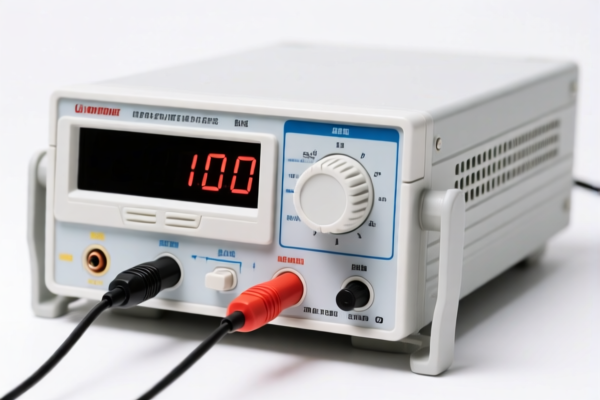
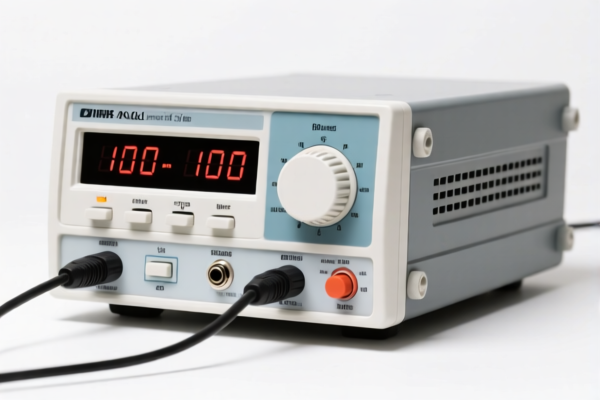
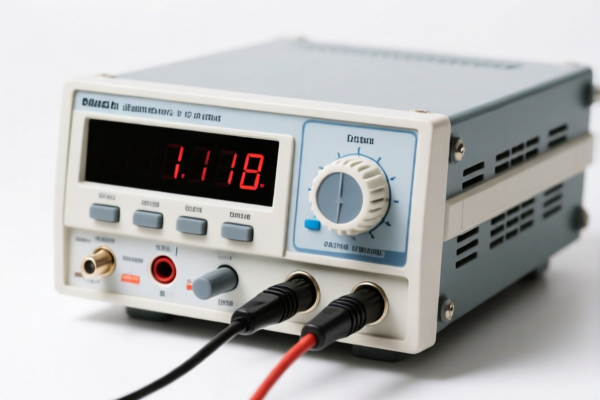
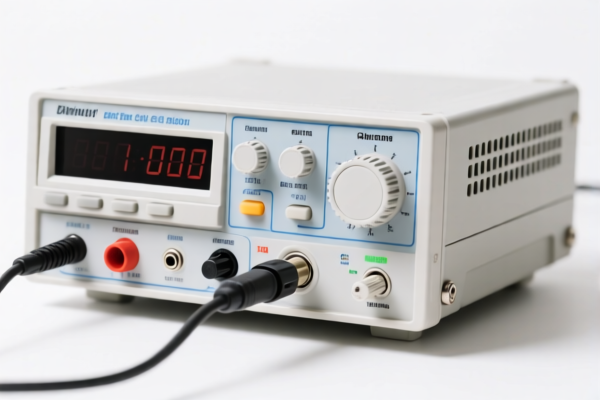
AI Analysis
📡 Signal Generator Modules (Electronic Instrumentation & Components)
🌐 HS Code Reference & Customs Clearance Guide | 2026 Latest Tariff Analysis | Professional Clearance Strategy
📌 I. Product Definition & Classification: What Exactly is a "Signal Generator"?
A Signal Generator is a critical electronic device used to produce specific electrical signals (waveforms) for testing, measuring, and analyzing the performance of other electronic devices. In international trade, classification depends heavily on the physical form and functional integration:
- Standalone Instruments: Complete units with screens, interfaces, and housing used for measurement/testing.
- Modules/Components: Circuit boards, ICs, or sub-assemblies designed to be integrated into larger systems (e.g., base stations, test benches).
⚠️ Key Distinction Point:
- If it is a standalone instrument with a user interface for measurement → Likely Chapter 90 (9030).
- If it is a circuit module/IC intended for integration → Likely Chapter 85 (8542, 8543).
📦 II. HS Code Classification Details (2026 Latest Tariff Authority Comparison)
Based on the provided data, here are the applicable HS Codes, summaries, and tax rates for "Signal Generator Modules":
| HS Code | Product Description / Summary | Applicable Scenario | Total Tax Rate |
|---|---|---|---|
8542.39.00.90 |
Electronic Integrated Circuit Module | Core function is signal processing; fits the "Other" category for ICs. | 60.0% |
8542.39.00.70 |
Electronic Integrated Circuit Component | Has adjustable performance characteristics; a component of ICs. | 60.0% |
9030.89.01.00 |
Standalone Signal Generator Instrument | An electronic device for generating specific waveforms; fits "Other Instruments/Apparatus" for measurement. | 35.0% |
9030.90.68.00 |
Electronic Circuit Component (PCBA) | Function aligns with Printed Circuit Assemblies (PCBA); a component of the instrument. | 35.0% |
8543.20.00.00 |
Electrical Apparatus (Signal Generator) | Name matches "Signal Generator"; "Module" form is a component of electrical equipment. | 35.0% |
8543.90.68.00 |
Functional Electrical Module | Independent functional electrical device/component; aligns with "Printed Circuit Assemblies" or parts. | 35.0% |
🔍 Key Insight:
- Modules/Components (Chapters 85) generally attract a 60% tax rate in this specific dataset due to higher "Section 301" additions.
- Instruments/Finished Goods (Chapter 90) attract a 35% tax rate.
- Misclassification Risk: Declaring a standalone instrument as a "Module" to save tax is a high-risk audit trigger.
💰 III. 2026 Latest Tariff Rate Breakdown (Including Surcharges & Policies)
✅ Applicable Country: USA (US)
✅ Origin: China (CN)
✅ Effective Date: Current rates apply as per provided data (Note: Historically aligned with Section 301 & IEEPA surcharges).
🎯 1. High-Tax Category: Electronic Components (HS Codes 8542)
Applicable Codes: 8542.39.00.90, 8542.39.00.70
Total Rate: 60.0%
| Item | Detail |
|---|---|
| Basic Tariff | 0.0% |
| Section 301 Surcharge | 50.0% (Additional Tariff) |
| IEEPA Surcharge | 10.0% (Section 122 Tariff) |
| Total Effective Rate | 60.0% |
| De Minimis Exemption | ❌ Not Eligible (Likely blocked by Section 301) |
| Tax Logic | High tariff reflects strict control on semiconductor/components from China. |
📌 Explanation:
- These codes classify the product as Integrated Circuits (ICs).
- The 50% Section 301 tariff is the dominant cost driver.
- Even though the base rate is 0%, the total burden is 60%, making this category extremely expensive for importers.
🎯 2. Lower-Tax Category: Instruments & Apparatus (HS Codes 9030, 8543)
Applicable Codes: 9030.89.01.00, 9030.90.68.00, 8543.20.00.00, 8543.90.68.00
Total Rate: 35.0%
| Item | Detail |
|---|---|
| Basic Tariff | 0.0% |
| Section 301 Surcharge | 25.0% (Additional Tariff) |
| IEEPA Surcharge | 10.0% (Section 122 Tariff) |
| Total Effective Rate | 35.0% |
| De Minimis Exemption | ❌ Not Eligible (Subject to surcharges) |
| Tax Logic | Classified as Test/Measuring Instruments or Other Electrical Machines. |
📌 Explanation:
- These codes classify the product as Finished Instruments or Functional Modules not strictly as "ICs".
- The 25% Section 301 tariff is lower than the 50% applied to ICs.
- Savings: Choosing the correct code here can save 25% in duties compared to the IC classification.
🛠️ IV. Customs Clearance Operational Advice (Practical Pitfall Guide)
✅ 1. Documentation Checklist (Non-Negotiable)
| Document | Required | Description |
|---|---|---|
| ✅ Product Specification Sheet | ✔️ | Must clearly state: "Is this a standalone instrument or a circuit module?" Include schematic diagrams. |
| ✅ Circuit Board Layout / PCBA Image | ✔️ | Proves whether it is a bare PCB (Module) or a finished box with buttons/screen (Instrument). |
| ✅ Product Photos (Front/Rear/Bottom) | ✔️ | Must show model number, input/output ports, and lack/presence of a display. |
| ✅ Commercial Invoice | ✔️ | Description must match the HS Code logic (e.g., "Signal Generator Unit" vs. "Signal Generator PCB"). |
| ✅ Packing List | ✔️ | Ensure accessories (cables, power supplies) are not declared separately if they are part of the main unit. |
| ✅ FCC ID / Test Reports | ✔️ | Required for electronic devices entering the US. |
✅ 2. Declaration Strategy (Key Mnemonics)
🔥 "Instrument in Box = 35%, Module on Board = 60%!"
| Scenario | Correct Classification | Risk of Misclassification |
|---|---|---|
| Standalone Unit (Has Screen, Knobs, USB) | 9030.89.01.00 (35%) |
⚠️ High Risk: If declared as a "Module" (8542), you pay 60%. |
| Bare Circuit Board (No case, no screen) | 8542.39.00.90 (60%) |
⚠️ Low Risk: Hard to argue it's a finished instrument. |
| Module with Adjustable Signals | 8542.39.00.70 (60%) |
⚠️ Low Risk: Specific IC classification. |
| PCBA Assembly (Parts for assembly) | 9030.90.68.00 (35%) |
✅ Opportunity: If it's a component for an instrument, it may fall here. |
✅ 3. Special Situations
| Situation | Handling Advice |
|---|---|
| OEM/ODM Modules | Provide the End-User Device Manual to prove the module is integrated into a larger system. This supports classification under 8543 or 9030.90 (Parts). |
| "Signal Generator" in Name Only | If the device only amplifies or filters signals but doesn't generate them, check 8543 carefully. |
| Kit Assembly | If shipped disassembled but intended to be a standalone unit, Customs may classify it as 8542/8543 but enforce the 35% instrument rate if deemed a "complete unit." |
🌍 V. Global Market Comparison (2026 Snapshot)
| Country/Region | Recommended HS Code (Example) | Tariff Rate (China Origin) | Key Certification | Note |
|---|---|---|---|---|
| 🇺🇸 USA | 9030.89.01.00 or 8542.39.00.90 |
35% or 60% | FCC + RoHS | High Section 301 impact. |
| 🇨🇳 China | 9030.89.01.00 |
~5-10% | CCC | No Section 301. |
| 🇪🇺 EU | 9030.89.00 |
0-2.7% (if origin rules met) | CE + RoHS | Lower tariffs, strict EMC directives. |
| 🇬🇧 UK | 9030.89.00 |
0-2.7% | UKCA | Post-Brexit rules apply. |
| 🇦🇺 Australia | 9030.89.00 |
5% | RCM | Standard electronics import. |
📌 Conclusion:
- The US market is significantly more expensive due to the 25% or 50% Section 301 surcharge.
- Optimization Strategy: If the product is a circuit module destined for integration, argue for8543or9030.90(35%) rather than8542(60%) if technically defensible, but never misdeclare a finished instrument as a part.
📌 VI. Common Errors & Pitfalls (Lessons Learned)
❌ Error 1: Calling a Standalone Signal Generator a "Signal Generator Module" to avoid higher taxes.
👉 Consequence: Customs may reclassify it as an Instrument (9030), leading to penalties for incorrect declaration, or worse, if they think it's a Component (8542), they charge 60% anyway.
Correction: Be precise. If it has a screen and buttons, it's an Instrument.
❌ Error 2: Declaring a PCBA as a "Finished Instrument" (9030.89.01.00).
👉 Consequence: Customs may reject it as incomplete. However, this might actually be better if the goal is to avoid the 60% IC tariff, but it risks being flagged as an incomplete good.
Correction: Ensure the PCBA is clearly labeled as a "Component" or "Sub-assembly."
❌ Error 3: Ignoring the IEEPA 10% Surcharge.
👉 Consequence: Underestimating total landed cost by 10%.
Correction: Always budget for Base + Section 301 + IEEPA.
✅ Correct Practice:
"Signal Generator Module, Model XYZ, Bare PCB, No Housing, No Display, For Integration into [System Name]"
vs.
"Standalone Signal Generator, Model ABC, 3.5GHz, DC-6.5GHz, with Display and Front Panel Controls"
🎯 VII. Conclusion: Precise Classification Saves Millions!
🎯 Remember the Mantra:
🔹 "Instruments = 35%, ICs = 60%. Know your Form!"
🔹 "If it has a Screen, it's 9030. If it's just a Chip, it's 8542."
📌 Pro Tip:
If you are importing high-volume components, consider applying for a Customs Ruling (Advance Ruling) from CBP to lock in the 35% classification for 9030.90 or 8543 if your module is truly a functional sub-assembly and not a standalone IC. This provides legal certainty against the 60% rate.
📣 Immediate Action:
📞 Contact a Licensed Customs Broker with your Schematics and Physical Photos.
🚀 Get a Pre-Ruling to avoid the 25% difference between 35% and 60% tariffs.
💼 Your Profit Margin depends on accurate HS Codes!
✨ Professional Clearance Starts with Accurate Classification!
💼 Every Dollar of Duty Saved is Pure Profit!
Customer Reviews
About HS Code Classification
The Harmonized System (HS) is an internationally standardized nomenclature developed by the World Customs Organization (WCO) to classify traded products. Over 200 countries use the HS system as the basis for customs tariffs, trade statistics, and import/export regulations.
Each HS code follows a hierarchical structure:
- Chapter (2 digits) — Broad category of goods (e.g., Chapter 84: Machinery and Mechanical Appliances)
- Heading (4 digits) — More specific grouping within the chapter
- Subheading (6 digits) — Internationally standardized breakdown, used by all WCO member countries
- National subdivisions (8-10 digits) — Country-specific extensions for further classification, such as US HTSUS 10-digit codes
Correct HS code classification is essential for smooth customs clearance, accurate duty payment, and compliance with trade regulations. Misclassification can lead to customs delays, overpayment of duties, or penalties.
When importing from CN to US, the applicable tariff rates may include:
- Most-Favored-Nation (MFN) rate — The standard duty rate applied to WTO members
- General rate — Applied to countries without trade agreements
- Trade remedy duties — Additional tariffs such as Section 301 (anti-dumping), Section 232 (national security), or countervailing duties
The information provided on this page is for reference purposes only. For official classification, please consult with your local customs authority or a licensed customs broker.