Signal Switcher
CN → US| HS Code | Tariff Rate | Origin | Destination | Doc |
|---|---|---|---|---|
| 8537109170 | 37.7% | CN | US | Official Doc |
| 8537200040 | 37.7% | CN | US | Official Doc |
| 8542390090 | 60.0% | CN | US | Official Doc |
| 8542390070 | 60.0% | CN | US | Official Doc |
| 8536509065 | 35.0% | CN | US | Official Doc |
| 8536509031 | 35.0% | CN | US | Official Doc |
Product Images
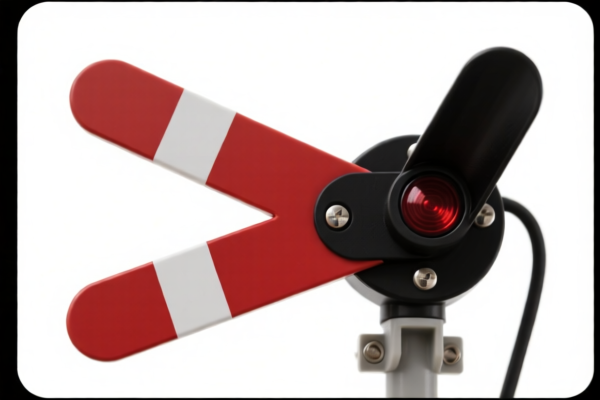
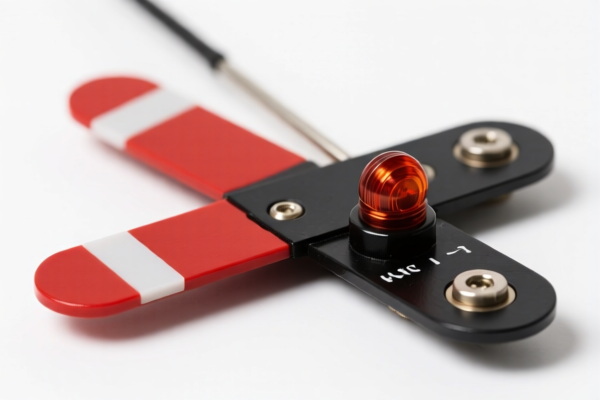
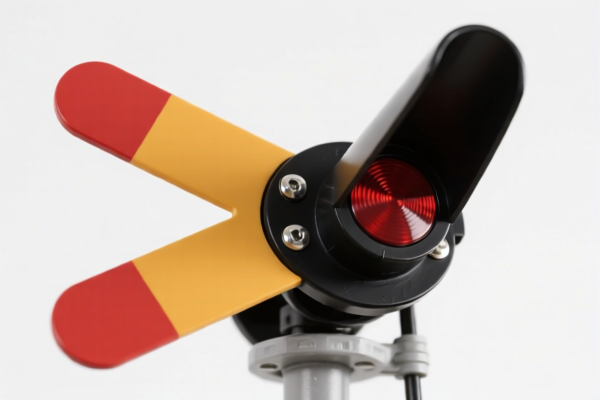
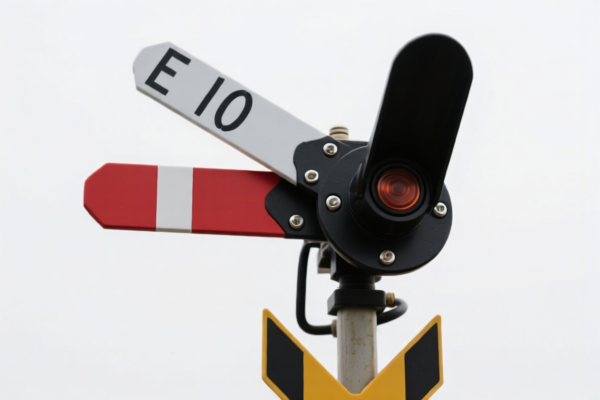
AI Analysis
🔌 Signal Switcher (Electrical Control/Distribution Apparatus)
🌐 HS Code Reference & Customs Clearance Guide | 2026 Latest Tariff Analysis | Professional Level Clearance Strategy
📌 I. Product Definition & Classification: Do You Really Understand "Signal Switchers"?
In international trade, the term "Signal Switcher" is ambiguous and often leads to misclassification. It generally refers to equipment used for electric control or distribution, specifically involving the switching, protection, or connection of electrical circuits.
Crucially, the classification depends heavily on: 1. Voltage Level: Does it operate ≤ 1,000 V or > 1,000 V? 2. Configuration: Is it a standalone switch, a push-button, or part of a board/console? 3. Integration: Does it incorporate instruments (Chapter 90) or numerical control apparatus?
⚠️ Key Distinction:
- If the device is a board/panel/console equipped with two or more apparatus of heading 8535/8536 → It falls under Heading 8537.
- If it is a single switch, relay, or push-button → It may fall under Heading 8536 or 8537 depending on specifics.
- If it involves Integrated Circuits (ICs) for control logic without being a full board → It may fall under Heading 8542.
📦 II. HS Code Classification Details (2026 Latest Tariff Authority Comparison)
Based on the provided data, here are the specific HS Codes and their applicability for "Signal Switchers" and related control apparatus:
| HS Code | Product Description | Voltage Level | Key Characteristics |
|---|---|---|---|
8537.10.91.70 |
Boards, panels, consoles, desks, cabinets... for electric control/distribution | ≤ 1,000 V | "Other: Other: Other". Applies to complex control panels with multiple switching apparatus. |
8537.20.00.40 |
Boards, panels, consoles, desks, cabinets... for electric control/distribution | > 1,000 V | "Other". Applies to high-voltage switchgear panels. |
8542.39.00.90 |
Electronic integrated circuits; parts thereof: Other | N/A | "Other". Applies to IC chips used within the switcher, not the switcher itself. |
8542.39.00.70 |
Electronic integrated circuits... With adjustable performance characteristics | N/A | Specific ICs with adjustable features. |
8536.50.90.65 |
Electrical apparatus for switching... voltage ≤ 1,000 V: Other switches: Other | ≤ 1,000 V | General switches, relays, surge suppressors (standalone). |
8536.50.90.31 |
Electrical apparatus for switching...: Push-button switches | ≤ 1,000 V | Rated ≤ 5 A, Momentary contact. Specific to push-button interfaces. |
🔍 Important Note:
- "Signal Switcher" is rarely a standalone HS Code. It must be mapped to the function it performs.
- If it is a control panel with multiple switches/fuses → Use 8537.
- If it is a single switch/relay → Use 8536.
- If it is a microchip/IC controlling the signal → Use 8542.
💰 III. 2026 Latest Tariff Rate Breakdown (Including Surcharges)
✅ Applicable Country: United States (US)
✅ Country of Origin: China (CN)
✅ Effective Time: Current (2025/2026 Tariff Schedule)
🎯 1. 8537.10.91.70 — Control/Distribution Boards (≤ 1,000 V)
| Item | Details |
|---|---|
| Base Tariff | 2.7% |
| Additional Tariff (Section 301) | 25.0% |
| Total Tariff Rate | 27.7% |
| Calculation | CIF Value × 27.7% |
| De Minimis Exemption | ❌ Not Eligible (Value > $800 threshold for typical industrial goods) |
| Legal Basis | Section 301 Tariff Action List |
📌 Explanation:
- This code applies to complex electrical control panels.
- The 27.7% rate is a composite of the standard MFN rate (2.7%) and the punitive 301 tariff (25.0%).
- High Duty Alert: This is a significant cost factor for industrial control systems.
🎯 2. 8537.20.00.40 — Control/Distribution Boards (> 1,000 V)
| Item | Details |
|---|---|
| Base Tariff | 2.7% |
| Additional Tariff (Section 301) | 25.0% |
| Total Tariff Rate | 27.7% |
| Calculation | CIF Value × 27.7% |
| De Minimis Exemption | ❌ Not Eligible |
| Legal Basis | Section 301 Tariff Action List |
📌 Note:
- High-voltage switchgear panels incur the same 27.7% rate as low-voltage ones in this dataset.
- Ensure the voltage rating is correctly declared to avoid customs queries.
🎯 3. 8542.39.00.90 & 8542.39.00.70 — Electronic Integrated Circuits
| Item | Details |
|---|---|
| Base Tariff | 0.0% |
| Additional Tariff (Section 301) | 50.0% |
| Total Tariff Rate | 50.0% |
| Calculation | CIF Value × 50.0% |
| De Minimis Exemption | ❌ Not Eligible |
| Legal Basis | Section 301 Tariff Action List (High-Tech Items) |
📌 Critical Warning:
- 50% is a very high tariff rate. This applies to the chips or ICs inside the switcher, not the switcher body.
- If importing ICs separately for assembly, the cost impact is massive.
- "Adjustable performance characteristics" (8542.39.00.70) also face the 50% rate.
🎯 4. 8536.50.90.65 — Other Switches (≤ 1,000 V)
| Item | Details |
|---|---|
| Base Tariff | 0.0% |
| Additional Tariff (Section 301) | 25.0% |
| Total Tariff Rate | 25.0% |
| Calculation | CIF Value × 25.0% |
| De Minimis Exemption | ❌ Not Eligible |
| Legal Basis | Section 301 Tariff Action List |
📌 Explanation:
- Standard electrical switches, relays, and connectors face a 25% additional tariff.
- The base duty is 0%, but the 301 surcharge dominates.
🎯 5. 8536.50.90.31 — Push-Button Switches (≤ 1,000 V)
| Item | Details |
|---|---|
| Base Tariff | 0.0% |
| Additional Tariff (Section 301) | 25.0% |
| Total Tariff Rate | 25.0% |
| Calculation | CIF Value × 25.0% |
| De Minimis Exemption | ❌ Not Eligible |
| Legal Basis | Section 301 Tariff Action List |
📌 Note:
- Specific to push-button switches rated ≤ 5 A with momentary contact.
- Same 25% rate as general switches.
🛠️ IV. Customs Clearance Practical Advice (Pitfall Avoidance Guide)
✅ 1. Required Documentation Checklist
| Document | Required | Description |
|---|---|---|
| Product Specification Sheet | ✔️ | Must detail voltage (≤1,000V or >1,000V), amperage, and function. |
| Circuit Diagram/Block Diagram | ✔️ | Critical to distinguish between 8537 (board with multiple apparatus) and 8536 (single switch). |
| Product Photos | ✔️ | Clear shots of labels, connectors, and internal components (if visible). |
| Commercial Invoice | ✔️ | Must accurately describe the item (e.g., "Control Panel for Machine X" vs. "Switch"). |
| Packing List | ✔️ | Separate items if mixing ICs (8542) with Switches (8536). |
| FCC Certification | ✔️ | For electronic devices, FCC ID is often required for clearance. |
✅ 2. Declaration Tips (Key Mnemonic)
🔥 "Board vs. Switch, Voltage is Key! ICs are 50%, Boards 27.7%, Switches 25%!"
| Scenario | Correct HS Code | Incorrect Code | Consequence |
|---|---|---|---|
| A panel with 10 switches/fuses | 8537.10.91.70 |
8536.50.90.65 |
Under-declaration of complexity; potential penalty. |
| A single relay or switch | 8536.50.90.65 |
8537 |
Over-classification; higher duty risk if 8537 was lower (but here both are high, structure matters). |
| Just the chip/IC | 8542.39.00.90 |
8536 |
Massive duty difference (50% vs 25%); DO NOT MIX. |
| Push-button interface | 8536.50.90.31 |
8536.50.90.65 |
Specificity required; may affect audit findings. |
| High voltage panel (>1,000V) | 8537.20.00.40 |
8537.10.91.70 |
Wrong voltage classification leads to seizure or reclassification. |
✅ 3. Special Cases
| Case | Handling Advice |
|---|---|
| Mixed Containers | If importing both Switches (8536) and ICs (8542), declare separately. Do not lump them under one code. |
| OEM Custom Panels | Provide design blueprints to prove it is a "board/console" (8537) and not a generic switch. |
| Used/Refurbished | Ensure compliance with US EPA/FCC standards for used electronic equipment. |
| Components vs. Assembly | Importing loose switches vs. pre-assembled panels? Loose switches = 8536; Assembled panel = 8537. |
🌍 V. Global Market Comparison (2026 Latest)
| Country/Region | Recommended HS Code | Tariff Rate (China Origin) | Certification Required | Notes |
|---|---|---|---|---|
| 🇺🇸 USA | 8537 or 8536 |
25% - 50% | FCC, UL (optional but recommended) | Section 301 tariffs apply heavily. |
| 🇨🇳 China | 8537 / 8536 |
0% - 5% | CCC (if applicable) | Low duty, high volume. |
| 🇪🇺 EU | 8537 / 8536 |
2.7% - 4% | CE, RoHS, REACH | No 301-style punitive tariffs. |
| 🇯🇵 Japan | 8537 / 8536 |
0% - 3% | PSE (for electrical) | Competitive rate. |
📌 Conclusion:
- The USA imposes the highest burden due to the 25-50% additional tariffs.
- EU and Japan are much more cost-effective for these goods.
- Consider supply chain diversification if shipping to the US to avoid Section 301 duties.
📌 VI. Common Errors & Pitfall Guide (Blood & Tears Lessons)
❌ Error 1: Declaring a Control Panel (8537) as a Single Switch (8536)
👉 Consequence: If the panel contains multiple apparatus, it must be 8537. Misclassification can lead to seizure or fines for incorrect declaration.
❌ Error 2: Declaring ICs (8542) inside a switcher as part of the switcher
👉 Consequence: If ICs are shipped separately, they face 50% duty. If included in a kit, ensure proper packaging declaration.
❌ Error 3: Ignoring Voltage Ratings
👉 Consequence: Confusing 8537.10 (≤1,000V) with 8537.20 (>1,000V) leads to customs delays and potential reclassification penalties.
❌ Error 4: Using Generic Terms like "Signal Switch"
👉 Consequence: Customs may ask for clarification. Be specific: "Electrical Control Panel, 220V, 50Hz" or "Push-button Switch, 5A".
✅ Correct Practice:
"Electrical Control Panel, Model ABC, 220V AC, Equipped with Switches, Relays, and Fuses, FCC Certified, Origin: China"
🎯 VII. Conclusion: Professional Declaration, Save Money, Ensure Smooth Clearance!
🎯 Remember the Mnemonic:
🔹 "Boards 27.7%, Switches 25%, Chips 50%!"
🔹 "Voltage defines the board, ICs define the chip!"
📌 Tip:
If your Signal Switcher is produced in Vietnam, Mexico, or Thailand, you may avoid Section 301 tariffs.
Consider applying for an Advance Ruling from US Customs if your product is complex.
✨ Professional clearance starts with accurate classification!
💼 Every cent of duty is worth calculating precisely!
Customer Reviews
About HS Code Classification
The Harmonized System (HS) is an internationally standardized nomenclature developed by the World Customs Organization (WCO) to classify traded products. Over 200 countries use the HS system as the basis for customs tariffs, trade statistics, and import/export regulations.
Each HS code follows a hierarchical structure:
- Chapter (2 digits) — Broad category of goods (e.g., Chapter 84: Machinery and Mechanical Appliances)
- Heading (4 digits) — More specific grouping within the chapter
- Subheading (6 digits) — Internationally standardized breakdown, used by all WCO member countries
- National subdivisions (8-10 digits) — Country-specific extensions for further classification, such as US HTSUS 10-digit codes
Correct HS code classification is essential for smooth customs clearance, accurate duty payment, and compliance with trade regulations. Misclassification can lead to customs delays, overpayment of duties, or penalties.
When importing from CN to US, the applicable tariff rates may include:
- Most-Favored-Nation (MFN) rate — The standard duty rate applied to WTO members
- General rate — Applied to countries without trade agreements
- Trade remedy duties — Additional tariffs such as Section 301 (anti-dumping), Section 232 (national security), or countervailing duties
The information provided on this page is for reference purposes only. For official classification, please consult with your local customs authority or a licensed customs broker.