Silencer Pipe
CN → US| HS Code | Tariff Rate | Origin | Destination | Doc |
|---|---|---|---|---|
| 8708925000 | 37.5% | CN | US | Official Doc |
| 8708927500 | 37.5% | CN | US | Official Doc |
| 8409999990 | 35.0% | CN | US | Official Doc |
| 8409999910 | 35.0% | CN | US | Official Doc |
| 3926909987 | 22.8% | CN | US | Official Doc |
| 3926909989 | 22.8% | CN | US | Official Doc |
Product Images
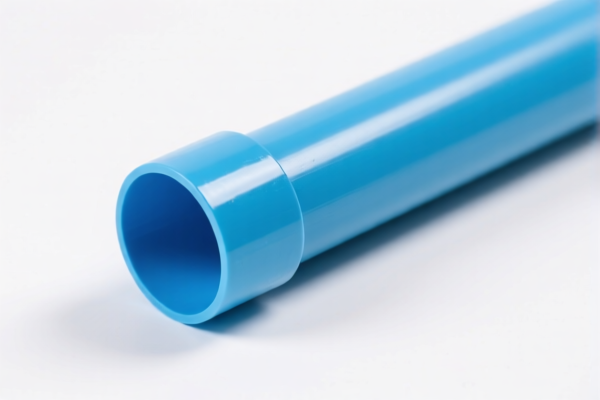
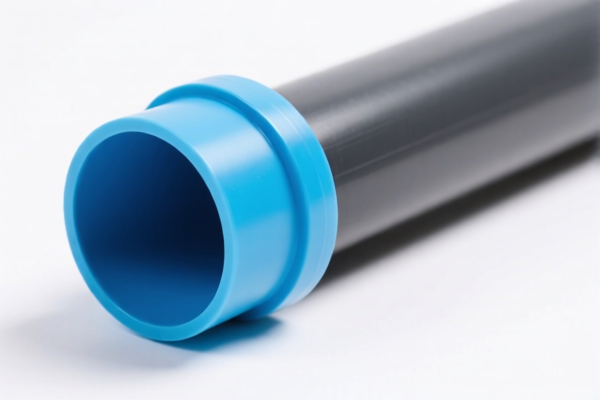
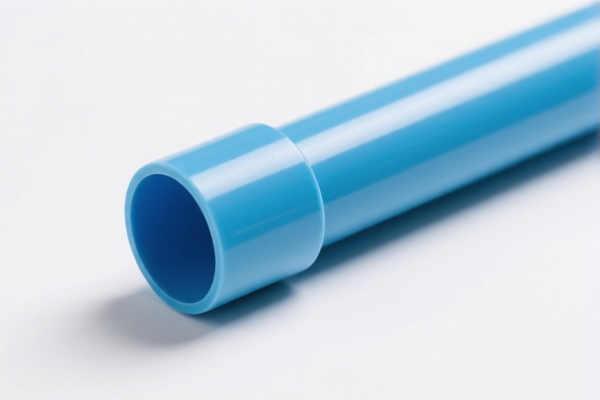
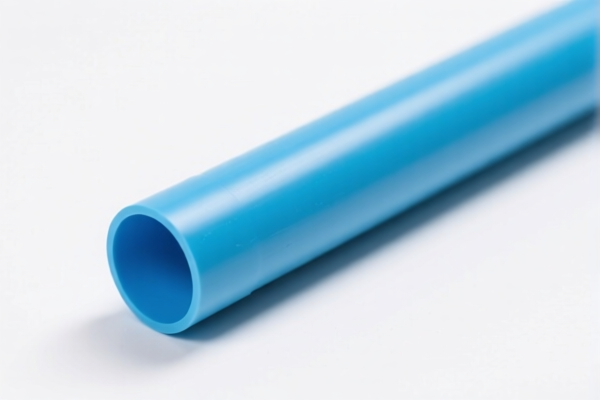
AI Analysis
🚗 Silencer Pipe (Mufflers & Exhaust Pipes)
🌐 HS Code Reference & Clearance Guide | 2026 Latest Tariff Analysis | Professional Entry Strategy
📌 I. Product Definition & Classification: Do You Really Know "Silencer Pipes"?
A "Silencer Pipe" generally refers to automotive exhaust components designed to reduce engine noise and direct exhaust gases. In international trade, these fall under Heading 8708 (Parts and accessories of motor vehicles). However, precise classification depends on whether the item is the main assembly or a component part, and its specific application.
1. Mufflers and Exhaust Pipes (The Assembly):
- Complete units including the silencing chamber, inlet/outlet pipes, and mounting brackets.
- Primary HS Code: 8708.92.50.00
2. Parts of Mufflers/Exhaust Pipes (Components):
- Individual flanges, brackets, hangers, or internal baffles sold separately.
- Primary HS Code: 8708.92.75.00
⚠️ Key Distinction:
- If it is a complete functional unit that attaches directly to the exhaust system to silence sound → Classify as Muffler/Exhaust Pipe (8708.92.50.00).
- If it is a small component used to assemble the muffler system (e.g., a bracket, a specific connector not a full pipe section) → Classify as Part (8708.92.75.00).
📦 II. HS Code Classification Details (2026 Latest Tariff Authority)
Based on the provided <DATA>, here are the exact classifications for "Silencer Pipe" related items:
| HS Code | Product Description | Application Scenario | Tax Implication (China to US) |
|--------|--------------------------|--------------------------|
| 8708.92.50.00 | Mufflers and exhaust pipes for other vehicles | Complete silencer units, catalytic converters with housing, full tailpipe assemblies | 27.5% Total Duty |
| 8708.92.75.00 | Parts for other vehicles (of mufflers/exhausts) | Brackets, hangers, flanges, gaskets, internal components | 27.5% Total Duty |
🔍 Important Note:
- Both codes fall under "Other vehicles" (excluding trucks heading 8701–8705 specific exemptions if any apply, though typically these parts carry higher duties).
- The description "For other vehicles" implies passenger cars, SUVs, and light trucks unless specified as heavy commercial vehicles under different headings.
💰 III. 2026 Latest Tariff Rate Breakdown (Detailed Tax Clauses)
✅ Applicable Country: United States (US)
✅ Country of Origin: China (CN)
✅ Effective Time: Current applicable rates including Section 301 additions
🎯 1. 8708.92.50.00 —— Mufflers and Exhaust Pipes
| Item | Details |
|---|---|
| Base Duty Rate | 2.5% (General Duty Rate) |
| Section 301 Additional Duty | +25.0% (Specific to HS 8708.92.50 from China) |
| Total Tax Rate | 27.5% |
| Tax Calculation | CIF Value × 27.5% |
| De Minimis Exemption | ❌ Not Eligible (Value exceeds $800 threshold or subject to enforcement actions) |
| Legal Basis | USITC:8708.92.50.00 + Section 301 Footnote |
📌 Explanation:
- The 2.5% is the standard Most Favored Nation (MFN) duty for auto parts.
- The 25% is the additional tariff imposed under Section 301 of the Trade Act of 1974 targeting Chinese imports.
- Total: 27.5%. This is a significant cost factor.
🎯 2. 8708.92.75.00 —— Parts of Mufflers and Exhaust Pipes
| Item | Details |
|---|---|
| Base Duty Rate | 2.5% |
| Section 301 Additional Duty | +25.0% |
| Total Tax Rate | 27.5% |
| Tax Calculation | CIF Value × 27.5% |
| De Minimis Exemption | ❌ Not Eligible |
| Legal Basis | USITC:8708.92.75.00 + Section 301 Footnote |
📌 Note:
- Even though these are "parts," they are classified under the same duty structure as the main assembly in this context.
- Small accessories like gaskets or bolts might fall under 8708.99 or 7315 (chains) or 7326 (other iron/steel articles), which may have different rates. However, strictly defined "parts of mufflers" are8708.92.75.00.
🛠️ IV. Clearance Operational Advice (Practical Pitfall Avoidance)
✅ 1. Required Documentation Checklist
| Document | Must Provide? | Description |
|---|---|---|
| ✅ Product Photos | ✔️ | Clear images showing the item is a complete muffler/exhaust or a distinct part. Show labels, part numbers, and mounting points. |
| ✅ Technical Specs | ✔️ | Material type (stainless steel, aluminized steel, titanium), dimensions, weight, and vehicle compatibility list. |
| ✅ Commercial Invoice | ✔️ | Must clearly state: "Muffler for Automobile, Model XXX" or "Bracket for Exhaust System, Part YYY". Avoid vague terms like "Silencer Pipe" without context. |
| ✅ Packing List | ✔️ | Detail quantities and weights. Separate assemblies from small parts if shipped together. |
| ✅ Certificate of Origin | ✔️ | Essential for verifying origin (China) to apply correct Section 301 rates. |
✅ 2. Declaration Tips (Key Mnemonics)
🔥 "Complete Unit = Muffler; Small Piece = Part. Name It Right, Avoid Light!"
| Scenario | Correct Declaration | Incorrect Declaration |
|---|---|---|
| Full Muffler Unit | 8708.92.50.00 "Muffler Assembly, Stainless Steel" |
"Auto Part" "Silencer" (Too vague) |
| Individual Flange/Hanger | 8708.92.75.00 "Exhaust Hanger, Part No. ZZZ" |
"Muffler" (Misclassification) |
| Exhaust Pipe Section (not full system) | 8708.92.50.00 if it functions as a silencer element8708.92.75.00 if just a connector |
"Pipe" (Ambiguous) |
⚠️ Critical Warning:
- Do not declare a complete muffler as a "Part" (8708.92.75.00) to try to lower duties (if any difference existed). Both are 27.5%.
- However, misclassification can lead to penalties or audit flags. Always describe the function accurately.
✅ 3. Special Cases
| Situation | Handling Advice |
|---|---|
| Aftermarket vs. OEM | No difference in HS code. Ensure invoice shows "Aftermarket Part" if applicable, but duty rate remains 27.5%. |
| Titanium Exhausts | Still 8708.92.50.00 or .75. Material does not change the auto-parts heading. |
| Custom Fabricated Pipes | If it is a unique, one-off pipe not sold as a standard part, ensure it meets the definition of "part principally used with vehicle." |
| Shipping with Cars | If shipped with a vehicle, parts are often ignored in the vehicle's duty calculation. But for separate shipment, full duty applies. |
🌍 V. Global Market Comparison (2026 Update)
| Country/Region | Recommended HS Code | Duty Rate (China Origin) | Notes |
|---|---|---|---|
| 🇺🇸 USA | 8708.92.50.00 / 8708.92.75.00 |
27.5% (2.5% Base + 25% Section 301) | High duty due to trade tensions. |
| 🇨🇳 China | 8708.92.50.00 / 8708.92.75.00 |
0% (Most countries have 0% import duty on auto parts to boost manufacturing) | Export from China may face no import duty in destination if they have FTA, but US does not have FTA with China. |
| 🇪🇺 EU | 8708.92 (General) |
0% (Under EU-China trade, but subject to anti-dumping if applicable) | Check for specific anti-dumping duties on auto components. |
| 🇬🇧 UK | 8708.92.00 |
4.5% (Standard UK Tariff) | No Section 301 equivalent. |
| 🇯🇵 Japan | 8708.92.00 |
0% | FTA agreement may apply if rules of origin are met. |
📌 Conclusion:
- The US market is the most expensive for Chinese-origin silencer pipes due to the 25% Section 301 duty.
- Importers must factor this 27.5% total cost into their pricing strategy.
📌 VI. Common Mistakes & Pitfalls (Lessons Learned)
❌ Mistake 1: Declaring a complete muffler as a "General Auto Part" under 8708.99 (Other parts).
👉 Consequence: While 8708.99 might have a different base rate, customs will reclassify to 8708.92 because it is principally an exhaust part. Risk of misdeclaration penalties.
❌ Mistake 2: Omitting the "For Other Vehicles" detail.
👉 Consequence: Customs may assume it's for heavy trucks (Headings 8701-8705), leading to delay while they verify the vehicle type.
❌ Mistake 3: Using vague terms like "Silencer" or "Muffler" without specifying "For Motor Vehicles".
👉 Consequence: Customs might classify it under 8481 (Valves) or 7326 (Other steel articles), leading to incorrect duty assessment and potential fines.
✅ Correct Declaration Example:
"Automotive Muffler, Stainless Steel, Model XYZ, for Passenger Car, Made in China"
🎯 VII. Conclusion: Professional Declaration Saves Money!
🎯 Remember the Rules:
🔹 "Complete Muffler = 8708.92.50.00"
🔹 "Component Part = 8708.92.75.00"
🔹 "Total Duty = 27.5% (2.5% + 25%)"
📌 Pro Tip:
- Ensure your commercial invoice matches the HS Code description exactly.
- If you are importing small parts (e.g., 500 brackets), consider if they can be bundled as "Parts of Mufflers" (8708.92.75.00) to keep consistency.
- Consult a licensed customs broker if the item's function is ambiguous (e.g., a decorative tail tip vs. a functional silencer).
📣 Immediate Action:
📞 Verify HS Code with a broker using product photos.
📄 Prepare Detailed Invoice describing the item's function and vehicle compatibility.
💰 Budget for 27.5% Duty to avoid cash flow surprises at US Customs.
✨ Precision in Classification = Efficiency in Clearance!
💼 Don't let 27.5% duty eat your margins!
Customer Reviews
About HS Code Classification
The Harmonized System (HS) is an internationally standardized nomenclature developed by the World Customs Organization (WCO) to classify traded products. Over 200 countries use the HS system as the basis for customs tariffs, trade statistics, and import/export regulations.
Each HS code follows a hierarchical structure:
- Chapter (2 digits) — Broad category of goods (e.g., Chapter 84: Machinery and Mechanical Appliances)
- Heading (4 digits) — More specific grouping within the chapter
- Subheading (6 digits) — Internationally standardized breakdown, used by all WCO member countries
- National subdivisions (8-10 digits) — Country-specific extensions for further classification, such as US HTSUS 10-digit codes
Correct HS code classification is essential for smooth customs clearance, accurate duty payment, and compliance with trade regulations. Misclassification can lead to customs delays, overpayment of duties, or penalties.
When importing from CN to US, the applicable tariff rates may include:
- Most-Favored-Nation (MFN) rate — The standard duty rate applied to WTO members
- General rate — Applied to countries without trade agreements
- Trade remedy duties — Additional tariffs such as Section 301 (anti-dumping), Section 232 (national security), or countervailing duties
The information provided on this page is for reference purposes only. For official classification, please consult with your local customs authority or a licensed customs broker.