Silica Rubber Strip
CN → US| HS Code | Tariff Rate | Origin | Destination | Doc |
|---|---|---|---|---|
| 4016996050 | 37.5% | CN | US | Official Doc |
| 4016100000 | 35.0% | CN | US | Official Doc |
| 4002990000 | 35.0% | CN | US | Official Doc |
| 4002910000 | 35.0% | CN | US | Official Doc |
| 3910000000 | 38.0% | CN | US | Official Doc |
Product Images
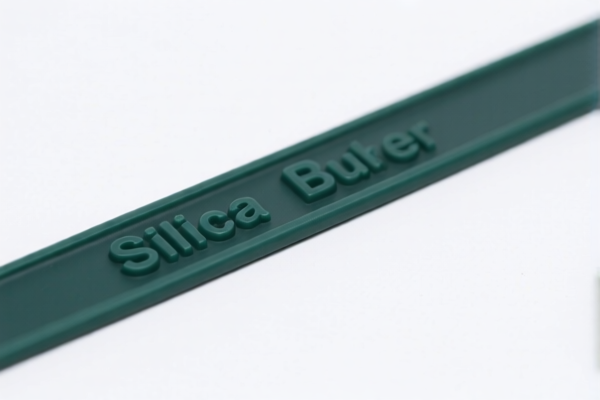
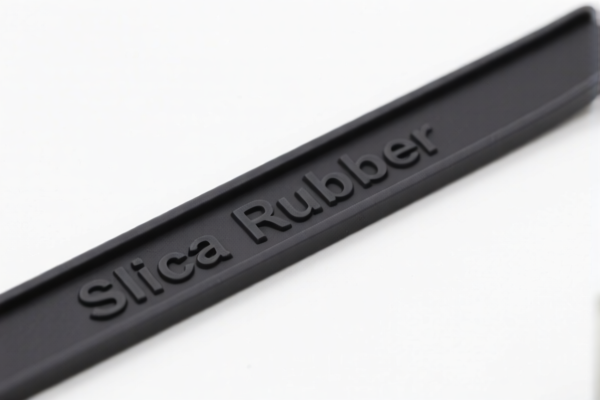
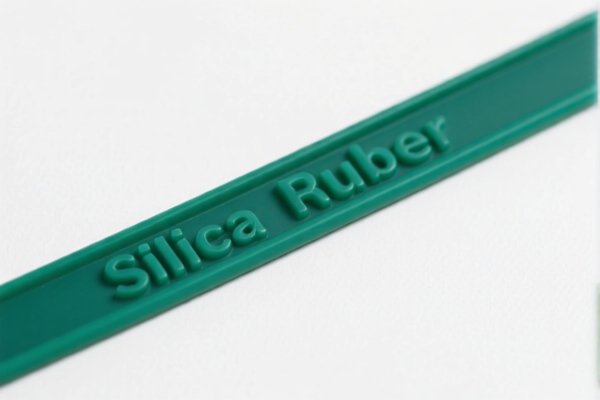
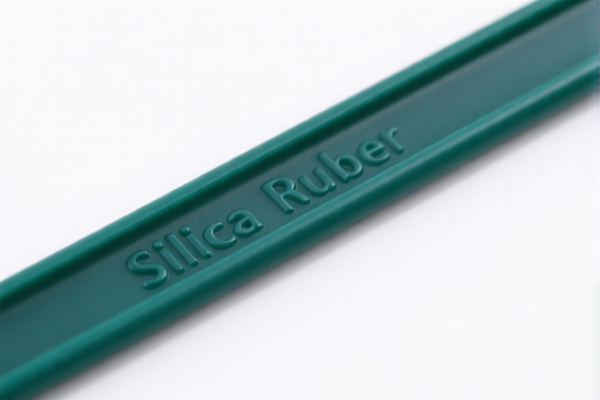
AI Analysis
🧪 Silica Rubber Strip (Silicone Rubber Products)
🌐 HS Code Reference & Customs Clearance Guide | 2026 Tariff Structure | Strategic Classification for Silicone Rubber Strips
📌 I. Product Definition & Classification Logic: Do You Really Understand "Silica Rubber"?
Silica rubber (more commonly known as Silicone Rubber in trade) is a high-performance elastomer known for its thermal stability, chemical resistance, and flexibility. In international trade, it is classified based on its physical state (raw material vs. finished product) and material composition.
Key Distinction:
- Raw/Intermediate Forms: Silicone oils, emulsions, or unvulcanized rubber → Classified under Chapter 40 (Rubber) or Chapter 39 (Plastics/Silicones).
- Finished/Processed Forms: Vulcanized silicone strips, gaskets, seals → Classified under Chapter 40 (Rubber Articles).
⚠️ Critical Classification Point:
- If the product is a finished, vulcanized strip (ready for use in sealing, insulation, etc.) → It falls under 4016.99 (Other articles of vulcanized rubber).
- If the product is unvulcanized silicone rubber (raw material) → It falls under 4002.99 (Synthetic rubber) or 3910.00 (Silicones in primary forms).
📦 II. HS Code Classification Details (2026 Latest Tariff Data)
Based on the provided dataset, here are the 5 possible HS Codes for "Silica Rubber Strip" and the rationale for each:
| HS Code | Product Description | Classification Logic | Material State |
|---|---|---|---|
| 4016.99.60.50 | Silicone Rubber Products, Material Matched to Vulcanized Rubber | Fallback/兜底 Category: Classified as "other" rubber articles because it is a finished vulcanized product that doesn't fit specific sub-headings like gaskets (4016.10). | ✅ Vulcanized (Finished) |
| 4016.10.00.00 | Silicone Rubber Products, Material Consistency Based on Vulcanized Rubber | Material Consistency: Classified specifically as Gaskets and Seals (or similar specific articles) if the strip is used for sealing. | ✅ Vulcanized (Finished) |
| 4002.99.00.00 | Silicone Rubber, Classified as Synthetic Rubber | Material Inference: Classified under "Other Synthetic Rubber" if the strip is considered a semi-finished rubber good or unvulcanized material. | ⚠️ Unvulcanized (Raw/Semi) |
| 4002.91.00.00 | Silicone Rubber, Matching Synthetic Rubber/Plastic Requirements | Primary Emulsion/latex: Inferred as a primary form or emulsion of synthetic rubber due to material properties. | ⚠️ Primary Form (Raw) |
| 3910.00.00.00 | Silicone Rubber, Matching Silicone/Polyorganosiloxane Primary Form Logic | Silicone Specific: Classified under Silicones in primary forms (liquid, paste, powder) if not yet processed into rubber articles. | ⚠️ Primary Form (Raw) |
🔍 Key Takeaway:
- Finished Strips (Vulcanized) go to 4016 (4016.99.60.50 or 4016.10.00.00).
- Raw Silicone (Unvulcanized) goes to 4002 or 3910.
- Misclassification Risk: Declaring a finished strip as raw material (4002/3910) to lower tariffs is illegal and will result in penalties.
💰 III. 2026 Latest Tariff Rate Breakdown (Including Surtaxes & Policy Add-ons)
✅ Applicable Country: United States (US)
✅ Origin: China (CN)
✅ Effective Date: Post-2025 (Current Trade Restrictions Apply)
🎯 1. 4016.99.60.50 – Silicone Rubber Products (Finished, Fallback Category)
| Item | Detail |
|---|---|
| Base Tariff | 2.5% (Most Favored Nation rate) |
| Section 301 Surcharge | +25.0% (USITC Footnote 9903.88.01) |
| IEEPA Surcharge | +10.0% (Section 122 Clause:针对中国产品) |
| Total Tariff | 37.5% |
| Calculation | CIF Value × 37.5% |
| De Minimis Exemption | ❌ No (Denied for Section 301 goods) |
| Legal Path | USITC:4016.99.60.50 → FOOTNOTE:9903.88.01 → IEEPA:9903.01.25 |
📌 Explanation:
- This is the most common code for finished silicone strips (e.g., seals, gaskets, insulators).
- The 37.5% total rate is high due to the combination of base duty, Section 301, and IEEPA surcharges.
- No de minimis exemption applies, so even small shipments are taxed.
🎯 2. 4016.10.00.00 – Silicone Rubber Products (Gaskets/Seals Specific)
| Item | Detail |
|---|---|
| Base Tariff | 0.0% |
| Section 301 Surcharge | +25.0% |
| IEEPA Surcharge | +10.0% |
| Total Tariff | 35.0% |
| Calculation | CIF Value × 35.0% |
| De Minimis Exemption | ❌ No |
| Legal Path | USITC:4016.10.00.00 → FOOTNOTE:9903.88.01 → IEEPA:9903.01.25 |
📌 Explanation:
- If the strip is explicitly a gasket or seal, it may qualify for 4016.10.
- Slightly cheaper than 4016.99.60.50 (35% vs. 37.5%), but still subject to full surcharges.
- Requirement: Must be clearly identifiable as a gasket/seal in documentation.
🎯 3. 4002.99.00.00 – Silicone Rubber (Synthetic Rubber, Other)
| Item | Detail |
|---|---|
| Base Tariff | 0.0% |
| Section 301 Surcharge | +25.0% |
| IEEPA Surcharge | +10.0% |
| Total Tariff | 35.0% |
| Calculation | CIF Value × 35.0% |
| De Minimis Exemption | ❌ No |
| Legal Path | USITC:4002.99.00.00 → FOOTNOTE:9903.88.01 → IEEPA:9903.01.25 |
📌 Explanation:
- Applicable only if the product is unvulcanized or considered a synthetic rubber material.
- High Risk: If customs determines the strip is vulcanized (finished), this code is incorrect, leading to penalties.
🎯 4. 4002.91.00.00 – Silicone Rubber (Primary Form/Emulsion)
| Item | Detail |
|---|---|
| Base Tariff | 0.0% |
| Section 301 Surcharge | +25.0% |
| IEEPA Surcharge | +10.0% |
| Total Tariff | 35.0% |
| Calculation | CIF Value × 35.0% |
| De Minimis Exemption | ❌ No |
| Legal Path | USITC:4002.91.00.00 → FOOTNOTE:9903.88.01 → IEEPA:9903.01.25 |
📌 Explanation:
- For emulsions or latex forms of silicone.
- Not suitable for solid rubber strips unless they are raw, unprocessed material.
🎯 5. 3910.00.00.00 – Silicones in Primary Forms
| Item | Detail |
|---|---|
| Base Tariff | 3.0% |
| Section 301 Surcharge | +25.0% |
| IEEPA Surcharge | +10.0% |
| Total Tariff | 38.0% |
| Calculation | CIF Value × 38.0% |
| De Minimis Exemption | ❌ No |
| Legal Path | USITC:3910.00.00.00 → FOOTNOTE:9903.88.01 → IEEPA:9903.01.25 |
📌 Explanation:
- For silicones (polyorganosiloxanes) in primary forms (liquid, paste, powder).
- Highest total rate (38%) among the options due to the higher base tariff (3%).
- Only for raw, unprocessed silicone materials.
🛠️ IV. Customs Clearance Practical Advice (Real-World Pitfall Avoidance)
✅ 1. Documentation Checklist (Non-Negotiable)
| Document | Required | Notes |
|---|---|---|
| ✅ Product Specification | ✔️ | Must specify: Material (Silicone/Vulcanized), Shape (Strip), Dimensions, Hardness, Color. |
| ✅ Material Safety Data Sheet (MSDS) | ✔️ | Proves chemical composition (Silicone vs. Natural Rubber). |
| ✅ Product Photos | ✔️ | Clear images showing the strip’s texture, cross-section, and finish. |
| ✅ Commercial Invoice | ✔️ | Must state: "Vulcanized Silicone Rubber Strip" or "Silicone Raw Material" accurately. |
| ✅ Certificate of Origin | ✔️ | To confirm CN origin and apply surcharges correctly. |
| ✅ Packaging List | ✔️ | Weight and dimensions for customs valuation. |
✅ 2. Declaration Strategy (Key Mantras)
🔥 "Vulcanized = 4016, Raw = 4002/3910. Don't Mix Up, Or You'll Pay!"
| Scenario | Correct HS Code | Wrong Code | Consequence |
|---|---|---|---|
| Finished Silicone Strip (Seal, Gasket, Insulator) | 4016.99.60.50 or 4016.10.00.00 |
4002.99.00.00 |
Penalty: Misdeclaration, higher taxes, potential seizure. |
| Raw Silicone Paste/Liquid | 3910.00.00.00 |
4016.99.60.50 |
Penalty: Incorrect base rate, compliance issues. |
| Silicone Strip + Metal Core | 4016.99.60.50 (as rubber article) |
7616.99 (Aluminum) |
Penalty: Incorrect component classification. |
📌 Note:
- If the strip is vulcanized (hard, elastic, shaped), it MUST be classified under 4016.
- Declaring vulcanized strips as raw material (4002or3910) to avoid Section 301 taxes is fraud.
✅ 3. Special Cases Handling
| Case | Recommendation |
|---|---|
| Custom Color/Molded Strip | Provide mold drawings to prove it’s a finished article, not raw material. |
| Composite Strip (e.g., Silicone + Fabric) | Still likely 4016 if rubber is the essential character. |
| OEM Custom Strips | Include customer design specs to justify specific HS code. |
| Low-Value Samples | Still subject to tariffs; no de minimis for Section 301 goods. |
🌍 V. Global Market Comparison (2026)
| Country/Region | Recommended HS Code | Total Tariff (CN Origin) | Notes |
|---|---|---|---|
| 🇺🇸 USA | 4016.99.60.50 |
37.5% | High due to Section 301 + IEEPA. No exemption. |
| 🇨🇳 China | 4016.99.60.50 |
~5-8% | Standard MFN rate. No surcharges. |
| 🇪🇺 EU | 4016.99 |
0% - 4% | Usually duty-free or low rate for rubber articles. |
| 🇯🇵 Japan | 4016.99 |
~5-10% | Varies by specific product type. |
| 🇸🇬 Singapore | 4016.99 |
0% | Free trade agreement benefits. |
📌 Conclusion:
- USA is the most expensive market for silica rubber strips due to aggressive surcharges.
- Diversify Supply Chain: Consider sourcing from non-CN countries (e.g., Vietnam, Malaysia) if possible to mitigate tariffs.
📌 VI. Common Mistakes & Pitfalls (Lessons Learned)
❌ Mistake 1: Declaring vulcanized strips as "Silicone Raw Material" (3910 or 4002)
👉 Result: Customs detects vulcanization → Penalties + Back Taxes + Interest.
❌ Mistake 2: Ignoring Section 301 and IEEPA surcharges in cost calculation
👉 Result: Profit margins wiped out by unexpected 35-37.5% tariffs.
❌ Mistake 3: Using generic terms like "Rubber Strip" without specifying "Silicone"
👉 Result: Customs may classify as natural rubber (higher duty) or reject declaration for vagueness.
❌ Mistake 4: Assuming de minimis (800 USD) exemption applies
👉 Result: False. Section 301 goods are not eligible for de minimis exemption in the US.
✅ Correct Practice:
"Silicone Rubber Strip, Vulcanized, Custom Cut, Black, 5mm x 10mm, For Sealing Use, Model XYZ, MSDS Attached"
🎯 VII. Conclusion: Precision Classification for Cost Control
🎯 Remember the Mantra:
🔹 "Vulcanized = 4016 (37.5%), Raw = 4002/3910 (35-38%). Don't Lie, Don't Hide!"
🔹 "HS Code Determines Tax, Tax Determines Profit, Classification Determines Compliance!"
📌 Pro Tip:
- If your silica rubber strip is exporting to the US, pre-classify with a customs broker.
- Consider Advance Rulings from US CBP to confirm the correct HS code and avoid surprise audits.
- For high-volume shipments, explore HTS Code exclusions or duty drawback programs.
📣 Immediate Action:
📞 Consult a Licensed Customs Broker
📄 Submit Product Samples + MSDS + Specs
🚀 Ensure Accurate Classification to Avoid Costly Delays and Penalties!
✨ Professional Customs Clearance Starts with Accurate Classification!
💼 Your Margins Are Worth the Precision!
Customer Reviews
About HS Code Classification
The Harmonized System (HS) is an internationally standardized nomenclature developed by the World Customs Organization (WCO) to classify traded products. Over 200 countries use the HS system as the basis for customs tariffs, trade statistics, and import/export regulations.
Each HS code follows a hierarchical structure:
- Chapter (2 digits) — Broad category of goods (e.g., Chapter 84: Machinery and Mechanical Appliances)
- Heading (4 digits) — More specific grouping within the chapter
- Subheading (6 digits) — Internationally standardized breakdown, used by all WCO member countries
- National subdivisions (8-10 digits) — Country-specific extensions for further classification, such as US HTSUS 10-digit codes
Correct HS code classification is essential for smooth customs clearance, accurate duty payment, and compliance with trade regulations. Misclassification can lead to customs delays, overpayment of duties, or penalties.
When importing from CN to US, the applicable tariff rates may include:
- Most-Favored-Nation (MFN) rate — The standard duty rate applied to WTO members
- General rate — Applied to countries without trade agreements
- Trade remedy duties — Additional tariffs such as Section 301 (anti-dumping), Section 232 (national security), or countervailing duties
The information provided on this page is for reference purposes only. For official classification, please consult with your local customs authority or a licensed customs broker.