Silicate Refractory Mortar
CN → US| HS Code | Tariff Rate | Origin | Destination | Doc |
|---|---|---|---|---|
| 6902901010 | 35.0% | CN | US | Official Doc |
| 6902905010 | 35.0% | CN | US | Official Doc |
| 6808000000 | 35.0% | CN | US | Official Doc |
Product Images
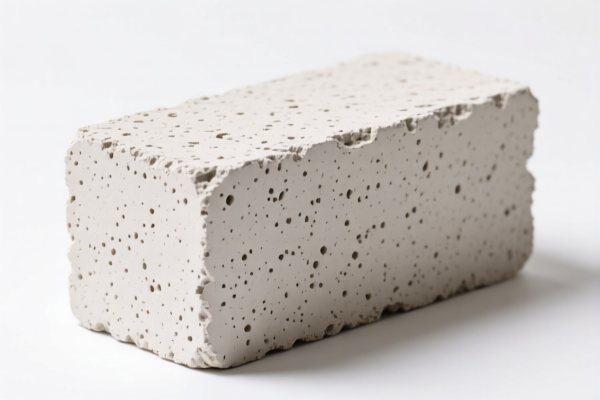
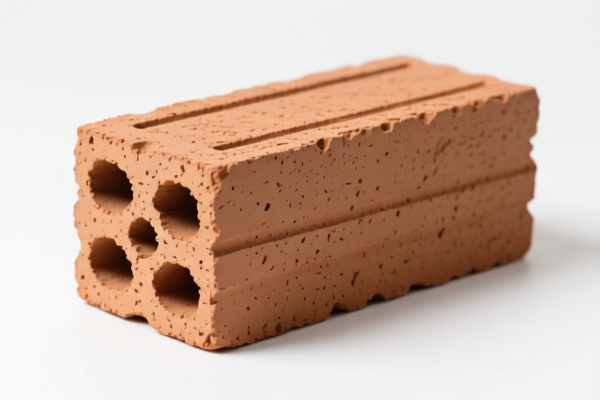
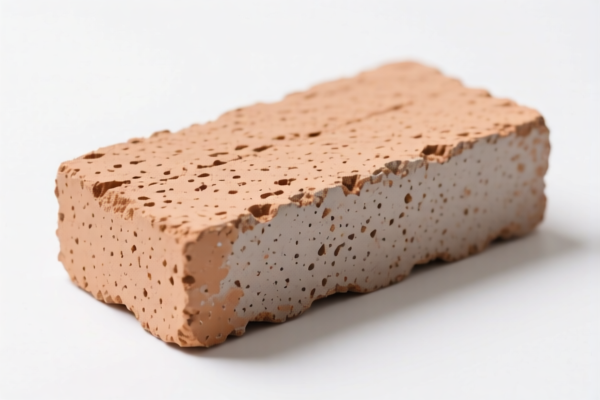
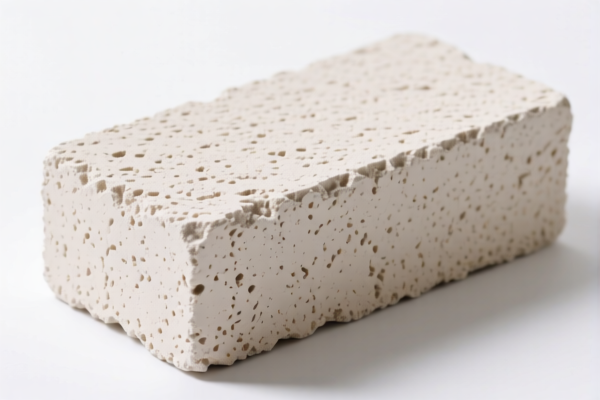
AI Analysis
🔥 Silicate Refractory Mortar: The High-Heat Solution for Industrial Kilns
🌐 HS Code Classification & Customs Clearance Guide | 2026 Latest Tariff Analysis | Expert Strategy for Hardened Materials
📌 I. Product Definition & Classification: What Exactly is "Silicate Refractory Mortar"?
Silicate Refractory Mortar is a specialized construction material used in high-temperature industrial applications. It serves as the "glue" for refractory bricks and castables in furnaces, kilns, boilers, and incinerators. Unlike ordinary cement, it withstands extreme heat (often exceeding 1000°C) without losing structural integrity.
In international trade, its classification is not single-dimensional. It depends on the chemical composition (siliceous vs. non-siliceous) and the physical form (mixed with mineral binders vs. pure ceramic).
⚠️ Key Classification Logic:
- Is it a ceramic product made from silicates? → Look to Chapter 69.
- Is it a mineral-based construction material with binders? → Look to Chapter 68.
- Crucial Distinction: The presence of "mineral binding agents" vs. "pure silicate ceramic composition" determines the HS Code.
📦 II. HS Code Classification Details (2026 Latest Tariff Authority)
Based on current trade data, Silicate Refractory Mortar is primarily classified into three specific HS Codes depending on its exact formulation. All listed below incur a Total Tariff Rate of 35% for goods originating from China entering the US market.
| HS Code | Product Description | Classification Logic | Applicable Scenario |
|---|---|---|---|
6902.90.10.10 |
Siliceous Refractory Ceramic Products | Classified as a silicate-based ceramic product (specifically "Siliceous"). | Mortar primarily composed of silica/silicates, fired or semi-fired ceramic nature. |
6902.90.50.10 |
Non-Siliceous or Similar Siliceous Earthen Refractory Ceramic Products | Classified as non-siliceous or "similar" earthen refractory ceramics. | Mortar containing clay, fireclay, or other non-siliceous binders that still fall under ceramic norms. |
6808.00.00.00 |
Mineral Binding Granular or Block Articles | Classified as a construction article bound by mineral agents. | Mortar that is essentially a granular/block mix with mineral binders, not fully fired ceramics. |
🔍 Critical Insight:
- Do not guess: If your mortar is a dry mix with added water to activate mineral binding,6808.00.00.00is often the correct fit.
- If it is a pre-formed or semi-sintered ceramic product, it falls under6902.
- Tax Uniformity: Despite the different HS codes, the total tax burden is identical (35%) for all three categories under current US-China trade rules.
💰 III. 2026 Latest Tariff Rate Breakdown (Including Surcharges & Policy Add-ons)
✅ Applicable Country: United States (US)
✅ Origin: China (CN)
✅ Effective Time: Ongoing (Subject to Section 301 & IEEPA updates)
For ALL listed HS Codes (6902.90.10.10, 6902.90.50.10, 6808.00.00.00), the tariff structure is strictly defined as follows:
🎯 Universal Tax Structure for Silicate Refractory Mortar
| Item | Content |
|---|---|
| Base Tariff Rate | 0% (Ad Valorem) |
| Section 301 Surcharge | +25% (Retaliatory tariffs under US Trade Law) |
| Section 122 (IEEPA) Surcharge | +10% (Targeted surcharge on specific Chinese industrial goods) |
| Total Effective Rate | 35% |
| Tax Calculation | CIF Value × 35% |
| De Minimis Exemption | ❌ Not Applicable (These goods are excluded from de minimis relief) |
| Legal Basis Path | USITC:6902/6808 → Section 301 Footnotes → IEEPA Section 122 |
📌 Explanation:
- The 0% base rate indicates that refractory materials are traditionally viewed as essential industrial inputs, hence low base duty.
- However, the 35% total is due to aggressive trade policies.
- Section 301 (25%) is the standard penalty on Chinese industrial goods.
- Section 122 (10%) is an additional layer specifically targeting certain mineral/ceramic products.
- Total Cost Impact: For every $10,000 of CIF value, you pay $3,500 in tariffs.
🛠️ IV. Customs Clearance Practical Advice (Battle-Tested Pitfall Guide)
✅ 1. Documentation Checklist (Non-Negotiable)
| Document | Must Provide? | Explanation |
|---|---|---|
| ✅ Technical Data Sheet (TDS) | ✔️ | Must specify chemical composition (Silica % vs. Clay %). Critical for distinguishing between 6902 and 6808. |
| ✅ Safety Data Sheet (SDS) | ✔️ | Proves the material is stable and safe for transport. |
| ✅ Commercial Invoice | ✔️ | Must explicitly state "Silicate Refractory Mortar" and indicate "Made in China". |
| ✅ Packing List | ✔️ | Detail net/gross weight. Mortar is heavy; accurate weight is crucial for freight calculation. |
| ✅ Certificate of Origin | ✔️ | Required to verify origin for Section 301/122 assessment. |
✅ 2. Declaration Strategies (Key Mnemonics)
🔥 "Composition Dictates Code, Binders Define Chapter!"
| Situation | Correct Classification | Wrong Practice |
|---|---|---|
| Mortar is primarily Silica/Silicate ceramic | 6902.90.10.10 |
Mislabeling as 6808 to avoid scrutiny → Risk of Audit |
| Mortar contains Clay/Fireclay (Non-siliceous) | 6902.90.50.10 |
Labeling as "General Cement" → Rejection |
| Mortar is a Mineral-Bound Granular Mix | 6808.00.00.00 |
Labeling as "Ceramic" → Unnecessary Complexity |
| Any of the above | Total Tax: 35% | Assuming "Industrial Material" = Lower Tax → Back Taxes + Penalties |
📌 Pro Tip:
If your product is a dry mix that the user adds water to, emphasize the "Mineral Binding" aspect in your description to align with6808. If it is a pre-mixed wet pack or sintered, lean towards6902.
✅ 3. Special Cases & Risk Management
| Scenario | Handling Advice |
|---|---|
| High-Purity Silica Mortar | Ensure TDS shows >90% Silica. This supports 6902.90.10.10. |
| Alumina-Based Mortar | This may be "Non-Siliceous". Use 6902.90.50.10. |
| Imported with Refractory Bricks | Declare Mortar and Bricks separately. Mortar uses 6902/6808, Bricks use 6902.10/6902.90. Do not bundle. |
| Small Samples (De Minimis) | ❌ Cannot use $800 de minimis exemption. Must file formal entry and pay 35% tax immediately. |
🌍 V. Global Market Comparison (2026 Latest)
| Country/Region | Recommended HS Code | Tariff Rate | Certification | Remarks |
|---|---|---|---|---|
| 🇺🇸 USA | 6902.90.10.10 / 6902.90.50.10 / 6808.00.00.00 |
35% | None Specific | High tax due to Section 301 & 122. |
| 🇨🇳 China | 6902.90.10.10 etc. |
0-5% | GB Standards | Low domestic tax. |
| 🇪🇺 EU | 6902.10 / 6902.20 |
0-2.5% | CE (if applicable) | No Section 301 equivalent. |
| 🇮🇳 India | 6902.10 |
7.5-10% | BIS | Moderate tariffs. |
📌 Conclusion:
The US market is uniquely expensive for Silicate Refractory Mortar due to the layered 35% tax.
Strategy: For US exports, consider value-added processing in third countries (e.g., Vietnam, Mexico) if rules of origin are met, or absorb the cost into the FOB price.
📌 VI. Common Errors & Pitfall Guide (Lessons Learned)
❌ Error 1: Classifying as "General Construction Cement" (3001)
👉 Result: Wrong code. Customs will reclassify to 6902 or 6808 and charge 35% instead of potentially lower base rates. Plus, penalties for misdeclaration.
❌ Error 2: Ignoring the "Mineral Binder" vs. "Ceramic" distinction
👉 Result: While tax is the same (35%), misclassification can lead to detailed scrutiny and delays. Be precise.
❌ Error 3: Assuming "Refractory" means "Exempt from Trade Wars"
👉 Result: Refractories are explicitly targeted in Section 301 and Section 122 lists. No automatic exemption.
❌ Error 4: Not declaring Origin Correctly
👉 Result: If "Made in China" is missing, customs may apply Most Favored Nation (MFN) rates if eligible, but you risk fraud charges if it is actually Chinese.
✅ Correct Description Example:
"Silicate Refractory Mortar, Dry Mix, High-Temperature Resistant (Up to 1200°C), Silica-Based, For Industrial Kiln Lining, Made in China."
🎯 VII. Conclusion: Precision in High-Heat Trade
🎯 Remember the Rules:
🔹 "Siliceous = 6902.10, Non-Siliceous = 6902.50, Mineral-Bound = 6808."
🔹 "Total Tax is 35%: 0% Base + 25% Sec301 + 10% Sec122."
🔹 "No De Minimis. No Exemptions. Plan Your Margin."
📌 Tips:
If your supply chain includes components from other countries, check if substantial transformation has occurred. If the mortar is merely repacked in a third country, it still retains Chinese origin and the 35% tax.
Recommend pre-clearance consultation with a licensed customs broker to confirm the exact HS code based on your TDS.
📣 Immediate Action:
📞 Consult Your Broker with the Technical Data Sheet.
📊 Calculate Landed Cost including the full 35% tariff.
🚀 Optimize Packaging to reduce CIF value (freight weight matters!).
✨ Professional Clearance Starts with Accurate Classification!
💼 Every Percent Counts in High-Tariff Commodities!
Customer Reviews
About HS Code Classification
The Harmonized System (HS) is an internationally standardized nomenclature developed by the World Customs Organization (WCO) to classify traded products. Over 200 countries use the HS system as the basis for customs tariffs, trade statistics, and import/export regulations.
Each HS code follows a hierarchical structure:
- Chapter (2 digits) — Broad category of goods (e.g., Chapter 84: Machinery and Mechanical Appliances)
- Heading (4 digits) — More specific grouping within the chapter
- Subheading (6 digits) — Internationally standardized breakdown, used by all WCO member countries
- National subdivisions (8-10 digits) — Country-specific extensions for further classification, such as US HTSUS 10-digit codes
Correct HS code classification is essential for smooth customs clearance, accurate duty payment, and compliance with trade regulations. Misclassification can lead to customs delays, overpayment of duties, or penalties.
When importing from CN to US, the applicable tariff rates may include:
- Most-Favored-Nation (MFN) rate — The standard duty rate applied to WTO members
- General rate — Applied to countries without trade agreements
- Trade remedy duties — Additional tariffs such as Section 301 (anti-dumping), Section 232 (national security), or countervailing duties
The information provided on this page is for reference purposes only. For official classification, please consult with your local customs authority or a licensed customs broker.