Silicon Carbide Rod
CN → US| HS Code | Tariff Rate | Origin | Destination | Doc |
|---|---|---|---|---|
| 6909195095 | 39.0% | CN | US | Official Doc |
| 6909120000 | 39.0% | CN | US | Official Doc |
Product Images
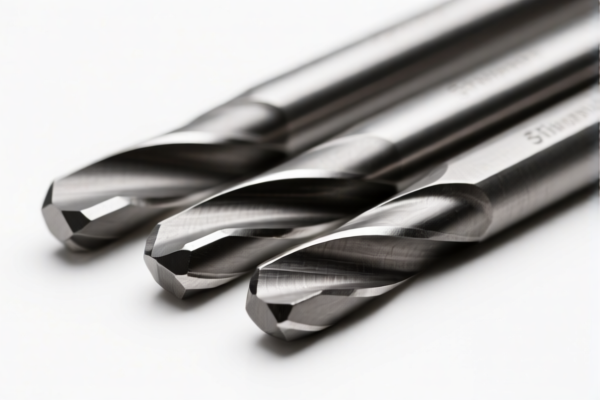
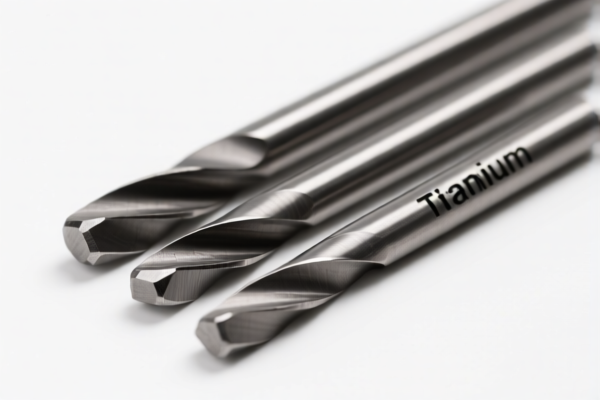
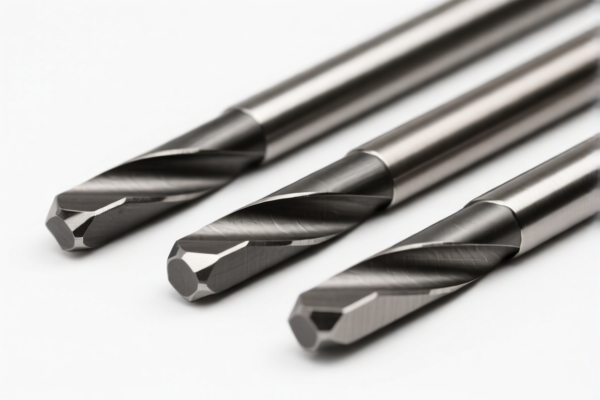
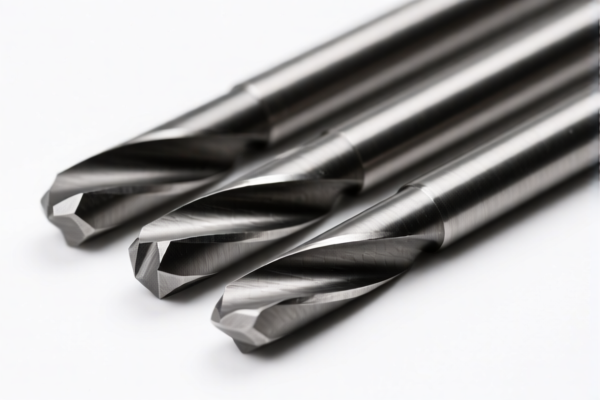
AI Analysis
🔥 Silicon Carbide Rod (SiC Rod)
Industrial Heating Elements & Technical Ceramics
🌐 HS Code Reference & Customs Clearance Guide | 2026 Latest Tariff Analysis | Professional Clearance Strategy
📌 I. Product Definition and Classification: Do You Really Understand "Silicon Carbide Rod"?
Silicon Carbide (SiC) rods are high-temperature resistant, electrically conductive ceramic components primarily used as heating elements in industrial furnaces. In international trade, their classification depends heavily on their hardness and specific technical application, rather than just their material composition.
Key Distinction for Customs: * General Technical Ceramic Ware: SiC rods used for general chemical or laboratory purposes, or those with lower hardness. * High-Hardness Technical Ware: SiC rods with a Mohs hardness of 9 or more, specifically designed for extreme temperature or wear-resistant applications.
⚠️ Critical Classification Point:
- If the rod is a general technical ceramic (not meeting the specific hardness threshold of 9+ on Mohs scale for this subheading) or falls under "Other" technical uses →归入 6909.19.50.95
- If the rod has a hardness equivalent to 9 or more on the Mohs scale → 归入 6909.12.00.00
- Note: Pure Silicon Carbide typically has a Mohs hardness of ~9.5, so many high-grade SiC rods fall under the "9+" category. However, if the product description or certificate indicates it is for general laboratory/technical use without emphasizing the high hardness, customs may default to the "Other" category.
📦 II. HS Code Classification Details (2026 Latest Tariff Authority Comparison)
| HS Code | Product Description | Applicable Scenario | Hardness (Mohs) |
|---|---|---|---|
6909.19.50.95 |
Ceramic wares for laboratory, chemical or other technical uses: Other: Other: Other | General SiC components, lower-grade technical ceramics, or those not explicitly certified as "9+ hardness" | < 9 (or unspecified) |
6909.12.00.00 |
Ceramic wares for laboratory, chemical or other technical uses: Articles having a hardness equivalent to 9 or more on the Mohs scale | High-grade SiC heating elements, wear-resistant parts, explicitly rated ≥9 Mohs | ≥ 9 |
🔍 Key Reminder:
- Silicon Carbide (SiC) is naturally hard (Mohs ~9.5). Therefore, most industrial SiC rods qualify for6909.12.00.00.
- Misclassifying a high-hardness SiC rod as6909.19.50.95("Other") can lead to scrutiny if the importer cannot prove the hardness or if the specific use doesn't align with the "Other" description.
- Always provide a hardness test report to support classification under6909.12.00.00.
💰 III. 2026 Latest Tariff Rate Details (Including Surtaxes and Policy Additions)
✅ Applicable Country: United States (US)
✅ Country of Origin: China (CN)
✅ Effective Date: From November 10, 2025 (including subsequent imports)
🎯 1. 6909.19.50.95 —— Ceramic Wares for Laboratory/Technical Uses (Other)
| Item | Content |
|---|---|
| Base Tariff | 4.0% (ad valorem) |
| Surtax (Section 301) | +25.0% |
| Total Tariff Rate | 29.0% |
| Tax Calculation | CIF Value × 29.0% |
| De Minimis Eligibility | ❌ Not Eligible (deny_de_minimis) |
| Legal Basis Path | USITC:6909.19.50.95 → FOOTNOTE:301 (25% surtax) |
📌 Explanation:
- This is the default classification for technical ceramics not meeting specific subheading criteria (like the "9+ hardness" rule).
- The 29% total rate includes the 4% base MFN rate and the 25% Section 301 surtax on Chinese goods.
- No other major IEEPA surtaxes apply to this specific code in the provided data.
🎯 2. 6909.12.00.00 —— Ceramic Wares with Hardness ≥ 9 Mohs
| Item | Content |
|---|---|
| Base Tariff | 4.0% (ad valorem) |
| Surtax (Section 301) | +25.0% |
| Total Tariff Rate | 29.0% |
| Tax Calculation | CIF Value × 29.0% |
| De Minimis Eligibility | ❌ Not Eligible (deny_de_minimis) |
| Legal Basis Path | USITC:6909.12.00.00 → FOOTNOTE:301 (25% surtax) |
📌 Note:
- Despite the specific technical description, the tariff rate is identical to the "Other" category in this dataset.
- However, classification under6909.12.00.00is more accurate for high-quality SiC rods, reducing the risk of customs disputes or reclassification penalties.
- Both codes attract the 29% total duty from China.
🛠️ IV. Customs Clearance Practical Advice (Real-World Pitfall Avoidance)
✅ 1. Preparation Checklist (Missing One Will Cause Delay)
| Document | Required | Explanation |
|---|---|---|
| ✅ Product Specification Sheet | ✔️ | Must include material (SiC), dimensions, resistivity, and max operating temperature. |
| ✅ Hardness Test Report | ✔️ | Crucial for classifying under 6909.12.00.00. Must state Mohs hardness ≥9. |
| ✅ Product Photos | ✔️ | Clear images showing the rod, labels, and any markings. |
| ✅ Commercial Invoice | ✔️ | Must clearly state "Silicon Carbide Heating Rod" or "Technical Ceramic Rod". |
| ✅ Packing List | ✔️ | Detail packaging to prevent breakage claims. |
| ✅ Material Safety Data Sheet (MSDS) | ✔️ | Required for ceramic dust/particles, though SiC rods are solid. |
✅ 2. Declaration Tips (Key Mnemonics)
🔥 “SiC Rods Are Hard, Declare 9+, Or Pay 29% Either Way!”
| Scenario | Correct Declaration | Wrong Practice |
|---|---|---|
| High-grade SiC Heating Element | 6909.12.00.00 |
Misclassifying as general ceramic → Risk of audit |
| SiC Rod for General Lab Use | 6909.19.50.95 |
Using high-hardness code without proof → Delay |
| SiC Rods + Mounting Hardware | Declare as One Item | Splitting parts → Higher tariffs on parts |
| SiC Rods for Furnace Only | State "Heating Element" | Vague term "Ceramic Part" → Misclassification |
✅ 3. Special Cases
| Situation | Handling Advice |
|---|---|
| OEM Custom SiC Rods | Provide customer specs + drawings to prove technical use. |
| SiC Rods with Attachments | If attached to electrodes or frames, declare as a single unit if integral. |
| Re-exported SiC Rods | Provide proof of non-Chinese origin if applicable (unlikely for SiC). |
| Sample Shipments | Even samples are subject to 29% duty if from China; no de minimis exemption. |
🌍 V. Global Market Comparison (2026 Latest)
| Country/Region | Recommended HS Code | Tariff (China Origin) | Certification Requirements | Notes |
|---|---|---|---|---|
| 🇺🇸 USA | 6909.12.00.00 or 6909.19.50.95 |
29% | None specific (but hardness proof needed) | High tariff due to Section 301 |
| 🇨🇳 China | 6909.12.00.00 |
4% - 8% (varies) | CCC (if electrical) | Lower domestic duty |
| 🇪🇺 EU | 6909.12 or 6909.19 |
4% - 6% | CE (if applicable) | No major surtaxes |
| 🇬🇧 UK | 6909.12 or 6909.19 |
4% - 6% | UKCA (if applicable) | Post-Brexit rules apply |
| 🇯🇵 Japan | 6909.12 or 6909.19 |
3% - 5% | PSE (if electrical) | Low tariffs, strict quality checks |
📌 Conclusion:
- USA is the most costly market for SiC rods from China due to the 29% total tariff.
- EU and Asia offer more favorable rates, but hardness proof is still critical for accurate classification.
- No de minimis exemption in the US means even small samples incur full duties.
📌 VI. Common Errors & Pitfall Guide (Lessons Learned)
❌ Error 1: Declaring SiC rods as "Ceramic Pipes" (6909.11.00.00)
👉 Consequence: Incorrect classification → Penalty + Retention. SiC rods are not pipes.
❌ Error 2: Omitting "Silicon Carbide" in description, using only "Ceramic Rod"
👉 Consequence: Customs may classify under higher-duty or restricted categories → Delay.
❌ Error 3: Not providing hardness report for 6909.12.00.00
👉 Consequence: Customs may downgrade to 6909.19.50.95 or question the classification → Audit risk.
❌ Error 4: Assuming de minimis ($800) applies
👉 Consequence: Full 29% duty applied to the entire shipment value, including samples.
✅ Correct Practice:
"Silicon Carbide Heating Rod, SiC, Mohs Hardness ≥9, For Industrial Furnace, 1200°C Max, Model XYZ, Country of Origin: China"
🎯 VII. Conclusion: Precise Classification Saves Money and Time!
🎯 Remember the Mnemonic:
🔹 "SiC Rods are Hard, Declare 9+, Pay 29% Either Way!"
🔹 "HS Code Determines Duty, Hardness Proof is Key, Declare Clearly, Avoid Delay!"
📌 Pro Tip:
If your SiC rods are originating from Vietnam, Mexico, Thailand, or Malaysia, you may qualify for preferential tariffs or Section 301 exemptions, reducing the rate to 0%~5%.
Recommendation: Apply for a Pre-Ruling (Advance Ruling) from US Customs and Border Protection (CBP) to confirm classification and avoid surprise duties.
📣 Immediate Action:
📞 Contact a professional customs broker + Provide product photos + Request Hardness Test Report
🚀 Ensure your SiC rods, smooth clearance, efficient export, profit maximization!
✨ Professional Clearance Starts with Accurate Classification!
💼 Every cent of your cost is worth calculating precisely!
Customer Reviews
About HS Code Classification
The Harmonized System (HS) is an internationally standardized nomenclature developed by the World Customs Organization (WCO) to classify traded products. Over 200 countries use the HS system as the basis for customs tariffs, trade statistics, and import/export regulations.
Each HS code follows a hierarchical structure:
- Chapter (2 digits) — Broad category of goods (e.g., Chapter 84: Machinery and Mechanical Appliances)
- Heading (4 digits) — More specific grouping within the chapter
- Subheading (6 digits) — Internationally standardized breakdown, used by all WCO member countries
- National subdivisions (8-10 digits) — Country-specific extensions for further classification, such as US HTSUS 10-digit codes
Correct HS code classification is essential for smooth customs clearance, accurate duty payment, and compliance with trade regulations. Misclassification can lead to customs delays, overpayment of duties, or penalties.
When importing from CN to US, the applicable tariff rates may include:
- Most-Favored-Nation (MFN) rate — The standard duty rate applied to WTO members
- General rate — Applied to countries without trade agreements
- Trade remedy duties — Additional tariffs such as Section 301 (anti-dumping), Section 232 (national security), or countervailing duties
The information provided on this page is for reference purposes only. For official classification, please consult with your local customs authority or a licensed customs broker.