Silicon Carbide Substrate
CN → US| HS Code | Tariff Rate | Origin | Destination | Doc |
|---|---|---|---|---|
| 3818000030 | 60.0% | CN | US | Official Doc |
| 3824300000 | 38.6% | CN | US | Official Doc |
| 2849202000 | 10.5% | CN | US | Official Doc |
| 2849201000 | 10.0% | CN | US | Official Doc |
| 3824993990 | 35.0% | CN | US | Official Doc |
Product Images
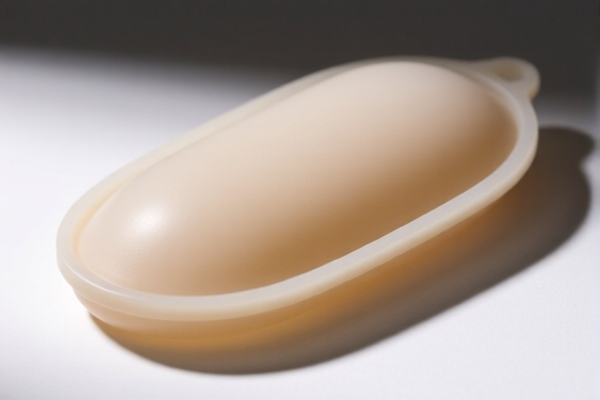
AI Analysis
💎 Silicon Carbide Substrates: The Foundation of Next-Gen Power Electronics
🌐 HS Code Reference & Customs Clearance Guide | 2026 Latest Tariff Analysis | Professional-Level Strategy
📌 I. Product Definition & Classification: What is a "Silicon Carbide Substrate"?
Silicon Carbide (SiC) substrates are high-purity, crystalline wafers used as the foundational base for growing semiconductor devices. They are the "ground zero" for Wide Bandgap (WBG) semiconductors, enabling faster charging, higher voltage handling, and better efficiency in electric vehicles (EVs), 5G infrastructure, and renewable energy systems.
In international trade, classification depends heavily on the state of processing and material purity:
1. Semiconductor Wafers (Processed):
- Crystalline, polished, and shaped for device fabrication.
- Often classified under Chapter 38 (Miscellaneous Chemical Products) as prepared catalysts or materials of kind used in chemical industries, OR under 2849 if considered refined inorganic compounds.
2. Raw/Unprocessed Carbides:
- Powder, lump, or unrefined forms.
- Classified under Chapter 28 (Inorganic Chemicals) as silicon carbide.
⚠️ Key Distinction Point:
- If the item is a "Substrate/Wafer" ready for epitaxy (growing chips on it) → It is often seen as a semi-finished semiconductor material.
- If it is raw powder or coarse carbide → It falls under inorganic chemicals.
📦 II. HS Code Classification Details (2026 Latest Tariff Authority Comparison)
Based on the provided data, here are the 5 most relevant HS Codes for "Silicon Carbide Substrate," ranked by technical accuracy and risk level.
| HS Code | Product Description | Matching Logic | Total Tax Rate (US/China Origin) |
|---|---|---|---|
| 3818.00.00.30 | Prepared Catalysts & Other Products of Chapter 38 | Best Fit. "Substrate" is a wafer (disc/plate shape). SiC is the material. Matches "disc/wafer-like shape" and "SiC material" perfectly. | 60.0% |
| 3824.30.00.00 | Metal Carbides, Agglomerated or Not | Plausible. SiC is a metal carbide. Matches material but ignores the precise "wafer/substrate" form factor. | 38.6% |
| 2849.20.20.00 | Silicon Carbide, Refined/Processed | Alternative. Matches material (SiC). Assumes "substrate" implies refined/post-processing state. | 10.5% |
| 2849.20.10.00 | Silicon Carbide, Unrefined/Primary | Riskier. Matches material. Assumes "substrate" is a semi-finished/primary form. Lower base tax. | 10.0% |
| 3824.99.39.90 | Other Chemical Products (Mixtures) | Last Resort. Classifies SiC as an inorganic compound mixture. "Substrate" as intermediate product. | 35.0% |
🔍 Critical Insight:
- 3818.00.00.30 is the most technically accurate for semiconductor-grade wafers because Chapter 38 covers products "of a kind used in chemical industries" or catalysts, which includes high-purity substrates.
- 2849 codes are risky because they treat the substrate as a raw chemical commodity, ignoring its precise geometric and functional definition as a wafer.
💰 III. 2026 Latest Tariff Rate Breakdown (Detailed Tax Clauses)
✅ Applicable Country: United States (US)
✅ Origin: China (CN)
✅ Effective Date: November 10, 2025 onwards (Including subsequent imports)
🎯 1. 3818.00.00.30 —— Silicon Carbide Substrates (Wafer Form)
| Item | Content |
|---|---|
| Base Rate | 0.0% (ad valorem) |
| Section 301 Additional Duty | +50.0% (USITC Footnote related to Section 301) |
| IEEPA Additional Duty | +10.0% (Specific to Chinese/HK products under IEEPA) |
| Total Tax Rate | 60.0% |
| Tax Calculation | CIF Value × 60% |
| De Minimis Exemption | ❌ DENIED (deny_de_minimis) |
| Legal Basis Path | IEEPA:9903.01.25 → IEEPA:9903.01.24 → USITC:3818.00.00.30 → FOOTNOTE:301_Applicable |
📌 Explanation:
- Despite a 0% base tariff, the Section 301 (50%) and IEEPA (10%) surcharges make this the most expensive classification.
- This reflects the high strategic value of semiconductor materials in US-China trade tensions.
- Total 60% is extremely high. Must be factored into supply chain costs.
🎯 2. 3824.30.00.00 —— Metal Carbides (Agglomerated)
| Item | Content |
|---|---|
| Base Rate | 3.6% |
| Section 301 Additional Duty | +25.0% |
| IEEPA Additional Duty | +10.0% |
| Total Tax Rate | 38.6% |
| Tax Calculation | CIF Value × 38.6% |
| De Minimis Exemption | ❌ DENIED |
| Legal Basis Path | IEEPA:9901.25 → IEEPA:9903.01.24 → USITC:3824.30.00.00 → FOOTNOTE:301_Applicable |
📌 Note:
- This code treats SiC as a generic "metal carbide."
- While lower than 3818, it lacks precision for "substrates." Customs may reject this if documentation clearly shows "wafer/substrate" form.
🎯 3. 2849.20.20.00 —— Refined Silicon Carbide
| Item | Content |
|---|---|
| Base Rate | 0.5% |
| Section 301 Additional Duty | 0.0% |
| IEEPA Additional Duty | +10.0% |
| Total Tax Rate | 10.5% |
| Tax Calculation | CIF Value × 10.5% |
| De Minimis Exemption | ❌ DENIED |
| Legal Basis Path | IEEPA:9903.01.24 → USITC:2849.20.20.00 → FOOTNOTE:IEEPA_Specific |
📌 Note:
- This is a high-risk, low-tax option.
- Only applicable if you can prove the substrate is "refined silicon carbide" but not a "prepared catalyst" or "wafer for semiconductors."
- Customs often scrutinizes this to prevent duty evasion.
🎯 4. 2849.20.10.00 —— Unrefined Silicon Carbide
| Item | Content |
|---|---|
| Base Rate | 0.0% |
| Section 301 Additional Duty | 0.0% |
| IEEPA Additional Duty | +10.0% |
| Total Tax Rate | 10.0% |
| Tax Calculation | CIF Value × 10.0% |
| De Minimis Exemption | ❌ DENIED |
| Legal Basis Path | IEEPA:9903.01.24 → USITC:2849.20.10.00 → FOOTNOTE:IEEPA_Specific |
📌 Note:
- Lowest tax rate.
- High Risk: SiC substrates are highly processed crystals. Claiming them as "unrefined" is likely to trigger a customs audit, potential reclassification, and penalties.
🎯 5. 3824.99.39.90 —— Other Chemical Mixtures
| Item | Content |
|---|---|
| Base Rate | 0.0% |
| Section 301 Additional Duty | +25.0% |
| IEEPA Additional Duty | +10.0% |
| Total Tax Rate | 35.0% |
| Tax Calculation | CIF Value × 35.0% |
| De Minimis Exemption | ❌ DENIED |
| Legal Basis Path | IEEPA:9901.25 → IEEPA:9903.01.24 → USITC:3824.99.39.90 → FOOTNOTE:301_Applicable |
📌 Note:
- Fallback option if no other code fits.
- Treats SiC substrate as a "mixture of inorganic compounds." Less accurate than 3818 or 2849.
🛠️ IV. Customs Clearance Practical Advice (Avoid Pitfalls)
✅ 1. Document Checklist (Mandatory)
| Document | Required? | Purpose |
|---|---|---|
| ✅ Product Specification Sheet | ✔️ | Must detail: Purity (e.g., 99.999%), Diameter (e.g., 50mm, 100mm), Thickness, Crystal Orientation, Surface Finish. |
| ✅ Technical Drawing / Diagram | ✔️ | Proves "wafer/disc" shape. Critical for arguing 3818.00.00.30. |
| ✅ Certificate of Analysis (CoA) | ✔️ | Confirms chemical composition (SiC) and impurity levels. |
| ✅ Commercial Invoice | ✔️ | Clear description: "Silicon Carbide Semiconductor Substrate Wafer, Not for General Chemical Use." |
| ✅ Origin Certificate (CO) | ✔️ | Essential for IEEPA/Section 301 determination. |
| ✅ Packing List | ✔️ | Shows how wafers are packed (anti-static, cushioned). |
✅ 2. Declaration Strategy (Key Mantra)
🔥 "Shape Defines Code, Purity Defines Chapter, Origin Defines Tax!"
| Scenario | Correct Declaration | Wrong Declaration |
|---|---|---|
| High-Purity Wafer | 3818.00.00.30 "Silicon Carbide Substrate Wafer" |
"Silicon Carbide Powder" → Leads to 2849 audit |
| Raw Carbide | 2849.20.10.00 "Silicon Carbide, Unrefined" |
"Semiconductor Wafer" → Leads to 3818 audit |
| Mixed/Unknown | 3824.99.39.90 "Chemical Product" |
"Electronics Part" → Misclassification |
| OEM Custom Wafer | Provide client order + design specs | Generic "SiC Material" |
✅ 3. Special Circumstances
| Situation | Recommendation |
|---|---|
| EV Component | If sold as part of an EV inverter, it may be classified under EV parts (lower duty), but substrates alone are raw materials. Declare as material. |
| 5G Base Station | Similar to EV. Substrate is a component, not a finished good. |
| Re-export | If shipped from a third country (e.g., Vietnam) with sufficient transformation, IEEPA 10% may be avoided. Provide proof of substantial transformation. |
| Pre-Ruling | Strongly Recommended. Apply for an Advance Ruling with US Customs (CBP) to lock in 3818.00.00.30 or argue for 2849 if documentation supports it. |
🌍 V. Global Market Comparison (2026 Latest)
| Country/Region | Recommended HS Code | Tariff (China Origin) | Certification | Notes |
|---|---|---|---|---|
| 🇺🇸 USA | 3818.00.00.30 |
60% | No specific, but IEEPA/301 apply | Highest duty due to strategic material status |
| 🇨🇳 China | 2849.20.20.00 |
~10-13% | RoHS, CCC (if end-product) | Domestic use tax is lower |
| 🇪🇺 EU | 3818.00 |
0-6% | REACH, RoHS | No Section 301 equivalent, but anti-dumping may apply |
| 🇯🇵 Japan | 3818.00 |
0-6% | PSE (if component) | Strategic import partner for semiconductors |
| 🇰🇷 South Korea | 3818.00 |
0-5% | KC Mark | Major SiC consumer (Samsung, LG) |
📌 Conclusion:
- USA is the most expensive market for SiC substrates due to 60% combined duties.
- EU/Japan/Korea offer more favorable rates, but require strict REACH/PSE compliance.
- Strategic Importance: SiC is a critical mineral. Expect increased scrutiny globally.
📌 VI. Common Mistakes & Pitfalls (Lessons Learned)
❌ Mistake 1: Declaring "SiC Substrate" as "Silicon Carbide Powder" (2849)
👉 Consequence: Customs rejects because form factor (wafer) doesn't match "powder." Re-classification to 3818 (60%) + penalties.
❌ Mistake 2: Ignoring IEEPA 10% surcharge
👉 Consequence: Underpayment of duties. Audit reveals 10% short payment + interest.
❌ Mistake 3: Missing "Wafer" or "Substrate" in Description
👉 Consequence: Customs assumes generic chemical product, leading to arbitrary classification.
❌ Mistake 4: Not providing Purity Data
👉 Consequence: Inability to distinguish between industrial-grade SiC (cheap) and semiconductor-grade (expensive). May trigger higher duty rates if purity is not declared.
✅ Correct Approach:
"High-Purity Silicon Carbide Semiconductor Substrate Wafer, 100mm Diameter, 500um Thickness, Epitaxy-Ready, Chinese Origin, HS Code 3818.00.00.30"
🎯 VII. Conclusion: Professional Declaration, Cost Optimization
🎯 Remember the Mantra:
🔹 "Substrate = Wafer = 3818 (60%)"
🔹 "Powder = 2849 (10%) — But Risky!"
🔹 "IEEPA 10% is Non-Negotiable for China Origin"
🔹 "Declare Shape, Declare Purity, Declare Origin"
📌 Pro Tip:
If your SiC substrates are shipped from Vietnam, Mexico, or Thailand with substantial transformation (e.g., cutting, polishing, packaging under strict supervision), you may avoid the 10% IEEPA surcharge.
👉 Action: Apply for an Advance Ruling with CBP. Document the entire supply chain.
📣 Immediate Action:
📞 Engage a Licensed Customs Broker.
📄 Prepare Technical Datasheets.
🚀 Optimize your classification to save up to 50% in duties.
✨ Precision in Classification, Profitability in Logistics!
💼 Every percentage point of duty saved is pure profit!
Customer Reviews
About HS Code Classification
The Harmonized System (HS) is an internationally standardized nomenclature developed by the World Customs Organization (WCO) to classify traded products. Over 200 countries use the HS system as the basis for customs tariffs, trade statistics, and import/export regulations.
Each HS code follows a hierarchical structure:
- Chapter (2 digits) — Broad category of goods (e.g., Chapter 84: Machinery and Mechanical Appliances)
- Heading (4 digits) — More specific grouping within the chapter
- Subheading (6 digits) — Internationally standardized breakdown, used by all WCO member countries
- National subdivisions (8-10 digits) — Country-specific extensions for further classification, such as US HTSUS 10-digit codes
Correct HS code classification is essential for smooth customs clearance, accurate duty payment, and compliance with trade regulations. Misclassification can lead to customs delays, overpayment of duties, or penalties.
When importing from CN to US, the applicable tariff rates may include:
- Most-Favored-Nation (MFN) rate — The standard duty rate applied to WTO members
- General rate — Applied to countries without trade agreements
- Trade remedy duties — Additional tariffs such as Section 301 (anti-dumping), Section 232 (national security), or countervailing duties
The information provided on this page is for reference purposes only. For official classification, please consult with your local customs authority or a licensed customs broker.