Silicon Carbide Thin Sheet
CN → US| HS Code | Tariff Rate | Origin | Destination | Doc |
|---|---|---|---|---|
| 2849202000 | 10.5% | CN | US | Official Doc |
| 2849201000 | 10.0% | CN | US | Official Doc |
| 8541100040 | 60.0% | CN | US | Official Doc |
| 8541590040 | 60.0% | CN | US | Official Doc |
Product Images
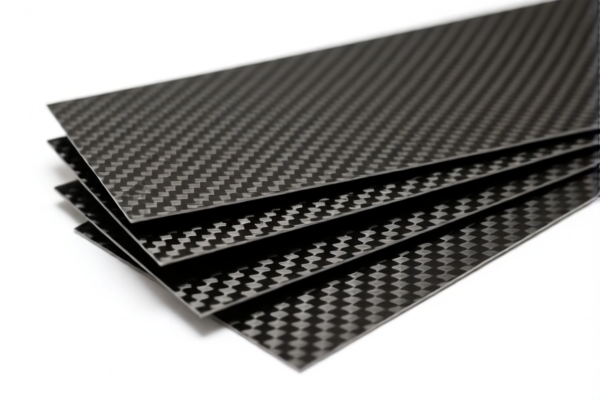
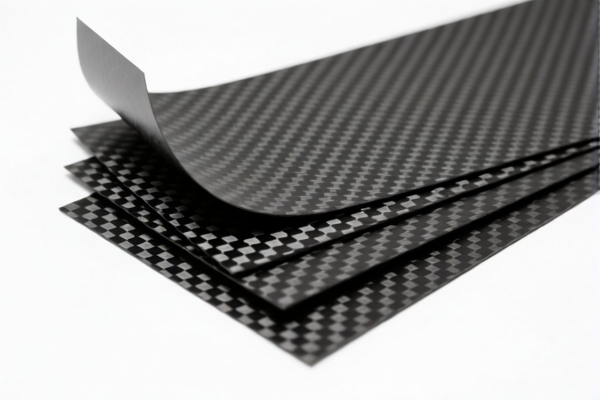
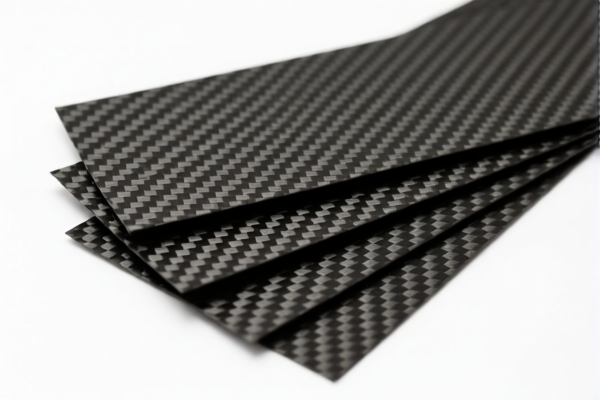
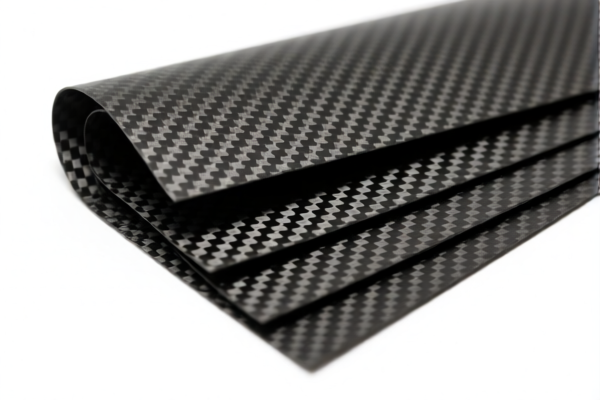
AI Analysis
🌪️ Silicon Carbide (SiC) Thin Sheet: The High-Voltage Semiconductor Powerhouse
🌐 HS Code Reference & Customs Clearance Guide | 2026 Latest Tariff Analysis | Professional-Level Clearance Strategy
📌 I. Product Definition & Classification: Do You Really Understand "Silicon Carbide"?
Silicon Carbide (SiC), often referred to as "Carborundum," is a wide-bandgap semiconductor material that is revolutionizing electric vehicles (EVs), renewable energy systems, and high-power industrial applications. In international trade, the classification of SiC products depends strictly on its physical state (raw powder vs. refined crystal) and processing level (wafer vs. packaged device).
For the input "Silicon Carbide Thin Sheet," this typically refers to a processed SiC substrate or wafer. However, under US Customs and Border Protection (CBP) rules, the distinction between a "semiconductor wafer" (Class 85) and a "refined mineral" (Class 28) is critical and can change your tariff from 10% to 60%.
⚠️ Key Distinction:
- If the sheet is considered a "Refined Product" (chemically processed but not yet a semiconductor device) → It may fall under Chapter 28.
- If the sheet is clearly a "Semiconductor Wafer" (prepared for electronic use) → It falls under Chapter 85 (Diodes/Transistors).
- Note: The provided data indicates multiple classifications for "SiC Epitaxial Wafers/Thin Sheets," suggesting that even within "wafers," the specific definition (epitaxial vs. bare substrate) drives the HS code selection.
📦 II. HS Code Classification Details (Based on Provided Data)
The following table details the specific HS Codes associated with "Silicon Carbide Thin Sheet / Epitaxial Wafer" as per the provided dataset. All codes listed carry significant "Section 301" (122 Clause) tariffs due to Chinese origin implications.
| HS Code | Product Description | Application / Form | Tax Rate |
|---|---|---|---|
2849.20.20.00 |
SiC Epitaxial Wafer (Refined/Processed) | Material: SiC. Form: Refined/Processed thin sheet. Matches definition of "Silicon Carbides, refined." | 10.5% |
2849.20.10.00 |
SiC Epitaxial Wafer (Semi-finished) | Material: SiC. Form: Semi-finished/Thin sheet type. Matches definition of "Silicon Carbides, intermediate form, unrefined." | 10.0% |
8541.10.00.40 |
SiC Epitaxial Wafer (Uninstalled Diode) | Material: SiC (Semiconductor). Form: Uninstalled chips, grains, wafers. Classified under Diodes. | 60.0% |
8541.59.00.40 |
SiC Epitaxial Wafer (Uninstalled Semiconductor) | Material: SiC. Form: Wafer. Classified under Other Unmounted Semiconductor Devices. | 60.0% |
🔍 Critical Note:
- Codes2849.20.xxare classified under Chemicals/Minerals (Chapter 28).
- Codes8541.xxare classified under Electrical Machinery/Components (Chapter 85).
- Why the huge tax difference? Chapter 85 items are subject to 50% Additional Tariff (Section 301) + 10% IEEPA Tariff = 60% Total.
- Chapter 28 items are subject to 0-0.5% Base Tariff + 10% IEEPA Tariff = ~10% Total.
💰 III. 2026 Latest Tariff Rate Breakdown (Detailed Policy Analysis)
✅ Applicable Country: United States (US)
✅ Origin: China (CN) (Implied by the "122 Clause" and high tariffs in the data)
✅ Effective Time: Ongoing (Post-2025/2026 adjustments)
🎯 1. Classification A: 2849.20.20.00 (Refined SiC Thin Sheet)
This classification treats the thin sheet as a refined chemical/mineral product rather than an electronic component.
| Item | Detail |
|---|---|
| Base Tariff | 0.5% (Ad valorem) |
| Additional Tariff (Sec 301) | 0.0% (Exempt or excluded from 25% list for this specific subheading) |
| IEEPA Tariff (122 Clause) | +10.0% |
| Total Tariff Rate | 10.5% |
| Tax Calculation | CIF Value × 10.5% |
| De Minimis Exemption? | ❌ No (High-value industrial goods generally not eligible) |
| Legal Basis | HS 2849.20 → IEEPA Footnote for Chinese Goods |
📌 Explanation:
- This is the lowest tax bracket for SiC thin sheets in the provided data.
- It relies on the argument that the product is a "Refined Silicon Carbide" (Chapter 28) rather than a "Semiconductor Device" (Chapter 85).
- Risk: Customs may challenge this if the wafer has clear electronic specifications (e.g., doped, patterned).
🎯 2. Classification B: 2849.20.10.00 (Semi-finished SiC Thin Sheet)
This classification applies if the thin sheet is considered an "Intermediate Form" or semi-finished product.
| Item | Detail |
|---|---|
| Base Tariff | 0.0% |
| Additional Tariff (Sec 301) | 0.0% |
| IEEPA Tariff (122 Clause) | +10.0% |
| Total Tariff Rate | 10.0% |
| Tax Calculation | CIF Value × 10.0% |
| De Minimis Exemption? | ❌ No |
| Legal Basis | HS 2849.20 → IEEPA Footnote for Chinese Goods |
📌 Explanation:
- Lowest total duty in the dataset.
- Applicable if the product is explicitly defined as "unrefined intermediate form" or semi-finished substrate before epitaxial growth or packaging.
🎯 3. Classification C: 8541.10.00.40 (SiC Wafer as Diode/Component)
This classification treats the SiC thin sheet as a semiconductor device (specifically, an uninstalled diode or similar component).
| Item | Detail |
|---|---|
| Base Tariff | 0.0% |
| Additional Tariff (Sec 301) | +50.0% (High punitive tariff for semiconductors) |
| IEEPA Tariff (122 Clause) | +10.0% |
| Total Tariff Rate | 60.0% |
| Tax Calculation | CIF Value × 60.0% |
| De Minimis Exemption? | ❌ No |
| Legal Basis | IEEPA:9903.01.24 → USITC:8541.10.00.40 |
📌 Explanation:
- Extremely High Cost.
- Applies if the SiC wafer is viewed as a finished semiconductor product ready for integration into circuits.
- Warning: Many importers try to avoid this classification due to the 60% burden.
🎯 4. Classification D: 8541.59.00.40 (SiC Wafer as Other Semiconductor)
Similar to above, but classified under "Other" semiconductor devices (e.g., transistors, modules).
| Item | Detail |
|---|---|
| Base Tariff | 0.0% |
| Additional Tariff (Sec 301) | +50.0% |
| IEEPA Tariff (122 Clause) | +10.0% |
| Total Tariff Rate | 60.0% |
| Tax Calculation | CIF Value × 60.0% |
| De Minimis Exemption? | ❌ No |
| Legal Basis | IEEPA:9903.01.24 → USITC:8541.59.00.40 |
🛠️ IV. Customs Clearance Practical Advice (Pitfall Avoidance Guide)
✅ 1. Preparation Checklist (Non-Negotiable)
| Document | Required? | Description |
|---|---|---|
| ✅ Product Specification Sheet | ✔️ | Must detail: Diameter, Thickness, Crystal Orientation, Dopant Type, Resistivity. |
| ✅ Technical Datasheet | ✔️ | Proves whether it is a "Raw Substrate" (Chapter 28) or "Processed Wafer" (Chapter 85). |
| ✅ Commercial Invoice | ✔️ | Clearly state "Silicon Carbide Substrate/Wafer" and NOT "Electronic Component" if aiming for Chapter 28. |
| ✅ Origin Certificate | ✔️ | To prove Chinese origin (or third-party if applicable) and assess IEEPA impact. |
| ✅ Photographs | ✔️ | Show the physical appearance: Is it a bare slice? Is it packaged in a cassette? |
| ✅ Third-Party Test Report | ✔️ | SEM/EDS results confirming SiC purity and structure. |
✅ 2. Declaration Strategy (Key Tactics)
🔥 "Define the Form, Control the Chapter!"
| Scenario | Recommended HS Code | Strategy |
|---|---|---|
| Bare SiC Substrate/Wafer (No circuits, no packaging) | 2849.20.10.00 or 2849.20.20.00 |
Emphasize "Mineral Product", "Refined Silicon Carbide", "Raw Substrate". Avoid terms like "Chip," "Diode," "Electrical Device." |
| Epitaxial Wafer (With epitaxial layer for devices) | 2849.20.20.00 |
Argue that the epitaxial layer is part of the refined mineral process, not a finished electronic device. |
| Patterned/Diced SiC Chips | 8541.10.00.40 |
If already diced into chips or packaged, it MUST go to Chapter 85. No choice. |
| SiC Modules/Components | 8541.59.00.40 |
If assembled with leads or contacts. |
⚠️ Critical Warning:
- Do NOT use terms like "Diode," "Transistor," "Electronic Component," or "Semiconductor Device" in the product name if you wish to classify under Chapter 28.
- Use terms like: "Silicon Carbide Substrate," "SiC Wafer," "Refined SiC Thin Sheet."
✅ 3. Special Circumstances
| Situation | Handling Suggestion |
|---|---|
| OEM Custom Wafers | Provide design specs. If custom-shaped, still try Chapter 28 if no electronics are added. |
| Mixed Shipment (Chips + Substrates) | Must separate. Chips go to 8541 (60%), Substrates go to 2849 (10%). Mixing them risks auditing and higher rates on the whole shipment. |
| Destination Port Audit | Have a Legal Opinion from a customs attorney supporting the Chapter 28 classification if challenged. |
🌍 V. Global Market Comparison (2026 Context)
| Market | Recommended HS Code | Est. Tariff (China Origin) | Notes |
|---|---|---|---|
| 🇺🇸 USA | 2849.20.10.00 / 2849.20.20.00 |
10.0% - 10.5% | Lowest duty. Avoid 8541 codes unless necessary. |
| 🇺🇸 USA | 8541.xx |
60.0% | Avoid if possible. High penalty. |
| 🇨🇳 China | 2849.20 |
~3-5% | Import into China for processing. |
| 🇪🇺 EU | 2849.20 |
0% (Most Favored Nation) | No Section 301 equivalent. Lower barrier. |
| 🇯🇵 Japan | 2849.20 |
5-8% | Competitive for SiC substrates. |
📌 Conclusion:
- USA is the most challenging market due to the 50% Section 301 tariff on Chapter 85 semiconductors.
- Strategy: Aim for Chapter 28 (2849) classification for raw/epitaxial wafers to save ~50% in duties.
- EU/Japan: More favorable, but still require accurate description of "Refined Silicon Carbide."
📌 VI. Common Mistakes & Pitfalls (Blood & Tears Lessons)
❌ Mistake 1: Calling a "SiC Wafer" a "Semiconductor Component"
👉 Result: Classified under 8541 → 60% Tariff instead of 10%.
👉 Fix: Use "SiC Substrate" or "Silicon Carbide Thin Sheet."
❌ Mistake 2: Not distinguishing between "Raw Powder" and "Refined Wafer"
👉 Result: Misclassification under 2849.10 (Powder) vs 2849.20 (Crystals/Wafers).
👉 Fix: Ensure product description matches the physical form (thin sheet/wafer).
❌ Mistake 3: Ignoring the "122 Clause" (IEEPA)
👉 Result: Underestimating total duty by forgetting the 10% IEEPA tariff.
👉 Fix: Always calculate Base Tariff + 10% IEEPA. Even Chapter 28 has a 10% floor.
❌ Mistake 4: Assuming "Epitaxial" automatically means "Electronic Device"
👉 Result: Customs may classify epitaxial wafers as 8541.
👉 Fix: Provide technical evidence that the epitaxial layer is part of the mineral refinement process, not a finished circuit.
✅ Correct Practice:
"Silicon Carbide (SiC) Epitaxial Wafer, 150mm Diameter, 350um Thickness, n-type, for Substrate Use. NOT a semiconductor device."
🎯 VII. Conclusion: Professional Declaration for Cost Efficiency
🎯 Remember the Mantra:
🔹 "Wafer = 2849 (10%), Chip = 8541 (60%). Define as Substrate, Save Half the Cost!"
🔹 "No 'Diode' in the name, No 60% Tax in the bill!"
📌 Pro Tip:
If your SiC thin sheet is originally from Vietnam or Malaysia, you may qualify for lower or zero IEEPA tariffs. Always check the Country of Origin on the Bill of Lading.
For US imports, consider applying for an Exclusion if available (check USTR Exclusion List for HS 2849.20).
📣 Immediate Action:
📞 Contact your freight forwarder.
📄 Provide the Technical Data Sheet highlighting "Substrate/Wafer" status.
🚀 Declare as2849.20.xxto minimize duty at ~10%.
✨ Professional Clearance, Starting with Precise Classification!
💼 Every Percentage Point Counts in Semiconductor Trade!
Customer Reviews
About HS Code Classification
The Harmonized System (HS) is an internationally standardized nomenclature developed by the World Customs Organization (WCO) to classify traded products. Over 200 countries use the HS system as the basis for customs tariffs, trade statistics, and import/export regulations.
Each HS code follows a hierarchical structure:
- Chapter (2 digits) — Broad category of goods (e.g., Chapter 84: Machinery and Mechanical Appliances)
- Heading (4 digits) — More specific grouping within the chapter
- Subheading (6 digits) — Internationally standardized breakdown, used by all WCO member countries
- National subdivisions (8-10 digits) — Country-specific extensions for further classification, such as US HTSUS 10-digit codes
Correct HS code classification is essential for smooth customs clearance, accurate duty payment, and compliance with trade regulations. Misclassification can lead to customs delays, overpayment of duties, or penalties.
When importing from CN to US, the applicable tariff rates may include:
- Most-Favored-Nation (MFN) rate — The standard duty rate applied to WTO members
- General rate — Applied to countries without trade agreements
- Trade remedy duties — Additional tariffs such as Section 301 (anti-dumping), Section 232 (national security), or countervailing duties
The information provided on this page is for reference purposes only. For official classification, please consult with your local customs authority or a licensed customs broker.