Silicon Carbide Wafer Physical Analysis Sheet
CN → US| HS Code | Tariff Rate | Origin | Destination | Doc |
|---|---|---|---|---|
| 7017905000 | 41.7% | CN | US | Official Doc |
| 8541590040 | 10.0% | CN | US | Official Doc |
| 8541100040 | 10.0% | CN | US | Official Doc |
Product Images
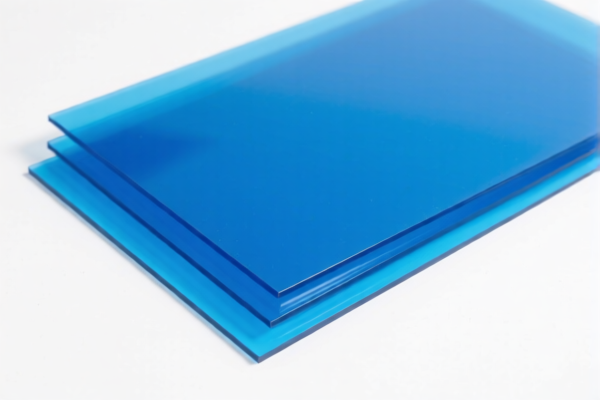
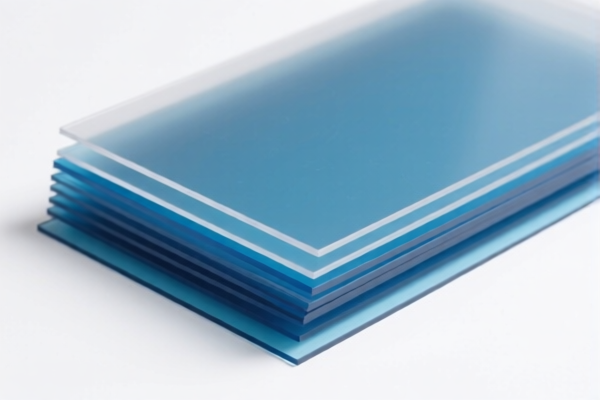

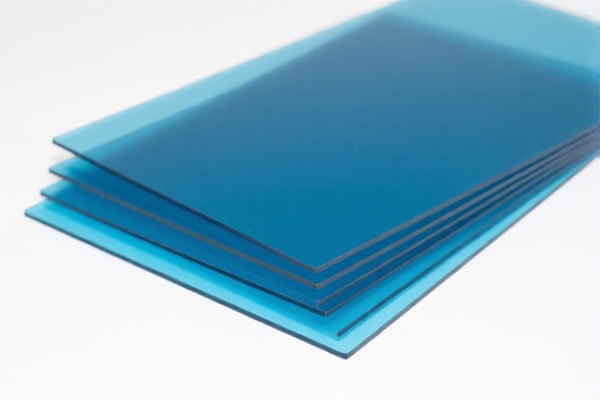
AI Analysis
⚡ Silicon Carbide (SiC) Wafer Physical Analysis Sheet
🌐 HS Code Reference & Customs Clearance Guide | 2026 Latest Tariff Analysis | Professional-Grade Compliance Strategy
📌 I. Product Definition & Classification: What Exactly is a "SiC Physical Analysis Sheet"?
Silicon Carbide (SiC) wafers are the next-generation semiconductor material, renowned for high-temperature, high-voltage, and high-frequency performance. The term "Physical Analysis Sheet" in this context typically refers to SiC wafers (often called "wafers" or "substrates") used for testing, characterization, or as blank substrates for device fabrication.
In international trade, these products are strictly classified under semiconductor devices or electronic components, NOT as general glass/labware.
⚠️ Critical Distinction:
- If the product is a bare SiC wafer (single crystal, polished) used for semiconductor manufacturing/testing → It falls under 8541 (Diodes, Transistors, Semiconductor Devices).
- If the product is a glass slide made of SiO2/Silica for general lab use → It falls under 7017 (Laboratory glassware).
- Crucial Point: Since the input explicitly states "Silicon Carbide", it is a semiconductor material, not generic lab glass. Therefore, it MUST be classified under HS 8541. Misclassifying as glass (7017) will lead to severe penalties and delays.
📦 II. HS Code Classification Details (2026 Latest Tariff Authority Match)
| HS Code | Product Description | Application Scenario | Key Classification Logic |
|---|---|---|---|
8541.59.00.40 |
Other semiconductor devices, including photodiodes and other photodetectors; wafers | SiC wafers, SiC substrates, blank wafers for analysis/testing | ✅ Best Match: "Wafer" form + SiC material = Semiconductor device component |
8541.10.00.40 |
Diodes, other than photodiodes; transistors; unmounted chips, grains, and wafers | Unmounted SiC wafers, raw semiconductor wafers | ✅ Alternative Match: "Unmounted wafers" under diode/category logic |
7017.90.50.00 |
Laboratory, medical, or pharmacy glassware: other | INCORRECT for SiC: Only applies if the item is actually silica glass, not SiC semiconductor | ❌ High Risk: Mismatched material (SiC ≠ Silica Glass) |
🔍 重点提醒 (Key Reminder):
- SiC (碳化硅) is a semiconductor, not glass (玻璃). Even if the shape is a "wafer" or "sheet", the material defines the HS Code.
-8541.59.00.40is the most accurate for "SiC Wafers" because it explicitly covers "wafers" in the semiconductor category.
-7017.90.50.00is included in the data due to a "logical inference" error in some automated systems that confuse "analysis sheet" with "glass slide". Avoid this code for SiC.
💰 III. 2026 Latest Tariff Rate Breakdown (Including Surcharges)
✅ Applicable Country: United States (US)
✅ Country of Origin: China (CN)
✅ Effective Date: November 10, 2025 (and onwards)
🎯 1. 8541.59.00.40 —— Silicon Carbide Wafers (Semiconductor Devices)
| Item | Content |
|---|---|
| Base Tariff | 0% (ad valorem) |
| Section 301 Tariff | +25% (USITC Footnote) |
| IEEPA Surcharge | +10% (对中国产品, effective Nov 10, 2025) |
| Total Effective Rate | 35% |
| Calculation | CIF Value × 35% |
| De Minimis Exemption | ❌ Not Eligible (deny_de_minimis) |
| Legal Basis Path | IEEPA:9903.01.25 → USITC:8541.59.00.40 → FOOTNOTE:301 |
📌 Explanation:
- Although the base tariff for semiconductors is 0%, Section 301 tariffs add 25%.
- The IEEPA 10% surcharge applies to all Chinese-origin semiconductor materials.
- Total: 35%. This is significantly lower than the 41.7% for glassware, but still high.
🎯 2. 8541.10.00.40 —— Unmounted Wafers (Diodes/Transistors Category)
| Item | Content |
|---|---|
| Base Tariff | 0% |
| Section 301 Tariff | +25% |
| IEEPA Surcharge | +10% |
| Total Effective Rate | 35% |
| Calculation | CIF Value × 35% |
| De Minimis Exemption | ❌ Not Eligible |
| Legal Basis Path | IEEPA:9903.01.25 → USITC:8541.10.00.40 → FOOTNOTE:301 |
📌 Note:
- This code is often used for "raw" or "unmounted" wafers. The tariff structure is identical to8541.59.00.40.
- Use this if the waiver is clearly "unmounted" and not yet processed into specific diode structures.
⚠️ 3. 7017.90.50.00 —— Laboratory Glassware (MISCLASSIFICATION ALERT)
| Item | Content |
|---|---|
| Base Tariff | 6.7% |
| Section 301 Tariff | +25% |
| IEEPA Surcharge | +10% |
| Total Effective Rate | 41.7% |
| Why This Appears in Data | Automated systems may misidentify "Analysis Sheet" as "Glass Slide" |
| Risk | Customs will reject this if material is proven SiC. You will face penalties + back taxes. |
🛠️ IV. Customs Clearance Practical Advice (Real-World Pitfall Guide)
✅ 1. Required Documentation Checklist (Non-Negotiable)
| Document | Mandatory? | Description |
|---|---|---|
| ✅ Material Certificate | ✔️ | Must explicitly state "Silicon Carbide (SiC)", not "Glass" or "Quartz" |
| ✅ Product Specification Sheet | ✔️ | Include diameter, thickness, orientation (e.g., 4H-SiC), and surface finish |
| ✅ High-Resolution Photos | ✔️ | Show wafer shape, labels, and any packaging |
| ✅ Commercial Invoice | ✔️ | Use precise description: "Silicon Carbide Semiconductor Wafer, for Analysis, Not Laboratory Glassware" |
| ✅ Packing List | ✔️ | Ensure no "glass" keywords appear |
| ✅ FCC/CE Reports (if applicable) | ✔️ | Not always required for raw wafers, but helpful for end-product certification |
📌 Pro Tip:
- Never use the word "Glass" or "Glassware" in your invoice or description. Use "Semiconductor Wafer", "Substrate", or "Crystal" instead.
- If customs asks, provide a Material Safety Data Sheet (MSDS) and Manufacturer’s Spec Sheet proving it is SiC.
✅ 2. Declaration Strategy (Key Mantra)
🔥 “Wafer = Semiconductor, Not Glass! Declare as 8541, Avoid 7017!”
| Scenario | Correct Declaration | Wrong Declaration |
|---|---|---|
| SiC Wafer for Testing | 8541.59.00.40 - "SiC Wafer" |
7017.90.50.00 - "Glass Slide" |
| Unmounted SiC Wafer | 8541.10.00.40 - "Unmounted Wafer" |
7017.90.50.00 - "Lab Glass" |
| SiC Wafer with Circuit | 8541.59.00.40 |
8541.10.00.40 (less accurate) |
📌 Warning:
- 7017.90.50.00 has a 41.7% tariff.
- 8541.59.00.40 has a 35% tariff.
- Savings: 6.7%. But more importantly, 7017 is the wrong HS Code. If caught, you face fraud penalties and import bans.
✅ 3. Special Handling Cases
| Case | Recommendation |
|---|---|
| Mixed Shipment | Separate SiC wafers from actual glassware. Do not bundle. |
| OEM Custom Wafer | Provide customer PO and design files. Declare as "Custom Semiconductor Wafer". |
| Small Sample (<$800) | Do NOT use De Minimis (Section 321). SiC wafers are restricted. Use Section 301 clearance. |
| End-User in Semiconductor Industry | Provide proof of end-use to justify semiconductor classification. |
🌍 V. Global Market Comparison (2026)
| Country/Region | Recommended HS Code | Tariff Rate | Certification | Notes |
|---|---|---|---|---|
| 🇺🇸 USA | 8541.59.00.40 |
35% (25% + 10%) | FCC/CE (if applicable) | High tariff due to Section 301 + IEEPA |
| 🇨🇳 China | 8541.59.00.40 |
0% | CCC (if applicable) | No surcharge |
| 🇪🇺 EU | 8541.59.00.40 |
0% | CE + RoHS | No surcharge |
| 🇯🇵 Japan | 8541.59.00.40 |
0% | PSE (if applicable) | No surcharge |
📌 Conclusion:
- USA is the only major market with significant surcharges for SiC wafers.
- China, EU, Japan have 0% base tariffs and no additional surcharges for SiC semiconductors.
- Strategy: If possible, transship or process SiC wafers in a third country (e.g., Vietnam, Malaysia) to avoid IEEPA/301 tariffs, though this requires careful compliance with Substantial Transformation rules.
📌 VI. Common Mistakes & Pitfalls (Lessons from Blood and Tears)
❌ Mistake 1: Declaring SiC Wafer as "Glass Slide" (7017)
👉 Consequence: Customs audit → Material test → Penalty + Back Taxes + Blacklist
❌ Mistake 2: Using "De Minimis" for SiC Wafers under $800
👉 Consequence: Seizure. SiC wafers are excluded from de minimis relief due to IEEPA restrictions.
❌ Mistake 3: Vague Description ("Analysis Sheet")
👉 Consequence: Customs may classify as generic glass or semiconductor, leading to uncertainty and delays.
✅ Correct Practice:
"Silicon Carbide (SiC) Semiconductor Wafer, 2-Inch, 4H Polytype, Polished, for Physical Analysis, Model XYZ, Origin: China"
🎯 VII. Conclusion: Precise Classification Saves Money and Time!
🎯 Remember the Mantra:
🔹 "SiC = Semiconductor, Not Glass!"
🔹 "Declare 8541, Avoid 7017!"
🔹 "35% Tariff in USA, 0% Elsewhere!"
📌 Pro Tip:
- If your SiC wafers are not made in China, you can avoid IEEPA 10% and possibly Section 301.
- Always request a Pre-Ruling from US Customs (CBP) before shipping high-value SiC wafers.
📣 Immediate Action Required:
📞 Contact your customs broker + Provide Spec Sheet + Confirm Material: SiC (Not Glass)
🚀 Clear Customs Smoothly, Reduce Costs, Expand Global Markets!
✨ Professional Clearance, Starting with Accurate Classification!
💼 Every Penny of Tariff Must Be Calculated Precisely!
Customer Reviews
About HS Code Classification
The Harmonized System (HS) is an internationally standardized nomenclature developed by the World Customs Organization (WCO) to classify traded products. Over 200 countries use the HS system as the basis for customs tariffs, trade statistics, and import/export regulations.
Each HS code follows a hierarchical structure:
- Chapter (2 digits) — Broad category of goods (e.g., Chapter 84: Machinery and Mechanical Appliances)
- Heading (4 digits) — More specific grouping within the chapter
- Subheading (6 digits) — Internationally standardized breakdown, used by all WCO member countries
- National subdivisions (8-10 digits) — Country-specific extensions for further classification, such as US HTSUS 10-digit codes
Correct HS code classification is essential for smooth customs clearance, accurate duty payment, and compliance with trade regulations. Misclassification can lead to customs delays, overpayment of duties, or penalties.
When importing from CN to US, the applicable tariff rates may include:
- Most-Favored-Nation (MFN) rate — The standard duty rate applied to WTO members
- General rate — Applied to countries without trade agreements
- Trade remedy duties — Additional tariffs such as Section 301 (anti-dumping), Section 232 (national security), or countervailing duties
The information provided on this page is for reference purposes only. For official classification, please consult with your local customs authority or a licensed customs broker.