Silicon Nitride Wafer
CN → US| HS Code | Tariff Rate | Origin | Destination | Doc |
|---|---|---|---|---|
| 8541100040 | 60.0% | CN | US | Official Doc |
| 8541590040 | 60.0% | CN | US | Official Doc |
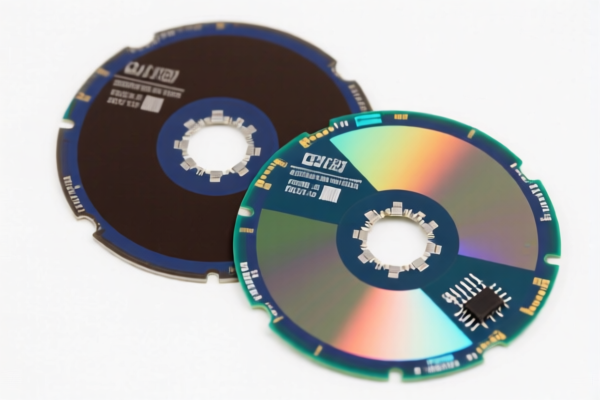
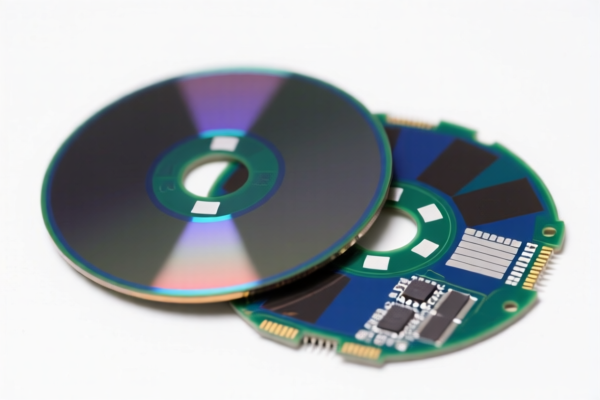
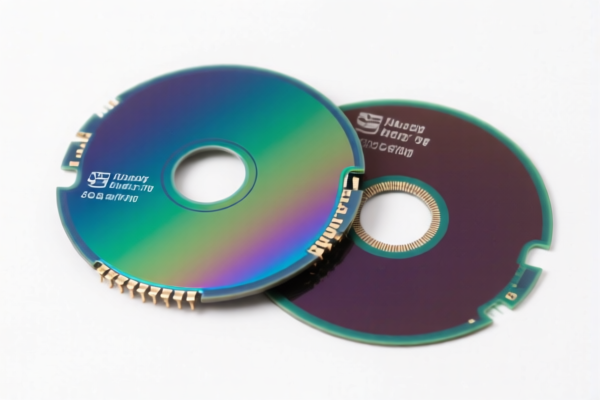
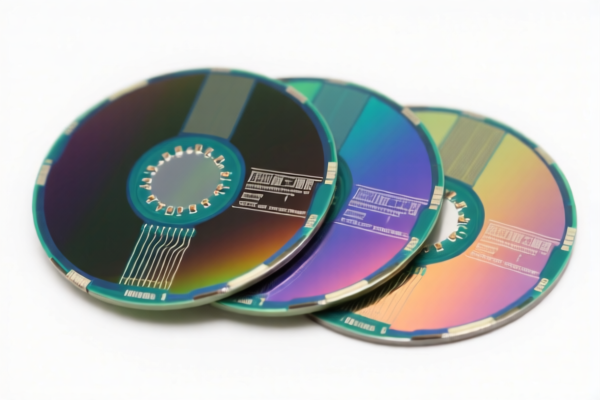
Product Images
AI Analysis
⚛️ Silicon Nitride Wafer: The High-Performance Ceramic Semiconductor | HS Code Deep Dive
🌐 HS Code Reference & Customs Clearance Guide | 2026 Latest Tariff Analysis | Professional Clearance Strategy
📌 I. Product Definition & Classification: What Exactly is a "Silicon Nitride Wafer"?
Silicon Nitride ($Si_3N_4$) is not just a simple silicon chip; it is an Advanced Ceramic Material known for extreme hardness, thermal stability, and electrical insulation. However, in the global trade context, its classification depends heavily on its form factor and intended end-use.
It is generally categorized into two distinct paths: 1. Technical/Ceramic Forms: Raw rods, sheets, or semi-finished substrates used in industrial machinery or laboratory equipment. 2. Semiconductor Forms: Thin, polished wafers used as substrates for power electronics (GaN-on-SiN), RF devices, or advanced packaging.
⚠️ Key Distinction:
- If it is a raw, unpolished, or semi-finished ceramic block/rod → It is a Ceramic Product.
- If it is a polished, thin substrate intended for chip manufacturing → It may be classified as a Semiconductor Component.
- If it is a refined chemical compound in sheet form (less common for wafers, but possible in specific chemical contexts) → It falls under Chemicals.
📦 II. HS Code Classification Details (2026 Latest Tariff Authority Mapping)
Based on the provided data, there are five potential HS Codes depending on the precise physical state and commercial intent of the Silicon Nitride Wafer.
| HS Code | Product Description | Application Scenario | Key Differentiator |
|---|---|---|---|
6909.12.00.00 |
Silicon Nitride Ceramics (Rod/Sheet Form) | Lab equipment, technical ceramics, raw ceramic substrates | ✅ Ceramic Material: Rod-shaped or sheet-like semi-finished products. |
6909.19.50.95 |
Other Silicon Nitride Ceramic Articles | Advanced ceramic components, unspecified shapes, semi-finished forms | ✅ Ceramic Material: Catch-all for advanced ceramics not specifically listed in 6909.12. |
2849.20.20.00 |
Refined Silicon Carbide/Nitride Compounds | Chemical-grade sheets, refined compound wafers, semi-processed chemical forms | ✅ Chemical Compound: Treated as a refined inorganic compound (sheet/thin form). |
8541.10.00.40 |
Semiconductor Wafers (Unassembled) | Power electronics substrates, RF device bases, bare semiconductor wafers | ✅ Semiconductor: If treated as an electronic component/substrate. |
8541.59.00.40 |
Semiconductor Wafers (Other) | Other semiconductor wafers, die-level substrates, advanced packaging bases | ✅ Semiconductor: Fits the definition of "wafers/dies" under semiconductor headings. |
🔍 Critical Note:
- The shift from 6909 (Ceramics) to 8541 (Semiconductors) is the most contentious area in customs clearance.
- 6909 is for the material itself as a ceramic.
- 8541 is for the electronic function of the wafer.
- Misclassification can lead to massive duty differences (see below).
💰 III. 2026 Latest Tariff Rate Breakdown (Including Surcharge & Policy Add-ons)
✅ Applicable Country: United States (US)
✅ Origin: China (CN)
✅ Effective Date: Post-2025 (Includes 301 & IEEPA surcharges)
🎯 1. Ceramic Classification (6909.12.00.00 & 6909.19.50.95)
These codes classify Silicon Nitride as a technical ceramic.
| Item | Details |
|---|---|
| Base Tariff | 4.0% (Ad Valorem) |
| Section 301 Surcharge | +25.0% (USITC Footnote 9903.88.01) |
| IEEPA Surcharge | +10.0% (Targeting Chinese/origin products, effective from Nov 10, 2025) |
| Total Tax Rate | 39.0% |
| Calculation | CIF Value × 39% |
| De Minimis Exemption? | ❌ No (Denied for Chinese-origin ceramic wafers under current surcharges) |
| Legal Path | IEEPA:9903.01.25 → IEEPA:9903.01.24 → USITC:6909.xxxx → FOOTNOTE:9903.88.01 |
📌 Explanation:
- Even though Silicon Nitride is a high-tech material, if classified as a ceramic component (6909), it suffers the 301 + IEEPA penalty stack.
- Total duty: 39%. High, but lower than the semiconductor classification below.
🎯 2. Chemical Compound Classification (2849.20.20.00)
If the wafer is considered a refined chemical compound rather than a finished ceramic or electronic component.
| Item | Details |
|---|---|
| Base Tariff | 0.5% (Ad Valorem) |
| Section 301 Surcharge | 0.0% (Exempted or not applicable in this specific chemical subheading) |
| IEEPA Surcharge | +10.0% (Applies to Chinese-origin chemicals) |
| Total Tax Rate | 10.5% |
| Calculation | CIF Value × 10.5% |
| De Minimis Exemption? | ❌ No (Generally denied for high-tech chemicals from CN) |
| Legal Path | IEEPA:9903.01.25 → USITC:2849.20.20.00 → FOOTNOTE:9903.88.01 (Note: 301 may not apply here) |
📌 Explanation:
- This is the lowest duty rate (10.5%).
- However, it is risky. CBP (Customs and Border Protection) may argue that a "wafer" is not a bulk chemical compound but a manufactured article.
- Suitable only if the product is sold as a raw chemical substrate rather than a precision-engineered electronic part.
🎯 3. Semiconductor Classification (8541.10.00.40 & 8541.59.00.40)
If the wafer is classified as a semiconductor device/substrate.
| Item | Details |
|---|---|
| Base Tariff | 0.0% (Ad Valorem) |
| Section 301 Surcharge | +50.0% (Aggressive surcharge on advanced semiconductors) |
| IEEPA Surcharge | +10.0% (Standard IEEPA penalty) |
| Total Tax Rate | 60.0% |
| Calculation | CIF Value × 60% |
| De Minimis Exemption? | ❌ No (Denied) |
| Legal Path | IEEPA:9901.25 → IEEPA:9903.01.24 → USITC:8541.xxxx → FOOTNOTE:9903.88.01 |
📌 Explanation:
- Despite a 0% base tariff, the 301 Surcharge is 50% for these specific semiconductor codes.
- Total duty: 60%.
- This is the highest duty rate. CBP is increasingly strict on classifying high-tech substrates under8541to capture higher revenues from "advanced" tech.
🛠️ IV. Customs Clearance Practical Advice (Battle-Tested Guide)
✅ 1. Documentation Checklist (Non-Negotiable)
| Document | Required | Purpose |
|---|---|---|
| ✅ Product Specification Sheet | ✔️ | Must detail: Material (Si₃N₄), Purity, Dimensions, Surface Finish, Thickness. |
| ✅ Technical Drawing | ✔️ | To prove if it’s a "raw ceramic" (6909) or "precision semiconductor substrate" (8541). |
| ✅ End-Use Declaration | ✔️ | Crucial! If it’s for a lab furnace, use 6909. If for GaN chip manufacturing, 8541. |
| ✅ Certificate of Analysis (CoA) | ✔️ | To prove chemical composition (supports 2849 argument if needed). |
| ✅ Commercial Invoice | ✔️ | Clear description: "Silicon Nitride Ceramic Substrate" vs "Semiconductor Wafer". |
| ✅ Original Packing List | ✔️ | Prevents "missing package" flags. |
✅ 2. Declaration Strategy (Key Mnemonic)
🔥 "Form Follows Function: Ceramic = 39%, Chemical = 10.5%, Semi = 60%!"
| Scenario | Recommended HS Code | Duty Rate | Why? |
|---|---|---|---|
| Lab/Industrial Use (Rods, Plates, Non-Electronic) |
6909.12.00.00or 6909.19.50.95 |
39.0% | Safest "Ceramic" classification. Lower risk than 8541. |
| Raw Chemical Substrate (Unpolished, Bulk Chemical Grade) |
2849.20.20.00 |
10.5% | Lowest Duty, but high risk of reclassification by CBP. Only use if physically rough/unpolished. |
| High-End Electronics (Polished, For GaN/SiC Chips) |
8541.10.00.40or 8541.59.00.40 |
60.0% | Highest Duty. Only declare if functionally indispensable as an electronic component. |
📌 Pro Tip:
- If the wafer is polished to optical standards and sold to semiconductor fabs, CBP will likely push for 8541 (60%).
- If the wafer is used for heating elements, crucibles, or structural ceramic parts, insist on 6909 (39%).
- Avoid 2849 unless the product is genuinely a chemical compound sheet, not a precision ceramic part.
✅ 3. Special Case Handling
| Situation | Strategy |
|---|---|
| OEM Custom Wafers | Provide customer order + design specs. If the customer is a semiconductor company, expect 8541 classification. |
| Hybrid Use | If the wafer can be used for both labs and electronics, argue for 6909 (Ceramic) as it is the broader "material" definition. |
| Value-Added Processing | If you add electrodes, packaging, or testing, it moves further into 8541. Keep it "bare" for 6909/2849. |
| Pre-Ruling (Advance Ruling) | Highly Recommended. Apply for an HS Code binding ruling from CBP before shipping to lock in the 39% rate vs. 60% rate. |
🌍 V. Global Market Comparison (2026 Overview)
| Country/Region | Recommended HS Code | Estimated Duty | Certification Req. | Note |
|---|---|---|---|---|
| 🇺🇸 USA | 6909.12.00.00 |
39.0% (301+IEEPA) | N/A | Avoid 8541 (60%) unless necessary. |
| 🇨🇳 China | 6909.12.00.00 |
Low/Moderate | CCC (if applicable) | Domestic trade benefits from lower rates. |
| 🇪🇺 EU | 6909.19.50.95 |
~6-9% | CE | No Section 301 equivalent. Lower risk. |
| 🇯🇵 Japan | 6909.19.50.95 |
~5-8% | PSE (if electronic) | Focus on technical ceramic classification. |
📌 Conclusion:
- The US market is the most punitive for Silicon Nitride wafers due to the 301 and IEEPA surcharges.
- European and Asian markets are more lenient, typically classifying them as technical ceramics with standard duties (5-10%).
- Strategy for US Imports: Fight for 6909 (39%) over 8541 (60%). Document the "non-electronic" or "structural" aspect of the wafer heavily.
📌 VI. Common Errors & Pitfalls (Lessons Learned)
❌ Mistake 1: Calling it a "Semiconductor Wafer" to get 0% base duty.
👉 Result: CBP applies 50% 301 surcharge → Total 60%. You paid more because you used the wrong technical term.
❌ Mistake 2: Declaring it as "Ceramic" when it’s clearly a polished electronic substrate.
👉 Result: CBP reclassifies to 8541 anyway + penalties + back taxes. Lies in description = Big Problems.
❌ Mistake 3: Ignoring the IEEPA 10% Surcharge.
👉 Result: Underpayment by 10% on all codes. Always include IEEPA in your cost calculation.
✅ Correct Approach:
"Silicon Nitride Technical Ceramic Substrate, Polished, for Industrial Heating Application, Model XYZ, Material Si₃N₄, 99.9% Purity"
🎯 VII. Conclusion: Precision in Classification Saves Millions!
🎯 Remember the Mantra:
🔹 "Ceramic 39, Chemical 10.5, Semi 60. Don't call it a chip if it's a plate!"
🔹 "HS Code is King. 21% difference (39% vs 60%) is the price of wrong labeling."
📌 Pro Tip:
If your Silicon Nitride Wafer is originally from Vietnam, Mexico, or Thailand, you MAY be exempt from the IEEPA/301 surcharges.
Recommendation: Apply for a Pre-Liminary Ruling with CBP to lock in the 6909 (39%) classification and avoid the 8541 (60%) trap.
📣 Immediate Action:
📞 Contact a Licensed Customs Broker
📄 Submit Product Specs & Intended Use Statement
🚀 Secure Your 39% Rate, Avoid the 60% Trap!
✨ Professional Clearance Starts with Accurate Classification!
💼 Your Margins Depend on the Digits!
Customer Reviews
About HS Code Classification
The Harmonized System (HS) is an internationally standardized nomenclature developed by the World Customs Organization (WCO) to classify traded products. Over 200 countries use the HS system as the basis for customs tariffs, trade statistics, and import/export regulations.
Each HS code follows a hierarchical structure:
- Chapter (2 digits) — Broad category of goods (e.g., Chapter 84: Machinery and Mechanical Appliances)
- Heading (4 digits) — More specific grouping within the chapter
- Subheading (6 digits) — Internationally standardized breakdown, used by all WCO member countries
- National subdivisions (8-10 digits) — Country-specific extensions for further classification, such as US HTSUS 10-digit codes
Correct HS code classification is essential for smooth customs clearance, accurate duty payment, and compliance with trade regulations. Misclassification can lead to customs delays, overpayment of duties, or penalties.
When importing from CN to US, the applicable tariff rates may include:
- Most-Favored-Nation (MFN) rate — The standard duty rate applied to WTO members
- General rate — Applied to countries without trade agreements
- Trade remedy duties — Additional tariffs such as Section 301 (anti-dumping), Section 232 (national security), or countervailing duties
The information provided on this page is for reference purposes only. For official classification, please consult with your local customs authority or a licensed customs broker.