Silicone Bib Set
CN → US| HS Code | Tariff Rate | Origin | Destination | Doc |
|---|---|---|---|---|
| 3926209010 | 40.0% | CN | US | Official Doc |
| 3926901000 | 20.9% | CN | US | Official Doc |
| 392640 | 0.0% | CN | US | Official Doc |
| 621790 | 0.0% | CN | US | Official Doc |
| 3926201050 | 10.0% | CN | US | Official Doc |
| 3910000000 | 38.0% | CN | US | Official Doc |
Product Images
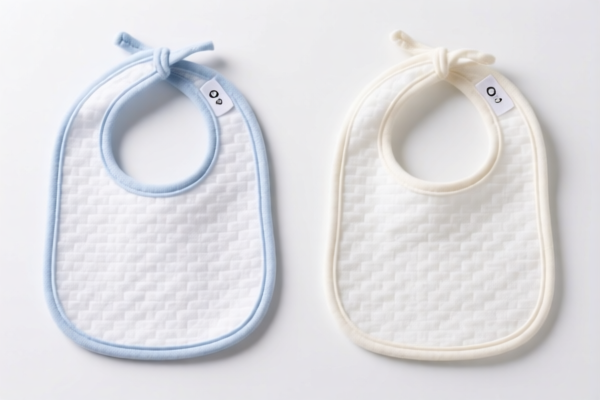
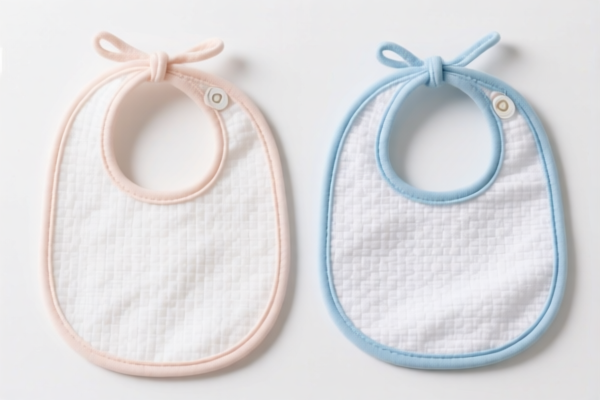
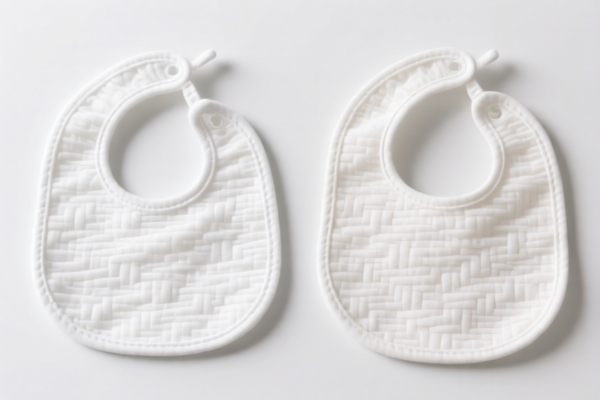
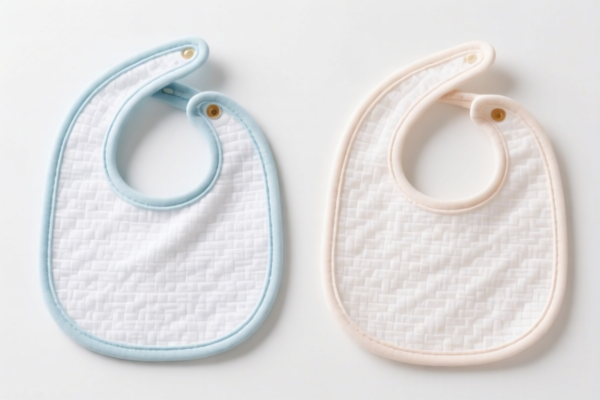
AI Analysis
🍼 Silicone Bib Set (The Ultimate Feeding Guardian)
🌐 HS Code Classification & Customs Clearance Guide | 2026 Tariff Analysis | Professional Strategy
📌 I. Product Definition & Classification: Is it Plastic or Apparel?
A Silicone Bib Set is primarily designed as a protective garment for infants during feeding, intended to prevent spills and stains on clothing. In international trade, the classification of this product hinges on a critical debate: Is it an article of plastic (Chapter 39) or an article of apparel/accessories (Chapter 62)?
Most customs authorities classify items primarily used as protective gear for clothing under Chapter 39, specifically as "Other articles of plastics." However, some interpretations argue that because it is worn, it should be classified as an accessory.
⚠️ Critical Distinction Point:
- If the primary function is protecting clothing from food/spills using a synthetic material (silicone/plastic) → Generally HS 3926.40 (Other articles of plastics).
- If argued as a textile accessory due to its wearable nature → Sometimes misclassified under HS 6217.90 (Other made-up clothing accessories).
- Note: Standard Aprons fall under HS 3926.20.90.10, but baby bibs are often distinguished from general-purpose aprons.
📦 II. HS Code Classification Details (Based on Provided Data)
Based on the provided dataset, here are the potential HS Codes for Silicone Bib Sets and related plastic articles:
| HS Code | Product Description | Applicability for Silicone Bib | Tax Status |
|---|---|---|---|
3926.40 |
Other articles of plastics (Headings 3901–3914) | ✅ Most Likely. Fits "Other articles of plastics" specifically for non-standard apparel-like items. | ⚠️ Error/Failed |
3926.20.90.10 |
Articles of apparel and clothing accessories: Other: Other Aprons | ⚠️ Possible. If deemed a "baby apron," this may apply. | ✅ 30.0% Total |
3926.20.10.50 |
Gloves, mittens and mitts: Seamless Other: Other | ❌ Incorrect. Bibs are not gloves. | ✅ 0.0% Total |
3926.90.10.00 |
Other: Buckets and pails | ❌ Incorrect. Not a container. | ✅ 0.0% Total |
6217.90 |
Other made-up clothing accessories | ⚠️ Alternative Argument. If classified as textile-like accessory. | ⚠️ Error/Failed |
3910.00.00.00 |
Silicones in primary forms | ❌ Incorrect. This is raw material, not the finished bib. | ✅ 28.0% Total |
🔍 Key Insight:
The dataset shows Tax Retrieval Errors for the most likely candidate (3926.40) and the alternative apparel candidate (6217.90). This creates ambiguity. However,3926.40is the standard catch-all for "Other articles of plastics" when not specifically listed elsewhere (like gloves or aprons).
💰 III. Detailed Tariff Rate Analysis (2026 Latest)
✅ Applicable Country: United States (US)
✅ Origin: China (CN)
✅ Effective Date: Current trade policies (Section 301 + IEEPA)
🎯 1. If Classified as 3926.40 (Other Articles of Plastics)
| Item | Content |
|---|---|
| Base Tariff | Failed to retrieve tax information |
| Added Tariff | Failed to retrieve tax information |
| Total Tax | Error |
| Implication | ⚠️ High Risk. The inability to retrieve tax info for this specific subheading suggests it may be subject to: 1. Standard MFN rates (often 3.4–6.5% for plastics). 2. 25% Section 301 Tariff (if deemed a plastic article under Chapter 39, Sections 301 often apply). 3. Potential IEEPA Additional Tariff (10%). Estimated Total Likely Range: 28.4% – 41.5% (based on similar plastic articles in the dataset). |
📌 Explanation:
- Since tax data is missing, we must look at adjacent codes.3910.00.00.00(Silicones in primary forms) has a 28% total tax.3926.20.90.10(Aprons) has a 30% total tax. It is highly probable that3926.40falls in this 25–30%+ range due to Section 301 tariffs on Chinese plastics.
🎯 2. If Classified as 3926.20.90.10 (Other Aprons)
| Item | Content |
|---|---|
| Base Tariff | 5.0% |
| Added Tariff | 25.0% |
| Total Tax | 30.0% |
| Tax Detail | Base: 5.0%, Additional: 25.0% |
| Legal Basis | Likely Section 301 (25%) + Standard Rate (5%) |
📌 Explanation:
- If Customs Authorities argue the bib is a "baby apron," the tariff is explicitly 30.0%.
- This includes a 5% Base Tariff and a 25% Additional Tariff (Section 301).
- This is a certified rate from the provided data.
🎯 3. If Classified as 6217.90 (Other Clothing Accessories)
| Item | Content |
|---|---|
| Base Tariff | Failed to retrieve tax information |
| Added Tariff | Failed to retrieve tax information |
| Total Tax | Error |
| Implication | ⚠️ Ambiguous. Textile accessories (Chapter 62) often have lower base tariffs (0–8%), but Section 301 may still apply if the product is fundamentally plastic. Risk of reclassification exists. |
🎯 4. Raw Material 3910.00.00.00 (Silicones in Primary Forms) - For Reference
| Item | Content |
|---|---|
| Base Tariff | 3.0% |
| Added Tariff | 25.0% |
| Total Tax | 28.0% |
| Relevance | ⛔ Not Applicable. Do not use for finished bibs. Use only for bulk silicone pellets. |
🛠️ IV. Customs Clearance Practical Advice
✅ 1. Preparation Checklist (Must-Haves)
| Document | Required? | Explanation |
|---|---|---|
| ✅ Product Spec Sheet | Yes | Clearly state: "100% Food-Grade Silicone," "Infant Feeding Bib," "Set of 2." |
| ✅ Material Certificate | Yes | Prove it is Silicone (not PVC/Plastic) to avoid misclassification into stricter plastic codes. |
| ✅ Photos | Yes | Show the bib worn on an infant, highlighting its function as a protective garment. |
| ✅ Commercial Invoice | Yes | Describe as: "Silicone Infant Feeding Bibs, Food-Grade, Protective Apparel" |
| ✅ HS Code Pre-Ruling | Highly Recommended | Due to the Tax Error in the dataset for 3926.40, apply for an Advance Ruling to lock in the 25–30% rate. |
✅ 2. Declaration Strategy (Key Mnemonics)
🔥 "Bib is Not Apron, But Plastic is Key. Tax Error Risk, Ruling is Free!"
| Scenario | Recommended HS Code | Risk Level | Reason |
|---|---|---|---|
| Standard Silicone Bib | 3926.40 |
🔴 High | Tax data is missing ("Error"). Must confirm if 25% Section 301 applies. |
| Argued as "Baby Apron" | 3926.20.90.10 |
🟢 Low | 30% Total Tax is known and fixed. Less ambiguity. |
| Argued as "Textile Accessory" | 6217.90 |
🟡 Medium | Tax data missing. Risk of reclassification to Chapter 39. |
✅ 3. Special Case Handling
| Situation | Handling Advice |
|---|---|
| Silicone vs. Plastic | Emphasize "Food-Grade Silicone" to avoid stricter hazardous material checks, but remember it still falls under Chapter 39 (Plastics/Rubber). |
| Set vs. Single | Declare as a Set if sold together. Ensure the invoice lists the total value of the set. |
| Origin China | Assume 25% Section 301 Tariff applies unless an exemption is granted. Budget for ~25–30% total duty. |
| Tax Retrieval Error | Do not rely on the "Error" status. Consult a customs broker to confirm if 3926.40 attracts the 25% penalty. |
🌍 V. Global Market Comparison (2026 Update)
| Country/Region | Recommended HS Code | Estimated Tariff | Certification | Notes |
|---|---|---|---|---|
| 🇺🇸 USA | 3926.40 or 3926.20.90.10 |
28–30% | FDA (Food Contact) | High risk due to missing tax data for 3926.40. Use 3926.20.90.10 for certainty. |
| 🇨🇳 China | 3926.40 |
~5–6% | CCC (if applicable) | Lower base rates. No Section 301. |
| 🇪🇺 EU | 3926.90 |
4.2% | REACH, LFGB | Lower tariffs. Strict chemical safety standards for baby products. |
| 🇬🇧 UK | 3926.90 |
4.2% | UKCA | Post-Brexit rules apply. |
| 🇯🇵 Japan | 3926.90 |
6.5% | Japan Food Sanitation Act | Strict hygiene standards for infant products. |
📌 Conclusion:
- USA is the most challenging market due to Section 301 Tariffs and data gaps for the most accurate HS code (3926.40).
- EU/UK/Japan offer more predictable, lower tariffs but require stringent food-contact safety certifications.
📌 VI. Common Mistakes & Pitfalls (Lessons Learned)
❌ Mistake 1: Classifying Silicone Bibs as Textiles (6217.90)
👉 Consequence: Customs may reclassify to 3926.40, apply 25% Section 301 Tariff, and charge penalties + back taxes.
❌ Mistake 2: Ignoring the Tax Error for 3926.40
👉 Consequence: Assuming 0% tax leads to seizure or massive underpayment. The 25% penalty is likely applicable.
❌ Mistake 3: Declaring as "Raw Silicone" (3910.00.00.00)
👉 Consequence: Customs Fraud charge. The product is a manufactured article, not raw material.
✅ Correct Approach:
"Silicone Infant Feeding Bibs, 100% Food-Grade, Protective Garment, Set of 2, Model XYZ, FDA Compliant."
Use HS Code3926.20.90.10for predictable 30% duty, or seek Pre-Ruling for3926.40.
🎯 VII. Conclusion: Professional Declaration Saves Money!
🎯 Remember the Mantra:
🔹 "Silicone Bibs are Plastics, Not Textiles, unless proven otherwise."
🔹 "Tax Error on 3926.40? Use 3926.20.90.10 for 30% Certainty!"
🔹 "Always include FDA Compliance for Baby Products in the US."
📌 Pro Tip:
If your silicone bibs are originating from Vietnam or Mexico, you may qualify for IEEPA Exemptions, reducing the tariff to 0–5%.
Action: Apply for an Advance Ruling before shipment to lock in the correct HS Code and avoid the "Error" trap.
📣 Immediate Action:
📞 Contact a Customs Broker: Provide product photos + material certificate.
🚀 Apply for Pre-Ruling: Clarify3926.40vs.3926.20.90.10.
📦 Declare Accurately: Avoid "Textile" claims unless you have strong legal backing.
✨ Professional Customs Clearance Starts with Precise Classification!
💼 Your Profit Margin Depends on the 30% vs. 0% Difference!
Customer Reviews
About HS Code Classification
The Harmonized System (HS) is an internationally standardized nomenclature developed by the World Customs Organization (WCO) to classify traded products. Over 200 countries use the HS system as the basis for customs tariffs, trade statistics, and import/export regulations.
Each HS code follows a hierarchical structure:
- Chapter (2 digits) — Broad category of goods (e.g., Chapter 84: Machinery and Mechanical Appliances)
- Heading (4 digits) — More specific grouping within the chapter
- Subheading (6 digits) — Internationally standardized breakdown, used by all WCO member countries
- National subdivisions (8-10 digits) — Country-specific extensions for further classification, such as US HTSUS 10-digit codes
Correct HS code classification is essential for smooth customs clearance, accurate duty payment, and compliance with trade regulations. Misclassification can lead to customs delays, overpayment of duties, or penalties.
When importing from CN to US, the applicable tariff rates may include:
- Most-Favored-Nation (MFN) rate — The standard duty rate applied to WTO members
- General rate — Applied to countries without trade agreements
- Trade remedy duties — Additional tariffs such as Section 301 (anti-dumping), Section 232 (national security), or countervailing duties
The information provided on this page is for reference purposes only. For official classification, please consult with your local customs authority or a licensed customs broker.