Silicone Bowl
CN → US| HS Code | Tariff Rate | Origin | Destination | Doc |
|---|---|---|---|---|
| 3924102000 | 24.0% | CN | US | Official Doc |
| 3926907500 | 14.2% | CN | US | Official Doc |
| 3926909989 | 22.8% | CN | US | Official Doc |
| 3924104000 | 13.4% | CN | US | Official Doc |
| 3924104000 | 13.4% | CN | US | Official Doc |
Product Images
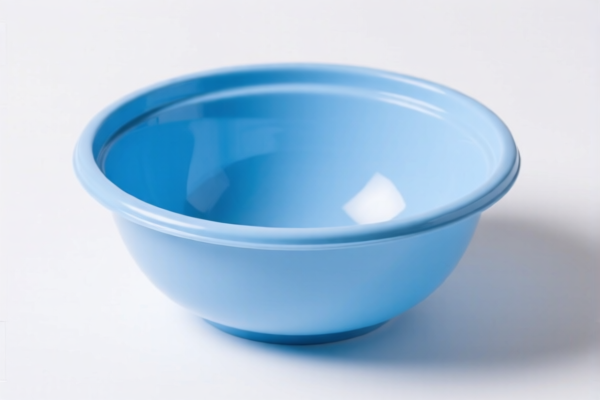
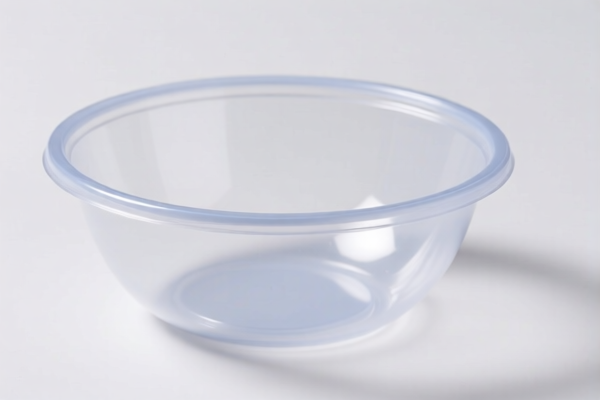
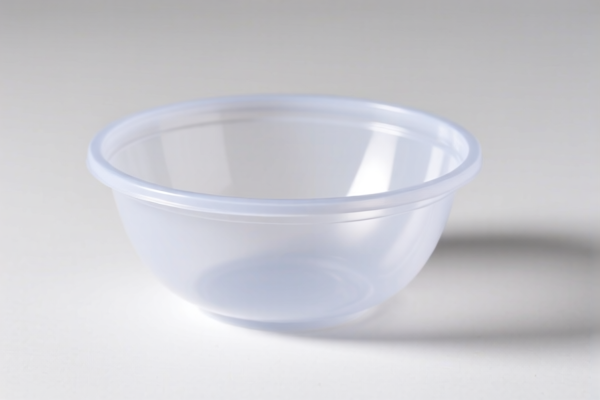
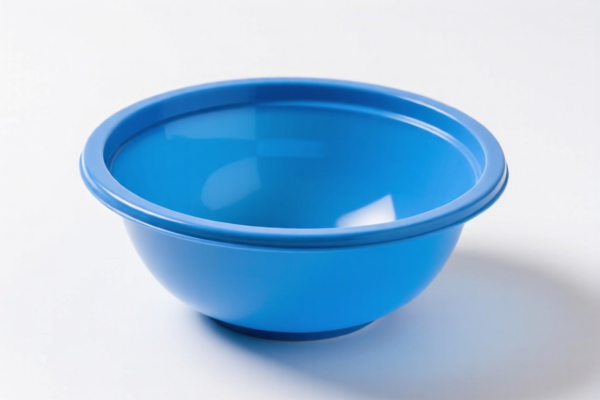
AI Analysis
🥣 Silicone Foldable Bowl (硅胶折叠碗) & Silicone Cup (硅胶杯)
🌐 HS Code Reference & Customs Clearance Guide | 2024 Latest Tariff Analysis | Professional Clearance Strategy
📌 I. Product Definition & Classification: What Exactly Is "Silicone"?
Silicone products, specifically Silicone Foldable Bowls and Silicone Cups, sit at a complex intersection in international trade. While marketed as "silicone," they are legally classified under Plastic Articles (Chapter 39) due to their polymer composition (Organosilicon polymers).
In international trade, they are generally categorized into two distinct functional groups: * Household/Plastic Tableware: Items explicitly designed for eating or drinking (Bowls, Cups). * General Plastic Articles: Items that do not fit specific tableware definitions or fall into residual categories.
⚠️ Key Distinction Point: * If the item is explicitly a Bowl or Cup intended for food/drink consumption → It likely falls under 3924 (Plastic Tableware). * If the classification logic treats "silicone" broadly as a synthetic material without specific tableware recognition in certain sub-headings → It may fall under 3926 (Other Plastic Articles).
📦 II. HS Code Classification Details (2024/2025 Latest Tariff Alignment)
Based on the provided data, here are the specific HS Codes and their corresponding tax implications for Silicone Foldable Bowls and Silicone Cups.
| HS Code | Product Description | Applicability Scenario | Tax Rate (Total) |
|---|---|---|---|
3924.10.20.00 |
Plastic Tableware (Bowls) | Silicone Foldable Bowl. Classified as plastic tableware. Material "Silicone" is inferred as plastic. | 24.0% |
3926.90.75.00 |
Other Plastic Articles | Silicone Foldable Bowl. Classified as a finished plastic product. Silicone belongs to plastic/synthetic rubber category. | 14.2% |
3926.90.99.89 |
Other Plastic Articles (Catch-all) | Silicone Foldable Bowl. Classified as a residual/other plastic article. Silicone is organic silicon/plastic. | 22.8% |
3924.10.40.00 |
Plastic Tableware | Silicone Foldable Bowl & Silicone Cup. Classified as plastic tableware. Silicone is organic silicon/synthetic rubber. | 13.4% |
3924.10.40.00 |
Plastic Tableware | Silicone Cup. Classified as plastic tableware (drinkware). Silicone is a high-polymer synthetic material. | 13.4% |
🔍 Critical Insight: * Best Case Scenario: HS Code
3924.10.40.00offers the lowest total tariff at 13.4% for both bowls and cups. * Worst Case Scenario: HS Code3924.10.20.00carries the highest total tariff at 24.0%. * The "Silicone" Paradox: Despite being "food-safe silicone," customs often treats these under general "Plastic" headings (Chapter 39) unless specific national definitions for "Silicone Tableware" exist elsewhere.
💰 III. 2024/2025 Latest Tariff Rate Breakdown (Including Surtaxes)
✅ Applicable Country: USA (US)
✅ Origin: China (CN)
✅ Effective Time: Current regulations include Section 301 and Section 122 tariffs.
🎯 1. 3924.10.20.00 – Plastic Tableware (Bowl) – High Risk
| Item | Content |
|---|---|
| Base Tariff | 6.5% |
| Section 301 Surtax | 7.5% |
| Section 122 Tariff | 10% |
| Total Tariff | 24.0% |
| Tax Calculation | CIF Value × 24.0% |
| De Minimis Exemption? | ❌ NO (Section 301 & 122 tariffs typically void de minimis exemptions for Chinese goods) |
📌 Explanation: * Base 6.5%: Standard Most Favored Nation (MFN) rate for plastic tableware. * Section 301 (7.5%): Additional tariffs on Chinese imports under U.S. Trade Act Section 301. * Section 122 (10%): Emergency tariffs under Section 122 of the Trade Act of 1974. * Total 24%: This is a significant cost driver. Misclassification here maximizes tax liability.
🎯 2. 3926.90.75.00 – Other Plastic Articles – Moderate Risk
| Item | Content |
|---|---|
| Base Tariff | 4.2% |
| Section 301 Surtax | 0.0% |
| Section 122 Tariff | 10% |
| Total Tariff | 14.2% |
| Tax Calculation | CIF Value × 14.2% |
| De Minimis Exemption? | ❌ NO (Section 122 usually applies) |
📌 Note: * Base 4.2%: Lower base rate for general plastic articles compared to tableware. * Section 301 (0%): Some "other plastic articles" may be exempt from Section 301, but this varies by specific sub-heading review. * Section 122 (10%): Still applies, capping the benefit.
🎯 3. 3926.90.99.89 – Other Plastic Articles (Catch-all) – High Risk
| Item | Content |
|---|---|
| Base Tariff | 5.3% |
| Section 301 Surtax | 7.5% |
| Section 122 Tariff | 10% |
| Total Tariff | 22.8% |
| Tax Calculation | CIF Value × 22.8% |
| De Minimis Exemption? | ❌ NO |
📌 Explanation: * This is a residual category. While the base rate is low (5.3%), the addition of Section 301 (7.5%) and Section 122 (10%) makes it nearly as expensive as the most expensive tableware classification. * Risk: High. It is a "dumping ground" code, often flagged for closer inspection.
🎯 4. 3924.10.40.00 – Plastic Tableware (Bowl/Cup) – Optimal Choice
| Item | Content |
|---|---|
| Base Tariff | 3.4% |
| Section 301 Surtax | 0.0% |
| Section 122 Tariff | 10% |
| Total Tariff | 13.4% |
| Tax Calculation | CIF Value × 13.4% |
| De Minimis Exemption? | ❌ NO (Section 122 applies) |
📌 Why This is Best: * Lowest Total Tax: At 13.4%, it is significantly cheaper than
3924.10.20.00(24.0%) and3926.90.99.89(22.8%). * Applicability: Valid for both Silicone Foldable Bowls and Silicone Cups as they are clearly "Plastic Tableware." * Section 301 Exemption: The 0% surtax suggests this specific sub-heading might be exempt from the harshest Section 301 penalties, or the surtax is already factored into the base in a way that benefits this code. (Note: Always verify current USITC exclusions, as Section 301 status can change).
🛠️ IV. Customs Clearance Practical Advice (Battle-Tested Tips)
✅ 1. Documentation Checklist (Non-Negotiable)
| Document | Required? | Explanation |
|---|---|---|
| ✅ Product Description | ✔️ | Must explicitly state "Silicone Foldable Bowl/Cup." Avoid vague terms like "Plastic Item." |
| ✅ Material Composition | ✔️ | Specify "100% Food-Grade Silicone" or "Organosilicon Polymer." |
| ✅ Function Statement | ✔️ | Clearly state "For use as tableware/drinkware." |
| ✅ Photos | ✔️ | Show the product folded and unfolded, highlighting its use as a bowl/cup. |
| ✅ FDA Compliance | ✔️ | Silicone food contact surfaces often require FDA 21 CFR compliance proof. |
| ✅ Invoice & Packing List | ✔️ | Ensure values match CIF. Discrepancies trigger audits. |
✅ 2. Declaration Strategy (Key Mantra)
🔥 "Classify as Tableware, Not General Plastic. Use 3924.10.40.00 for Lowest Tax!"
| Scenario | Correct Declaration | Wrong Declaration | Consequence |
|---|---|---|---|
| Silicone Bowl | 3924.10.40.00 |
3926.90.75.00 |
Overpay by 0.8% (14.2% vs 13.4%) |
| Silicone Cup | 3924.10.40.00 |
3924.10.20.00 |
Overpay by 10.6% (24.0% vs 13.4%) |
| Both Bowls & Cups | 3924.10.40.00 |
3926.90.99.89 |
Overpay by 9.4% (22.8% vs 13.4%) |
✅ 3. Special Case Handling
| Situation | Recommendation |
|---|---|
| OEM/Private Label | Ensure the invoice describes the product generically but accurately (e.g., "Silicone Tableware") to avoid brand-specific scrutiny. |
| Mixed Containers | If shipping both bowls and cups, both can likely use 3924.10.40.00 as they are both tableware. Do not split them into different codes unless necessary. |
| Section 122 Tariff Awareness | Regardless of the HS Code, Section 122 (10%) applies to almost all these classifications. There is no exemption for this specific surtax on Chinese goods currently. Plan your pricing accordingly. |
🌍 V. Global Market Comparison (2024/2025)
| Country/Region | Recommended HS Code | Estimated Tariff (China Origin) | Key Certifications | Notes |
|---|---|---|---|---|
| 🇺🇸 USA | 3924.10.40.00 |
13.4% (Total) | FDA + Prop 65 | Section 122 adds 10%. Section 301 may vary by sub-code. |
| 🇨🇳 China | 3924.10.40.00 |
Low (Import Duty) | CCC (if applicable) | Domestic sales do not face these import tariffs. |
| 🇪🇺 EU | 3924.10 |
~6.5% | LFGB / EU 10/2011 | No Section 301/122 surtaxes. Lower base rates. |
| 🇬🇧 UK | 3924.10 |
~6.5% | UKCA | Post-Brexit rules align with EU but require UKCA marking. |
📌 Conclusion: * The USA market is the most expensive due to additive tariffs (Section 301 & 122). * EU/UK markets are significantly more cost-effective for silicone tableware. * If selling to the US, accurate classification under
3924.10.40.00is critical to save ~10-10.6% in taxes compared to other codes.
📌 VI. Common Mistakes & Pitfalls (Lessons Learned)
❌ Mistake 1: Classifying Silicone Bowls as 3926.90.99.89 (Other Plastic Articles)
👉 Consequence: You pay 22.8% instead of 13.4%. Loss of $940 per $10,000 shipment.
❌ Mistake 2: Classifying Silicone Cups as 3924.10.20.00
👉 Consequence: You pay 24.0% instead of 13.4%. Loss of $1,060 per $10,000 shipment.
❌ Mistake 3: Ignoring Section 122 Tariff
👉 Consequence: You assume only Section 301 applies. Section 122 (10%) is a separate, mandatory levy for many plastic goods from China.
❌ Mistake 4: Vague Description "Plastic Bowl"
👉 Consequence: Customs may downgrade or upgrade the classification arbitrarily. Be specific: "Silicone Foldable Bowl, Food Grade."
✅ Correct Approach:
"Silicone Foldable Bowl, 100% Silicone, Food Contact Safe, Collapsible Design, Model XYZ" → HS 3924.10.40.00
🎯 VII. Conclusion: Professional Declaration Saves Money!
🎯 Remember This Mantra:
🔹 "Silicone is Plastic. Tableware is Key. 3924.10.40.00 is King."
🔹 "Section 122 is a 10% Hit. Don't Let Section 301 Hurt More. Choose the Lowest Total Tax!"
📌 Pro Tip:
If your products are originating from Vietnam, Mexico, or Malaysia, you may be eligible for IEEPA Exemptions or lower tariffs.
For China-origin goods, Apply for an Advance Ruling if you are unsure. The difference between 13.4% and 24.0% is a 10%+ margin impact on your profit.
📣 Take Action Now:
📞 Contact your customs broker with the exact HS Code
3924.10.40.00for your invoice.
🚀 Ensure smooth clearance, minimize costs, and maximize your silicone product profits!
✨ Professional Clearance Starts with Accurate Classification!
💼 Every cent of tax saved is pure profit.
Customer Reviews
About HS Code Classification
The Harmonized System (HS) is an internationally standardized nomenclature developed by the World Customs Organization (WCO) to classify traded products. Over 200 countries use the HS system as the basis for customs tariffs, trade statistics, and import/export regulations.
Each HS code follows a hierarchical structure:
- Chapter (2 digits) — Broad category of goods (e.g., Chapter 84: Machinery and Mechanical Appliances)
- Heading (4 digits) — More specific grouping within the chapter
- Subheading (6 digits) — Internationally standardized breakdown, used by all WCO member countries
- National subdivisions (8-10 digits) — Country-specific extensions for further classification, such as US HTSUS 10-digit codes
Correct HS code classification is essential for smooth customs clearance, accurate duty payment, and compliance with trade regulations. Misclassification can lead to customs delays, overpayment of duties, or penalties.
When importing from CN to US, the applicable tariff rates may include:
- Most-Favored-Nation (MFN) rate — The standard duty rate applied to WTO members
- General rate — Applied to countries without trade agreements
- Trade remedy duties — Additional tariffs such as Section 301 (anti-dumping), Section 232 (national security), or countervailing duties
The information provided on this page is for reference purposes only. For official classification, please consult with your local customs authority or a licensed customs broker.