Silicone Cake Mold
CN → US| HS Code | Tariff Rate | Origin | Destination | Doc |
|---|---|---|---|---|
| 3926909905 | 22.8% | CN | US | Official Doc |
| 3924104000 | 13.4% | CN | US | Official Doc |
| 3926909905 | 22.8% | CN | US | Official Doc |
| 3924905650 | 20.9% | CN | US | Official Doc |
| 3926909989 | 22.8% | CN | US | Official Doc |
Product Images
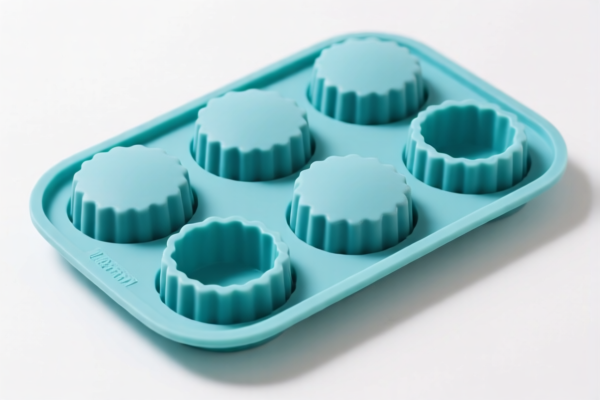
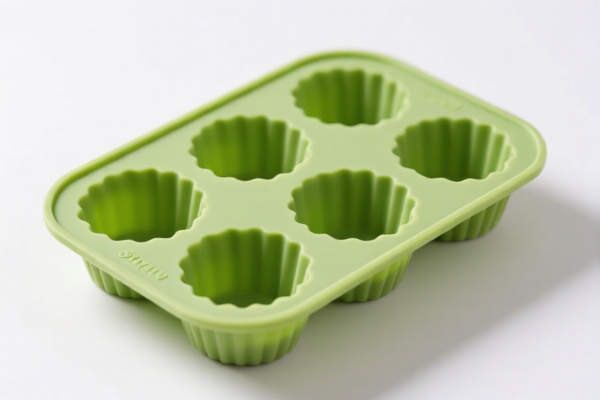
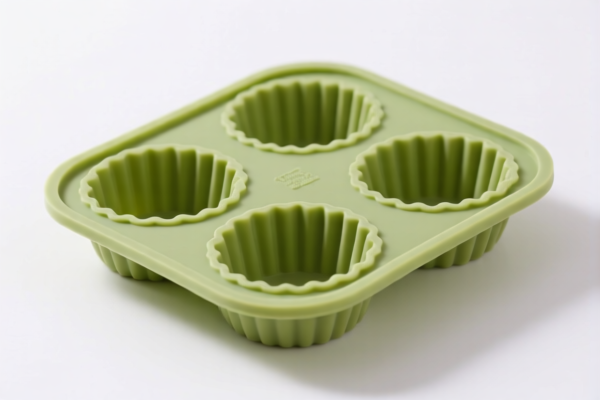

AI Analysis
🍰 Silicone Cake Mold (Silicone Baking Molds)
🌐 HS Code Reference & Customs Clearance Guide | 2026 Latest Tariff Analysis | Professional Entry Strategy
📌 1. Product Definition: What is a "Silicone Cake Mold"?
Silicone Cake Molds are kitchen utensils used for baking cakes, bread, and pastries. In international trade classification, they fall under Plastic Articles or Household Articles, depending on their specific material composition (food-grade silicone is often treated similarly to synthetic rubber or plastics) and usage.
Key Classification Logic: * Material: Silicone (chemically classified as a synthetic rubber/plastic polymer). * Function: Kitchenware/Cookware. * Conflict Check: There is no direct material conflict; silicone items are consistently grouped under Chapter 39 (Plastics) or Chapter 90 (Rubber) in some jurisdictions, but US HTS typically leans towards Chapter 39 for household plastic/silicone goods.
⚠️ Critical Distinction:
- If classified as a general plastic/synthetic article → Goes to 3926 (Other articles of plastics).
- If classified as a kitchen/household article → Goes to 3924 (Tableware, kitchenware, etc.).
📦 2. HS Code Classification Matrix (Based on Provided Data)
| HS Code | Product Description Summary | Total Tax Rate | Tax Breakdown Details |
|---|---|---|---|
| 3926.90.99.05 | General Plastic Article: Silicone mold treated as a general plastic product. No material conflict. | 22.8% | Base: 5.3% Section 301: 7.5% Section 122: 10% |
| 3924.10.40.00 | Kitchenware/Appliance: Specifically categorized as tableware/kitchenware (e.g., ice cream mold logic applies here for kitchen use). Material: Plastic/Synthetic Rubber. | 13.4% | Base: 3.4% Section 301: 0.0% Section 122: 10% |
| 3924.90.56.50 | Kitchen Utensil: Household item made of plastic-like/synthetic rubber. Falls under "Other" household articles. | 20.9% | Base: 3.4% Section 301: 7.5% Section 122: 10% |
| 3926.90.99.89 | Other Plastic Article: Not specifically listed elsewhere. General "Other" category for plastic/synthetic material molds. | 22.8% | Base: 5.3% Section 301: 7.5% Section 122: 10% |
🔍 Key Insight:
- The lowest tax rate (13.4%) is achieved by classifying the item under 3924.10.40.00 as a specific kitchenware item.
- Classifying it as a general "plastic article" (3926) results in significantly higher duties (22.8%).
💰 3. Detailed Tariff Analysis (2026 US Market)
✅ Applicable Country: United States (US)
✅ Origin: China (CN)
✅ Key Tax Components: Base Duty + Section 301 (7.5%) + Section 122 (10%)
🎯 Option A: 3926.90.99.05 / 3926.90.99.89 (General Plastic Articles)
- Total Tax: 22.8%
- Breakdown:
- Base Duty: 5.3%
- Section 301 Tariff: +7.5% (High penalty for Chinese origin plastics)
- Section 122 Tariff: +10% (Additional levy)
- Legal Path:
USITC:3926.90.99.05→FOOTNOTE:301→FOOTNOTE:122 - Analysis: This classification treats the silicone mold as a generic "other plastic article." It is subject to the highest burden of tariffs among the provided options. Avoid this if a better fit exists.
🎯 Option B: 3924.10.40.00 (Specific Kitchenware)
- Total Tax: 13.4%
- Breakdown:
- Base Duty: 3.4%
- Section 301 Tariff: +0.0% (Crucial Advantage!)
- Section 122 Tariff: +10%
- Legal Path:
USITC:3924.10.40.00→FOOTNOTE:122 - Analysis: This is the cost-effective choice. By proving the item is specifically designed as kitchen/tableware (e.g., ice cream mold, cake mold), it escapes the heavy Section 301 duty. Strongly Recommended.
🎯 Option C: 3924.90.56.50 (Other Household Articles)
- Total Tax: 20.9%
- Breakdown:
- Base Duty: 3.4%
- Section 301 Tariff: +7.5%
- Section 122 Tariff: +10%
- Legal Path:
USITC:3924.90.56.50→FOOTNOTE:301→FOOTNOTE:122 - Analysis: A middle-ground option. While the base duty is low (3.4%), the Section 301 duty applies, raising the total cost. Only use if 3924.10.40.00 is rejected.
🛠️ 4. Customs Clearance Practical Advice
✅ 1. Documentation Checklist (Essential for Clearance)
| Document | Requirement | Note |
|---|---|---|
| Product Description | ✔️ Specific | Use "Silicone Cake Mold" or "Silicone Baking Pan," NOT just "Plastic Mold." |
| Material Declaration | ✔️ Food-Grade Silicone | Specify "100% Food-Grade Silicone" to support kitchenware classification (3924). |
| Function Proof | ✔️ Image/Video | Show the mold being used for baking/baking goods to prove it is kitchenware. |
| Commercial Invoice | ✔️ Precise | Value must match CIF. Clearly state HS Code 3924.10.40.00 if claiming 13.4%. |
| Origin Certificate | ✔️ COO | Required for US customs origin verification. |
✅ 2. Classification Strategy & "Pitfall" Avoidance
🔥 "Kitchenware First, Plastic Second!"
| Scenario | Recommended HS Code | Why? | Risk if Wrong |
|---|---|---|---|
| Cake/Baking Mold | 3924.10.40.00 | Best fit for kitchen use; avoids Section 301. | If classified as 3926 → Tax jumps to 22.8%. |
| Decorative Silicone Item | 3926.90.99.05 | If not used for food (e.g., purely decorative). | Higher tax; justifiable only if non-kitchen use. |
| Industrial Silicone Part | 3926.90.99.89 | Not for home/kitchen use. | Misdeclaring kitchenware as industrial leads to penalties. |
📌 Pro Tip:
To secure 3924.10.40.00, ensure your product photos and descriptions emphasize food contact and kitchen usage. If you label it as a "plastic mold for casting jewelry," it will likely fall under 3926 (22.8%).
✅ 3. Special Considerations
- Section 122 Tariff: Note that all options listed above include a 10% Section 122 tariff. This is an additional levy that applies to many goods from China. Even the "best" option (13.4%) still carries this cost.
- Section 301 Exemption: The key to saving money is avoiding the 7.5% Section 301 tariff. This is only possible under 3924.10.40.00 according to the provided data.
🌍 5. Global Market Comparison (2026 Outlook)
| Market | Recommended HS Code | Est. Duty (China Origin) | Key Requirement |
|---|---|---|---|
| 🇺🇸 USA | 3924.10.40.00 | 13.4% | Food-grade proof, Kitchenware definition |
| 🇺🇸 USA (Alt) | 3926.90.99.05 | 22.8% | General plastic article |
| 🇪🇺 EU | 3924.10.40.00* | ~6.5% | LFGB/FDA compliance for food contact |
| 🇨🇳 China | 3924.10.40.00 | 0% | N/A |
*Note: EU classification may vary slightly but generally aligns with kitchenware under 3924.
📌 Conclusion:
For US imports, 3924.10.40.00 is the optimal classification for Silicone Cake Molds, offering the lowest total tax (13.4%) by leveraging the kitchenware exemption from Section 301 duties.
📌 6. Common Errors & Pitfalls (Blood & Tears Lessons)
❌ Error 1: Classifying as "Plastic Mold" (3926)
👉 Result: Tax increases from 13.4% to 22.8%. Loss of ~9.4% profit.
❌ Error 2: Using vague terms like "Silicone Product"
👉 Result: Customs may audit and reclassify to a higher duty bracket.
❌ Error 3: Ignoring Section 122
👉 Result: Even with 301 exemption, forget that 10% Section 122 still applies. Don't calculate costs without it.
✅ Correct Declaration Example:
"Silicone Cake Mold, Food-Grade, 100% Silicone, For Baking Cakes, Model XYZ, Intended for Kitchen Use"
🎯 7. Final Recommendation
🎯 Action Plan:
1. Choose HS Code: 3924.10.40.00
2. Total Duty: 13.4% (3.4% Base + 10% Sec 122)
3. Documentation: Ensure product images clearly show baking/kitchen context.
4. Avoid: Do not use "Plastic" or "Industrial" in your description unless it truly is not for food.
💼 Cost Saving Tip:
By correctly classifying as Kitchenware (3924.10.40.00), you save 9.4% in total duties compared to general plastic classification. On a $10,000 shipment, that’s a $940 savings.
📣 Immediate Action:
📞 Verify with your customs broker that
3924.10.40.00is accepted for silicone (not just hard plastic) items in your specific port.
🚀 Ship smarter, pay less, profit more!
✨ Professional Customs Classification Saves Money!
💼 Don't let a 9.4% tax mistake ruin your margin!
Customer Reviews
About HS Code Classification
The Harmonized System (HS) is an internationally standardized nomenclature developed by the World Customs Organization (WCO) to classify traded products. Over 200 countries use the HS system as the basis for customs tariffs, trade statistics, and import/export regulations.
Each HS code follows a hierarchical structure:
- Chapter (2 digits) — Broad category of goods (e.g., Chapter 84: Machinery and Mechanical Appliances)
- Heading (4 digits) — More specific grouping within the chapter
- Subheading (6 digits) — Internationally standardized breakdown, used by all WCO member countries
- National subdivisions (8-10 digits) — Country-specific extensions for further classification, such as US HTSUS 10-digit codes
Correct HS code classification is essential for smooth customs clearance, accurate duty payment, and compliance with trade regulations. Misclassification can lead to customs delays, overpayment of duties, or penalties.
When importing from CN to US, the applicable tariff rates may include:
- Most-Favored-Nation (MFN) rate — The standard duty rate applied to WTO members
- General rate — Applied to countries without trade agreements
- Trade remedy duties — Additional tariffs such as Section 301 (anti-dumping), Section 232 (national security), or countervailing duties
The information provided on this page is for reference purposes only. For official classification, please consult with your local customs authority or a licensed customs broker.