Silicone Car Key Case
CN → US| HS Code | Tariff Rate | Origin | Destination | Doc |
|---|---|---|---|---|
| 8517130000 | 10.0% | CN | US | Official Doc |
| 4202399000 | 55.0% | CN | US | Official Doc |
| 8517790000 | 67.5% | CN | US | Official Doc |
| 4202929700 | 52.6% | CN | US | Official Doc |
| 4205001000 | 35.0% | CN | US | Official Doc |
Product Images
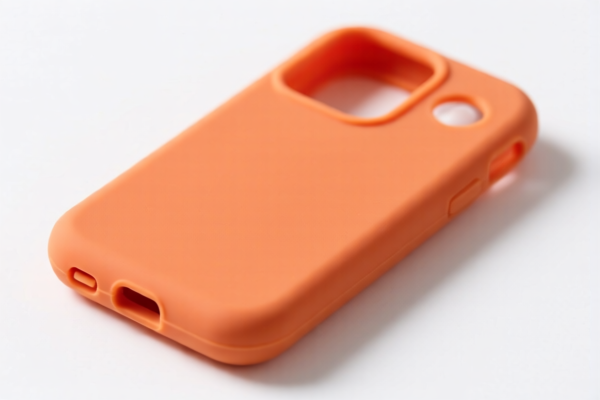
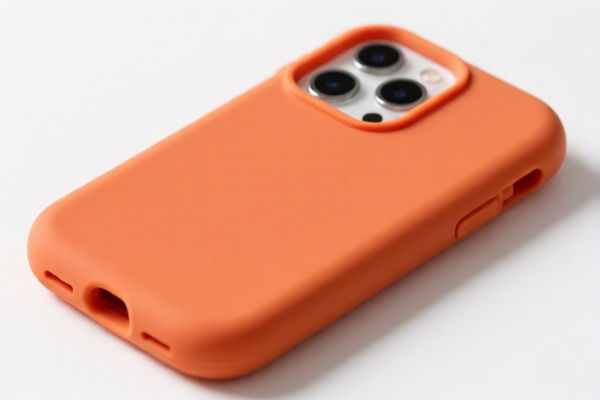
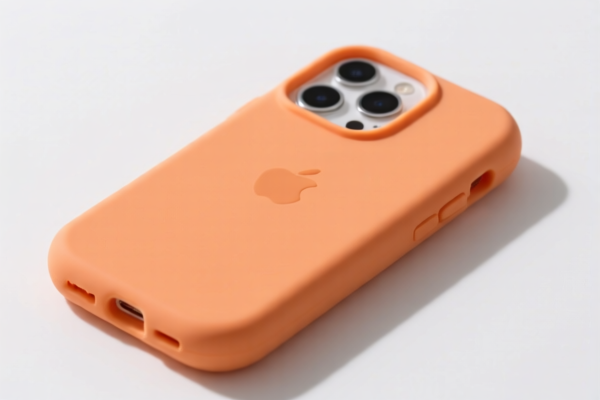
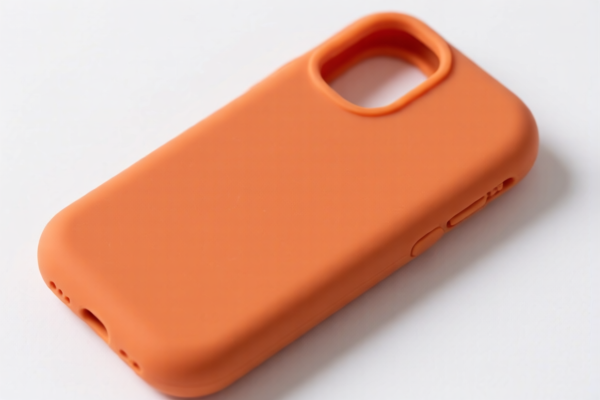
AI Analysis
🚗 Silicone Car Key Case: HS Code Classification & U.S. Customs Clearance Strategy (2026 Edition)
🌐 HS Code Reference & Customs Clearance Guide | 2026 Latest Tariff Analysis | Professional Clearance Strategy
📌 I. Product Definition & Classification: What is a "Silicone Car Key Case"?
A Silicone Car Key Case is a protective accessory designed to shield automotive keys from scratches, drops, and environmental wear. In international trade, the classification depends heavily on material composition and specific form factor.
While "silicone" is technically a synthetic rubber/elastomer, customs authorities often categorize these items based on whether they are viewed as plastic articles, leather goods (if mislabeled or mixed), or accessories for specific vehicles/electronics.
⚠️ Key Classification Dilemma:
- Is it a "plastic article" →4202or39?
- Is it a "vehicle part/accessory" →8708?
- Is it a "communication device accessory" →8517?
- Is it mistakenly classified as "leather"? →4205?
📦 II. HS Code Classification Details (Based on Provided Data)
Below are the five most likely HS Codes identified for "Silicone Car Key Case" or similar items, along with their tax implications. Note: One entry refers to "Leather Car Key Case," which is a common misclassification trap.
| HS Code | Product Description (Inferred) | Matching Logic & Summary | Total Tax Rate | Tax Breakdown |
|---|---|---|---|---|
| 8517.13.00.00 | Silicone Protective Cover | Logic: Inferred material is "silicone," function is "protective cover." Classified as a component/part. No material conflict. Fits a "catch-all" logic for parts. | 10.0% | Base Tariff: 0.0% Add-on Tariff: 0.0% Section 122 Tariff: 10% |
| 4202.39.90.00 | Silicone Protective Cover | Logic: Form is a "cover/case." Material inferred as plastic/synthetic (silicone). Fits under "other articles of sheeting of plastics or similar material." | 55.0% | Base Tariff: 20.0% Add-on Tariff: 25.0% Section 122 Tariff: 10% |
| 8517.79.00.00 | Silicone Protective Cover | Logic: Form is "protective cover" (part/component). Material "silicone" is common for communication device parts. Classified under "other parts" of communication apparatus. | 67.5% | Base Tariff: 0.0% Add-on Tariff: 7.5% Section 122 Tariff: 10% Steel/Aluminum/Copper Add-on: 50% |
| 4205.00.10.00 | Leather Car Key Case ⚠️ | Logic: Mistranslation/Misclassification Alert. Logic cites "leather" material. "Car key case" fits as "other leather articles." Do NOT use for silicone unless packaging is misleading. | 35.0% | Base Tariff: 0.0% Add-on Tariff: 25.0% Section 122 Tariff: 10% |
| 4202.92.97.00 | Silicone Protective Cover | Logic: Name "silicone" implies plastic/synthetic material. Form "cover" fits "similar containers." Material matches "made of plastic sheets." No obvious conflict. | 52.6% | Base Tariff: 17.6% Add-on Tariff: 25.0% Section 122 Tariff: 10% |
🔍 Critical Insight:
- 8517.13.00.00 offers the lowest tax rate (10%) but relies on a "parts/component" logic.
- 4202.39.90.00 and 4202.92.97.00 treat the item as a plastic article, resulting in higher taxes (52.6% - 55%) due to Section 301/122 tariffs.
- 8517.79.00.00 carries the highest risk (67.5%) due to potential steel/aluminum add-ons or strict "communication part" scrutiny.
- 4205.00.10.00 is for LEATHER cases. Using this for silicone may lead to misdeclaration penalties unless the product is actually leather or labeled as such.
💰 III. 2026 U.S. Customs Duty Breakdown & Policy Analysis
✅ Applicable Country: United States (US)
✅ Origin: China (CN) (Assumed based on tariff structure)
✅ Effective Date: November 10, 2025 (Current Policy)
🎯 1. 8517.13.00.00 – The "Low Tax" Option (Parts/Components)
| Item | Details |
|---|---|
| Base Tariff | 0% |
| USITC Add-on | 0% |
| IEEPA/122 Add-on | +10% (China-specific) |
| Total Duty | 10% |
| De Minimis Eligibility | ❌ No (Deny de minimis for Section 122/301 goods) |
| Legal Basis | IEEPA:9903.01.25 → USITC:8517.13.00.00 → FOOTNOTE:122 |
📌 Explanation:
This classification assumes the case is a part of a communication device (e.g., key fob with electronic components). If the key fob contains a battery or chip, this classification is more defensible. Lowest cost option.
🎯 2. 4202.39.90.00 & 4202.92.97.00 – The "Plastic Article" Route
| Item | Details |
|---|---|
| Base Tariff | 17.6% - 20% |
| USITC Add-on (301) | +25% |
| IEEPA/122 Add-on | +10% |
| Total Duty | 52.6% - 55% |
| De Minimis Eligibility | ❌ No |
| Legal Basis | IEEPA:9903.01.24 → USITC:4202.xx.xx → FOOTNOTE:301/122 |
📌 Explanation:
These codes treat the silicone case as a consumer accessory made of plastic/synthetic materials. This is the standard classification for non-electronic key covers. High cost option.
🎯 3. 8517.79.00.00 – The "Communication Part" Route (High Risk)
| Item | Details |
|---|---|
| Base Tariff | 0% |
| USITC Add-on | +7.5% |
| IEEPA/122 Add-on | +10% |
| Steel/Aluminum Add-on | +50% (If applicable materials are detected) |
| Total Duty | 67.5% (or higher) |
| De Minimis Eligibility | ❌ No |
📌 Explanation:
This is a high-risk classification. If CBP determines the case is not a "part" of a communication device but a general accessory, this classification may be rejected. The 50% steel/aluminum add-on is triggered if any metallic components are present.
🎯 4. 4205.00.10.00 – The "Leather" Misclassification (Audit Risk)
| Item | Details |
|---|---|
| Base Tariff | 0% |
| USITC Add-on | +25% |
| IEEPA/122 Add-on | +10% |
| Total Duty | 35% |
| Audit Risk | 🔴 HIGH |
📌 Explanation:
DO NOT USE for silicone products unless the product is actually leather or mislabeled. Customs audits frequently flag "silicone" products declared as "leather" to avoid higher plastic tariffs. Penalties can include fraud allegations.
🛠️ IV. Customs Clearance Practical Advice (Avoid Pitfalls)
✅ 1. Required Documentation Checklist
| Document | Must Provide? | Purpose |
|---|---|---|
| Product Specification Sheet | ✔️ | Confirm material (Silicone vs. Leather vs. Plastic) |
| Product Photos | ✔️ | Show no electronic components (if claiming 10% rate) |
| Commercial Invoice | ✔️ | Clearly state "Silicone Key Case" or "Protective Cover" |
| Bill of Lading/Air Waybill | ✔️ | Ensure HS Code matches invoice |
| FCC Certification | ⚠️ Conditional | Required if key fob has electronics. Not needed for pure silicone cover. |
| Material Test Report | ✔️ | Confirm "Silicone" content to avoid "Leather" misclassification |
✅ 2. Declaration Strategy
🔥 "Material is King, Function is Queen, Declaration Must Match!"
| Scenario | Recommended HS Code | Why? |
|---|---|---|
| Pure Silicone Cover (No electronics) | 4202.39.90.00 or 4202.92.97.00 | Most defensible as "plastic/synthetic article." Expect ~55% tax. |
| Key Fob with Silicone Cover (Has chip/battery) | 8517.13.00.00 | Considered a "part" of communication device. Lower tax (10%). |
| Mislabelled as "Leather" | DO NOT DO | High audit risk. Penalties for fraud. |
| Mixed Materials (Silicone + Metal Clips) | 8517.79.00.00 or 4202 | Risk of 50% steel add-on. Avoid if possible. |
✅ 3. Special Cases & Pitfalls
| Situation | Recommendation |
|---|---|
| OEM Custom Designs | Provide design files to prove no electronic integration. |
| Key Fob with Battery | Declare as Electronic Accessory (8517.13.00.00). Must have FCC ID. |
| Packaging Includes Instructions | Clarify if it's a "set" or "accessory." |
| Origin Marking | Ensure "Made in China" is visible to trigger correct IEEPA/122 tariffs. |
🌍 V. Global Market Comparison (2026)
| Country/Region | Recommended HS Code | Estimated Duty | Certification | Notes |
|---|---|---|---|---|
| 🇺🇸 USA | 4202.39.90.00 / 8517.13.00.00 |
10% - 55% | FCC (if electronic) | Highest tariff risk due to Section 122/301. |
| 🇨🇳 China | 3926.90.90.00 / 4202.92.97.00 |
5% - 10% | None | Low import duty. |
| 🇪🇺 EU | 3926.90.90.00 / 4202.92.97.00 |
0% - 4.5% | REACH (Silicone safety) | Lower duties, but strict chemical regulations. |
| 🇬🇧 UK | 3926.90.90.00 |
0% - 4% | UKCA | Post-Brexit tariffs apply. |
| 🇨🇦 Canada | 3926.90.90.00 |
0% - 6.5% | None | USMCA may apply if non-China origin. |
📌 Conclusion:
- USA is the most expensive market due to Section 122 and 301 tariffs.
- EU/UK have lower duties but strict silicone safety standards (REACH).
- China has low import duties but high export volume competition.
📌 VI. Common Errors & Pitfalls (Lessons Learned)
❌ Error 1: Declaring silicone as "leather" (4205.00.10.00)
👉 Consequence: Customs audit, penalty, seizure for fraud.
✅ Fix: Use "Silicone" or "Synthetic Material" in declaration.
❌ Error 2: Ignoring Section 122/301 tariffs
👉 Consequence: Unexpected 55% duty instead of 10%.
✅ Fix: Always calculate total duty including IEEPA/122 add-ons.
❌ Error 3: Missing FCC Certification for electronic key fobs
👉 Consequence: 100% seizure by CBP.
✅ Fix: Ensure FCC ID is on the product and invoice if it has electronics.
❌ Error 4: Splitting shipment to avoid de minimis
👉 Consequence: De minimis is denied for Section 122/301 goods.
✅ Fix: Plan for full duty payment from day one.
🎯 VII. Final Recommendations: Save Money, Clear Customs Faster!
🎯 Remember the Key Takeaways:
🔹 "Silicone is Plastic in Customs Eyes" → Expect 55% duty unless classified as a "part."
🔹 "Electronic = FCC Required" → No FCC = No Entry.
🔹 "Lowest Tax = 10%" → Achievable via8517.13.00.00if structured as a "part."
🔹 "No Leather Fraud" → Mislabeling leads to severe penalties.
📌 Pro Tip:
If your product is pure silicone with no electronics, consider classifying under
4202to avoid FCC hassle, but budget for 55% duty.
If your product includes a key fob with a chip, classify under8517.13.00.00for 10% duty and attach FCC ID.
📣 Immediate Action:
📞 Contact your customs broker with product photos and specs.
🚀 Apply for an Advance Ruling if unsure about classification.
💼 Precision in declaration saves thousands in duties!
✨ Professional Clearance Starts with Accurate Classification!
💼 Every dollar counts in cross-border trade.
Customer Reviews
About HS Code Classification
The Harmonized System (HS) is an internationally standardized nomenclature developed by the World Customs Organization (WCO) to classify traded products. Over 200 countries use the HS system as the basis for customs tariffs, trade statistics, and import/export regulations.
Each HS code follows a hierarchical structure:
- Chapter (2 digits) — Broad category of goods (e.g., Chapter 84: Machinery and Mechanical Appliances)
- Heading (4 digits) — More specific grouping within the chapter
- Subheading (6 digits) — Internationally standardized breakdown, used by all WCO member countries
- National subdivisions (8-10 digits) — Country-specific extensions for further classification, such as US HTSUS 10-digit codes
Correct HS code classification is essential for smooth customs clearance, accurate duty payment, and compliance with trade regulations. Misclassification can lead to customs delays, overpayment of duties, or penalties.
When importing from CN to US, the applicable tariff rates may include:
- Most-Favored-Nation (MFN) rate — The standard duty rate applied to WTO members
- General rate — Applied to countries without trade agreements
- Trade remedy duties — Additional tariffs such as Section 301 (anti-dumping), Section 232 (national security), or countervailing duties
The information provided on this page is for reference purposes only. For official classification, please consult with your local customs authority or a licensed customs broker.