Silicone Gasket
CN → US| HS Code | Tariff Rate | Origin | Destination | Doc |
|---|---|---|---|---|
| 3926904510 | 38.5% | CN | US | Official Doc |
| 3926904590 | 38.5% | CN | US | Official Doc |
| 8484900000 | 37.5% | CN | US | Official Doc |
| 8484100000 | 37.5% | CN | US | Official Doc |
Product Images


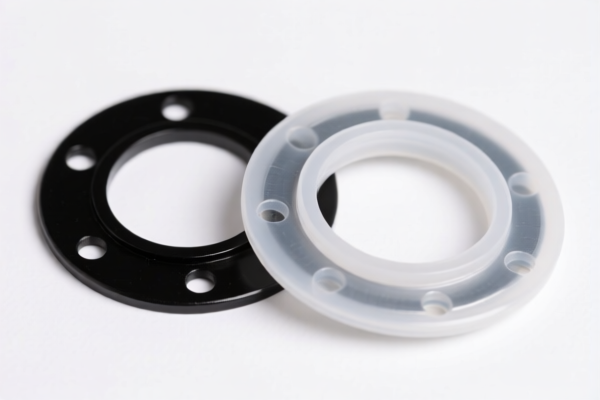

AI Analysis
🛠️ Silicone Gaskets & Seals (Industrial & Automotive)
🌐 HS Code Reference & Customs Clearance Guide | 2026 Latest Tariff Analysis | Professional Clearance Strategy
📌 Part 1: Product Definition & Classification: Do You Really Know "Silicone Gaskets"?
Silicone gaskets are critical sealing components used in food processing, automotive, medical, and industrial applications. In international trade, they are not always classified under a single "gasket" code. The classification depends heavily on material composition and construction.
In the provided data, we see two distinct paths: 1. Plastic/Article of Plastics (Chapter 39): Pure silicone rubber gaskets (O-rings, seals) are often classified here. 2. Metal Combined Gaskets (Chapter 84): Gaskets that are "metal sheeting combined with other material" or "mechanical seals."
⚠️ Key Distinction Point:
- If the gasket is pure silicone/rubber (elastomeric), it typically falls under Chapter 39.
- If the gasket is a composite (e.g., metal core with silicone coating, or metal sheeting combined with silicone), it may fall under Chapter 84 or Chapter 8484.
- Note: The data provided lists only specific HS codes. We must strictly adhere to these four codes.
📦 Part 2: HS Code Classification Details (Based on Provided Data)
| HS Code | Product Description | Applicability | Material/Construction |
|---|---|---|---|
3926.90.45.10 |
Other articles of plastics: Gaskets, washers and other seals O-Rings | Pure silicone O-rings, silicone seals | ✅ Plastic/Elastomer (Silicone) |
3926.90.45.90 |
Other articles of plastics: Gaskets, washers and other seals Other | Silicone gaskets (non-O-ring), flat gaskets | ✅ Plastic/Elastomer (Silicone) |
8484.90.00.00 |
Gaskets and similar joints of metal sheeting combined with other material...: Other | Composite gaskets (e.g., metal-faced silicone), mechanical seals | ⚠️ Composite/Metal-based |
8484.10.00.00 |
Gaskets and similar joints of metal sheeting combined with other material...: Gaskets... of metal sheeting combined with other material | Specific composite gaskets with metal layer | ⚠️ Composite/Metal-based |
🔍 Critical Reminder:
- Pure Silicone Products (like standard O-rings or flat silicone gaskets without a metal core) are classified under 3926.90.45.x0.
- Composite Gaskets (e.g., a metal ring with a silicone coating, or a gasket where the primary structure is metal sheeting combined with silicone) are classified under 8484.10.00.00 or 8484.90.00.00.
- Do NOT assume all "gaskets" are the same. The presence of a metal layer changes the chapter from 39 to 84.
💰 Part 3: 2026 Latest Tariff Rates Detailed (Including Surcharges)
✅ Country of Origin: USA (US)
✅ Export Origin: China (CN) (Assumed based on context of "Additional Tariffs")
✅ Effective Time: 2025/2026 (Current Data)
🎯 1. 3926.90.45.10 & 3926.90.45.90 —— Silicone Gaskets (Plastics)
| Item | Content |
|---|---|
| Base Duty | 0.0% (ad valorem) |
| Additional Tariff | 0.0% |
| Total Tax | 0.0% |
| Tax Detail | "Base Tariff: 0.0%, Additional Tariff: 0.0%" |
| Calculation | CIF Value × 0% = $0 |
| De Minimis Eligibility | ✅ Yes (Subject to standard de minimis limits, but tax is $0 anyway) |
| Legal Basis | Chapter 39 (Articles of Plastics), HTSUS 3926.90.45 |
📌 Explanation:
- Pure silicone gaskets (O-rings, seals) are classified as "articles of plastics" under HS 3926.90.45.
- Crucially, these codes have 0% additional tariffs. This is a significant advantage for silicone rubber products.
- Even if the base rate was non-zero, the data explicitly states 0.0% total tax.
🎯 2. 8484.90.00.00 —— Other Gaskets (Metal Sheetings Combined with Other Material)
| Item | Content |
|---|---|
| Base Duty | 0.0% (ad valorem) |
| Additional Tariff | 0.0% |
| Total Tax | 0.0% |
| Tax Detail | "Base Tariff: 0.0%, Additional Tariff: 0.0%" |
| Calculation | CIF Value × 0% = $0 |
| De Minimis Eligibility | ✅ Yes (Subject to standard de minimis limits, but tax is $0 anyway) |
| Legal Basis | Chapter 84 (Nuclear reactors, boilers, machinery...), HTSUS 8484.90 |
📌 Explanation:
- This code covers "Other" gaskets that do not fit into the specific metal-composite category of 8484.10.
- Like the plastic codes, this code has 0% total tax in the provided data.
🎯 3. 8484.10.00.00 —— Gaskets of Metal Sheeting Combined with Other Material
| Item | Content |
|---|---|
| Base Duty | 2.5% (ad valorem) |
| Additional Tariff | 25.0% |
| Total Tax | 27.5% |
| Tax Detail | "Base Tariff: 2.5%, Additional Tariff: 25.0%" |
| Calculation | CIF Value × 27.5% |
| De Minimis Eligibility | ❌ No (High duty rate) |
| Legal Basis | Chapter 84, HTSUS 8484.10 |
📌 Explanation:
- This code is for composite gaskets where the primary structure is metal sheeting combined with other material (e.g., metal + silicone).
- High Tax Alert: The total tax is 27.5%. This is a significant cost increase.
- Why so high? The 25% additional tariff likely applies to Chinese-origin goods under Section 301 or similar trade measures.
- Do NOT classify a pure silicone gasket here just to "safe" it. If it has no metal layer, it should be 3926.90.45 (0% tax). Misclassification leads to underpayment and penalties.
🛠️ Part 4: Customs Clearance Practical Advice (Pitfall Avoidance Guide)
✅ 1. Preparation Checklist (Non-negotiable)
| Material | Required | Notes |
|---|---|---|
| ✅ Material Specification Sheet | ✔️ | Must clearly state "100% Silicone Rubber" or "Silicone Coated Metal" |
| ✅ Product Photos | ✔️ | Close-up of cross-section to show if metal layer exists |
| ✅ Technical Drawing | ✔️ | Highlight dimensions, material composition, and any metal inserts |
| ✅ Commercial Invoice | ✔️ | Description must match HS code (e.g., "Silicone O-Ring, 100% FKM/Silicone") |
| ✅ HS Code Justification Memo | ✔️ | Explain why it’s not 8484.10 (if 3926) or vice versa |
✅ 2. Classification Strategy (Key Mnemonic)
🔥 "No Metal = 39 (0%); Metal Core = 84 (27.5%); Composite? Check Carefully!"
| Scenario | Correct HS Code | Tax Rate | Risk if Misclassified |
|---|---|---|---|
| Pure Silicone O-Ring / Flat Gasket | 3926.90.45.10 or .90 |
0.0% | Low risk, but ensure no metal core |
| Silicone Gasket with Metal Bead/Insert | 8484.10.00.00 |
27.5% | If declared as 3926 → Penalty for Evasion |
| Metal Face Gasket with Silicone Sealant | 8484.10.00.00 |
27.5% | High risk if misclassified as "Other" (8484.90) |
| Mechanical Seal (Metal/Ceramic) | 8484.90.00.00 |
0.0% | Ensure it’s not a "gasket of metal sheeting combined" |
📌 Critical Note:
- The difference between 3926.90.45 and 8484.10 is the metal layer.
- If your silicone gasket has a metal ring inside (for strength), it may fall under 8484.10.00.00 (27.5%).
- If it is pure silicone, it is 3926.90.45 (0%).
- Do not guess. Provide a cross-section photo to customs.
✅ 3. Special Cases
| Situation | Handling Advice |
|---|---|
| OEM Silicone Gaskets for Food Industry | Must provide FDA compliance documents. HS code remains 3926.90.45 (0%). |
| Automotive Silicone Gaskets with Metal Core | Likely 8484.10.00.00 (27.5%). Consider redesigning to eliminate metal if possible to reduce tax. |
| Silicone Seals for Medical Devices | HS code 3926.90.45 (0%). Ensure ISO 13485 documentation is ready. |
| Mixed Container (Silicone + Metal Gaskets) | Declare separately. Do not combine under one code. |
🌍 Part 5: Global Market Comparison (2026)
| Country/Region | Recommended HS Code | Tariff (China Origin) | Key Requirement |
|---|---|---|---|
| 🇺🇸 USA | 3926.90.45.10 / .90 |
0.0% | FDA (if food/medical) |
| 🇺🇸 USA | 8484.10.00.00 |
27.5% | Technical specs for composite |
| 🇨🇳 China | 4016.93.00.00 (Rubber) |
~5-10% | CCC (if applicable) |
| 🇪🇺 EU | 4016.93.00.00 (Rubber) |
4.5% | REACH Compliance |
| 🇯🇵 Japan | 4016.93.00.00 (Rubber) |
5.0% | JIS Standards |
📌 Conclusion:
- USA offers 0% tariff for pure silicone gaskets (3926.90.45).
- Composite gaskets (8484.10) face a 27.5% tariff in the USA.
- Strategy: If possible, design gaskets without metal layers to qualify for the 0% rate. If metal is required, budget for the 27.5% duty.
📌 Part 6: Common Mistakes & Pitfalls (Lessons Learned)
❌ Mistake 1: Declaring a metal-core silicone gasket as "Silicone O-Ring" (3926.90.45)
👉 Consequence: Customs detects metal layer → 27.5% duty + penalties + delay
❌ Mistake 2: Declaring a pure silicone gasket as "Mechanical Seal" (8484.90) unnecessarily
👉 Consequence: While tax is 0% in the data, misclassification can lead to inspection delays or rejection if documentation doesn't match "mechanical seal" standards.
❌ Mistake 3: Ignoring the "combined material" definition
👉 Consequence: Gaskets with silicone-coated metal washers are often misclassified as pure plastic. Check for metal!
✅ Correct Approach:
"Silicone Gasket, 100% FKM/Silicone, No Metal Components, Model XYZ, FDA Compliant" → 3926.90.45.10 (0%)
"Metal-Core Silicone Gasket, Steel Insert with Silicone Seal, Model ABC" → 8484.10.00.00 (27.5%)
🎯 Part 7: Conclusion: Precision Saves Money!
🎯 Remember the Rule:
🔹 "Pure Silicone = 0% Tax (3926)
🔹 "Metal Core = 27.5% Tax (8484)
🔹 "Composite? Prove It!"
📌 Pro Tip:
- For pure silicone gaskets, ensure your commercial invoice clearly states "100% Silicone Rubber" and "No Metal Components".
- For composite gaskets, be prepared to provide technical drawings to prove the metal layer, as the 27.5% tax is high.
- Always verify if your gasket has a metal insert. If it does, the tax doubles (from 0% to 27.5%).
📣 Action Item:
📞 Contact your customs broker with photos and material specs before shipping.
🚀 Optimize design to remove metal cores if possible to save 27.5% in duties.
✨ Professional Clearance Starts with Accurate Classification!
💼 Your every dollar saved on duty is profit in your pocket!
Customer Reviews
About HS Code Classification
The Harmonized System (HS) is an internationally standardized nomenclature developed by the World Customs Organization (WCO) to classify traded products. Over 200 countries use the HS system as the basis for customs tariffs, trade statistics, and import/export regulations.
Each HS code follows a hierarchical structure:
- Chapter (2 digits) — Broad category of goods (e.g., Chapter 84: Machinery and Mechanical Appliances)
- Heading (4 digits) — More specific grouping within the chapter
- Subheading (6 digits) — Internationally standardized breakdown, used by all WCO member countries
- National subdivisions (8-10 digits) — Country-specific extensions for further classification, such as US HTSUS 10-digit codes
Correct HS code classification is essential for smooth customs clearance, accurate duty payment, and compliance with trade regulations. Misclassification can lead to customs delays, overpayment of duties, or penalties.
When importing from CN to US, the applicable tariff rates may include:
- Most-Favored-Nation (MFN) rate — The standard duty rate applied to WTO members
- General rate — Applied to countries without trade agreements
- Trade remedy duties — Additional tariffs such as Section 301 (anti-dumping), Section 232 (national security), or countervailing duties
The information provided on this page is for reference purposes only. For official classification, please consult with your local customs authority or a licensed customs broker.