Silicone Hand Protector
CN → US| HS Code | Tariff Rate | Origin | Destination | Doc |
|---|---|---|---|---|
| 3926204010 | 16.5% | CN | US | Official Doc |
| 6116100500 | 10.0% | CN | US | Official Doc |
| 4015191110 | 38.0% | CN | US | Official Doc |
| 6116106500 | 24.5% | CN | US | Official Doc |
| 3926201020 | 10.0% | CN | US | Official Doc |
Product Images
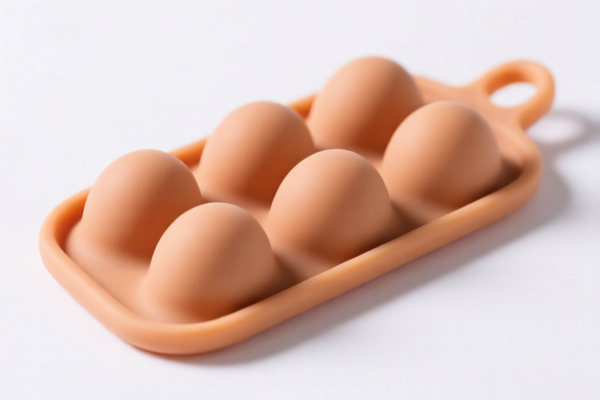


AI Analysis
🛡️ Silicone Hand Protector (Silicone Gloves / Protective Gloves)
🌐 HS Code Classification & Customs Clearance Guide | 2026 Latest Tariff Rules | Expert-Level Import Strategy
📌 One Product, Five HS Codes — Why the Tax Varies So Much!
📌 1. Product Definition & Classification: What Is a "Silicone Hand Protector"?
A Silicone Hand Protector is a wearable hand safety device made primarily from silicone, designed to shield hands from heat, chemicals, abrasion, or electrical hazards. It may be:
- Single-finger or full-hand coverage
- Disposable or reusable
- With or without reinforcement (e.g., fabric backing)
- Used in industrial, medical, food processing, or DIY settings
⚠️ Key Insight:
Silicone is not just a rubber — it’s a synthetic polymer (plastic-like), which leads to multiple possible HS codes depending on material composition, structure, and function.
📦 2. HS Code Classification Breakdown (2026 Official Tariff Mapping)
| HS Code | Product Description | Material Logic | Functional Match | Tax Rate |
|---|---|---|---|---|
3926.20.40.10 |
Silicone-based hand protection; synthetic material, plastic-like properties | Silicone = synthetic polymer → plastic category | Hand protection → gloves | 16.5% |
6116.10.05.00 |
Gloves with rubber (including silicone) coating, immersion, or layering | Silicone = rubber-coated/impregnated material | Hand protection → gloves | 10.0% |
4015.19.11.10 |
Vulcanized rubber (including silicone rubber), used in protective wear | Silicone = vulcanized rubber (cured elastomer) | Hand protection → gloves | 38.0% |
6116.10.65.00 |
Gloves made from plastic or rubber-coated fabrics (layered, laminated, coated) | Silicone = coated/layered material on fabric | Hand protection → gloves | 24.5% |
3926.20.10.20 |
Hand protection (gloves, fingerless gloves, protectors); silicone as synthetic material | Silicone = plastic/synthetic → plastic product logic | Hand protection → gloves | 10.0% |
🔍 Critical Note:
The same product can be classified under 5 different HS codes, leading to tax differences from 10% to 38%.
The key is how the product is structured and how the material is applied.
💰 3. 2026 U.S. Tariff Breakdown (Detailed Tax Clause Analysis)
✅ Applicable Country: United States (US)
✅ Origin: China (CN)
✅ Effective Date: November 10, 2025 (including all subsequent imports)
🎯 1. 3926.20.40.10 — Silicone as Synthetic Plastic Material
| Tax Component | Rate | Legal Basis | Explanation |
|---|---|---|---|
| Basic Duty | 6.5% | USITC:3926.20.40.10 |
Standard tariff for synthetic material gloves |
| Additional Duty (Section 301) | 0% | USITC:9903.88.01 |
Not subject to 301 tariff under this code |
| Section 122 (IEEPA) Duty | 10% | IEEPA:9903.01.25 |
Applies to goods from China under national emergency powers |
| Total Tax | 16.5% | — | CIF × 16.5% |
📌 Why This Code?
The product is treated as a plastic-based hand protector — silicone is classified as a synthetic polymer, not rubber, so it falls under plastics (Chapter 39).
🎯 2. 6116.10.05.00 — Rubber-Coated/Impregnated Gloves
| Tax Component | Rate | Legal Basis | Explanation |
|---|---|---|---|
| Basic Duty | 0% | USITC:6116.10.05.00 |
No base tariff |
| Additional Duty (Section 301) | 0% | USITC:9903.88.01 |
Not targeted under 301 |
| Section 122 (IEEPA) Duty | 10% | IEEPA:9903.01.25 |
Applies due to China origin |
| Total Tax | 10.0% | — | CIF × 10% |
📌 Why This Code?
Silicone is treated as rubber when coated, immersed, or layered on fabric. This is the lowest tax option if your product fits this description.
🎯 3. 4015.19.11.10 — Vulcanized Rubber (Including Silicone Rubber)
| Tax Component | Rate | Legal Basis | Explanation |
|---|---|---|---|
| Basic Duty | 3.0% | USITC:4015.19.11.10 |
Standard tariff for vulcanized rubber |
| Additional Duty (Section 301) | 25.0% | USITC:9903.88.01 |
Highly targeted under Section 301 |
| Section 122 (IEEPA) Duty | 10% | IEEPA:9903.01.25 |
Applies to China-origin goods |
| Total Tax | 38.0% | — | CIF × 38% |
📌 Why This Code?
If the silicone is fully vulcanized (cured) and used in protective gear, it’s treated as rubber — and subject to the highest tax due to Section 301 + IEEPA.⚠️ Red Flag: This code leads to the highest cost — avoid if possible.
🎯 4. 6116.10.65.00 — Gloves with Plastic/Rubber Coating or Lamination
| Tax Component | Rate | Legal Basis | Explanation |
|---|---|---|---|
| Basic Duty | 7.0% | USITC:6116.10.65.00 |
Tariff for coated/layered gloves |
| Additional Duty (Section 301) | 7.5% | USITC:9903.88.01 |
Partial 301 duty |
| Section 122 (IEEPA) Duty | 10% | IEEPA:9903.01.25 |
Applies to China origin |
| Total Tax | 24.5% | — | CIF × 24.5% |
📌 Why This Code?
If your glove has silicone layering, lamination, or coating on fabric, this code applies — moderate tax, but higher than 10%.
🎯 5. 3926.20.10.20 — Hand Protection as Plastic Product
| Tax Component | Rate | Legal Basis | Explanation |
|---|---|---|---|
| Basic Duty | 0% | USITC:3926.20.10.20 |
No base tariff |
| Additional Duty (Section 301) | 0% | USITC:9903.88.01 |
Not targeted under 301 |
| Section 122 (IEEPA) Duty | 10% | IEEPA:9903.01.25 |
Applies to China-origin goods |
| Total Tax | 10.0% | — | CIF × 10% |
📌 Why This Code?
The product is classified as a plastic hand protector — no 301 tariff, only IEEPA 10%.
✅ Best tax outcome if your product is solid silicone, not rubber-coated.
🛠️ 4. Customs Clearance Strategy (Pro Tips to Save 20–30% in Duties)
✅ 1. Essential Documentation (Must-Have)
| Document | Required? | Why It Matters |
|---|---|---|
| ✅ Product Technical Specs | ✔️ | Show material composition, thickness, curing method |
| ✅ Material Safety Data Sheet (MSDS) | ✔️ | Prove silicone is synthetic polymer, not rubber |
| ✅ Product Photos (Clear, Labelled) | ✔️ | Show structure: solid silicone vs. coated fabric |
| ✅ Circuit/Structure Diagram | ✔️ | Prove whether it's laminated, coated, or solid |
| ✅ Commercial Invoice | ✔️ | Must state: "Silicone Hand Protector, Solid Silicone, Not Rubber-Coated" |
| ✅ Certificate of Origin (CO) | ✔️ | For preferential tariff claims (if applicable) |
| ✅ Test Report (e.g., ASTM, ISO) | ✔️ | Prove non-rubber, synthetic nature |
✅ 2.申报技巧(Key Declaration Rules)
🔥 "Solid Silicone? → Use 3926.20.10.20 or 3926.20.40.10"
🔥 "Coated/Fabric-Backed? → Use 6116.10.05.00 or 6116.10.65.00"
🔥 "Vulcanized? → Avoid 4015.19.11.10 — it’s a 38% trap!"
| Scenario | Correct HS Code | Tax | Avoid This Code |
|---|---|---|---|
| Solid silicone, no fabric backing | 3926.20.10.20 |
10.0% | 4015.19.11.10 |
| Silicone coated on fabric | 6116.10.05.00 |
10.0% | 3926.20.40.10 |
| Silicone layer on fabric (laminated) | 6116.10.65.00 |
24.5% | 4015.19.11.10 |
| Fully cured, rubber-like | 4015.19.11.10 |
38.0% | ❌ Avoid at all costs |
✅ 3. Special Cases & Risk Mitigation
| Situation | Recommended Action |
|---|---|
| OEM Product with Custom Design | Provide design drawings + material test report |
| Reusable vs. Disposable | Reusable = higher value → may affect tariff logic |
| Used in Medical or Food Industry | May qualify for special classification (e.g., FDA compliance) |
| Export to EU or Canada | Check local rules — EU may use 6116.10.05.00 with 0% duty |
🌍 5. Global Market Tariff Comparison (2026)
| Country | Recommended HS Code | Base Duty | Additional Taxes | Total Tax |
|---|---|---|---|---|
| 🇺🇸 USA | 3926.20.10.20 or 6116.10.05.00 |
0–7% | 10% (IEEPA) | 10.0%–24.5% |
| 🇨🇳 China | 6116.10.05.00 |
0% | None | 0% |
| 🇪🇺 EU | 6116.10.05.00 |
0% (if CE) | None | 0% |
| 🇦🇺 Australia | 6116.10.05.00 |
5% | None | 5% |
| 🇯🇵 Japan | 6116.10.05.00 |
0% | None | 0% |
📌 Insight:
The U.S. is the only market with IEEPA 10% on China-origin goods.
China, EU, Japan, Australia are much more favorable.
📌 6. Common Mistakes & How to Avoid Them
❌ Mistake 1: Declaring "silicone gloves" without specifying structure
👉 Result: Customs may default to 4015.19.11.10 → 38% tax
❌ Mistake 2: Using "rubber" in product name or description
👉 Result: Triggered as rubber → higher tax
❌ Mistake 3: Not providing structure photos or material test reports
👉 Result: Delayed clearance, audit risk, or reclassification
❌ Mistake 4: Assuming all silicone gloves are the same
👉 Result: Wrong HS code → overpaying 20–30% in duties
✅ Correct Approach:
Use "Solid Silicone Hand Protector, Non-Rubber, Not Coated, for Industrial Use"
Attach MSDS + photos to prove structure.
🎯 7. Final Verdict: How to Minimize Duty & Maximize Profit
🔹 Best Tax Option:
3926.20.10.20or6116.10.05.00→ 10.0%
🔹 Avoid at All Costs:4015.19.11.10→ 38.0%
🔹 Key to Success: Structure + Material Proof
📣 Action Now!
📞 Contact a U.S. Customs Broker + Request HS Code Pre-Ruling
📂 Submit photos, MSDS, structure diagrams, and product specs
✅ Get a binding decision before shipment — avoid 38% surprise!
✨ Pro Tip:
If your product is produced in Vietnam, Mexico, or Thailand, you may qualify for IEEPA exemption — tax drops to 0%–5%.
📌 Remember:
"One word — 'coated' — can increase your duty by 28%."
"One photo — of the structure — can save you $10,000 per shipment."
💼 Your Product. Your Profit. Your Precision.
🚀 Accurate HS Code = Lower Tax = Faster Clearance = More Revenue!
🌐 Start today — secure your global trade advantage!
Customer Reviews
About HS Code Classification
The Harmonized System (HS) is an internationally standardized nomenclature developed by the World Customs Organization (WCO) to classify traded products. Over 200 countries use the HS system as the basis for customs tariffs, trade statistics, and import/export regulations.
Each HS code follows a hierarchical structure:
- Chapter (2 digits) — Broad category of goods (e.g., Chapter 84: Machinery and Mechanical Appliances)
- Heading (4 digits) — More specific grouping within the chapter
- Subheading (6 digits) — Internationally standardized breakdown, used by all WCO member countries
- National subdivisions (8-10 digits) — Country-specific extensions for further classification, such as US HTSUS 10-digit codes
Correct HS code classification is essential for smooth customs clearance, accurate duty payment, and compliance with trade regulations. Misclassification can lead to customs delays, overpayment of duties, or penalties.
When importing from CN to US, the applicable tariff rates may include:
- Most-Favored-Nation (MFN) rate — The standard duty rate applied to WTO members
- General rate — Applied to countries without trade agreements
- Trade remedy duties — Additional tariffs such as Section 301 (anti-dumping), Section 232 (national security), or countervailing duties
The information provided on this page is for reference purposes only. For official classification, please consult with your local customs authority or a licensed customs broker.