Silicone Ice Cube Tray
CN → US| HS Code | Tariff Rate | Origin | Destination | Doc |
|---|---|---|---|---|
| 3924104000 | 13.4% | CN | US | Official Doc |
| 3926901000 | 20.9% | CN | US | Official Doc |
| 3926902100 | 21.7% | CN | US | Official Doc |
Product Images
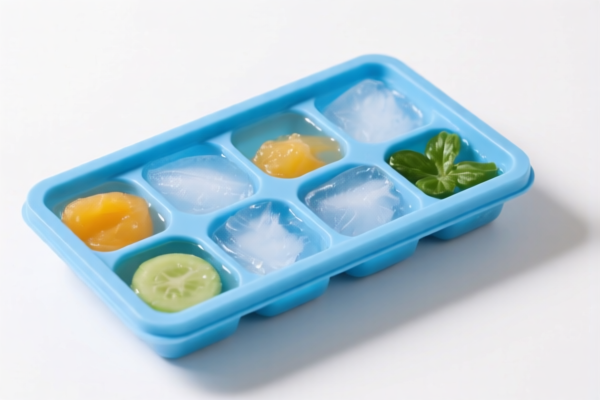
AI Analysis
🧊 Silicone Ice Cube Tray (硅胶冰格)
🌐 HS Code Reference & Customs Clearance Guide | 2026 Latest Tariff Analysis | Professional Clearance Strategy
📌 I. Product Definition & Classification: What Exactly is a "Silicone Ice Tray"?
Silicone Ice Cube Trays are ubiquitous kitchen tools used for freezing water into uniform ice blocks. In international trade, specifically when importing into the United States, these products face complex classification debates depending on their material composition, intended use, and structural design.
Because "Silicone" falls under Chapter 39 (Plastics) in the Harmonized System, the key dispute lies in whether it is classified as "Plastic Tableware/Kitchenware" (lower duty) or "Other Plastic Articles" (higher duty due to trade war tariffs).
⚠️ Critical Distinction:
- If viewed primarily as tableware/kitchen utensils (used for serving/consumption preparation) → Likely 3924.10.40.00
- If viewed as general plastic containers/storage (not specifically defined as tableware) → Likely 3926.90.10.00 or 3926.90.21.00
- Impact: The difference in total tariff can range from 13.4% to 21.7%, a significant cost difference for bulk imports.
📦 II. HS Code Classification Details (2026 Latest Tariff Reference)
Based on the provided data, here are the three possible classifications for Silicone Ice Cube Trays:
| HS Code | Product Description | Applicability Scenario | Key Classification Logic |
|---|---|---|---|
3924.10.40.00 |
Silicone Ice Tray | Kitchenware/Tableware category | Material: Silicone (Plastic/Synthetic Resin). Use: Tableware/Cookware. Classified under Plastic Tableware and Kitchenware. |
3926.90.10.00 |
Other Plastic Articles | General plastic storage/industrial use | Material: Silicone (Chapter 39 Synthesis Materials). Form: Plastic article. Classified as Other Plastic Articles. |
3926.90.21.00 |
Plastic Ice Trays/Bags | Specific form of ice containers | Form: Ice tray matching the scope of ice bags. Material: Plastic/Synthetic Resin. Classified under Chapter 39 Articles. |
🔍 Key Reminder:
- 3924.10.40.00 is the most favorable for consumer kitchenware if declared strictly as "Tableware."
- 3926.90.10.00 and 3926.90.21.00 are broader categories for plastic goods, often attracting higher "Section 301" and "Section 122" tariffs.
- Do not mix declarations: Ensure the commercial invoice clearly states "Tableware" for 3924 or "Plastic Article" for 3926 to avoid customs ambiguity.
💰 III. 2026 Latest Tariff Rate Breakdown (Including Surtaxes & Policy Add-ons)
✅ Applicable Country: United States (US)
✅ Country of Origin: China (CN)
✅ Effective Time: Current trade policies (2026 context)
🎯 1. 3924.10.40.00 —— Plastic Tableware (Silicone Ice Tray)
| Item | Content |
|---|---|
| Base Tariff | 3.4% (Standard MFN Rate) |
| Section 301 Surtax | 0.0% (Exempt or Not Applicable for this specific subheading in this dataset) |
| Section 122 Surtax | 10% (Specific policy surcharge) |
| Total Tax Rate | 13.4% |
| Calculation Method | CIF Value × 13.4% |
| De Minimis Eligibility | ❌ No (Not eligible for Section 321 de minimis if value exceeds threshold, check current rules) |
| Legal Basis Path | Chapter 39 → Heading 3924 → Subheading 3924.10.40.00 → Tariff Schedule |
📌 Explanation:
- This is the lowest tax rate option.
- It relies on the classification of the item strictly as tableware/kitchen utensil.
- Note: The 0% Section 301 rate here is specific to this HS code in the provided data. Misclassification could lead to higher rates.
🎯 2. 3926.90.10.00 —— Other Plastic Articles
| Item | Content |
|---|---|
| Base Tariff | 3.4% |
| Section 301 Surtax | 7.5% (China-specific surtax) |
| Section 122 Surtax | 10% |
| Total Tax Rate | 20.9% |
| Calculation Method | CIF Value × 20.9% |
| De Minimis Eligibility | ❌ No |
| Legal Basis Path | Chapter 39 → Heading 3926 → Subheading 3926.90.10.00 → Tariff Schedule |
📌 Explanation:
- This classification treats the ice tray as a generic plastic product.
- The 7.5% Section 301 tariff significantly increases the cost compared to the tableware classification.
- Use this only if the product cannot be proven as "tableware" (e.g., industrial mold components, non-consumer storage).
🎯 3. 3926.90.21.00 —— Plastic Ice Trays/Bags
| Item | Content |
|---|---|
| Base Tariff | 4.2% |
| Section 301 Surtax | 7.5% |
| Section 122 Surtax | 10% |
| Total Tax Rate | 21.7% |
| Calculation Method | CIF Value × 21.7% |
| De Minimis Eligibility | ❌ No |
| Legal Basis Path | Chapter 39 → Heading 3926 → Subheading 3926.90.21.00 → Tariff Schedule |
📌 Explanation:
- This is the highest tax rate option.
- It applies to plastic articles specifically identified as ice trays/bags under the "Other" category.
- Even with a slightly higher base tariff (4.2%), the addition of Section 301 (7.5%) and Section 122 (10%) makes this the most expensive classification.
🛠️ IV. Customs Clearance Practical Advice (Avoid Pitfalls)
✅ 1. Documentation Checklist (Non-Negotiable)
| Document | Required | Description |
|---|---|---|
| ✅ Product Spec Sheet | ✔️ | Material: 100% Food-Grade Silicone. Hardness, Temperature Resistance (-40°C to 230°C). |
| ✅ Product Photos | ✔️ | Clear images showing the tray, packaging, and any labels. Highlight "Food Grade" or "Kitchen Use." |
| ✅ Commercial Invoice | ✔️ | Must clearly state: "Silicone Ice Cube Tray, for Kitchen Tableware Use." Avoid vague terms like "Plastic Container." |
| ✅ Bill of Lading (B/L) | ✔️ | Match description with Invoice. |
| ✅ Certificate of Origin | ✔️ | If claiming preferential treatment (not applicable here for US/China), but required for customs record. |
| ✅ FDA Compliance Doc | ✔️ | Since it's food-contact silicone, proof of FDA compliance strengthens the "Tableware" classification argument. |
✅ 2. Declaration Strategy (Key Mantra)
🔥 “Kitchen Use, Tableware Claim, 13.4% Rate! General Plastic, 20%+ Rate!”
| Scenario | Correct Declaration | Wrong Practice |
|---|---|---|
| Consumer Silicone Tray | 3924.10.40.00 (Tableware) |
Reporting as "Plastic Art" → 20.9% |
| Industrial Silicone Mold | 3926.90.10.00 (Other) |
Reporting as "Tableware" → Risk of Audit & Penalty |
| Bundled with Other Items | Separate Declaration | Mixing with electronics → Complex classification |
✅ 3. Special Handling Tips
| Situation | Advice |
|---|---|
| OEM/Custom Branding | Ensure the brand name/logo doesn’t imply industrial use. Keep marketing materials "Consumer/Kitchen" focused. |
| Mixed Packaging | If shipping with non-plastic items (e.g., wooden spoons), declare separately. Do not bundle into one HS code. |
| Customs Inquiry | If questioned, provide FDA migration test results to prove food-grade nature, supporting the "Tableware" classification under 3924. |
| Price Volatility | Tariffs are based on CIF. Ensure freight and insurance are accurately calculated to avoid under-declaration penalties. |
🌍 V. Global Market Comparison (2026 Context)
| Country/Region | Recommended HS Code | Tariff (China Origin) | Certification | Notes |
|---|---|---|---|---|
| 🇺🇸 USA | 3924.10.40.00 |
13.4% | FDA + Prop 65 | Best rate if classified as tableware. High scrutiny on Section 122. |
| 🇪🇺 EU | 3924.10.00 |
~4-6% | LFGB + Food Contact | Lower duties, but strict food safety compliance. |
| 🇨🇳 China | 3924.10.40.00 |
~5% | GB Standard | No Section 301/122. Import from US/EU. |
| 🇬🇧 UK | 3924.10.00 |
~4% | UKCA + Food Contact | Post-Brexit rules align closely with EU. |
📌 Conclusion:
- The USA is the most complex market for Silicone Ice Trays due to Section 122 and potential Section 301 variances based on classification.
- Strategic Advantage: Classifying as 3924.10.40.00 saves ~7.5% - 8.3% in duties compared to other plastic articles.
📌 VI. Common Errors & Pitfalls (Lessons Learned)
❌ Mistake 1: Declaring as "Plastic Toy" or "Gift"
👉 Consequence: Incorrect HS Code, potential customs seizure, or higher duty rates.
❌ Mistake 2: Failing to specify "Silicone" in the description
👉 Consequence: Customs may classify under generic plastic codes with higher surtaxes.
❌ Mistake 3: Ignoring Section 122 Tariff
👉 Consequence: Unexpected 10% charge at border, causing cash flow issues.
❌ Mistake 4: Mixing "Tableware" and "Industrial Parts" in one shipment
👉 Consequence: Entire shipment may be audited, leading to delays.
✅ Correct Practice:
"Silicone Ice Cube Tray, Food-Grade, BPA-Free, 14-Cavity, for Home Kitchen Use, Model XYZ, FDA Compliant"
🎯 VII. Conclusion: Precision in Classification, Maximizing Profit
🎯 Remember the Mantra:
🔹 "Tableware Claim = 13.4% Cost; Plastic Article = 20.9%+ Cost."
🔹 "Silicone is Plastic, but Use Defines Duty. Kitchen Use Wins."
🔹 "Section 122 is Always 10%, Choose Your Base Rate Wisely."
📌 Pro Tip:
If your silicone ice trays are sourced from Vietnam, Thailand, or Malaysia, you may be eligible for lower or zero Section 301 tariffs. Consider supply chain diversification to mitigate US-China trade risks.
📣 Immediate Action:
📞 Consult with a licensed customs broker for Advance Ruling (Pre-classification).
🚀 Ensure your Commercial Invoice explicitly states "Kitchen Tableware" to secure the 13.4% rate.
💼 Your bottom line depends on these 2.5% digits.
✨ Professional Clearance Starts with Accurate Classification!
💼 Every percent saved is pure profit!
Customer Reviews
About HS Code Classification
The Harmonized System (HS) is an internationally standardized nomenclature developed by the World Customs Organization (WCO) to classify traded products. Over 200 countries use the HS system as the basis for customs tariffs, trade statistics, and import/export regulations.
Each HS code follows a hierarchical structure:
- Chapter (2 digits) — Broad category of goods (e.g., Chapter 84: Machinery and Mechanical Appliances)
- Heading (4 digits) — More specific grouping within the chapter
- Subheading (6 digits) — Internationally standardized breakdown, used by all WCO member countries
- National subdivisions (8-10 digits) — Country-specific extensions for further classification, such as US HTSUS 10-digit codes
Correct HS code classification is essential for smooth customs clearance, accurate duty payment, and compliance with trade regulations. Misclassification can lead to customs delays, overpayment of duties, or penalties.
When importing from CN to US, the applicable tariff rates may include:
- Most-Favored-Nation (MFN) rate — The standard duty rate applied to WTO members
- General rate — Applied to countries without trade agreements
- Trade remedy duties — Additional tariffs such as Section 301 (anti-dumping), Section 232 (national security), or countervailing duties
The information provided on this page is for reference purposes only. For official classification, please consult with your local customs authority or a licensed customs broker.