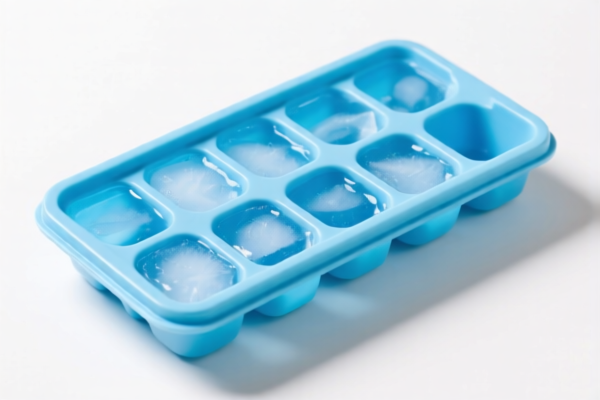
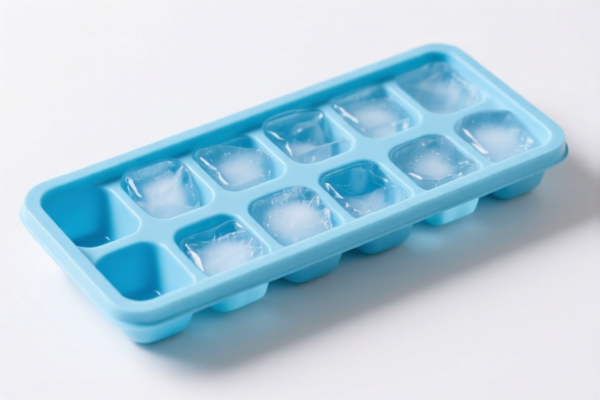
Silicone Ice Cube Tray Set
CN → US| HS Code | Tariff Rate | Origin | Destination | Doc |
|---|---|---|---|---|
| 3924104000 | 13.4% | CN | US | Official Doc |
| 3926901000 | 20.9% | CN | US | Official Doc |
| 3926902100 | 21.7% | CN | US | Official Doc |
Product Images


AI Analysis
🧊 Silicone Ice Cube Tray Set: The Ultimate HS Code & Clearance Guide (2026 Edition)
🌐 HS Code Reference & Clearance Strategy | 2026 Tariff Deep Dive | Professional Logistics Playbook
📌 Product Definition & Classification: Do You Know Your "Silicone" Ice Trays?
Silicone Ice Cube Tray Sets are kitchen essentials made from food-grade silicone (a synthetic polymer) used for freezing water, juices, or cocktails. In international trade, their classification depends heavily on the intended use and the specific material definition within the HS Nomenclature.
Two Primary Classification Paths: 1. Kitchenware Specific: If classified strictly as "Plastic Tableware" (specifically ice cube trays), they fall under 3924.10. 2. General Plastics "Other": If viewed as a general "Other article of plastics" without a specific tableware sub-category, they fall under 3926.90.
⚠️ Critical Distinction:
- 3924.10: Best for trays intended purely as utensils/kitchenware (eating/cooking tools).
- 3926.90: Used if the tray is considered a general plastic accessory or if customs officials reject the "tableware" claim.
Note: Silica/Silicone is legally classified under Chapter 39 (Plastics) in the HS system.
📦 HS Code Classification Breakdown (2026 Tariff Authority)
| HS Code | Product Description | Applicability Logic | Tax Rate (Total) |
|---|---|---|---|
3924.10.40.00 |
Silicone Ice Cube Tray classified as "Plastic Tableware" | Specific Use: Fits "Tableware" (cutlery/dishes). Silicone = Plastic/Synthetic Resin. | 13.4% |
3926.90.10.00 |
Silicone Ice Cube Tray classified as "Other Articles of Plastics" | General Use: Fits "Other articles" (3926). Silicone = Synthetic Material (Ch 39). | 20.9% |
3926.90.21.00 |
Silicone Ice Cube Tray classified under "Other Plastic Articles" (Specific Sub-heading) | Usage Interpretation: Fits "Ice packs" or similar frozen containers. Material consistency confirmed. | 21.7% |
🔍 Key Insight:
- 3924.10.40.00 is the lowest tariff option (13.4%) if the product is marketed strictly as "Kitchen Utensils."
- 3926.90.x0 codes attract higher tariffs (20.9% - 21.7%) due to Section 301 Add-on Tariffs and Section 122 penalties.
💰 2026 Tariff Rate Deep Dive (US Import from China)
✅ Applicable Market: United States (US)
✅ Country of Origin: China (CN)
✅ Effective Date: 2025–2026 Period
🎯 Scenario 1: 3924.10.40.00 (The "Kitchenware" Strategy)
Recommended for standard ice trays marketed for kitchen use.
| Item | Details |
|---|---|
| Base Duty (MFN) | 3.4% |
| Section 301 Add-on | 0.0% (No additional Section 301 tariff for this specific sub-code) |
| Section 122 Tariff | 10.0% (Additional 10% under Section 122) |
| Total Effective Rate | 13.4% |
| Calculation | CIF Value × 13.4% |
| De Minimis Exemption | ❌ NO (Section 122 usually denies de minimis relief) |
| Legal Path | HTS:3924.10.40.00 → Section 122:10% |
📌 Explanation:
- The Base Duty (3.4%) is the standard Most-Favored-Nation rate for plastic tableware.
- Section 301 is currently 0% for this specific code, unlike other plastic categories.
- Section 122 imposes a flat 10% surcharge on Chinese-origin goods in this category.
- Total Cost Impact: Relatively lower compared to the "Other Articles" category.
🎯 Scenario 2: 3926.90.10.00 (The "General Plastic" Strategy)
Higher risk, higher cost. Often applied if "Tableware" definition is contested.
| Item | Details |
|---|---|
| Base Duty (MFN) | 3.4% |
| Section 301 Add-on | 7.5% (Standard Section 301 surcharge) |
| Section 122 Tariff | 10.0% (Additional 10% surcharge) |
| Total Effective Rate | 20.9% |
| Calculation | CIF Value × 20.9% |
| De Minimis Exemption | ❌ NO |
| Legal Path | HTS:3926.90.10.00 → Section 301:7.5% → Section 122:10% |
📌 Warning:
- The Section 301 Tariff (7.5%) is the main differentiator here. If your ICE tray is not clearly defined as "Tableware," customs may apply this higher code.
- Combined with Section 122, the tax burden nearly doubles compared to the 3924.10 code.
🎯 Scenario 3: 3926.90.21.00 (The "Specific Article" Strategy)
Highest tax bracket. Used for "Ice Packs" or similar general plastic items.
| Item | Details |
|---|---|
| Base Duty (MFN) | 4.2% |
| Section 301 Add-on | 7.5% |
| Section 122 Tariff | 10.0% |
| Total Effective Rate | 21.7% |
| Calculation | CIF Value × 21.7% |
| De Minimis Exemption | ❌ NO |
| Legal Path | HTS:3926.90.21.00 → Section 301:7.5% → Section 122:10% |
📌 Risk: This classification is typically reserved for general plastic articles not fitting the "tableware" definition. It represents the highest financial risk for importers.
🛠️ Customs Clearance Action Plan (Avoid Pitfalls)
✅ 1. Document Checklist (Mandatory)
| Document | Required? | Purpose |
|---|---|---|
| Product Specification Sheet | ✅ Yes | Must explicitly state "Silicone (Synthetic Resin)" and "Intended for Ice Making (Tableware)." |
| Material Safety Data (MSDS) | ✅ Yes | Proves food-grade silicone composition (Crucial for Chapter 39). |
| Commercial Invoice | ✅ Yes | Must describe: "Silicone Ice Cube Tray Set - Plastic Tableware." |
| Origin Declaration | ✅ Yes | Explicitly state "Made in China" to trigger Section 301/122 correctly. |
| Product Photos (Lifestyle) | ✅ Yes | Show the tray in a kitchen setting, holding ice, emphasizing "Tableware" use. |
| Packaging Label | ✅ Yes | Labels must include "Food Contact" warnings to support 3924 classification. |
✅ 2. Declaration Strategy (The "Golden Rule")
🔥 Mantra: "Call it Kitchenware, Not 'Plastic Bag'!"
| Scenario | Correct Classification | Risk of Incorrect Classification |
|---|---|---|
| Standard Kitchen Tray | 3924.10.40.00 (13.4%) |
If miscoded as 3926.90 → Tax jumps to 20.9%+ |
| Bulk Industrial Ice Molds | 3926.90.10.00 (20.9%) |
If miscoded as 3924 → Audit risk (Misrepresentation of use) |
| Accessory Kits (with molds) | 3924.10.40.00 |
Do not split parts; declare the whole set as tableware. |
✅ 3. Special Scenarios
| Situation | Actionable Advice |
|---|---|
| Mixed Material Trays (Silicone + Plastic Handle) | Still classify under 3924 if silicone is the primary material and function is tableware. |
| Promotional "Ice Bags" (Soft, flexible) | Caution: May be classified as 3926.90.21 (Ice packs) rather than tableware. |
| OEM Custom Shapes | Provide design specs proving the item is a "Utensil" not a "Container." |
| High-End Luxury Trays | Even if expensive, if made of silicone for ice, 3924 still applies (material drives code). |
🌍 Global Market Comparison (2026)
| Region | Recommended HS Code | Estimated Duty (China Origin) | Key Requirement |
|---|---|---|---|
| 🇺🇸 USA | 3924.10.40.00 |
13.4% (Best Case) | Section 122 + 301 (0%) apply. |
| 🇨🇳 China | 3924.10.40.00 |
~10% | Domestic tax varies. |
| 🇪🇺 EU | 3924.10.00 |
4.9% | CE Marking + Food Contact (Reg 10/2011). |
| 🇬🇧 UK | 3924.10.00 |
4.9% | UKCA Marking. |
| 🇯🇵 Japan | 3924.10.00 |
4.5% | Food Sanitation Law compliance. |
📌 Conclusion:
The US is the most complex market due to the Section 122 and Section 301 layers. Getting the 3924.10.40.00 classification right can save you 7.5% to 8.3% in tariffs per unit!
📌 Common Mistakes & "Blood & Tears" Lessons
❌ Mistake 1: Calling it "Plastic Toy" or "General Plastic Good"
👉 Result: Classified as 3926.90 → Tax = 20.9%.
✅ Fix: Always use keywords: "Kitchen Utensil," "Tableware," "Ice Cube Maker."
❌ Mistake 2: Missing the "Section 122" declaration
👉 Result: Customs may impose retroactive penalties or seize goods.
✅ Fix: Ensure HS Code explicitly triggers Section 122 (10% surcharge) in your declaration notes.
❌ Mistake 3: Ignoring "Food Contact" certification
👉 Result: Even if HS is correct, goods may be rejected at the border.
✅ Fix: Provide FDA compliance letters or LFGB (Europe) certificates.
🎯 Final Verdict: Professional Shipping Strategy
🎯 Remember the Logic:
🔹 "Silicone = Plastic" (Chapter 39).
🔹 "Ice Tray = Tableware" (Heading 3924).
🔹 Target Code:3924.10.40.00→ 13.4% Total Duty.
🔹 Avoid:3926.90→ 20.9%+ Total Duty.📌 Pro Tip:
If your ICE trays are packaged with non-silicone accessories (e.g., plastic scoops), declare them as a Single Set under the Tableware code (3924) if the tableware defines the character of the set.
📣 Call to Action:
🚚 For 2026 Imports:
1. Verify "Silicone" composition in your BOM.
2. Draft invoices using "Plastic Tableware" terminology.
3. Apply for HS Code Pre-Ruling with CBP to lock in the 13.4% rate.
🚀 Don't let an extra 8% tariff melt your profits!
✨ Precision in Classification = Profit in the Pocket!
💼 Every percent counts in the age of Section 122 & 301!
Customer Reviews
About HS Code Classification
The Harmonized System (HS) is an internationally standardized nomenclature developed by the World Customs Organization (WCO) to classify traded products. Over 200 countries use the HS system as the basis for customs tariffs, trade statistics, and import/export regulations.
Each HS code follows a hierarchical structure:
- Chapter (2 digits) — Broad category of goods (e.g., Chapter 84: Machinery and Mechanical Appliances)
- Heading (4 digits) — More specific grouping within the chapter
- Subheading (6 digits) — Internationally standardized breakdown, used by all WCO member countries
- National subdivisions (8-10 digits) — Country-specific extensions for further classification, such as US HTSUS 10-digit codes
Correct HS code classification is essential for smooth customs clearance, accurate duty payment, and compliance with trade regulations. Misclassification can lead to customs delays, overpayment of duties, or penalties.
When importing from CN to US, the applicable tariff rates may include:
- Most-Favored-Nation (MFN) rate — The standard duty rate applied to WTO members
- General rate — Applied to countries without trade agreements
- Trade remedy duties — Additional tariffs such as Section 301 (anti-dumping), Section 232 (national security), or countervailing duties
The information provided on this page is for reference purposes only. For official classification, please consult with your local customs authority or a licensed customs broker.