Silicone Mold
CN → US| HS Code | Tariff Rate | Origin | Destination | Doc |
|---|---|---|---|---|
| 3926909905 | 22.8% | CN | US | Official Doc |
| 4016990500 | 20.9% | CN | US | Official Doc |
| 4016996050 | 37.5% | CN | US | Official Doc |
| 8480718045 | 38.1% | CN | US | Official Doc |
| 8480799090 | 38.1% | CN | US | Official Doc |
Product Images
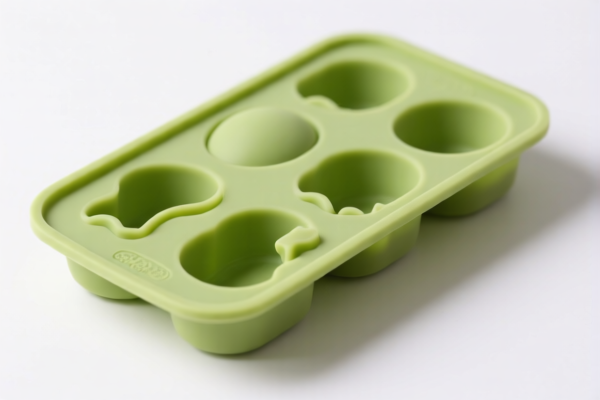


AI Analysis
🧊 Silicone Mold: The Ultimate HS Code & Tariff Guide (2026)
🌐 Global Customs Decoding | Silicon Mold Tariff Wars | Strategic Clearance Strategies
📌 Part 1: What is a Silicone Mold? It's Not Just "Plastic" or "Rubber"!
Silicone Molds are precision tools used in baking, crafting, industrial manufacturing, and prototyping. In international trade, they are notoriously tricky because Silicone sits at the chemical crossroads of Plastics and Rubber.
The classification depends entirely on the manufacturing process (vulcanization vs. molding) and the dominant material characteristic.
⚠️ The Critical Distinction: - Is it "Plastic/Resin"? (Often thermoplastic behavior or classified under "other plastic articles") → Chapter 39 - Is it "Vulcanized Rubber"? (Cured, elastic, flexible) → Chapter 40 - Is it a "Mold" (Tool)? (The actual tool used to shape other items) → Chapter 84
This distinction changes the Total Tax from ~22.8% to a staggering ~38.1%. A wrong declaration can cost you thousands.
📦 Part 2: HS Code Classification Matrix (Data-Driven Analysis)
Based on the provided data, here is the precise breakdown of Silicone Molds into the 5 possible HS Codes.
| 🏷️ HS Code | Classification Logic | Material Type | Total Tax (US/China Context) | Key Tax Breakdown |
|---|---|---|---|---|
| 3926.90.99.05 | Plastic Article / Part Classified as "Other Plastic Goods". Treated as a plastic item rather than a rubber product. |
Plastic / Synthetic Rubber | 22.8% | 🟢 Base: 5.3% ⚠️ Add: 7.5% ⚠️ Add: 10% (Section 122) |
| 4016.99.05.00 | Vulcanized Rubber Article Specifically "Other articles of vulcanized rubber" for household use. |
Vulcanized Rubber | 20.9% | 🟢 Base: 3.4% ⚠️ Add: 7.5% ⚠️ Add: 10% (Section 122) |
| 4016.99.60.50 | Other Rubber / Elastomer Non-vehicle specific rubber product. High tariff due to specific rubber sub-category. |
Vulcanized Rubber / Elastomer | 37.5% | 🟢 Base: 2.5% 🔴 Add: 25.0% ⚠️ Add: 10% (Section 122) |
| 8480.71.80.45 | Plastic/Rubber Mold (Injection) Classified strictly as a Tool/Mold for injection molding. |
Plastic or Rubber | 38.1% | 🟢 Base: 3.1% 🔴 Add: 25.0% ⚠️ Add: 10% (Section 122) |
| 8480.79.90.90 | Other Molds Covers all other molds not specifically injection-type. The "Catch-all" for industrial tools. |
Plastic / Rubber | 38.1% | 🟢 Base: 3.1% 🔴 Add: 25.0% ⚠️ Add: 10% (Section 122) |
📌 Golden Rule: - Lowest Tax (20.9%): If it's a Household silicone item (e.g., baking tray, cake mold) and clearly Vulcanized Rubber (
4016.99.05.00). - Highest Tax (38.1%): If it is declared as an industrial Mold/Tool (8480...), regardless of material. - Mid-Tax (37.5%): If it is a rubber product but not a tool and not household (4016.99.60.50).
💰 Part 3: Tariff Anatomy & Policy Details
The "Total Tax" is a compound structure. Here is the detailed breakdown of how the 122-Tariff and Section 301 duties are applied.
🔍 The 3-Layer Tax Structure
Every HS Code in the list above follows this formula:
- Base Duty (MFN Rate): The standard international tariff (3.1% ~ 5.3%).
- Add-on Duty (Section 301): The massive 25.0% tariff applied to Chinese imports under US Trade Policy (for rubber and molds).
- 122-Tariff Clause: A specific 10% penalty or additional tariff (often related to intellectual property or specific trade enforcement measures).
⚠️ Crucial Calculation: If you choose HS Code 8480 (Industrial Mold):
3.1% (Base) + 25.0% (Section 301) + 10.0% (122) = 38.1%If you qualify for HS Code 4016.99.05 (Household Rubber):
3.4% (Base) + 7.5% (Section 301) + 10.0% (122) = 20.9%
💡 The Savings Potential:
By correctly classifying a Silicone Baking Mold as 4016.99.05.00 instead of an industrial mold 8480.71.80.45, you save 17.2% in total duties (20.9% vs 38.1%).
🛠️ Part 4: Customs Clearance Strategy & Pitfalls
✅ 1. Product Description Strategy
DO NOT simply write "Silicone Mold" on the Commercial Invoice. This invites customs suspicion.
- ❌ Bad Description: "Silicone Mold" or "Rubber Tool"
- ✅ Good Description (Household): "Silicone Cake Mold, Household Use, Vulcanized Rubber, Model X, No Industrial Function"
- ✅ Good Description (Industrial): "Injection Molding Tool for Plastic, Metal Core with Silicone Sleeve, Industrial Grade"
✅ 2. Evidence Checklist
To justify the lower tax rate (4016.99.05.00), you must prove it is Household Use and Not a Tool.
| Document | Why It Matters |
|---|---|
| 📸 Product Photos | Must show the item used for baking/crafting, not in a factory setting. |
| 📄 User Manual | Must mention "Home Use", "Baking", "Crafts", NOT "Injection Molding". |
| 🔬 Material Safety Data Sheet (MSDS) | Proves the "Vulcanized Rubber" nature, distinguishing it from raw plastic (3926). |
| 🏭 Factory Profile | If the factory only makes molds, customs may force 8480. If they make kitchenware, 4016 is safer. |
✅ 3. Common Classification Errors (The "Trap")
| 🚫 Mistake | Consequence | Correct Fix |
|---|---|---|
| Calling a baking tray a "Mold" | Risk of 8480 (38.1% tax) |
Declare as "Household Rubber Article" (4016.99.05.00) |
| Declaring as "Plastic" | Risk of 3926.90.99.05 (22.8% tax) |
If it's vulcanized, use 4016 (20.9%) for lower tax. |
| Mixing Household + Industrial | Customs audit, delayed shipment | Split shipments: Household to 4016, Industrial to 8480. |
🌍 Part 5: Global Market Comparison
| Market | Preferred HS Code | Total Tax Estimate | Notes |
|---|---|---|---|
| 🇺🇸 USA | 4016.99.05.00 (Household) |
20.9% | Best Option. Must prove "Household". |
| 🇺🇸 USA | 8480.71.80.45 (Tool) |
38.1% | Avoid. High risk of audit for "Silicone" tools. |
| 🇪🇺 EU | 4016.93.00 |
~10-14% | No Section 301 tax, but strict safety regs (LFGB). |
| 🇨🇳 China | 4016.99.05.00 |
~0% | Export duty is low, but import to US is high. |
🔥 Pro Tip: If you are shipping Silicone Molds to the USA, do not use the term "Mold" unless it is a heavy-duty industrial tool. For baking/crafting, use terms like "Cake Pan," "Mold Tray," or "Candy Mold" to lean towards the
4016.99.05.00classification (20.9%).
📌 Part 6: Final Verdict & Action Plan
🎯 The Smartest Path:
- Identify the End User: Is it for a Kitchen (
4016.99.05.00- 20.9%) or a Factory (8480...- 38.1%)? - Select the HS Code:
- Kitchen/Crafting: Go for
4016.99.05.00. - Industrial Tool: Prepare for
8480.71.80.45.
- Kitchen/Crafting: Go for
- Verify Materials: Ensure the "Vulcanized Rubber" status is clear on the MSDS.
- Draft the Invoice: "Silicone Rubber Baking Mold, Household Use, No Electronic Components."
💡 Remember: In the world of Silicone, "Rubber" beats "Plastic" for tax, and "Household" beats "Industrial".
Don't let a $100k shipment get stuck paying 38.1% tax because you called a cake pan a "mold".
✨ Ready to Ship?
📞 Contact your logistics partner today to confirm the "Household Use" definition matches your product specs.
🚀 Clearance Success = Accurate Classification + Proof of Use!
Customer Reviews
About HS Code Classification
The Harmonized System (HS) is an internationally standardized nomenclature developed by the World Customs Organization (WCO) to classify traded products. Over 200 countries use the HS system as the basis for customs tariffs, trade statistics, and import/export regulations.
Each HS code follows a hierarchical structure:
- Chapter (2 digits) — Broad category of goods (e.g., Chapter 84: Machinery and Mechanical Appliances)
- Heading (4 digits) — More specific grouping within the chapter
- Subheading (6 digits) — Internationally standardized breakdown, used by all WCO member countries
- National subdivisions (8-10 digits) — Country-specific extensions for further classification, such as US HTSUS 10-digit codes
Correct HS code classification is essential for smooth customs clearance, accurate duty payment, and compliance with trade regulations. Misclassification can lead to customs delays, overpayment of duties, or penalties.
When importing from CN to US, the applicable tariff rates may include:
- Most-Favored-Nation (MFN) rate — The standard duty rate applied to WTO members
- General rate — Applied to countries without trade agreements
- Trade remedy duties — Additional tariffs such as Section 301 (anti-dumping), Section 232 (national security), or countervailing duties
The information provided on this page is for reference purposes only. For official classification, please consult with your local customs authority or a licensed customs broker.